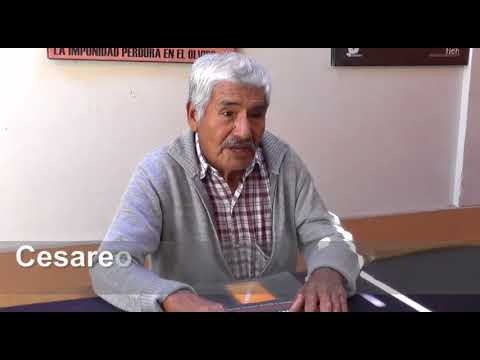
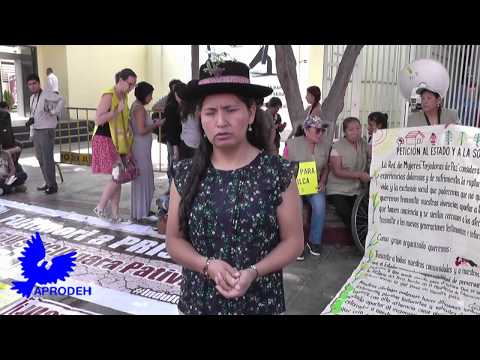
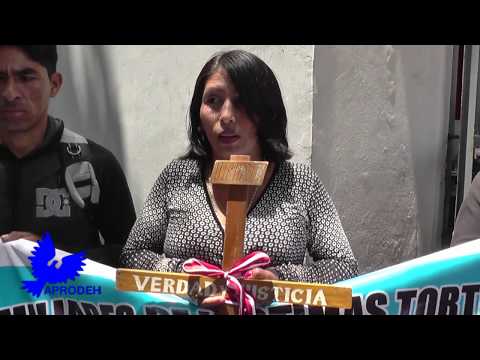
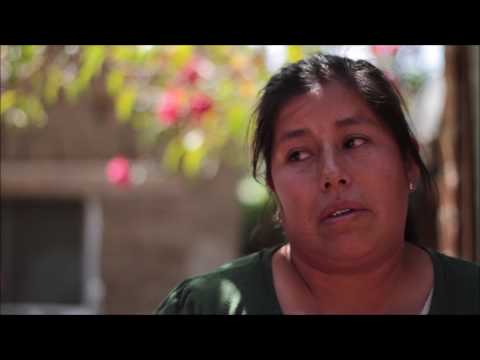
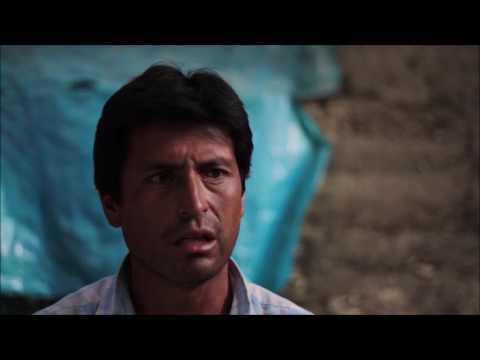
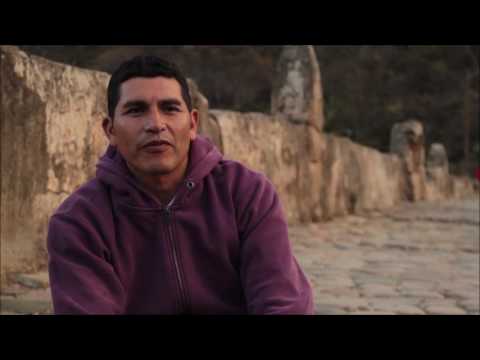
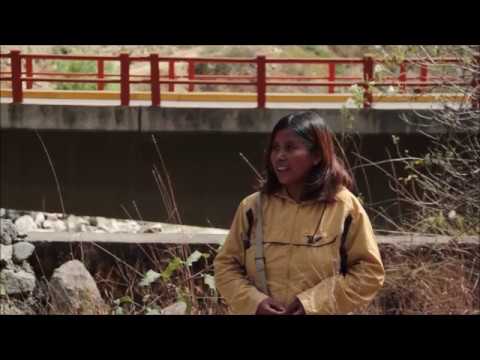
Alberto Fujimori and his former ministers Marino Costa Bauer, Alejandro Aguinaga, and Eduardo Yong Motta are charged before the Primer Juzgado Penal Nacional as indirect perpetrators of the alleged commission …
Books & Articles
167 documents in Truth and Reconciliation Commission - Peru
Human Rights organizations and relatives of victims of the internal conflict commemorated today, August 28, the 15th Anniversary of the delivery of the CVR report, paying a heartfelt tribute to …
The Internal Armed Conflict in Peru left more than 69,000 people killed and disappeared, both by subversive groups and by the Armed Forces. The CVR's final report recorded the identity …
The Justice sector identified, by name, more than 20,000 persons who disappeared between 1980 and 2000. The registry will be publicly accessible and will serve to continue the search for …
Informational brochure published by the General Directorate for the Search of Disappeared Persons of the Ministry of Justice and Human Rights of Peru, explaining what the work of the National …
The Ministry of Justice and Human Rights of Peru presented the first base list of the National Registry of Disappeared Persons and Burial Sites (RENADE), compiled by the General Directorate …
The number of persons who disappeared during the internal armed conflict experienced between 1980 and 2000 rose to 20,329, according to the first official list of victims released by the …
Framework document containing the guidelines for the process of searching for disappeared persons, known as the "National Plan for the Search for Disappeared Persons" (PNBPD), which falls within the public …
Full text of Legislative Decree 1398, enacted on September 8, 2018. The purpose of this regulation is to create the Genetic Data Bank to contribute to the identification of persons …
The Executive Branch officially formalized today the creation of the Genetic Data Bank for the search and identification of disappeared persons in Peru during the period of violence from 1980 …
On June 21, 2016, Law 30470, the Law on the Search for Disappeared Persons during the Period of Violence 1980–2000, was enacted, marking a paradigm shift in state intervention by …
Peru will have a genetic database to help in the search for persons who disappeared during the internal conflict that affected the country between 1980 and 2000 — a figure …
Essay summarizing the contributions of the book "La violencia política en el Perú 1980-2000. Sendero Luminoso contra el Estado y la sociedad" [Political Violence in Peru 1980-2000. Sendero Luminoso against …
Text that presents and summarizes the research. "The elaboration of the book La violencia política en el Perú 1980-2000. Sendero Luminoso contra el Estado y la sociedad (Paris, L'Harmattan, May …
The decision made in Congress — exempted from a preliminary committee report in the Justice and Human Rights Commission by agreement of the Junta de Portavoces — to approve the …
Legal opinion on the domestic criminal characterization of acts of surgical sterilization performed by personnel of the Ministerio de Salud during the 1990s on Peruvian women without their valid consent, …
During the period of political violence that Peru experienced at the end of the 20th century, the repression of activism at several public universities was accompanied by a strong stigmatization …
This colloquium is presented as an opportunity to discover and make visible histories that remained hidden, with the aim of questioning the way in which the past and present of …
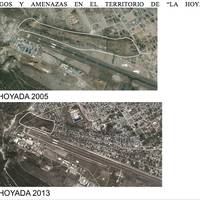
Background and justification of La Hoyada as a "Sanctuary in Memory of the Victims of Violence"
The path traveled by the victims, their families, and APRODEH is the book written by Gloria Cano, executive director of the Asociación Pro Derechos Humanos (APRODEH). It narrates the situation …
The present research — Entre el estigma y el silencio: memoria de la violencia entre estudiantes de la UNMSM y la UNSCH — deals precisely with one of the institutions …
Maintaining his direct style, without ambiguities or artifice, Morote unmasks those who attack the Comisión de la Verdad y Reconciliación to conceal their crimes, complicity, or silence committed during the …
CONTENTS: Real politics in an electoral year / Women are the ones who will save Peruvian politics / VRAEM: The ghost of eradication / Discrimination, racism and violence among adolescents …
Drawing on a photographic image exhibited in 2003 in the context of the presentation of the Final Report of the Truth and Reconciliation Commission (August 2003), which became iconic of …
The Instituto de Defensa Legal, through its Governance and Rights Area, publishes this study on the perceptions of victims of political violence regarding the reparations process, in the communities of …
The work presented below is the product of a joint effort by the Grupo Memoria at the IEP, with students from the Faculty of Social Sciences of the Universidad Nacional …
THE GREATEST SENDERO MASSACRE 1-Facts of the Soras massacre. 117 peasants murdered and massacred in a single day. 2-Context in which the massacre occurred. 3-True terrorist actions of Sendero Luminoso. …
This article analyzes the debates surrounding the construction and materialization of collective memory in Peru in relation to the internal war in which Sendero Luminoso was confronted by state forces, …
The article analyzes debates surrounding the construction and materialization of collective memory in Peru in relation to the internal war in which Sendero Luminoso was confronted by state forces, leaving …
This article takes the Peruvian exhibition Yuyanapaq by the Comisión de Verdad y Reconciliación (CVR) as a starting point for reflecting on the place of photographs in projects whose aim …
This book collects and expands upon the images and meanings of the exhibition "Anamnesia: phantasmatic returns of violence" held by Micromuseo during November and December 2012 in the Art Hall …
To reflect on the contributions of Carlos Iván Degregori to memory studies, I review his bibliography. I find that from the emergence of Sendero Luminoso in the early 1980s, his …
This article addresses four narrative texts by Peruvian writer Mario Vargas Llosa related to the violence experienced in Peru in the context of the war between Shining Path and the …
This report covers four years (2007–2011) of implementation of the Collective Reparations Program (PRC) as part of the Comprehensive Reparations Plan (PIR) for victims of Peru's internal armed conflict, which …
This document presents different angles of the conflict by offering several studies that analyze not only the actors who participated in the conflict but also the periods preceding it, in …
Once again, the Asociación Pro Derechos Humanos – APRODEH, in alliance with the International Center for Transitional Justice – ICTJ, is pleased to present the results of the monitoring study …
A publication containing the reflections, experiences, and recommendations of a group of experts who have systematized knowledge about economic reparation processes carried out in Latin America and the various aspects …
This publication presents the results of research on local experiences of memory of violence, carried out by the Instituto de Democracia y Derechos Humanos de la Pontificia Universidad Católica del …
Sendero Luminoso's transformation into a 'narco-guerrilla' forces the Government to revise its defense strategy — 'narcos' have killed 50 soldiers in one year. The great terror that Sendero Luminoso now …
Lima in Peruvian cinema in the late 1980s and early 1990s. What was the cinematic image of the capital at a time when an internal war and a severe economic …
Based on the publication by Jo-Marie Burt, Violence and Authoritarianism in Peru: Under the Shadow of Sendero and the Fujimori Dictatorship (see in the BVGA), the author considers that the …
In this issue: Spaces of memory. Battles for memory, Carlos Iván Degregori p.3 / A new Sendero Luminoso wave? The San José de Santillana attack in the context of the …
What would happen in Argentina if the Madres de Mayo were threatened with death for insisting that those who killed their children be convicted? What would happen in Chile if …
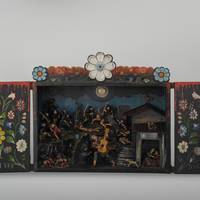
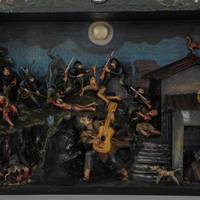
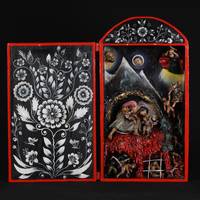
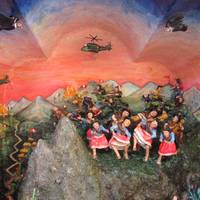
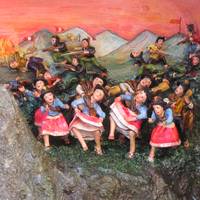
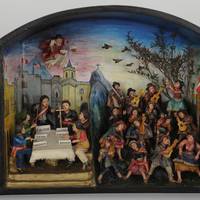
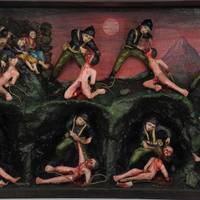
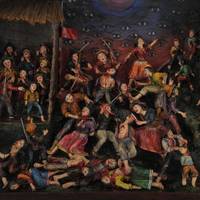
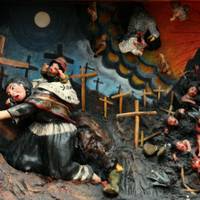
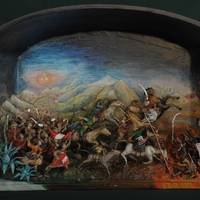
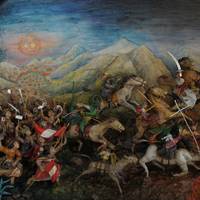
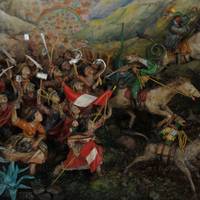
It is not imagination. It is above all memory. But wounded memory. The Ayacucho anthropologist and retablo artist Edilberto Jiménez has captured, like a true chronicler, in seven retablos, the …
In the presence of family members, friends, colleagues, authorities from the Province of Huanta, human rights organizations, and the press, a series of activities were held in memory of the …
For a long time we have been saying that in Ayacucho it is not possible to achieve the unity that would make it strong as a region and consolidate it …
It seems God was not as good as they wanted to present Him to us. Or perhaps, in a moment of weariness, He chose the wrong people? We will never …
Showing 1–50 of 167 documents
Timeline Events 26
-
Testimony on clashes in Uchiza
Testimony given by a resident who witnessed armed confrontations in Uchiza, province of Tocache, department of San Martin. The testimony was collected in October 2002 in Huánuco. The witness recounts the psychological consequences of having witnessed violence from an early age, showing aggression and changes in her behavior. The testimony …
-
Focus group with women in Accomarca
Focus group conducted with women in Accomarca, Vilcashuamán, Ayacucho, as part of CVR's research activities. During this meeting, women participants shared testimonies about aggressive manifestations and psychological sequels derived from the violence experienced during the internal armed conflict. One of the participants recounted how she became aggressive after witnessing violence …
5 docs -
March of the Four Yours
Former presidential candidate Alejandro Toledo Manrique calls for a three-day mobilization called the March of the Four of His Own, in protest against the fraudulent re-election of Alberto Fujimori Fujimori. The first day passes peacefully with thousands of people mobilizing from different parts of the capital. On July 28, acts …
9 docs -
Reactivación de las Comunidades Eclesiales de Base (CEBs)
In 1997, the program to form Basic Ecclesial Communities (CEBs) was relaunched with the objective of rebuilding the basic social fabric, focusing on the family. This effort was a response to the economic crisis that affected participation in the CEBs, and sought to counteract poverty, unemployment and violence. The strategy …
-
Concentration of violence in Antabamba and Aymaraes
In 1992, violent actions were concentrated in the provinces of Antabamba and Aymaraes. This concentration is evidence of the persistent presence of the PCP-SL in the high provinces of Apurímac despite the capture of Abimael Guzmán.
1 docs -
Burning of government vans and foodstuffs by students
In November 1991, students in open defiance burned two vans and a large amount of food that the government had sent to the University. This action occurred despite tighter control of the universities with more constant military interventions.
3 docs -
Communiqué of the Ayaviri Prelature
Under pressure from the murders in CAT Quisuni, in a very firm statement, the Ayaviri Prelature distances itself from the land seizures, affirming its rejection of any act of violence and calling for the land problem to be solved through dialogue and democracy. The Prelature also disassociates itself from responsibilities, …
-
Detention and torture of three women in Ranrapata
On April 25, 1990, near Ranrapata, three women were detained when they approached to take documents of detained family members. A shopkeeper was also detained. All were beaten and interrogated. The women were forced to cook but later managed to escape. This case illustrates how women seeking information about detained …
2 docs -
CONAP press release denouncing violence in the Central Rainforest
On February 17, 1990, the Confederation of Amazonian Nationalities of Peru (CONAP) published a communiqué denouncing the violence in the central jungle. This communiqué followed the massacre of fifteen ronderos in the community of Dos de Mayo and in a context of intolerable conditions of insecurity in the region. CONAP …
1 media 1 docs -
Massive emigration of Tambobamba residents due to violence
People from Tambobamba migrated en masse to Cuzco and Abancay since December 10, the day the PCP-SL killed three people in Mara and there were other executions in Haquira. This massive emigration is evidence of the terror generated by the subversive violence.
1 docs -
Second cycle of hiker violence
Around 1988, another cycle of intense violence was unleashed in the new scenarios where the Shining Path had expanded its operations. The magnitude of the crimes and violations can be explained by similar causes to the first cycle. However, in this period the resistance of the population, its authorities and …
8 media 14 docs -
Violent situation in the province of Abancay, control of highways by PCP-SL
Between July and August 1987, the province of Abancay went through a violent period. The PCP-SL fought for control of highways and bridges, resulting in several attacks on towns and peasant communities. During the rest of the year, violence extended to the provinces of Grau and Cotabambas.
2 media -
Beginning of the upsurge in violence
In 1987, violence in the Peruvian internal armed conflict began to escalate again, after a period of decline that reached its lowest point in 1986. This new period of escalation reached a peak in 1989 and remained at relatively high levels until 1992, the year of Abimael Guzmán's capture. Although …
1 media 2 docs -
PCP-SL prisoners riot in three Lima prisons
On June 18, 1986, prisoners accused of belonging to the PCP-SL rioted and took some hostages in three prisons in Lima: Santa Barbara (women's prison), Lurigancho and El Frontón, trying to avoid being transferred to Miguel Castro Castro prison. The government delegated to the forces of law and order the …
2 media 9 docs -
Penalty Killing
The massacre in the prisons marked the beginning of the stage of national deployment of violence. This event was a culminating point that considerably marked all the actors in the conflict and brought to Lima images of massacres that had been far away until then. In practical terms, with this …
3 media 16 docs -
Escalada de violencia del PCP-SL en Puno
In 1986, the Communist Party of Peru - Shining Path (PCP-SL) intensified its campaign of violence in the highlands of Puno, Peru. Actions included the looting and destruction of businesses, as well as the seizure of towns such as Chupa, where local authorities were captured and subjected to popular trials. …
-
Accomarca Massacre
The Accomarca massacre was a tragic event that occurred in Peru during the internal conflict between law enforcement and the Shining Path. In this context of violence, more than 15 secular Christian organizations issued a communiqué entitled 'El quinto no matar', condemning the killings and advocating for peace and justice. …
-
CDC agreement to annihilate terrorist collaborators
On December 27, 1984, a Civil Defense Committee in the Ayacucho highlands unanimously approved in assembly that those who had collaborated with the terrorists should be investigated and that the guilty parties would be annihilated by the Central authorities. That this appears in their minute book reveals that by 1984 …
4 docs -
Arrest of Zósimo Tenorio Prado in Ayacucho city
On the night of December 1, when the family was asleep in their home, about 25 hooded men with flashlights abruptly entered the house. They jumped over a wall to enter the house and kicked in the door of the room where the husband and wife were sleeping. After asking …
3 media 2 docs -
Early stages of the internal armed conflict in Ayacucho
The first phases of the internal armed conflict were marked by its eminently Ayacucho character and by the high peaks of violence reached in 1983 and 1984. Between 1982 and 1985, the conflict was practically confined to the department of Ayacucho. In December 1982, the Armed Forces (FFAA) were charged …
5 media 21 docs -
Murder of eight journalists in Uchuraccay
Murder of eight journalists in Uchuraccay, four weeks after the armed forces entered the fight against the PCP-SL. This event caused a break in the conflict when terrible images of the violence taking place in the highlands of Ayacucho and neighboring departments were widely disseminated in the national media. In …
3 media 9 docs -
Massacre in Lloqllapampa
During the period 1983-1985, a massacre took place in the town of Lloqllapampa. The event was witnessed by witnesses who provided information to the CVR Report. The massacre occurred in the context of the Peruvian internal armed conflict, although specific details about the number of victims and perpetrators are not …
-
First cycle of hiker violence in Ayacucho
Between 1982 and 1985, the first cycle of intense violence of the internal armed conflict took place, concentrated basically in the department of Ayacucho. During these years, about a third of the murders perpetrated by the PCP-Sendero Luminoso reported to the CVR were committed. This cycle was related to the …
8 media 26 docs -
Fourth Plenary Session of the PCP-SL - Agreement on blood quota
The fourth plenary session held in May 1981 specified the initial plans for the development of the 'guerrilla war' and agreed to radically intensify violence. The so-called 'quota' (of blood) necessary for the triumph of the revolution was agreed upon. Guzmán incited his militants to 'carry life at their fingertips' …
1 media 2 docs -
Inicio de la Lucha Armada del PCP-SL en Perú
In 1980, the Communist Party of Peru - Shining Path (PCP-SL) initiated an armed struggle against the Peruvian state, initially gaining the support of urban and peasant sectors. This conflict led to a military response from the state, resulting in a period of violence that included the assault on the …
-
La Insurrección de Trujillo de 1932
The Trujillo insurrection in 1932 was an uprising that was barbarically repressed, leaving a deep imprint of resentment and distrust in the political life of Peru for decades. This event is one of the many episodes of violence in 20th century Peruvian history that were not adequately investigated and responsibilities …
Photos & Videos 50
Dr. Gloria Cano on the Resolution of the National Criminal Chamber, the pardon and the death penalty
Interview with Cesáreo Calderón - Father of John Calderón Ríos (Pativilca Case)
Ada Ochoa Solano - Widow of Felandro Castillo Manrique - Pativilca Case (Caraqueño)
Interview with Tania Pariona - Pativilca Case Hearing
Interview with Maria Luisa Tello - Granddaughter of Santiago Tello (Cayara Case)
Ideeleradio interview with Dr. Gloria Cano
Interview with Marks Willem
Operation Victoria - Documentary
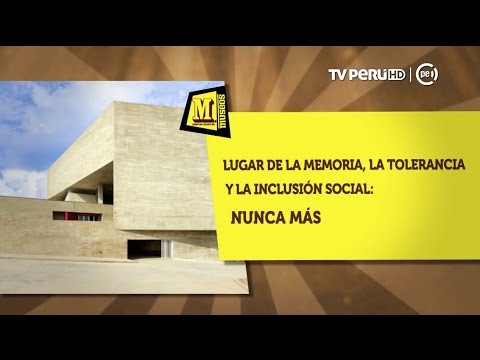
Place of memory, tolerance and social inclusion
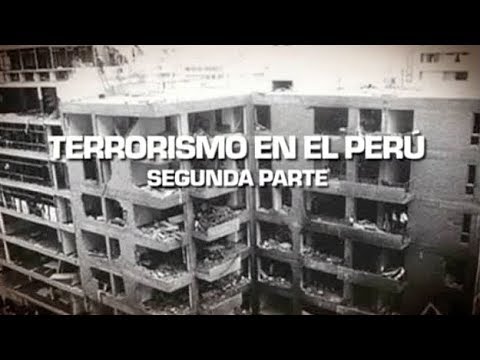
Terrorism in Peru - Part II
Terrorism in Peru - Part I
Abimael and the birth of Shining Path
ANFASEP Memory "So that it is not repeated"
Dr. Gloria Cano - Aprodeh Lawyer - On the verdict in the "Cabitos" case
Island - Documentary
2014
ENCROACHMENTS ON LA HOYADA
2014
LA HOYADA, 2014
Testimony of Juana Bustos Huamaní
Testimony of Ramiro Niño de Guzmán
Testimony of Toribia Casa Carrasco
Testimony of Igidia Arullca Oscco
Testimony of Eugenia Altamirano Huamán
Testimony of Cirila Súñiga Quispe
Testimony of Faustina Huamán Junco
Testimony of Agripina Pedraza Martínez
Testimony of Evaristo Contreras Huamán
Testimony of Gladis Felicitas Tello Merino
Testimony of Cecilia Barrios Alarcón
Testimony of Eugenia Quispe Sánchez
Testimony of Simeón Alarcón Santi
Testimony of Víctor Sánchez Marca
Testimony of Yasmina Fuentes Tello
Achka Illaki kallpanchawaraku (So much pain gave us strength and courage) - Documentary
Jaynapuncha Pajarin (Yesterday and tomorrow)
Lirio Qasa - Song
2012
RETABLO. WOMAN IN THE CEMETERY
RETABLO. THE CONDEMNED
RETABLO. DETAIL 1 OF THE CONDEMNED
RETABLO. DETAIL 2 OF THE CONDEMNED
RETABLO. DETAIL 3 OF THE CONDEMNED
RETABLO. DETAIL 1. DREAM OF THE HUAMANGUINA WOMAN
RETABLO. THE HUAMANGUINO
RETABLO. DETAIL OF THE HUAMANGUINO
RETABLO. DREAM OF THE HUAMANGUINA WOMAN DURING EIGHT YEARS OF VIOLENCE
2012
RETABLO. WAILLAKIS PURMACKAN
2012