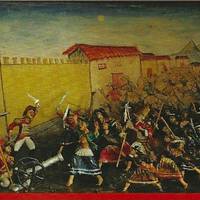
According to this book, Peru's Armed Forces have been unjustly accused by the CVR and NGOs for the atrocities committed between 1980 and 2000. Quote from the book: "The biased …
Books & Articles
539 documents in Truth and Reconciliation Commission - Peru
Human Rights organizations and relatives of victims of the internal conflict commemorated today, August 28, the 15th Anniversary of the delivery of the CVR report, paying a heartfelt tribute to …
The Internal Armed Conflict in Peru left more than 69,000 people killed and disappeared, both by subversive groups and by the Armed Forces. The CVR's final report recorded the identity …
The Justice sector identified, by name, more than 20,000 persons who disappeared between 1980 and 2000. The registry will be publicly accessible and will serve to continue the search for …
Informational brochure published by the General Directorate for the Search of Disappeared Persons of the Ministry of Justice and Human Rights of Peru, explaining what the work of the National …
The Ministry of Justice and Human Rights of Peru presented the first base list of the National Registry of Disappeared Persons and Burial Sites (RENADE), compiled by the General Directorate …
The number of persons who disappeared during the internal armed conflict experienced between 1980 and 2000 rose to 20,329, according to the first official list of victims released by the …
Framework document containing the guidelines for the process of searching for disappeared persons, known as the "National Plan for the Search for Disappeared Persons" (PNBPD), which falls within the public …
Full text of Legislative Decree 1398, enacted on September 8, 2018. The purpose of this regulation is to create the Genetic Data Bank to contribute to the identification of persons …
The Executive Branch officially formalized today the creation of the Genetic Data Bank for the search and identification of disappeared persons in Peru during the period of violence from 1980 …
I strongly recommend the recent book by Carlos Tapia on the period of political violence and the fight against terrorism that affected the country (Tapia, Carlos 2018. Tiempos oscuros, 1983-1995. …
Yesterday, Panel A of the National Criminal Court found 10 of the 12 terrorists (the reading of Moïsés Límaco's sentence was suspended because he is outside the country, while Elizabeth …
On June 21, 2016, Law 30470, the Law on the Search for Disappeared Persons during the Period of Violence 1980–2000, was enacted, marking a paradigm shift in state intervention by …
Ten days before she died, on August 18, the Poder Judicial confirmed that in 1983 her son, Arquímedes Ascarza, had been disappeared by a group of soldiers from the Los …
On August 28, 2017, Huamanga awakens to a brilliant Andean sun illuminating the tile rooftops surrounding the Plaza de Armas of the city. The atmosphere is as calm as any …
Lifetime testimony of Mamá Angélica. Spanish transcription of the testimony given by Angélica Mendoza, Mamá Angélica, about the disappearance of her son Arquímedes Arquímides Ascarza Mendoza. Published on September 1, …
The following audio is a posthumous tribute to doña Angélica Mendoza de Ascarza, known as Mamá Angélica, an exemplary mother who leaves us an enormous lesson of struggle and tireless …
"Maypi kachkanki Arquímedes?" "Where are you, Arquímedes?" What I remember about mamá Angélica are her eyes of unfathomable sadness. That last time I interviewed her, in 2015. Her husband had …
The Ayacucho guitar plays and the mothers of the disappeared sing in Quechua to 'Mamá Angélica,' the founding mother, the great mother. At the cemetery of Huamanga, on the afternoon …
"Mamá Angélica" begins her final journey tomorrow. Precisely on the International Day of the Victims of Enforced Disappearances, Angélica Mendoza de Ascarza will be buried in the cemetery of Huamanga, …
"Courageous mother, woman of a thousand battles, beautiful mother, unshakeable woman, your struggle is our struggle, your tears are our tears, you fought for 30 years in hard battles against …
Without a doubt, Angélica Mendoza de Ascarza was one of those women who, against all odds in the world, believed in justice and fought for it. I will not recount …
A native of Ayacucho, her name was Angélica Mendoza Ascarza, but Peru knew her simply as "Mamá Angélica." Until the age of 88, when life gave out, she never stopped …
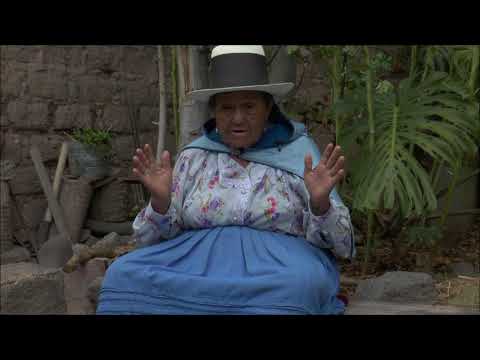
On the afternoon of August 28, Angélica Mendoza died, better known as "mamá Angélica," a woman who fought for more than 30 years over the disappearance of her son Arquímides …
Ten days after the ruling that convicted the military personnel from the 'Los Cabitos' barracks who disappeared her son, María Angélica Mendoza de Ascarza died in Ayacucho without ever finding …
The mother of one of the victims kidnapped and disappeared at an Ayacucho military barracks died at the age of 88, after a long fight to find justice. For 34 …
Angélica Mendoza de Ascarza, known as "Mamá Angélica," died at the age of 88. She was a woman from Ayacucho who became the symbol of families of the disappeared during …
Angélica Mendoza, who for more than three decades searched for her son kidnapped by Peruvian security forces and became a symbol for families of the disappeared, died at the age …
Peruvian social leader Angélica Mendoza viuda de Ascarza passed away on Monday afternoon in a public hospital in Ayacucho, the southern Andean region where she and her children were born …
Peru will have a genetic database to help in the search for persons who disappeared during the internal conflict that affected the country between 1980 and 2000 — a figure …
Former terrorist leader Martha Huatay left the Ancón II prison yesterday after serving a 25-year custodial sentence, drawing the attention of various media outlets and the concern of the entire …
The alleged crimes of aggravated homicide in the form of murder with ferocity and by explosion, for which 35 former naval officers are being prosecuted in the El Frontón Case, …
Research measuring how the Repared scholarship program has been functioning — a program that covers higher, technical, and university education studies at public and private institutions in Peru for victims …
Text that presents and summarizes the research. "The elaboration of the book La violencia política en el Perú 1980-2000. Sendero Luminoso contra el Estado y la sociedad (Paris, L'Harmattan, May …
If Abimael Guzmán were to die tomorrow, the government should hand his body over to his immediate family. In the absence of living children or parents, Iparraguirre should grant power …
The Coordinadora Nacional de Derechos Humanos (CNDDHH) expresses its greatest satisfaction at the ruling issued by judge Hugo Rodolfo Velásquez Zavaleta, presiding judge of the Fifth Specialized Constitutional Court of …
This pedagogical guide aims to orient the use of the photo book "Yuyanapaq: para recordar" [Yuyanapaq: To Remember] for educational purposes, helping teachers use the book in the classroom and …
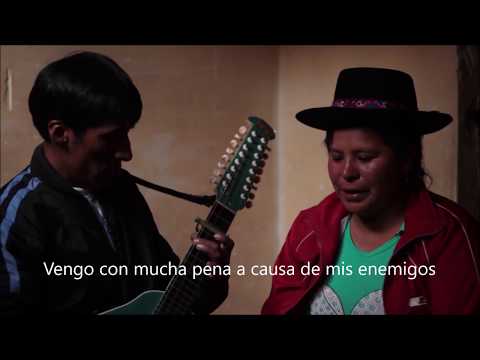
During the period of political violence that Peru experienced at the end of the 20th century, the repression of activism at several public universities was accompanied by a strong stigmatization …
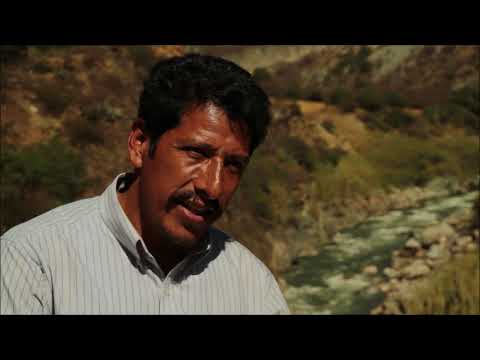
The Inter-American Court of Human Rights (IACHR) orders the Peruvian State to pay $60,000 in compensation to a female terrorist who was raped and tortured by the police in 1993.
We all have imprinted in our minds that heroic afternoon when a group of brave commandos stormed the residence of the Japanese Ambassador to rescue seventy-two hostages alive. After one …
The present research — Entre el estigma y el silencio: memoria de la violencia entre estudiantes de la UNMSM y la UNSCH — deals precisely with one of the institutions …
This collection of testimonies gathered and selected by the author during his time in Ayacucho between 1987 and 1991, in the midst of the internal armed conflict, constitutes a valuable …
NOTE FROM THE FUNDACIÓN HERBERT MOROTE. One of the objectives of the Biblioteca Virtual de la Verdad y la Reconciliación Perú (1980-2000) is to make available to interested parties books …
Ombudsman Report No. 162, "Ten Years of Truth, Justice and Reparation. Progress, Setbacks and Challenges of an Unfinished Process," accounts for the efforts undertaken after the delivery of the final …
The period of political violence and the fight against terrorism left very deep wounds in Peruvian society. The violence affected everyone, including the actors of the justice system, who were …
The book of memory, or the comings and goings of Lurgio Gavilán's life in the maelstrom of violence. Ramón Pajuelo Teves — review of "Memorias de un soldado desconocido. Autobiografía …
He was a terrorist, a soldier, a Franciscan novice, and today he is an anthropologist. Lurgio Gavilan speaks about his autobiography published under the title "Memorias de un soldado desconocido. …
The remarkable story of the brigade that, over four years, seeded informants throughout the tight-knit inner circle of "Alipio" and "Gabriel." A red cap was the lure. The police informant …
Showing 1–50 of 539 documents
Timeline Events 50
-
Constitutional Court ruling on unconstitutionality of anti-terrorist decrees
The Constitutional Tribunal of Peru issued a ruling declaring unconstitutional various articles of Decree Laws No. 25475, 25659, 25708, 25880 and 25744, related to anti-terrorist legislation. This ruling questioned fundamental aspects of the emergency legislation enacted after the 1992 coup d'état, including the violation of the principle of legality, the …
-
Disappearance in Putaqa
A female affiant recounts the disappearance of her son and husband in Putaqa, San Miguel, La Mar, Ayacucho. The testimony was collected in December 2002 in Ayacucho. The affiant describes the situation of extreme poverty in which she was left after these events, pointing out that her daughter suffers from …
1 docs -
Medical Report N°081 from the Instituto Materno Perinatal on pregnancy of María Magdalena Monteza Benavides
The Maternal Perinatal Institute of the Ministry of Health (Maternidad de Lima) issued Medical Report No. 081 on October 11, 2002. This medical report was used as evidence to determine the gestation time of María Magdalena Monteza Benavides. The document, together with Medical Record No. 3343 of the INPE Prison …
-
Tax ruling on the responsibility of MRTA members
On January 31, 2002, the Ad-Hoc Provincial Criminal Prosecutor's Office for Terrorism cases issued its opinion in which it stated that the criminal responsibility of the defendants for the commission of the crime against Public Tranquility in its modality of Terrorism, related to the kidnapping of Raúl Hiraoka Torres, has …
-
Report of the United Nations Working Group on Arbitrary Detention on its Mission to Peru
The United Nations Working Group on Arbitrary Detention issued a report on its mission to Peru, evaluating the situation of detentions and anti-terrorist legislation. The report noted that the crime of treason as a crime in law has nothing to do with terrorism, calling it an obvious abuse of language …
-
Presidential pardon to María Magdalena Monteza Benavides
On June 6, 1998, the President of the Republic granted a pardon to María Magdalena Monteza Benavides through Supreme Resolution Nº105-98-JUS, on the recommendation of the Ad Hoc Commission created by Law 26655. The Commission established a reasonable presumption that María Magdalena Monteza Benavides was not linked to terrorist activities, …
4 docs -
Administrative Resolution N°001-97 on Superior Corporate Criminal Court for Terrorist Crimes
Administrative Resolution No. 001-97, issued on December 12, 1997, established the Superior Corporate Criminal Court in charge of trying cases for the crime of terrorism. This resolution was part of the anti-terrorist legal framework implemented during the government of Alberto Fujimori. The creation of this specialized court was part of …
-
Supreme Decree No. 005-97 on prison regime for terrorism and treason
Supreme Decree No. 005-97, promulgated on June 24, 1997, established the Regulations for the regime of life and progressive treatment of inmates for terrorism and treason. This norm was part of the anti-terrorist legislation implemented during Alberto Fujimori's government. The decree regulated the conditions of confinement and the specific penitentiary …
-
MRTA assault on Japanese ambassador's residence
At 8:35 p.m., a commando of 14 MRTA members stormed the residence of the Japanese ambassador, Morihisa Aoki. Two hours after the takeover, the MRTA members allow the women and elderly to leave, but hold about 490 hostages. MRTA demands that the government release all MRTA prisoners. The crisis would …
2 media 14 docs -
Law No. 26590 amending Decree Law No. 25475
Law No. 26590, enacted on April 18, 1996, added a subsection to Article 13 of Decree Law 25475, which was the main anti-terrorist law in force since 1992. This modification is part of the set of anti-terrorist laws enacted during the government of Alberto Fujimori, which established an exceptional regime …
-
Release of innocent people by pardon
Between 1996 and 1999, the Peruvian State had to pardon 502 people unjustly convicted of terrorism and treason. This was a consequence of the serious errors committed by the system implemented to prosecute the accused, which violated elementary principles of due process. The magnitude of these errors demonstrated the structural …
3 media 19 docs -
Ley de Interpretación Auténtica y Eventos de Violencia Política en Perú
In 1996, the Peruvian legislature was reshuffled in favor of the ruling party, which led to the approval of Law No. 26657, known as the Authentic Interpretation Law, which paved the way for the reelection of President Alberto Fujimori. That same year, the Ad Hoc Commission was created to review …
-
Capture of Miguel Rincón Rincón and Lori Berenson
Miguel Rincón Rincón, an important member of the MRTA leadership, is captured together with Lori Berenson. The existence of a plan to take over Congress is discovered. Both are sentenced to life imprisonment. The sentence is issued on January 11, 1996. Rincón Rincón is imprisoned in the Callao Naval Prison.
3 docs -
Law No. 26537 on faceless court terms
Law No. 26537, enacted on October 13, 1995, established a new term for faceless tribunals in Peru. This law was framed within the anti-terrorist legislation of Alberto Fujimori's government, which had implemented these special tribunals after the 1992 coup d'état. The faceless courts were a distinctive feature of the Peruvian …
-
Approval of General Amnesty Law 26479 by Congress
The Congress approves with 47 votes in favor and 11 against the General Amnesty Bill (26479) which will benefit those sentenced for criminal acts during the fight against terrorism and the attempted coup of November 13, 1992. The law also includes acts of infidelity and insult to the nation and …
19 docs -
Law No. 26447 on the end of faceless tribunals
Law No. 26447, enacted on April 21, 1995, put an end to faceless courts in Peru. This law was part of the anti-terrorist legislation of Alberto Fujimori's government. The faceless tribunals had been implemented after the coup d'état of April 1992 as part of the scheme for trying crimes of …
1 docs -
Supreme Decree N°01-95 on the presentation of detainees
Supreme Decree No. 01-95, promulgated on January 6, 1995, prohibited the public presentation of those detained for terrorism. This measure was part of the set of anti-terrorist norms implemented during the government of Alberto Fujimori, specifically during his first presidential term (1990-1995). The decree was part of the emergency legislation …
-
Law No. 26345 on the term of validity of the repentance law
Law No. 26345 was enacted on August 30, 1994 during the government of Alberto Fujimori. This law established the term of the law of repentance, which was part of the anti-terrorist legal framework implemented after the 1992 coup d'état. The Law of Repentance was a rule of penal law that …
-
Modification of terrorism conviction by the Supreme Court
The Supreme Court of Justice modified the sentence imposed on María Magdalena Monteza Benavides for the crime of terrorist collaboration. Originally, on June 18, 1993, the Special Terrorism Chamber of the Superior Court of Lima had sentenced her to twenty years imprisonment. The Supreme Court reduced the sentence to fifteen …
-
Promulgación del Decreto Ley 25744 en Perú
Decree Law 25744, enacted in Peru, established an unconstitutional extension of the police detention period for the crimes of terrorism and treason. This law allowed the Peruvian National Police to preventively detain suspects for more than fifteen days, with the possibility of extending the term, which was criticized for violating …
-
Law N°26248 modifying decrees on terrorism
Law No. 26248, enacted on November 25, 1993, modified Decree Law 25659 on treason and Decree Law 25475 on terrorism. This law was part of the set of anti-terrorist regulations enacted during the government of Alberto Fujimori after the 1992 self-coup. The law was part of the emergency legislation that …
-
Birth Certificate N°2852 - Daughter of María Magdalena Monteza Benavides
On August 14, 1993, Birth Certificate N°2852 was issued by the Chief of the Civil Registry of the Municipality of Metropolitan Lima, corresponding to K.E.M.B., daughter of María Magdalena Monteza Benavides. The minor was born on July 14, 1993 at the Perinatal Maternal Institute of the Ministry of Health (Maternity …
-
Dynamite attack on Yamobamba hydroelectric power plant
On July 18, 1993, the PCP-Sendero Luminoso carried out a bomb attack that completely destroyed the Yamobamba hydroelectric plant, which supplied electricity to the city of Huamachuco. As a result of the attack, the entire city was without electricity for more than 8 months. This attack took place in the …
-
Birth of daughter to María Magdalena Monteza Benavides
On July 14, 1993, María Magdalena Monteza Benavides gave birth to her daughter K.E.M.B. in the context of her detention. The pregnancy was the result of a multiple rape suffered during her clandestine detention by members of the Army in October 1992. The child was conceived around the last days …
-
Special Terrorism Court convicts María Magdalena Monteza Benavides
On June 18, 1993, the Special Terrorism Chamber of the Superior Court of Lima sentenced María Magdalena Monteza Benavides to twenty years imprisonment for the crime of terrorist collaboration, based on the police investigation. On March 11, 1994, the Supreme Court of Justice modified the sentence and sentenced her to …
-
Supreme Decree No. 015-93, repentance regulation
Supreme Decree No. 015-93, promulgated on May 8, 1993, established the regulations for the law of repentance in the context of the anti-terrorist legislation of Alberto Fujimori's government. This norm regulated the procedures and conditions under which persons convicted or prosecuted for terrorist crimes could benefit from sentence reduction, exemption …
-
Acquittal of San Ignacio forest defenders
The Specialized Chamber of the Superior Court of Justice of Lambayeque issued a sentence acquitting the eleven defendants. The Court considered that the National Police proceeded in an unusual manner and without a correct evaluation of facts and evidence, that it was not established with certainty that the defendants were …
2 docs -
Statement of María Magdalena Monteza Benavides in the prison on torture and rape
On February 20, 1993, María Magdalena Monteza Benavides made a statement at the Lima police station. During this statement, she denounced having been subjected to physical and psychological torture, including rape, by members of the Peruvian Army during her detention on October 30, 1992. This statement was made in the …
2 docs -
Detention and torture of university students in Peru
During the internal conflict in Peru, university students were detained and tortured on suspicion of terrorism. National universities, especially the Universidad Nacional de Educación Enrique y Valle (La Cantuta) and others, were targeted. In 1993, one witness reported the detention of an individual in Piura, who was accused of terrorism …
-
Decree Law No. 25916 on Prison Benefits
Decree Law No. 25916, enacted on December 2, 1992, maintained the prohibition of penitentiary and procedural benefits for persons convicted of terrorism. This norm was part of the anti-terrorist legislation enacted after the coup d'état of April 1992. The decree eliminated rights such as parole, semi-liberty, probation, redemption of sentences …
-
María Monteza's statement on pregnancy status
On November 23, 1992, María Magdalena Monteza Benavides declared before the judge that she believed she was pregnant. This fact has been argued in different instances as proof of the rape suffered during her detention. Subsequently, a medical examination showed that Magdalena was in fact approximately eight and a half …
-
Forensic Medical Certificate N°39050-L - Examination of María Magdalena Monteza Benavides
Forensic medical examination requested by DINCOTE to María Magdalena Monteza Benavides, issued by doctors Yolanda Cáceres Bocanegra and Judith Maguiña Romero of the Institute of Forensic Medicine of Peru. The examination showed ecchymosis and swelling in the left knee that did not require disability. This certificate was one of several …
-
Prosecutor charges Magdalena Monteza Benavides for terrorism
On November 13, 1992, the provincial prosecutor filed a formal complaint against María Magdalena Monteza Benavides for the crime of terrorism in the form of collaboration. This act took place after Magdalena was detained, tortured and allegedly raped by members of the Army. On the same day a forensic medical …
-
Medical examination of María Magdalena Monteza Benavides by the National Police.
The medical examination performed by the Peruvian National Police on María Magdalena Monteza Benavides resulted in the presence of small ecchymosis on the left knee anterior face, considered as a recent injury, with no old injuries observed. Forensic Medicine Report No. 11605/92 concluded that the person presented signs of recent …
-
María Magdalena Monteza Benavides transferred to DINCOTE after detention and torture
On November 3, 1992, four days after her initial detention by military personnel from the Intelligence Department of the 1st Division of the Army's Special Forces, María Magdalena Monteza Benavides was handed over to the National Directorate against Terrorism (DINCOTE). During her previous detention in military facilities, Monteza was subjected …
1 docs -
Senior prosecutor's indictment in San Ignacio case
The Superior Prosecutor of Lambayeque indicted the defendants for the crimes of terrorism, homicide, serious injuries, minor injuries, robbery and damages. He stated that the defendants and other unidentified terrorists belonging to MRTA entered the INCAFOR camp with firearms and dynamite, proceeding to set fire to machinery and houses, and …
-
Final Report questioning accusation of terrorism in San Ignacio case
The head of the First Specialized Criminal Court of Chiclayo issued her Final Report contradicting the Prosecutor's Opinion. She questioned the way in which the proceedings aimed at proving the alleged commission of the crime of terrorism were carried out and concluded that the events that took place in the …
-
Promulgation of Decree Law 25728 - Power to convict in absentia
Decree Law 25728, published on September 18, 1992, established the power of the courts to convict in absentia persons accused of terrorism and treason. The norm stated that given the nature of these crimes and the serious damage they cause to the country, the courts were empowered to convict without …
5 docs -
Prosecutor's criminal responsibility ruling in the San Ignacio case
The Eighth Criminal Prosecutor's Office of Chiclayo issued an opinion stating that the defendants were criminally responsible for committing the crime of terrorism. This opinion contradicted the evidence that would later lead to the acquittal of the defendants, and was part of the irregular judicial process followed against the defenders …
-
Decree Law No. 25728 on Convictions in Absentia
Decree Law No. 25728, enacted on September 18, 1992, empowered the courts to convict in absentia persons accused of terrorist crimes. This law was part of the anti-terrorist legislation enacted after the coup d'état of April 1992. The decree was part of a package of emergency laws that substantially modified …
-
Supreme Resolution N°114-92 on visits to inmates on terrorism charges.
Supreme Resolution No. 114-92, enacted on August 14, 1992, approved the Regulations for Visits to inmates for the crime of Terrorism. This regulation was part of the set of decree laws issued after the coup d'état of April 1992, which established a restrictive legal framework for persons accused or convicted …
-
Decree Law No. 25659 creating the crime of treason.
Decree Law No. 25659 of August 13, 1992 created the crime of treason, denaturalizing its traditional conception and limiting it to a legal denomination of the aggravated type of the crime of terrorism. The law established that treason is committed by those who use car bombs, explosive devices or weapons …
2 docs -
Creation of the crime of treason
In August 1992, the Peruvian Executive Branch created the crime of treason through anti-terrorist legislation. This crime punished with life imprisonment the leaders or leaders of subversive groups or those who participated in or collaborated with the carrying out of attacks through the use of explosive or similar materials. This …
-
Attack on Tarata Street, Miraflores
The horrendous attack in Tarata Street, Miraflores, perpetrated by Sendero Luminoso (Shining Path) took place. Gustavo Gutiérrez wrote about the horror that turns taciturn and the falsehood that wears out the language as an effect and cause of the cervical fear and radical distrust that advances unstoppable in the country. …
3 media 10 docs -
Car bomb in Tarata Street
On July 16, 1992, the PCP-Sendero Luminoso detonated a car bomb on Tarata Street, in the heart of the residential district of Miraflores in Lima. This action was part of the Shining Path's strategy of "sounding board" and "strategic balance" that sought to demonstrate their ability to strike even in …
1 media 5 docs -
Attack on Tarata
The Tarata attack occurred on July 16, 1992 in Lima. According to the CVR report, this attack was part of a wave of Shining Path violence that culminated after the police intervention in the Canto Grande prison between June 6 and 9, 1992, which resulted in the assassination of prominent …
5 docs -
Explosion in Tarata Street
On July 16, 1992, a car bomb exploded on Tarata Street in the Miraflores district of Lima. This attack occurred in a context of intensifying violence in the capital, where the subversive groups Sendero Luminoso and MRTA increased their actions by carrying out continuous attacks against public and private entities. …
3 media 9 docs -
Car bomb in Tarata
Car bomb attack perpetrated on Tarata Street in the Miraflores district of Lima. This attack was part of the escalation of violence by the PCP-Sendero Luminoso during 1992, a year in which the subversive organization intensified its terrorist actions in the capital. The attack occurred a little more than a …
1 media 5 docs -
Opening of investigation against San Ignacio's forest defenders
The Eighth Specialized Criminal Court of Chiclayo opened an investigation against the ten residents of San Ignacio arrested on June 27, accusing them of the crime of terrorism against the State. The opening order stated that they had seized dynamite, explosives, PCP pamphlets and other items. Despite the fact that …
4 docs -
Tarata bombing
Terrorist car bomb attack on Tarata Street, the most serious car bomb attack carried out by Shining Path in Lima. Through these attacks, the Shining Path accelerated its offensive on the capital while calculating the possibility of a U.S. intervention that would unleash a war of national liberation in the …
8 media 16 docs
Photos & Videos 50
Tribute to Mamá Angélica - Part II
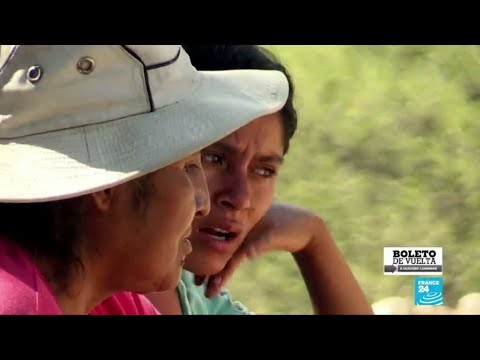
Peru: what remains of the Shining Path guerrilla?
Tribute to Mamá Angélica - Part I
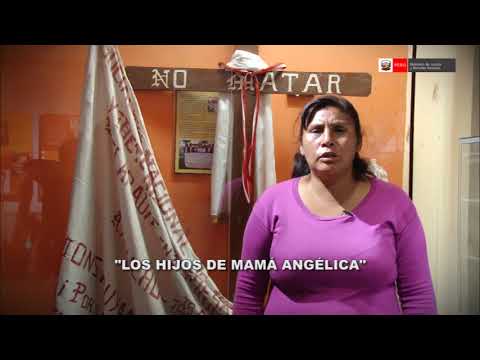
Tribute to Mamá Angélica
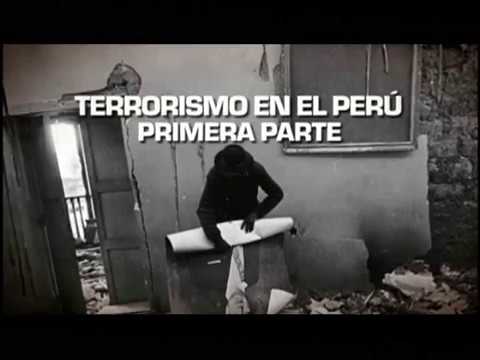
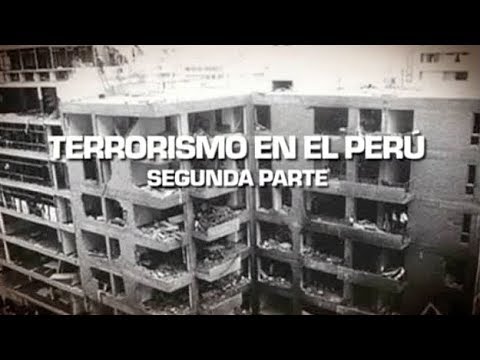
Terrorism in Peru - Part I
Operation Victoria - Documentary
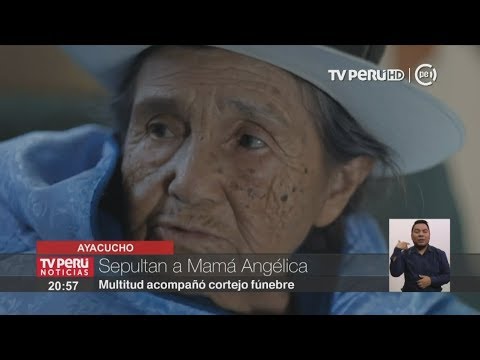
Ayacucho: 'mamá Angélica' is buried with a massive funeral procession
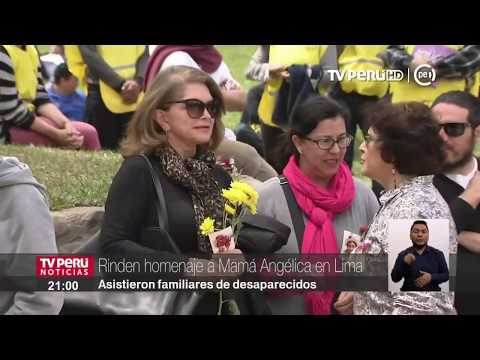
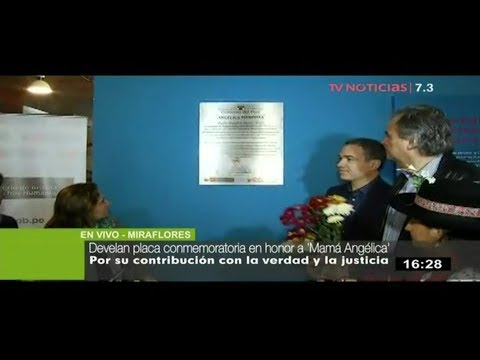
Tribute paid to 'mamá Angélica' in Lima
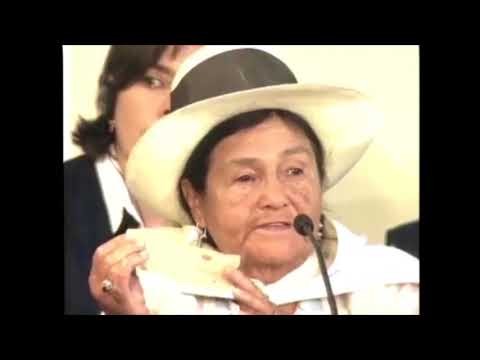
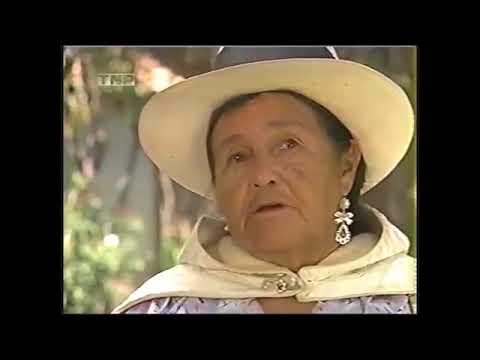
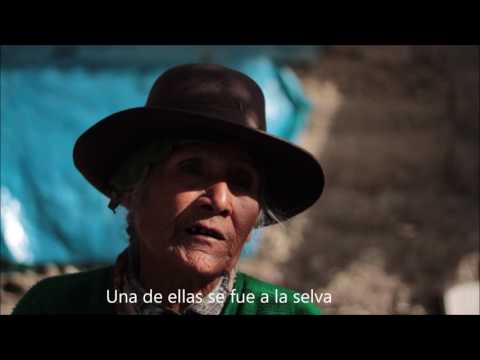
'Mamá Angélica' recounts the kidnapping of her son, Arquímides Escarza, in 1983
Abimael and the birth of Shining Path
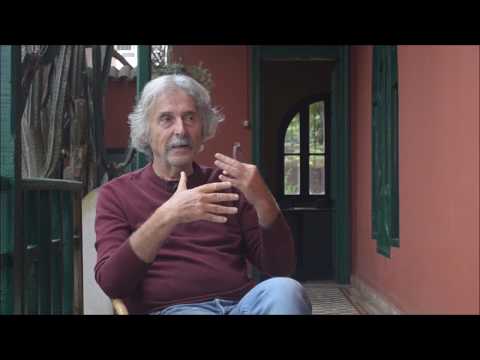
Interview with Marks Willem
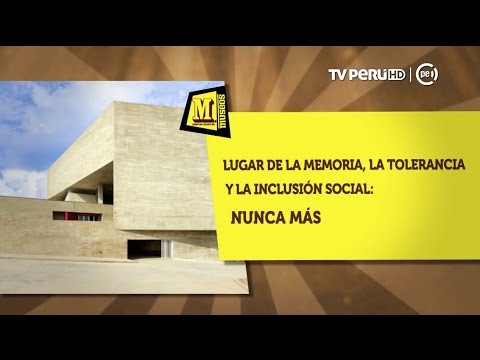
Place of memory, tolerance and social inclusion
Terrorism in Peru - Part II
Government ministers participated in posthumous tribute to "mamá Angélica"
Documentary about 'Mamá Angélica', a courageous woman from Ayacucho
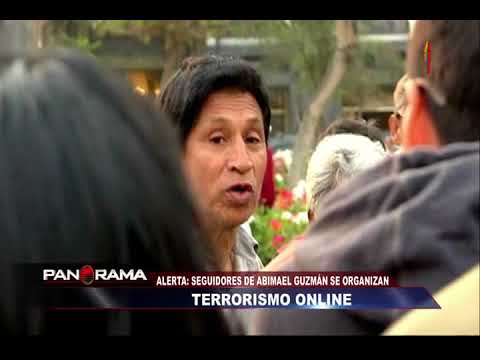
Online Terrorism: followers of Abimael Guzmán spread terrorist discourse
"Mama Anqui" (Angélica Mendoza): in memory
Ayacucho: Justice and Culture ministers attended the wake of 'Mamá Angélica'
Island - Documentary
Mamá Angelica "Memory for the absent"
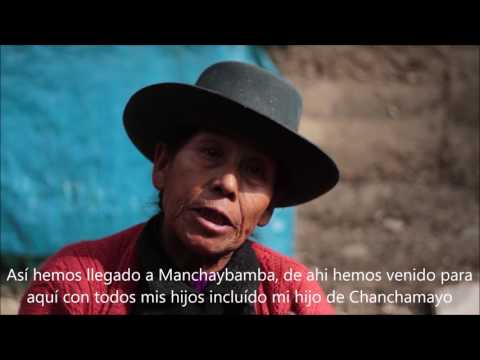
Willakusqaykichik kunan (I want to tell you something) - Documentary
Testimony of Yasmina Fuentes Tello
Puntaman puririsu (We keep moving forward) - Documentary
Testimony of Juana Bustos Huamaní
Testimony of Cecilia Barrios Alarcón
Testimony of Gladis Felicitas Tello Merino
Testimony of Eugenia Quispe Sánchez
Testimony of Faustina Huamán Junco
Testimony of Cirila Súñiga Quispe
Testimony of Evaristo Contreras Huamán
Testimony of Simeón Alarcón Santi
Testimony of Toribia Casa Carrasco
Testimony of Igidia Arullca Oscco
Jaynapuncha Pajarin (Yesterday and tomorrow)
Sanctuary - Documentary
Achka Illaki kallpanchawaraku (So much pain gave us strength and courage) - Documentary
Lirio Qasa - Song
Testimony of Ramiro Niño de Guzmán
Testimony of Eugenia Altamirano Huamán
Warmicha (Women) - Documentary
Testimony of Víctor Sánchez Marca
2012
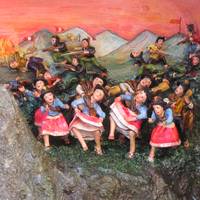
RETABLO. LUCÍA (DETAIL)
2012
RETABLO. PASÑACHA
2012
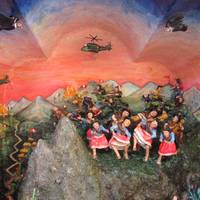
RETABLO. DETAIL 2. WAILLAKIS PURMACKAN
2012
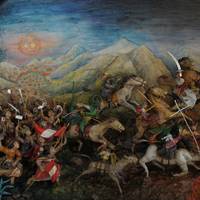
RETABLO. DETAIL OF MY MEMORIES
2012
RETABLO. MY MEMORIES
2012
RETABLO. WAILLAKIS PURMACKAN
RETABLO. DETAIL 1 OF THE CONDEMNED
2012
RETABLO. HORNS AND CLAWS
2012