Books & Articles
17 documents in Truth and Reconciliation Commission - Peru
Tag
apurímac
×
The CVR at More Than 3,600 Meters Above Sea Level: Tilting at Windmills?
Testimony of the research coordinator at the Sur Andina Regional Office for the Truth Commission regarding the difficulties encountered in his work.
Executive Allocates S/. 4 Million in Favor of Those Affected by Terrorism
Head of State Alan García Pérez transferred 3,998,904 soles to 28 local governments to carry out works in 7 regions of the country in favor of residents whose human rights …
5,001 Displaced Persons Have Been Registered and Accredited by MIMDES
The National Registry for Displaced Persons currently comprises 5,001 displaced persons who are in the process of resettlement in the cities of Huancayo, Lima, Ica, Puno, Ayacucho, and Apurímac — …
Lessons from the Andes: Local Reparation Experiences.
On the third anniversary of the delivery of the Final Report of the Truth Commission, the Asociación Paz y Esperanza presents nine successful experiences in reparation projects in communities in …
Will We Ever Reach the Victims?
A detailed assessment of the issue of reparations for victims of violence: from the proposals gathered in the Comprehensive Reparations Plan drawn up by the CVR, to the responses that …
Women's Memories (in the Internal Armed Conflict)
This document aims to collect, highlight, and restore value to women as human beings who acted during the violence experienced by the country. On the other hand, it seeks to …
Ombudsman's Report No. 77: EXTRAJUDICIAL EXECUTIONS: Cases Investigated by the Ombudsman's Office
This ombudsman's report constitutes a contribution to the process of truth and justice initiated in the country with the delivery of the Final Report of the Comisión de la Verdad …
The Displaced in Peru
With the publication of the book "Los desplazados en el Perú," the CICR aims to contribute to the efforts of many organizations and of the affected people themselves to place …
Assessment of the Displacement Process Due to Political Violence in Peru (1980–1997)
This report is a broad overview of the issue of displacement in Peru, based on the registry of NGOs from the Regional Roundtables that accompany displaced populations in the departments …
Ombudsman's Report
There are nearly 7,000 complaints of forced disappearance. The Defensoría del Pueblo has just published a very important investigation into the phenomenon of forced disappearance in Peru between 1983 and …
The Wanted Persons in Talavera de la Reyna
5,000, 8,000, 16,000 people wanted for terrorism? No one knows. How many are innocent? Impossible to know, but given those already identified, it is presumed there must be many. Since …
The Perpetual Pursuit. The Innocent Who Are Wanted
Among the many consequences of the internal war, that of persons unjustly placed under terrorism arrest warrants is one that went relatively unnoticed until recently. Being under an arrest warrant …
Assessment of the Process of Displacement Due to Political Violence in Peru 1980-1997 (National Workshop)
This report is an approximation of the topic: the correlation between the variable of political violence and population displacement in Peru between 1980 and 1997, based on records from the …
Warning Signal - Undertow
By midweek, Dincote's operational units had been virtually reconstituted, with a significant numerical reinforcement to the Delta groups and new logistics in communications, transportation, and intelligence resources both in Lima …
Showing 1–17 of 17 documents
Timeline Events 50
-
Disappearance and Family Trauma in Apurimac
In December 2002, a testimony from Lima recounts the disappearance of a child in Patas, Curahuasi, Apurimac. This event is part of a broader narrative of family trauma and loss, where the death of a parent leads to severe emotional distress and altered family dynamics. The community experiences deep psychological …
-
Testimony on father's murder in Tranca pata
A woman testified before the CVR about the murder of her father in Tranca Pata, province of Aimaraes, department of Apurimac. The testimony was collected in Sicuani in December 2002. This case is part of the documented testimonies that illustrate the psychological effects of violence, specifically related to mental health …
-
Disappearance of son in Patas
The affiant recounts the disappearance of his son in Patas, Curahuasi, Apurimac. The testimony was collected in Lima in December 2002. The father expresses the uncertainty and anguish characteristic of the relatives of the disappeared, stating: "Suddenly any night now he will come back", I just stop thinking. Then I …
-
Massacres in Ayacucho and Apurimac
In November 2002, testimonies were collected from women in Ayacucho who witnessed massacres in Ocros, Huamanga. Additionally, a couple testified about the death of their son in a massacre in Llocca, Ocros, Abancay, Apurimac. These events have left deep psychological scars on the survivors, manifesting in physical ailments and emotional …
-
Assassination and Its Aftermath in Haquira, Cotabamba, Apurimac
In September 2002, testimonies were collected regarding the assassination of a father in Haquira, Cotabamba, Apurimac. The event left the family in a state of orphanhood, with the eldest sibling taking on the responsibility of caring for younger siblings. The loss also had a profound impact on the community, particularly …
-
Testimony on mistreatment in the community of Anco, Antabamba
The affiant recounts the mistreatment he suffered in his community of Anco, Antabamba, Apurimac. As a consequence of the traumatic experiences lived during the internal armed conflict, the affiant reports serious physical and psychological sequelae. He specifically mentions suffering from heart pain, describing that it beats strongly and feels like …
-
Father murdered in Haquira
The witness recounts the murder of her father in Haquira, province of Cotabamba, department of Apurimac. The testimony was collected in September 2002. This case is part of the multiple murders of family members documented by the CVR in the Apurimac region during the period of political violence in Peru.
-
Testimony on murder in Apurimac
Testimony collected by the CVR in Apurimac during September 2002. The declarant narrates the murder of her father in the locality of Haquira, province of Cotabamba, department of Apurimac. This testimony is part of the documentation of cases of political violence in the Apurimac region during the internal armed conflict. …
1 docs -
Public Hearing in Abancay
Public hearing held by the Truth and Reconciliation Commission in the city of Abancay, department of Apurimac. During this hearing, case No. 10 was presented, in which testimonies related to the internal armed conflict and its consequences in the region were discussed. The testimony collected in this hearing refers to …
2 media 3 docs -
Death of authority in Chacña
A woman testifies about the death of her husband, who was an authority in the community of Chacña, province of Aimaraes, department of Apurimac. The testimony was collected in Sicuani in July 2002. The witness describes the deep emotional impact of the loss, stating that after her husband's death she …
-
Testimony on the death of husband who was an authority in Chacña
The affiant recounts the death of her husband who was an authority in Chacña, Aimaraes, Apurímac. The testimony reflects the profound emotional impact of the loss, expressing how the death of her husband completely changed her life. The affiant describes her emotional state after the event saying "I was like …
-
Mistreatment in Anco
The affiant recounts the mistreatment he suffered in the community of Anco, Antabamba, Apurimac. As a consequence of this mistreatment, the victim developed health problems, stating: 'I have heart pain, my heart beats hard, it almost covers me up, I have a lump when I think, when I have worries'. …
-
Violence almost nonexistent in Apurimac
From 1997 onwards, acts of violence were almost non-existent in Apurímac, except for propaganda actions. This marks the effective end of the internal armed conflict in the department.
-
PCP-SL harasses BAS Santa Rosa on Abancay-Chalhuanca highway
The PCP-SL harassed the Santa Rosa Anti-Subversive Base, located on the Abancay-Chalhuanca highway, province of Aymaraes. It would appear to be the last major action of the PCP-SL in Apurimac, marking the end of the cycle of violence in the region.
-
Attack by the PCP-SL against the Superior Court of Apurimac in Abancay
The PCP-SL attacked the premises of the Superior Court of Apurimac in the city of Abancay. This attack against an institution of the Judicial Power is evidence of the PCP-SL's strategy of attacking symbols of the State.
-
Rape of young girl resulting in pregnancy and death of baby in Antahuaycco
Seven armed subversives entered the affiant's house where they raped his daughter. They then took provisions and part of his animals. As a result of the rape, the young woman became pregnant but the baby died at birth. The case is evidence of sexual violence with serious consequences for the …
-
PCP-SL militants apply for Repentance Law in Cuzco
In August 1994, militants of the PCP-Sendero Luminoso began to take advantage of the Law of Repentance in the department of Cuzco. This process occurred after the capture of Abimael Guzmán and the internal division of the PCP-SL between the followers of the so-called 'Peace Accord' of December 1993 and …
-
PCP-SL harasses military base on Abancay-Chuquibambilla highway
The PCP-SL harassed the military base located on the Abancay-Chuquibambilla highway, in the province of Grau. This harassment is evidence of the continuity of armed actions by the PCP-SL against military installations.
-
Extension of state of emergency in Apurimac provinces
The state of emergency was extended for 60 days in the provinces of Chincheros, Andahuaylas, Abancay and Aymaraes. This extension is evidence of the persistence of the violent situation in the department of Apurimac.
2 media -
PCP-SL Peace Agreement
In December 1993, the so-called 'Peace Agreement' divided the PCP-Sendero Luminoso between the followers of Abimael Guzmán and the members of Sendero Rojo, headed by comrade 'Feliciano'. This agreement marks a breaking point in the subversive organization after the capture of its leader Abimael Guzman in September 1992. In Apurímac, …
3 docs -
Attack on Canchara hamlet, murders, arson and rape
There was an attack on the village of Canchara, in the province of Abancay. They killed the cattle, burned the houses and raped several women. This attack shows the brutality of violence against civilian populations.
-
Arrest of Juan Maya Montoya
On November 5, 1992, Juan Maya Montoya was arrested in the district of Chalhuanca, province of Aimaraes, department of Apurimac, when he went to receive his salary. A combination of the army and the police took him to DINCOTE where he was disappeared without giving any reason to his family. …
1 docs -
Events in Santa Rosa District
The text of the CVR report mentions the District of Santa Rosa, Province of Grau, Department of Apurimac in 1992, but does not provide specific details about the events that occurred in this location. The reference appears in a list of places and dates related to the internal armed conflict …
-
Concentration of violence in Antabamba and Aymaraes
In 1992, violent actions were concentrated in the provinces of Antabamba and Aymaraes. This concentration is evidence of the persistent presence of the PCP-SL in the high provinces of Apurímac despite the capture of Abimael Guzmán.
1 docs -
Santa Rosa confrontation
On July 30, 1991, there was a confrontation between the 'ronderos' (members of the Self-Defense Committees) of Santa Rosa and the PCP-Sendero Luminoso in the province of Grau, Apurímac. This confrontation is framed in the period of counter-subversive strategies (1989-1992), when the Armed Forces established an alliance with the peasantry …
1 docs -
Death of Rayda Maruja Dávalos Arias
Rayda Maruja Dávalos Arias was a union leader murdered in Apurímac during 1991. According to CVR records, she held the position of union leader in Trade Unions or Federations of Workers, workers or employees. Her death is part of the offensive of the PCP-Sendero Luminoso against social and union leaders …
-
Hikers raid and murder in the community of Huashua
In May 1990, a Shining Path column raided the community of Huashua, Apurimac, looting the belongings of the villagers. When the villagers tried to defend their clothes, food and animals, they were mistreated. Gregoria was beaten, her hands were stepped on and her feet were tied, fracturing her hands. Among …
-
Arrest and death of Víctor Huachaca Gómez in Huacullo
A military patrol arrived at the Ccochopata ranch in Huacullo and arrested Antonio Huachaca and two of his children. Later they detained 4 more people in a school. At dawn on April 21, the interrogations began, subjecting the detainees to torture. Víctor Huachaca Gómez was the first to be interrogated …
-
Military patrol death tour of Apurimac and Cusco communities
Between April 12 and May 1, 1990, a military patrol from the Antabamba base conducted a tour of the districts of Antabamba, Oropesa, Quiñota, Llusco and Santo Tomás in the provinces of Antabamba (Apurímac) and Chumbivilcas (Cusco). During this operation, the patrol raided peasant communities suspected of forming support bases …
1 docs -
Death threats to families to prevent the escape of recruits
The Shining Path constantly threatened the recruited youths, telling them 'you are going to cry, you have to fight, you have to be excellent like us' and 'don't even try to escape, because we are going to die and so are our families'. The murders were in front of everyone …
-
Separation of children from their families in camps
In the Shining Path camps, when people arrived from different sides, they would form and separate them into groups of 10. At the age of 11 or 12, the children were separated from their parents and from the 'masses' to join the future combat group. A 14-year-old girl recounts: 'When …
1 docs -
Disappearance of Mariano Huyhua and rape of his wife
On August 28, 1989, Mariano Huyhua Calluchi, a community delegate from Sañayca appointed by the military, was detained, tortured and disappeared by soldiers from the Capaya Base after being accused by community members of collaborating with terrorists. His relatives took food and drinks to the base to ask for his …
-
Kidnapping and death threat to priest José Viscardi in Tambobamba
The Italian priest José Viscardi was kidnapped and threatened with death in Tambobamba, Cotabambas province. This is evidence of the violence of the PCP-SL against representatives of the Catholic Church in rural areas.
-
Confrontation in Tambobamba
On May 6, 1989, there was a confrontation between the Peruvian Army and the PCP-Sendero Luminoso in Tambobamba, capital of the province of Cotabambas in Apurimac. This confrontation took place in the context of a new counter-subversive strategy implemented by the Armed and Police Forces, which established Counter-Subversive Bases and …
-
Rape at Capaya Base and disappearance of sister Elisa
In May 1989, Elisa was detained and taken to the Capaya Military Base, from where she sent a note asking for help, threatened with firing squad. Her sister (witness 500331) went to the base where a lieutenant tricked her, took her to a room and raped her threatening her with …
-
Clash between PCP-SL and army in Cotabambas, ADC formation
There was a confrontation between the PCP-SL and an army patrol in Cotabambas. From that moment on, Self-Defense Committees began to be organized in the different provinces of the department, as part of the counter-subversive strategy.
1 docs -
Organization of Self-Defense Committees in Apurimac
On April 12, 1989, Self-Defense Committees began to be organized in the various provinces of the department of Apurimac. This organization was part of a new counter-subversive strategy implemented by the Armed and Police Forces between 1988 and 1989, a period that saw the highest death toll of the internal …
4 docs -
San Francisco Showdown
On February 28, 1989, one of the most bloody confrontations between the Self-Defense Committees and the PCP-Sendero Luminoso took place in the community of San Francisco, province of Abancay, Apurimac. This confrontation resulted in the death of 30 ronderos (members of the Self-Defense Committees). The event occurred in the context …
1 docs -
Detention, torture and subsequent death of Bernardino Flores Arbieto
Bernardino Flores Arbieto was detained by 24 soldiers from the Capaya Base and taken to the base where he was severely beaten with the butt of a gun. According to the testimony of his wife Gertrudes Arbieto Huamaní, after the mistreatment her husband became ill, unable to work and with …
-
Testimony of sexual violence in Capaya
CVR testimony 205316 documents a case of sexual violence that occurred in the district of Capaya, province of Aymares, department of Apurimac in 1989. This testimony is mentioned in the context of a broader analysis of human rights violations during the internal armed conflict. The case is part of the …
2 docs -
Sexual violations in Capaya
In 1989, at the Capaya Military Base in Abancay, there were numerous systematic rapes against peasant women. A witness who was detained at the base witnessed mass rapes that took place during the night, where soldiers, including those in the watchtowers, demanded to participate in the rapes. The victims were …
-
Sexual violations at Capaya Military Base
During 1989, the Capaya Military Base in Abancay was the scene of numerous systematic rapes. A witness who was detained at the base witnessed mass rapes occurring at night, where soldiers in the towers demanded to participate in the rapes. The victims were mainly peasant women who were brought to …
-
Events in Province of Aimaraes
The CVR report records events that occurred in the Province of Aimaraes during 1989, in the context of the internal armed conflict in the Department of Apurimac. The document refers to testimony 500254 related to this province and year. However, the text provided does not offer specific details about the …
-
Aggression and threats to community members in Tamburqui by Army troops
Army personnel entered the community of Tamburqui and house by house removed the villagers, gathering them in the plaza. They forced the affiant and her neighbor to bring blankets and hides for the soldiers. When they returned to the plaza, the Chief of the soldiers told them 'Ah, you still …
-
Escape from Capaya barracks
One witness recounts that when he fled from the Capaya barracks in 1989, he was helped by a peasant in exchange for taking his daughter. The peasant was afraid of the soldiers because they raped and killed women, as had happened to his cousins. This testimony is evidence of the …
-
Massive emigration of Tambobamba residents due to violence
People from Tambobamba migrated en masse to Cuzco and Abancay since December 10, the day the PCP-SL killed three people in Mara and there were other executions in Haquira. This massive emigration is evidence of the terror generated by the subversive violence.
1 docs -
Assassination of CICDA aid workers in Haquira
On December 6, 1988, the PCP-Sendero Luminoso murdered three aid workers from the International Cooperation Center for Agricultural Development (CICDA) in the district of Haquira, province of Cotabambas, Apurimac. The victims were two French aid workers and a Peruvian, as well as two other people. This attack was part of …
1 docs -
Assassination of CICDA aid workers and villagers in Haquira
The PCP-SL killed two French and one Peruvian aid workers from the International Center for Cooperation for Agricultural Development (CICDA) in Haquira district, Cotabambas province. Two more people died in the incident. During the following month, the PCP-SL assassinated nearly 50 people in the highlands, including lieutenant governors, peasant leaders …
-
Murder of aid workers in Haquira
On December 5, 1988, a column of the Shining Path PCP took the town of Haquira in the province of Cotabambas, Apurimac. During this raid, the subversive group murdered two local villagers, two French aid workers and a Peruvian technician. The foreign victims and the Peruvian technician worked for the …
-
Haquira raid
A detachment of the PCP-SL raided the town of Haquira, in the province of Cotabambas, Apurimac, where they killed five people. This action was part of a PCP-SL campaign that lasted for almost three months throughout the border area between Cotabambas and Chumbivilcas. As a consequence of the murder of …
Photos & Videos 8
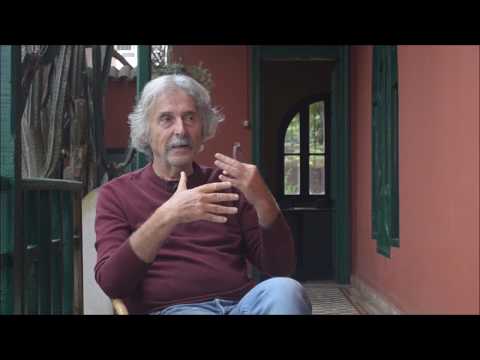
Interview with Marks Willem
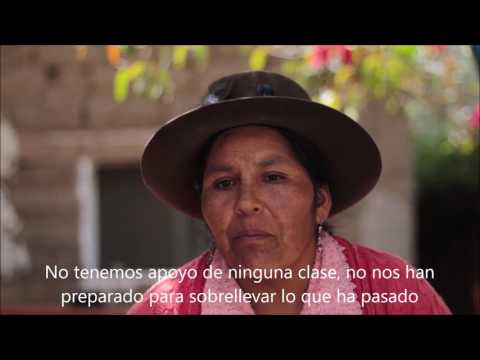
Testimony of Cirila Súñiga Quispe
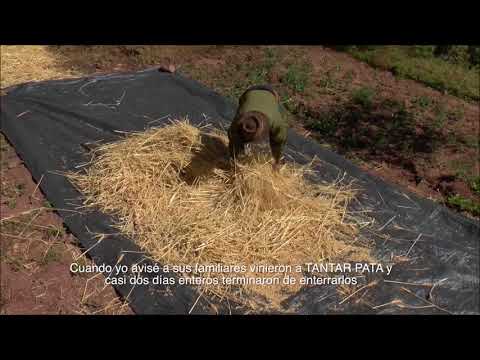
Willakusqaykichik kunan (I want to tell you something) - Documentary
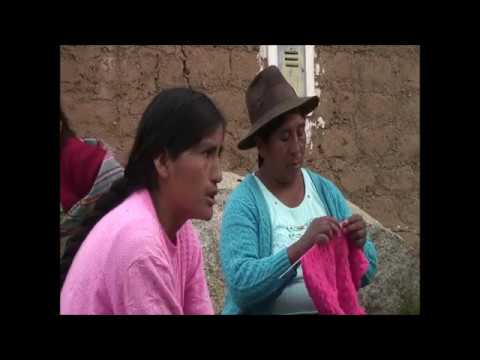
Warmicha (Women) - Documentary
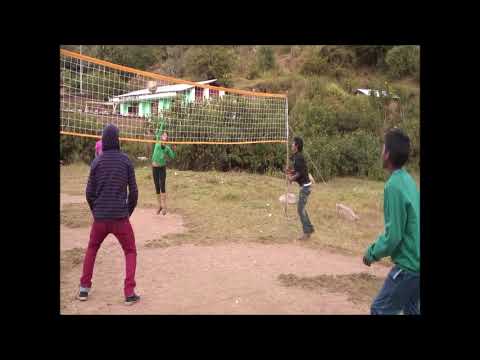
Jaynapuncha Pajarin (Yesterday and tomorrow)
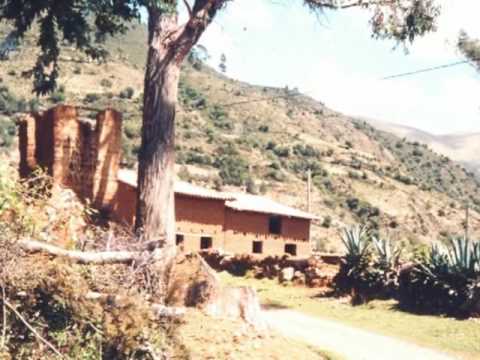
That place called Chaupiorcco. Mass grave.
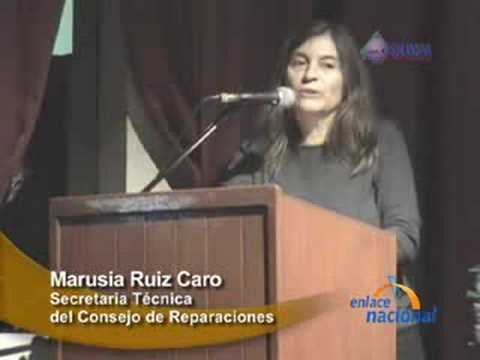
Apurímac government submits to the Reparations Council the list of victims of the internal armed conflict in the region