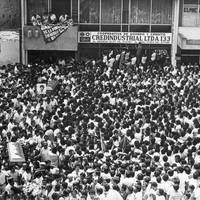
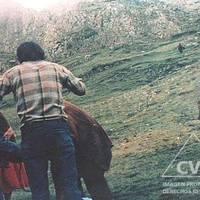
The eight journalists, martyrs of Uchuraccay, murdered on January 26, 1983, have always been justly honored; but what happened to their guide, Juan Argumedo, and to a community member, Severino …
Books & Articles
30 documents in Truth and Reconciliation Commission - Peru
Vargas Llosa bade farewell to Uchuraccay forever and never referred to the subject again, not even, as we recall, in his memoirs titled "El Pez en el Agua," perhaps because, …
On January 26, 1983, eight journalists and an Andean guide were brutally massacred by peasants from the community of Uchuraccay (Ayacucho) who had been trained and directed by the Peruvian …
It has been a long time since Mario Vargas Llosa has referred to Uchuraccay, that horrific episode in the history of Peru that, on January 26, 1983, cost the lives …
The writer and journalist Alfredo Pita recalls that fateful day when he arrived in Uchuraccay immediately after the massacre, about which clear answers are still lacking due to what has …
Thirty years ago (January 26, 1983), eight journalists went to Uchuraccay to try to find out what had happened a week earlier in Huaychau, and to determine whether the official …
On January 26, 1983, eight journalists were killed in a frigid community on the Ayacuchan highlands. The whirlwind of violence then spreading across Peru suddenly engulfed those who had traveled …
The following research captures each of the events that left us with reflection and above all a lesson about what it means to carry out journalistic work. Here, details of …
The report of the Truth and Reconciliation Commission shows us the twenty years of violence (1980–2000) that Peru lived through, during which the human rights of nearly seventy thousand Peruvians …
After twenty-two long years of legal maneuvering and even the alleged kidnapping of the main defendant, Army Captain Álvaro Artaza Adrianzén, alias "Comandante Camión," the forced disappearance of journalist Jaime …
Today we are at the moment of historicizing the era of violence in Peru. But this does not mean placing events and memories in the past in order to forget …
The events of Uchuraccay — which include the deaths of 135 peasants — allow us to approach the divides that continue to distort Peruvian society. We suggest that the quasi-sacred …
This work explores the scenario of violence and the ways in which the memory of Uchuraccay operates — a community that, after the massacre, became an emblematic reference point for …
The author states in this work: In 1989 I submitted this book (when it was 1,000 pages, 2 volumes) to CONCYTEC, which did not approve it, as that honor had …
On January 23, 1983, General Noel, then the political-military commander of the Ayacucho zone, announced to the press that the villagers of Huaychao had killed seven Senderistas. To find out …
17 years later, the wounds of Uchuraccay are still open. Widows and mothers of the journalists murdered in Ayacucho are outraged when they recall the injustice that the writer covered …
The dynamite attack against the local affiliate of channel 13 in Puno has been presented as a local dispute among regional power groups. But it seems more likely to be …
On January 26, thirteen years ago, the community of Iquicha, in the jurisdiction of Uchuraccay, was the scene of the massacre of eight journalists who, in their eagerness to document …
In the following pages OIGA offers its readers the complete report of the Investigative Commission on the Uchuraccay massacre. Aware of the historical value of this document, we have not …
Mario Vargas Llosa, president of the independent commission that investigated the murders of eight journalists in Ayacucho, believes that the recently discovered photographs confirm the commission's conclusions that the reporters …
Front page of El Comercio. Thursday, February 3, 1983.
Wednesday, February 2, 1983. Other headlines: Relatives did not allow the coffins to be used for political ends. Cardinal calls for an investigation into the Uchuraccai massacre. Condolence messages continue …
Front page of El Comercio. Monday, January 31, 1983. Other headlines: Due to a misunderstanding, comuneros confused them with terrorists.
Front page of El Comercio. February 2, 1983. Other headlines: Among them the Lieutenant Governor and several women. Lima gives a massive farewell to the murdered journalists. Relatives, upset at …
Before January 26, 1983, no one knew where Uchuraccay was — a locality in the province of Huanta, department of Ayacucho. After that date, it was discovered that it "existed," …
During the following months, Uchuraccay continued to be the scene of violence, death, and desolation: one hundred and thirty-five community members were killed as a result of attacks by the …
Showing 1–30 of 30 documents
Timeline Events 50
-
Disclosure of the Octavio Plan for surveillance of journalists
On April 30, 1999, Baruch Ivcher revealed in a telephone communication with CCN the existence of the Octavio Plan, documented by La República on May 10, 1999. Conceived in June 1996, the plan contemplated the surveillance and persecution of 20 journalists and media businessmen including Ivcher, Hildebrandt, Miró Quesada Cisneros …
1 media 2 docs -
I Encounter for Peace and National Reconciliation
On January 26, 1998, the 'I Encounter for Peace and National Reconciliation' was held in the community of Uchuraccay. This event was held in commemoration of the fifteenth anniversary of the death of the eight journalists murdered on January 26, 1983. The meeting was part of the national reconciliation efforts …
1 docs -
I Meeting for peace and national reconciliation
On January 26, 1998, in commemoration of the fifteenth anniversary of the death of the eight journalists murdered in Uchuraccay, the first peace and national reconciliation meeting was held. This event was promoted by a group of journalists from Ayacucho and the authorities of the Tambo district, who contacted the …
7 docs -
Disappearance of journalist Pedro Yauri Bustamante
Agents of the Peruvian Army detain and disappear journalist Pedro Yauri Bustamante in Huaura. This case represents one of the many forced disappearances of journalists during the internal armed conflict.
-
Murder of journalist Pedro Yauri in Huacho
On June 24, 1992, the Colina detachment assassinated journalist Pedro Yauri in Huacho. According to the testimony of a former member of the Colina detachment, Pedro Yauri was interrogated under torture but stood his ground before being executed. The case was reported to the PNP but the police and military …
2 docs -
Disappearance of journalist Pedro Yauri
Disappearance of journalist Pedro Yauri in Huaura, Lima. The case is attributed to the Colina Group, although the perpetrator has not yet been clearly identified.
-
Kidnapping and disappearance of journalist Pedro Yauri Bustamante
In 1992, journalist Pedro Yauri Bustamante was kidnapped and disappeared in Huacho. The crime occurred in the context of selective murders that took place in the coastal provinces since 1992, the year of Abimael Guzman's capture. The crime is presumed to have been committed by the paramilitary group "Colina". This …
-
Murder of journalist Gustavo Zúñiga
On August 30, 1991, journalist and Cambio 90 leader Gustavo Zuñiga was shot and killed by the PCP-Sendero Luminoso in the city of Juliaca. This assassination took place in the context of an upsurge of subversive violence in Puno during 1991, especially of urban annihilation commandos. The crime was part …
-
Arbitrary execution of journalist Luis Morales Ortega
On July 13, 1991, at approximately 8:45 a.m., journalist Luis Antonio Morales Ortega was intercepted and killed by two men as he was walking along the fifth block of San Martin Street in Huamanga. He was shot five times with a .38 caliber revolver. Morales Ortega was known for denouncing …
-
Murder of journalist Antonio Morales
Antonio Morales, a journalist known for his involvement in the Uchuraccay case and correspondent of El diario de Marka in Huamanga, Ayacucho, was murdered on July 13, 1991. Before his death, he had received death threats from the self-styled Comando de Liberación Antiterrorista (Anti-Terrorist Liberation Command). This murder took place …
1 docs -
Murder of journalist Luis Morales Ortega
Luis Morales Ortega, journalist, was murdered in July 1991 in the city of Huamanga. The crime was perpetrated by paramilitary groups in a context of intense urban violence in Ayacucho. This murder occurred during a period of high paramilitary activity against various sectors of the population, including university professors, students, …
-
Opening of criminal proceedings against officers for the murder of Hugo Bustíos
As a consequence of the murder of journalist Hugo Bustíos Saavedra, in May 1991 Army officers Víctor La Vera Hernández and Amador Vidal Sambenito were charged with the crime of homicide. Simultaneously, the Military Justice opened a judicial investigation the same month, initiating a dispute of competence that would eventually …
-
Raid on El Diario
The police carried out an unexpected and violent raid on the offices of the newspaper El Diario on November 2, 1989. During the operation, 15 workers and journalists of the newspaper were arrested. This raid took place in the context of the counter-subversive struggle, given that El Diario was considered …
-
Murder of Barbara D'Achille and Esteban Bohorquez
On May 31, 1989, 'El Comercio' journalist and environmentalist Barbara D'Achille, along with CORDE-Huancavelica official Esteban Bohorquez, were assassinated by the PCP-Sendero Luminoso in Tinyacclla, Huancavelica. This double assassination was part of the PCP-SL's 'hit list' during the 1989-1990 Shining Path offensive, a period in which the subversive group claimed …
-
Murder of journalist Barbara D'Achille
On May 31, 1989, El Comercio journalist Bárbara D'Achille was murdered by hikers in a mountainous area. D'Achille was not covering the armed conflict; she was traveling as a reporter specializing in ecology. Her murder demonstrated that journalists were at risk even when they were not directly covering issues related …
-
Murder of journalist Bárbara D'Achille and engineer Esteban Bohórquez
Italian journalist Barbara D'Achille, Head of the Ecology Section of the newspaper El Comercio, and engineer Esteban Bohórquez Rondón, Director of Special Projects of CORDE-Huancavelica, were intercepted by an armed group of the PCP-SL at the 'Martha' mine while traveling to the South American Camelids Project. They were detained and …
2 docs -
Murder of radio journalist in Tingo María
The Escorpio group, under the command of Captain EP Martin Rivas, murdered a radio journalist in Tingo Maria in April 1989. This crime was part of a series of criminal acts and crimes against humanity attributed to the group, which operated in collusion with military commandos and under the impunity …
2 media -
Murder of journalist Hugo Bustíos Saavedra and attack on Eduardo Rojas Arce
On November 24, 1988, journalists Hugo Bustíos Saavedra and Eduardo Yeny Rojas went to Erapata to investigate the murder of Primitiva Jorge Ayala and her son Guillermo Sulca Jorge by the Shining Path. They were ambushed by individuals in civilian clothes with white polo shirts who shot at them. Bustíos …
1 media 1 docs -
Murder of journalist Hugo Bustíos Saavedra
On November 24, 1988, in the hamlet of Erapata, province of Huanta, Ayacucho, Hugo Bustíos Saavedra, a journalist for the magazine Caretas, was murdered. This crime occurred in a context of intense political violence in the Ayacucho region, where both law enforcement and subversive groups were active. The murder of …
-
Death of Hugo Bustios Saavedra
Hugo Bustios Saavedra was violently murdered in Huanta in November 1988. His death occurred at the hands of the Peruvian Navy. This case is mentioned in the context of the selective assassinations that characterized the period, in contrast to the massive attacks on civilian populations of the previous period. The …
-
Murder of journalist Hugo Bustios Saavedra
Journalist Hugo Bustios Saavedra was murdered in Huanta by members of the Peruvian Army in November 1988. This murder occurred in a context of intensifying internal armed conflict in the region, during which multiple operations by groups linked to the intelligence services were carried out against journalists, teachers and other …
-
Complaint of threats from Comando Rodrigo Franco against journalist Morales
On August 8, 1988, journalist Luis Morales Ortega filed a complaint with the Superior Prosecutor's Office of Ayacucho for being a victim of threats by the paramilitary group 'Comando Democrático Rodrigo Franco' and a self-styled Anti-Terrorist Liberation Command. In his complaint, Morales indicated that he had been followed and that …
-
Final judgment in the second instance of the Uchuraccay case
The Supreme Court of Justice issued its final judgment in the second instance of the Uchuraccay case, increasing to 15 years the prison sentence of defendants Dionisio Morales Pérez and Mariano Ccasani Gonzáles for the crime of simple homicide, confirming the rest of the sentence of the Special Court. The …
2 docs -
Judgment of the Special Court on the Uchuraccay Case
The Special Court sentenced three peasants from Uchuraccay for the murder of eight journalists on January 26, 1983. Dionisio Morales Pérez was sentenced to 10 years in prison, Mariano Ccasani Gonzáles to 8 years and Simeón Auccatoma Quispe to 6 years, all for the crime of simple homicide. Although the …
3 media 3 docs -
Final court decision on the Uchuraccay case
The judiciary issued the final ruling in the criminal trial for the murder of eight journalists and two community members in Uchuraccay on January 26, 1983. The judicial process was extremely confusing and lengthy, lasting more than four years. The sentence convicted three peasants from Uchuraccay for murder: Dionisio Morales …
5 docs -
Condemnation of peasants for Uchuraccay massacre
Four years after the 1983 Uchuraccay massacre, the Correctional Court in charge of the case issued its conviction. The court convicted three peasants from the Ayacucho hamlet of Uchuraccay accused of the crime. This sentence came in March 1987, four years after the events that took the lives of eight …
1 media 2 docs -
Exhumation of Juan Argumedo's body
Juan Argumedo was one of the journalists murdered in the Uchuraccay massacre on January 26, 1983. His sister Juana Lidia Argumedo went to Uchuraccay with Judge Juan Flores Rojas on February 11, 1983 to perform the exhumation, but it could not be done because the body was not found. Some …
-
Oral trial with statements of mixed patrol in the Uchuraccay case
During the oral trial of the Uchuraccay case transferred to Lima, hearings were held between May and December 1986 in which members of the mixed patrol that arrived in Uchuraccay after the murder of the journalists on January 26, 1983 testified. The trial took place before the Special Tribunal that …
-
Constitution of Special Tribunal for the Uchuraccay case
In mid-April 1986, the Eighth Correctional Court of Lima became a Special Court dedicated exclusively to the Uchuraccay case. This tribunal was presided over by a doctor whose name is not fully specified in the excerpt. The Special Tribunal was constituted after the trial was transferred from Ayacucho to Lima …
-
Report on disappearance of journalist Jaime Ayala Sulca
On March 4, 1986, Lieutenant Commander AP Alvaro Artaza Adrianzén disappeared just before the trial against him for the Ayala case began. He was to be the first officer to be tried for the disappearance of journalist Jaime Ayala Sulca. The report mentions sub-officer Lince (second warrant officer AP Román …
-
Shining Path threat against journalist Luis Morales
In 1986, journalist Luis Morales Ortega received a death threat from the PCP-Sendero Luminoso urging him to disseminate a communiqué announcing upcoming 'executions' against six people considered 'undesirable'. The letter ended by threatening him: 'if you don't listen, you will be number 6'. The communiqué was signed by the 'SL …
1 media -
Eighth Correctional Court takes over the Uchuraccay trial
On November 25, 1985, the Eighth Correctional Court of Lima was designated to take over the continuation of the judicial process for the Uchuraccay massacre. This transfer took place after the request of the journalists' relatives to transfer the trial from Ayacucho to Lima was declared well-founded on September 12, …
-
Declaration of transfer of the process to Lima
On September 12, 1985, the request of the relatives of the journalists murdered in Uchuraccay to transfer the judicial process to Lima was declared well-founded. This decision was made after the relatives requested the transfer of jurisdiction on July 18, 1985 and challenged all the members of the chamber of …
-
Recusation of members of the Superior Court of Ayacucho
The relatives of the journalists murdered in Uchuraccay recused all the members of the chamber of the Superior Court of Ayacucho during the judicial process. This recusal occurred after the last hearing of the oral trial held on July 24, 1985. The recusal was part of the multiple irregularities and …
-
Last hearing of the Uchuraccay massacre trial
On July 24, 1985, the last hearing of the oral trial against three peasants accused of the massacre of eight journalists in Uchuraccay was held. The oral trial had begun on September 28, 1984 and lasted ten months. The defendants present were Dionisio Morales Pérez, Mariano Ccasani Gonzáles and Simeón …
1 media 1 docs -
Request for transfer of the trial to Lima
On July 18, 1985, the relatives of the journalists murdered in Uchuraccay formally requested the transfer of jurisdiction of the trial from the Superior Court of Ayacucho to the city of Lima. This request came in the context of an extremely eventful and complex judicial process that had dragged on …
-
Prosecutor requests withdrawal of indictment in Uchuraccay case
During the hearing on March 26, 1985 in the oral trial for the Uchuraccay massacre, prosecutor Oscar Guerrero, to the astonishment of the audience, requested the withdrawal of the accusation against the three accused peasants (Dionisio Morales Perez, Mariano Ccasani Gonzales and Simeon Auccatoma Quispe) and their immediate release. The …
-
Kidnapping of Virginia Pelaez Ocampo and Percy Raborg Pfenning by the MRTA
Members of the MRTA kidnapped reporter Virginia Pelaez Ocampo and cameraman Percy Raborg Pfenning of Channel 2 as they were leaving their workplace in Miraflores. The kidnappers forced them to record and broadcast a message denouncing alleged mistreatment and torture of MRTA comrades detained in Cusco. They were released the …
2 docs -
Kidnapping of journalist Vicky Pelaez and cameraman
The MRTA kidnapped Vicky Pelaez and a cameraman from the 90 Segundos news program in the morning hours, in order to publicly denounce the arrest of their militants in Paucartambo, thus preserving their integrity. The statement read by a hooded Víctor Polay was not broadcast on Channel 2 due to …
2 docs -
Kidnapping of journalists by MRTA
On December 8, 1984, members of the Tupac Amaru Revolutionary Movement (MRTA) kidnapped two journalists from Channel 2: Vicky Pelaez and her cameraman. During the kidnapping, the journalists were forced to do a report in which MRTA members explained their differences with the PCP-Sendero Luminoso. The kidnappers also took advantage …
1 docs -
Prosecution accusation against seventeen farmers of Uchuraccay
On August 14, 1984, the Public Prosecutor's Office filed the indictment against seventeen peasants from Uchuraccay accused of the massacre of journalists that occurred on January 26, 1983. The prosecution requested a minimum prison sentence of 25 years for the crime of multiple homicide. Of the seventeen defendants, only three …
2 media 1 docs -
Forced disappearance of journalist Jaime Ayala Sulca
On August 2, 1984, journalist Jaime Boris Ayala Sulca, 22 years old, correspondent of the newspaper La República and host of a program on Radio Huanta 2000, went to the Navy Base at the Huanta Stadium to complain about the raid on his mother's house that took place that morning. …
2 media 9 docs -
Disappearance of journalist Jaime Ayala Sulca
The kidnapping and disappearance of Jaime Ayala Sulca, a journalist from Huanta, correspondent of the newspaper 'La República', took place in the Marine Infantry base stationed in the Municipal Stadium of Huanta. This case adds to the serious human rights violations committed by the Marine Infantry in Huanta during 1984.
2 media 9 docs -
Arrest and disappearance of journalist Jaime Ayala Sulca
Jaime Ayala Sulca, correspondent of the newspaper La República, disappeared after being detained at the Peruvian Navy in Huanta, Ayacucho. This case became emblematic of the repression against journalists during the internal armed conflict. The detention was carried out by members of the Navy and his disappearance was later denied …
1 media 6 docs -
Raid of Jaime Ayala Sulca's mother's home
On August 2, 1984, members of the police forces raided the home of journalist Jaime Ayala Sulca's mother in Huanta. Jaime Ayala Sulca was a correspondent for the newspaper La República. This raid occurred in the context of the journalist's disappearance, which caused a commotion in political circles along with …
-
Kidnapping and torture of journalist Hugo Bustíos by the Marines
On March 1, 1984, Hugo Bustíos was kidnapped by a group of Navy infantrymen who violently entered his home and kept him arbitrarily detained in the barracks in Huanta for 34 days, where he was tortured. Due to the protest of national journalists and Amnesty International, he regained his freedom …
1 docs -
Completion of judicial investigation of the Uchuraccay case
The investigation carried out by the ad hoc Court of Instruction ended on February 17, 1984, one year and one month after the events of the Uchuraccay massacre. The case file was transferred to the Superior Court of Justice of Ayacucho. Subsequently, on August 14, 1984, the Public Prosecutor's Office …
-
Reconstruction of the events in Uchuraccay
On January 31, 1984, the judicial reconstruction of the events that occurred in the community of Uchuraccay took place. This judicial proceeding was part of the criminal process initiated after the massacre of eight journalists, a guide and a community member on January 26, 1983. The reconstruction was carried out …
-
Judicial reconstruction of facts in Uchuraccay
On January 31, 1984, a judicial reconstruction of facts was carried out in Uchuraccay, related to the judicial process for the murder of the eight journalists that occurred on January 26, 1983. During this proceeding, the path taken by the journalists from their arrival in the area to the place …
-
Request for annulment of the proceeding by relatives of journalists
The relatives of the journalists murdered in Uchuraccay requested the nullity of the judicial process due to procedural flaws and serious irregularities committed during the beginning of the process. This request was filed in the context of an extremely eventful and complex judicial process that lasted for five long years. …
Photos & Videos 7
Uchuraccay in memory
1983
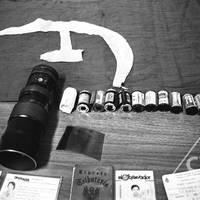
Objects handed over by the Uchuraccay community members
1983
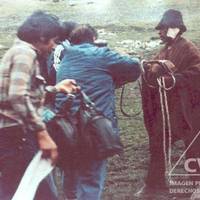
Meeting of eight journalists with a peasant from Uchuraccay
1983
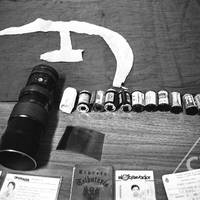
Objects handed over by the Uchuraccay community members
1983
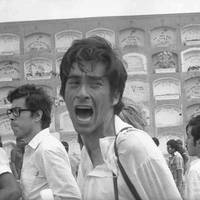
Expressions of grief and outrage during the funerals of the journalists killed at Uchuraccay
1983
Funeral procession of the journalists murdered at Uchuraccay
1983