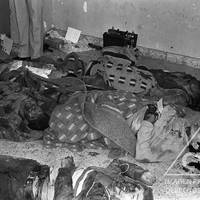
The Penales Genocide is remembered, which took place between June 18th and 19th, 1986. Those responsible for this horrendous act, which left around 300 dead in its wake, always argued …
Books & Articles
5 documents in Truth and Reconciliation Commission - Peru
The relevance of this publication, within the framework of the search for truth and justice in which Peruvians are engaged, derives not only from legal considerations. The events reconstructed here …
This book was supposed to appear toward the end of last year, approximately, but due to causes and contingencies not always of fate's making, but rather various impediments both major …
The Academic Department of Public Law and Legal and Political Sciences of the Universidad Nacional de San Agustín de Arequipa (Peru) commissioned professors Enrique Soto, Rómulo González, and Alfonso Banda …
The Peruvian Army has exterminated the inmate population of three Lima prisons in the bloodiest event recorded in the country since the emergence of terrorism in 1980. After 35 hours …
Showing 1–5 of 5 documents
Timeline Events 50
-
Attempted attack on Q'enqoro prison
On October 27, 1994, militants of the PCP-Sendero Luminoso tried to attack the Q'enqoro prison again in order to free their detained militants. This attempt took place in a context of desperation of the subversive group, after in August of the same year several of its militants began to take …
-
Fujimori's visit to Yanamayo prison
In March 1994, President Alberto Fujimori visited the Yanamayo maximum security prison. During this visit, he was received by Osmán Morote, leader of the PCP-SL imprisoned in the prison. Morote, with a handshake, reiterated the president's request for a "peace agreement". This visit took place in the context of the …
-
Canto Grande Shining Path prisoners support letters from Abimael Guzmán
In December 1993, three hundred Shining Path prisoners held in the Canto Grande prison adhered to Abimael Guzman's letters. This event occurred in the context of the internal division of the PCP-SL, when in November 1993 Abimael Guzmán proposed a peace agreement, while the faction led by Feliciano advocated the …
-
Escape from Qenqoro prison
On March 28, 1993, a dump truck full of explosives exploded against a wall of the Qenqoro prison, leaving a hole through which several PCP-SL and MRTA prisoners escaped. This maximum security prison, located near the city of Cuzco, had already experienced a previous escape on May 26, 1984, when …
-
Police intervention in Canto Grande prison
The police intervention in the Canto Grande prison took place between June 6 and 9, 1992, culminating in the assassination of prominent cadres of Socorro Popular of the PCP-SL. This action was one of the triggers of the wave of Shining Path violence that culminated in the attack on Tarata …
-
Slaughter in Canto Grande prison
On May 9, 1992, a police intervention called "Mudanza Uno" took place in the Shining Path wards of the Canto Grande prison with the objective of transferring more than 100 women to the Chorrillos prison. The operation resulted in the murder of 35 inmates accused of terrorism. Among the victims …
6 media -
Operation Move One in Canto Grande
Police intervention called 'Mudanza Uno' in the Shining Path wards of the Canto Grande prison to transfer more than 100 women to the Chorrillos prison. On May 12, an official communiqué from the Ministry of the Interior reported that 35 inmates accused of terrorism were killed. This operation was carried …
7 media -
Massacre in Castro Castro prison
Between May 6 and 9, 1992, the government decided to retake by force the control of the wards where the accused and convicted terrorists of the PCP-Sendero Luminoso were being held. On May 6, members of the National Police entered by surprise and in the face of resistance used firearms …
5 media -
Killing at Miguel Castro Castro Prison - Operation Move One
The police operation known as "Mudanza Uno" (Move One) began in the Shining Path wards of the Miguel Castro Castro prison in order to transfer more than 100 women to the Santa Monica prison. Given the refusal of the PCP-SL inmates and the resistance, the operation lasted four days and …
5 media -
Sexual abuse in Chorrillos Prison
In the Santa Monica Penitentiary in Chorrillos, during 1992, a colonel in charge of the prison abused his power over the inmates. The colonel would take groups of women out to sing the hymn and condition prison benefits such as visits, transfers, better conditions, work material and access to lawyers …
1 docs -
Relocation of inmates in Chorrillos prison
During the relocation of inmates to different wings of the Chorrillos prison in 1992, acts of sexual violence occurred. A prison inmate reported that approximately 30 inmates were about to be relocated when the events occurred. The inmates were subjected to sexual violence during the transfer process to their new …
-
Events at Cristo Rey de Cachiche prison
In 1992, sexual violence occurred in the Cristo Rey de Cachiche prison in the department of Ica. An affiant was a victim of rape during her imprisonment in this penitentiary. As a result of the rapes suffered, the affiant became pregnant. This case is part of the pattern of sexual …
1 docs -
Restitution of authority in prisons
Beginning in 1992, the policy of 'restitution of authority' was implemented in Peru's maximum security prisons. If in the 1980s prison authority represented extreme weakness and impotence that allowed the PCP-SL to organize itself politically and ideologically in the prisons, this new policy radically transformed prison conditions. The maximum security …
2 media -
Authorization for the Armed Forces to enter prisons
In 1991, during the government of Alberto Fujimori, Legislative Decree 734 was enacted authorizing the Armed Forces to enter prisons. The government considered that the subversion had control of the penitentiary centers, mainly the Miguel Castro Castro prison.
2 docs -
Escape of 47 inmates from Castro Castro Prison
47 emerretistas, including leaders and militants, escaped through a 332-meter long tunnel that had been built over three years. The impact of the escape placed them once again on the national public scene and aroused sympathy in the places where they had been operating. The operation had been carried out …
1 media 1 docs -
Escape of MRTA leaders from Castro Castro
Escape of MRTA leaders from Castro Castro prison. After this escape, the MRTA attempted a dialogue with the government through the kidnapping of a pro-Fujimori congressman, but was rejected. The organization subsequently concluded that its priority should be to rebuild its national leadership through the release of the imprisoned leaders.
-
Transfer to Santiago Apóstol prison
A declarant was detained on December 26, 1989 in the district of Ayacucho, province of Huamanga, department of Ayacucho. On January 23, 1990, she was transferred to Santiago Apostol prison, located in the department of Ayacucho. The transfer occurred in the context of detentions related to the internal armed conflict. …
1 media -
Garcia demands punishment of those responsible for the death of 300 inmates
President Alan Garcia Perez demands the immediate punishment of those responsible for the death of 300 inmates accused of terrorism. This statement comes in the context of the report presented in March 1988 by Senator Rolando Ames Cobián on the events that took place in three prisons in June 1986. …
1 media 2 docs -
Report of the commission of inquiry into the case of the prisons
In March 1988, the Peruvian Congress presented the report of the investigative commission on the case of the prisons. Senator Rolando Ames Cobián presented a detailed report on the events that took place in three prisons in June 1986, where there was a mass murder of inmates. The report maintains …
1 media 1 docs -
Senator Rolando Ames Cobián presents report on prison massacre of June 1986
Senator Rolando Ames Cobián presents a detailed report on the events that took place in three prisons in June 1986. In his report, he argues that the mass murder of inmates should not go unpunished and requests the intervention of the Judiciary to punish those found guilty. This report was …
2 media 8 docs -
Prison event report account
The Board of Directors of the Congress reported on two reports issued by the Commission of Inquiry into the events of the prisons that occurred in June 1986. Two reports were presented: a majority report with seven signatures and a minority report with six signatures. The majority report pointed out …
1 media 1 docs -
Presentation of Congressional reports on prison riots
In December 1987, the Senate Investigative Commission chaired by Rolando Ames Cobián presented two reports on the events of the June 1986 prisons, one in the majority and the other in the minority. Both coincide in the facts but differ in the evaluation and determination of responsibilities. The minority report …
1 media 4 docs -
Resignation of the ministerial cabinet
The ministerial cabinet as a whole resigned on July 14, 1986, after the serious events that took place in the prisons of Lima and Callao in June of the same year. The National Directive Committee of the IU had proposed the resignation of the cabinet considering the political responsibility for …
1 media -
Communiqué of the IU National Steering Committee on events in prisons
On June 29, 1986, a new communiqué appeared from the IU National Directive Committee in which it demanded the clarification of the events that took place in the prisons and the punishment of anyone responsible for the tragic events of June 18.
-
Presidential statement on those responsible for massacre in prisons
President Alan Garcia Perez made a public statement demanding sanctions for those responsible for the events that occurred in the Lima and Callao prisons during the riot of June 18, 1986. In his message, the President used a strong phrase: "Either all those responsible leave or I leave", expressing his …
1 media -
President Alan Garcia's message on prison riots
President Alan Garcia Perez addressed a message to the country on June 24, 1986, four days after the riot of terrorist detainees in three prisons in Lima and Callao (Lurigancho, El Fronton and Santa Barbara) occurred on June 18. In his message, the president condemned terrorism and reiterated his support …
2 media 2 docs -
Statement by Alfonso Barrantes on reestablishment of order in prisons
On June 21, 1986, Alfonso Barrantes declared about the need to reestablish order in the prisons after the June 18 riot, but he pointed out that it should be done without violating legal norms. The following day, on June 22, he stated that Peru was in mourning for all the …
-
Deaths in Santa Barbara prison
On June 18, 1986, detainees held for terrorism in three prisons in Lima and Callao (Lurigancho, El Frontón and Santa Bárbara) rioted. In Santa Barbara prison, two subversives died on June 19. The government ordered the Joint Command to have the military justice system carry out the necessary investigations to …
1 media 1 docs -
Riot in Lima and Callao prisons
On June 18, 1986, detainees held for terrorism in three prisons in Lima and Callao (Lurigancho, El Frontón and Santa Bárbara) rioted. In Santa Barbara two subversives died on June 19. The government ordered the Joint Command to have the military justice system carry out the necessary investigations to determine …
4 media 1 docs -
Rioting in Lima's prisons
On June 18 and 19, 1986, there was a riot of subversive prisoners in three prisons in Lima: CRAS Lurigancho (124 dead), CRAS El Frontón (more than 100 dead), and CRAS Santa Bárbara (3 inmates dead). This event was the largest collective massacre in the history of Peru up to …
3 media 6 docs -
Riots and massacres in Lurigancho, Santa Bárbara and El Frontón prisons
In June 1986, inmates accused of terrorism of the PCP-Sendero Luminoso rioted and took control of wards in Lurigancho and El Frontón prisons. Between June 18 and 19, operations were carried out to retake control. The official toll was 124 inmates dead in Lurigancho and 119 in El Frontón. There …
5 media 7 docs -
Rioting in Lima and Callao prisons
Between June 18 and 19, 1986 there were simultaneous riots in three prisons: CRAS Lurigancho, CRAS El Frontón in Callao, and CRAS Santa Bárbara. The riot in Lurigancho was broken up by members of the Navy and the Republican Guard, resulting in 124 inmates dead. In the Frontón prison approximately …
4 media 7 docs -
Massacre in Lima and Callao prisons
On June 18 and 19, 1986, a massacre took place in the prisons of Lima and Callao. This event occurred in the context of riots and tensions in the prisons where prisoners accused of terrorism were being held. The incident is mentioned as one of the most significant events of …
1 media 5 docs -
Massacre in the Lima prisons
The massacre of the prisons left a considerable mark on all the actors in the conflict and brought to Lima images of massacres that had been far away until then. In practical terms, with this massacre and the way it was handled, the Aprista government's attempts to develop its own …
3 media 6 docs -
PCP-SL mutiny in El Frontón, Lurigancho and Santa Mónica prisons
PCP-SL militants rioted in three prisons: El Frontón, Lurigancho and Santa Mónica, taking advantage of the media coverage of the Socialist International congress taking place in Lima. Garcia's government commissioned the Armed Forces to put an end to the riot with a death toll of 244 people. Almost immediately, pro-guerrilla …
4 media 12 docs -
PCP-SL prisoners riot in three Lima prisons
On June 18, 1986, prisoners accused of belonging to the PCP-SL rioted and took some hostages in three prisons in Lima: Santa Barbara (women's prison), Lurigancho and El Frontón, trying to avoid being transferred to Miguel Castro Castro prison. The government delegated to the forces of law and order the …
2 media 9 docs -
Massacre in Lima and Callao prisons
There was a massacre of prisoners in the jails of Lima and Callao, where hundreds of human beings died. The bishops of Peru pronounced themselves against violence 'wherever it came from'. They pointed out that they could not accept the method of terror as a means to achieve change, but …
1 media 4 docs -
Slaughter of the prisons (Riots in Lima's prisons)
Between June 18 and 19, 1986, there were simultaneous riots in three penitentiaries in Lima. In CRAS Lurigancho, 124 inmates died after repression by members of the Navy and the Republican Guard. In CRAS El Frontón, located in Callao, approximately 150 inmates died. In CRAS Santa Barbara 3 female inmates …
3 media 10 docs -
Penalty Killing
The massacre in the prisons marked the beginning of the stage of national deployment of violence. This event was a culminating point that considerably marked all the actors in the conflict and brought to Lima images of massacres that had been far away until then. In practical terms, with this …
3 media 16 docs -
Riot and massacre in Lurigancho prison
PCP-SL inmates of the Lurigancho prison rioted to prevent a search. The Peruvian Republican Guard broke up the riot, resulting in the death of 30 inmates. This was one of the first episodes of mass violence in prisons during the internal armed conflict.
-
Lurigancho prison riot
Riot in the Lurigancho prison that resulted in the death of inmates. The APRA government did not assume any responsibility for these events. This event marked a point in which the denunciations of human rights violations did not find the same echo as in previous cases.
-
Killings in Lima and Callao prisons
The prison massacres occurred in 1985, 1986 and 1992, remaining in the terrible tally of penitentiary history. Approximately 350 inmates were killed, most of them as a result of extrajudicial executions. The State, unable to apply a correct and efficient anti-subversive strategy in the prisons, opted on these occasions for …
-
Escape from Quenqoro prison
On May 26, 1984, seven prisoners escaped from the maximum security prison of Quenqoro, located near the city of Cuzco. Among the escapees were four subversives. This event had regional repercussions and highlighted the precariousness of the Peruvian prison system at the time. The escape occurred in a context of …
-
Assault by the PCP-SL on the Cerro de Pasco penitentiary center
The PCP-SL assaults a prison in Cerro de Pasco on June 28. This assault was part of the PCP-SL's strategy to free its imprisoned militants and demonstrate its operational capacity in different regions of the country.
-
Assault on Huamanga prison by the PCP-SL
The PCP-SL carried out the assault on the Huamanga prison in the department of Ayacucho. This action was very well planned and had a great impact. It was decisive for the MRTA's entry into the armed struggle, according to Peter Cárdenes Schulte. The attack demonstrated the operational capacity of the …
1 media -
Simultaneous triple attack by the PCP-SL in Ayacucho
On March 2, 1982, at approximately 11:30 p.m., there were three simultaneous attacks of greater magnitude against the Civil Guard headquarters, the headquarters of the Investigative Police and again against the Ayacucho penal establishment. As a result of these attacks, two policemen and ten subversives died. In addition, 254 inmates …
-
Assault on Ayacucho prison with the escape of 304 inmates
Members of the PCP-SL assault Ayacucho prison. They escaped 247 prisoners (other sources mention 304), among them Edith Lagos Saenz. This was one of the most daring assaults of the PCP-SL and demonstrated its operational capacity. The assault lasted between March 2 and 3, 1982.
1 media -
Attack on the prison in Huamanga
The PCP-SL carried out an attack on the prison in the city of Huamanga in March 1982. This event was part of the PCP-SL's initial strategy of attacking state institutions, including police posts and penitentiaries. The attack on the prison was inscribed in the context of the Shining Path offensive …
-
Assault on Huamanga CRAS and rescue of hikers prisoners
Shining Path command assaulted the Huamanga CRAS and rescued its prisoners, managing to escape without an adequate response from the police forces. The assault on the Huamanga prison forced different observers to consider the PCP-SL as a major threat. Hours after the attack, a group of members of the Republican …
-
Attack of the PCP-SL to the Ayacucho prison
On February 28, 1982, members of the PCP-Sendero Luminoso attacked the facilities of the penal establishment in the city of Ayacucho to free people imprisoned for crimes linked to subversion. The attack was repelled by the forces of law and order and resulted in the death of three inmates. Two …
Photos & Videos 12
Interview with Gloria Cano about the El Frontón massacre
Unpublished testimonies about the El Frontón massacre. Report
Mother Covadonga - Report
Alan García and the prison massacre
Fujimori and the massacre at Castro Castro prison. Part 2
Fujimori and the massacre at Castro Castro prison. Part 1
Terrorists at Castro Castro
Shining Path. TVE report
Peruvian revolutionary women of Canto Grande prison
Massacre at Castro Castro prison. Journalistic report.
Prisoners for terrorism denounce preparation of genocide in the prisons (1992). Part 2
1982