Books & Articles
289 documents in Truth and Reconciliation Commission - Peru
Tag
conflicto armado
×
Political Violence in Peru 1980–2000. Shining Path Against the State and Society. An Essay in the Anthropology of Violence
Text that presents and summarizes the research. "The elaboration of the book La violencia política en el Perú 1980-2000. Sendero Luminoso contra el Estado y la sociedad (Paris, L'Harmattan, May …
The Survivor of a Massacre
Elizabeth Malpica has not forgotten March 27, 1990. That night fifteen members of her family were murdered by the anti-subversive rondas of Satipo. The trial against nine ronderos and a …
Ayacucho: Prosecutor's Office Handed Over 58 Bodies of Victims from the Terrorism Era
The Minister of Justice, Marisol Pérez Tello, participated in the ceremony for the handover of 58 bodies of victims from the period of terrorism to their families in Huamanga (department …
CNDDHH Welcomes Verdict Recognizing the Multiple Harm Suffered by Victims of the Armed Conflict
The Coordinadora Nacional de Derechos Humanos (CNDDHH) expresses its greatest satisfaction at the ruling issued by judge Hugo Rodolfo Velásquez Zavaleta, presiding judge of the Fifth Specialized Constitutional Court of …
The Surrendered. On the Gift of Forgiveness
"The nature of this document is somewhat undefined. In its form it groups short narratives, halfway between reflections and biographical notes from an era of violence. Let us call them …
Internal Displacements in Peru
The Ministerio de la Mujer y Poblaciones Vulnerables (MIMP), which is responsible for national population and internal migration policy and for the prevention, protection, and care of internally displaced persons …
CONSTRUCTION OF CHILDREN'S MEMORY
1. SUMMARY. Memory is recollection — the persistent remembrance of something. Thus, based on the study of various bibliographic, pedagogical, and historical sources, as well as national and international legal …
Between Stigma and Silence. Memory of Violence Among Students of UNMSM and UNSCH
The present research — Entre el estigma y el silencio: memoria de la violencia entre estudiantes de la UNMSM y la UNSCH — deals precisely with one of the institutions …
The Justice System, Ten Years Later
The period of political violence and the fight against terrorism left very deep wounds in Peruvian society. The violence affected everyone, including the actors of the justice system, who were …
How Hard It Is to Be God. The Communist Party of Peru - Shining Path and the Internal Armed Conflict in Peru: 1980-1999
This book is the result of a compilation of articles that Carlos Iván Degregori published between 1985 and 2004. His writings are nourished by his experience as a journalist during …
Open Secrets. Memory and Education in Public Schools in Lima and Ayacucho
This document has an exploratory character in that it presents advances in understanding a complex social phenomenon such as the memory of the internal armed conflict and its process of …
Neither Heroes nor Enemies. Analysis of Testimonies from Former Peruvian Police Officers and Former Military Personnel Gathered by the Truth and Reconciliation Commission in the Context of the Internal Armed Conflict
This thesis draws on the testimonies of former police officers and former military personnel compiled by the Comisión de la Verdad y la Reconciliación before publishing the Final Report in …
And After the Violence, What Remains? Victims, Citizens and Reparations in the Post-CVR Context in Peru
The objective of this research is to study the meaning of being or feeling like a victim in Peru after the internal armed conflict. More than a study on the …
Reparation for Victims of the Armed Conflict in Peru: The Voice of the Victims
The Instituto de Defensa Legal, through its Governance and Rights Area, publishes this study on the perceptions of victims of political violence regarding the reparations process, in the communities of …
Meanings, Learnings and Future Prospects of Adolescents from Putacca Based on a Collective Memory Experience
This research was conducted in the community of Putacca, Ayacucho, with a group of adolescents who participated in a collective memory project promoted by the Asociación Paz y Esperanza. Theory …
The New Horizons of Displaced Families from Ayacucho and Huancavelica. Process of Integration into Urban Areas: The Case of Huancayo
This post-graduate thesis in anthropology addresses the phenomenon of displacement in Peru and attempts to shed light on the reality experienced by a large sector of the civilian population during …
"Because Otherwise Again": Political Violence, "State of Exception" and "Obscene Ritual" in "Las retiradas"
This thesis seeks to identify the different discursive practices developed by Sendero Luminoso and the Peruvian Army from the perspective of the peasants of Chungui. I intend to demonstrate that …
Wellbeing, Values and Emotional Climate in Persons Exposed to Political Violence and Transitional Justice Processes in Ayacucho
This study aims to explore and analyze the relationships between values, well-being, and individual and collective emotions in a group of people who were exposed to political violence during the …
Request to Amend Executive Decree 051-PCM-11 and Approve a Budget to Enable Implementation of the PIR
The Coordinadora Nacional de Organizaciones de Afectados por la Violencia Política (CONAVIP) requests that President Ollanta Humala Tasso amend D.S. 051-PCM-11 and approve a budget that makes it possible to …
Family and Intergenerational Transmission of Memories of the Internal Armed Conflict in Ayacucho
The work presented below is the product of a joint effort by the Grupo Memoria at the IEP, with students from the Faculty of Social Sciences of the Universidad Nacional …
The Pardon and Ethics
During the Fujimontesinista decade, a pernicious style emerged and took hold — one that few of us denounced and that the majority refused to see or confront. Society accepted it …
Enforced Disappearance and Victims' Rights. The Humanitarian Response to the Demands for Truth, Justice and Reparation in Peru
This is a publication by IDEHPUCP with the support of the Fundación Konrad Adenauer, whose purpose is to confirm the persistence of impunity in Peru and, therefore, the denial of …
The Political in the Theatrical Work "Goodbye Ayacucho" by the Yuyachkani Group and Its Relationship with the Period of Political Violence 1980-2000
Theater arises from a dialogue with social events. In this way, the theater group Yuyachkani was prompted to incorporate political elements into its works, as a response to the period …
The Dead of Ayacucho. Violence and Clandestine Burial Sites
How many remains lie buried in the clandestine sites that emerged with the violence? A question that is impossible to answer for now, since since the delivery of the CVR's …
Life Plans of Women Victims of Sexual Violence in the Internal Armed Conflict
The research presented by the author is based on the finding that sexual violence during the internal armed conflict was not an isolated event, but rather reveals an exercise of …
Power Relations and Political Violence in the Peasant Communities of Ayacucho
This thesis studies political violence in the peasant communities of Ayacucho, considering its impact on power relations among local power groups, peasant community members, and the state, as well as …
Imaginaries and Mentalities of the Internal Armed Conflict in Peru, 1980-2000
This thesis conducts a socio-historical investigation into part of the Peruvian film archive, specifically regarding cinema about political violence. The research aims both to establish how Peruvian cinema serves as …
Interpersonal Relationships in Victims of Political Violence Through the Rorschach Psychodiagnostic
This university thesis analyzes the interpersonal relationships of a group of ten adults from a high Andean community that was affected by political violence. To this end, the Rorschach Psychodiagnostic …
The Response of Women from Ayacucho to the Problems of Political Violence
This thesis is a qualitative study that aims to address the response mechanisms developed by women in the Ayacucho region in response to the various problems generated by political violence, …
Documentation Experiences in Post-Conflict Scenarios: The Huancavelica - Peru Case
This publication is the result of joint work between the Registro Nacional de Identidad y Estado Civil (RENIEC) and the Instituto de Defensa Legal (IDL), launched at the end of …
Topics in Criminal Law and Human Rights Violations
This publication presents a series of articles related to the process of truth, justice, and reparation involving victims of the period of violence that occurred in Peru between 1980 and …
Progress and Challenges in Reparations for Victims of Political Violence. Governance and Human Rights
Several years after the enactment of the law creating the Comprehensive Reparations Plan — PIR, Law No. 28592 (July 2005) — and its Regulations (Supreme Decree No. 015-2006-JUS), and with …
The Novel and the Memory of the Armed Conflict of Shining Path in Peru
This thesis presents the history of the internal conflict in Peru and, through an analysis of three novels that reflect on the postwar period, evaluates the contribution of contemporary Peruvian …
State of the Art. The Conflict in Peru
This document presents different angles of the conflict by offering several studies that analyze not only the actors who participated in the conflict but also the periods preceding it, in …
The Sites of Memory. Social Processes of Commemoration in Peru
This publication presents the results of research on local experiences of memory of violence, carried out by the Instituto de Democracia y Derechos Humanos de la Pontificia Universidad Católica del …
Voices of the Women of the Central Jungle. Testimonies of Indigenous Women During the Internal Armed Conflict
This effort focuses on a fundamental aspect: gathering the voices of indigenous women from the central jungle who were victims of violence between 1980 and 2000. It should be noted …
Discourses on Political Violence and Human Rights Violations. The Violent Acts at Uchiza and Cayara According to El Diario, La República and El Comercio
"The discourse analysis methodology employed in this research will make it possible to show, in a detailed and methodical manner, the underlying intentions in the discourses and will offer a …
Local Reparation Policies in Ayacucho. Reparations Without Repairers?
This research seeks to explain the origins of reparations policies for victims of the internal armed conflict in Peru in four municipalities of the department of Ayacucho, understood as rare …
In Honor of Truth
This book recounts a reality that comes from within the Army, a branch of the Armed Forces of Peru, whose members faced the challenge of restoring order and securing peace. …
Fourth Annual Report of the Reparations Council (October 2009 – October 2010)
Upon completing its fourth consecutive year of work (in 2010), the Consejo de Reparaciones fulfills its duty to deliver this report to the Presidencia del Consejo de Ministros and to …
Protocol for the Investigation of Cases of Sexual Rape in the Internal Armed Conflict
The first chapter of the document contains "The problem of sexual violence in the internal armed conflict"; the second chapter contains "The identification of cases and problems during the preliminary …
State of the Art. The Conflict in Peru
A compilation of books and documents on the internal armed conflict in Peru.
City of the Condemned
Lima in Peruvian cinema in the late 1980s and early 1990s. What was the cinematic image of the capital at a time when an internal war and a severe economic …
The Victims Are Not Peruvians
The aim of this article is to reflect on how Peruvian society ended up semiotically constructing the victims; what elements of our history and what flaws and strengths of our …
Shining Path School Dismantled in Canto Grande Prison
Although an ideological indoctrination school that had been operating inside Canto Grande prison was shut down a few days ago, concern remains among agents of the Directorate of Investigation Against …
The Horizon of Memory
"The sea is a peacemaker," he comments on the coastal landscape of Barranco that he enjoys from the balcony of his apartment — similar, indeed, to that of the privileged …
Showing 1–50 of 289 documents
Timeline Events 11
-
Emboscada en Paran y Declive de Sendero Luminoso en Oyon
In 1992, an ambush in Paran, Oyon, marked a decisive blow against the Senderistas, resulting in the loss of several of their leaders, including Dante, known as 'the bloodthirsty'. This event contributed to the decline of the PCP-SL's armed actions in the province. The capture of Abimael Guzman in the …
-
Enfrentamiento en el Puerto de Mantaro
In 1991, a confrontation took place at Mantaro Port between the Peruvian Army and the Shining Path insurgent group. During this confrontation, members of the army were attacked and killed by the Shining Path, who waited on the hill to ambush the military forces. This event is part of a …
-
Enfrentamiento entre MRTA y PCP-SL
In 1991, there was a confrontation between the Tupac Amaru Revolutionary Movement (MRTA) and the Communist Party of Peru - Shining Path (PCP-SL) in the Ponaza valley. The conflict arose when the Shining Path captured four MRTA members, which led to a rescue attempt by the guerrillas. Despite MRTA's attempts …
-
Ambush to Military Patrol in San Alejandro
On June 21, 1989, an ambush on a military patrol in San Alejandro resulted in the deaths of 20 soldiers. This event was part of the broader conflict involving the Peruvian government and insurgent groups such as the MRTA and PCP-SL during a period of intense violence in the region.
-
Establecimiento de Comités Populares por el PCP-SL en Tulumayo
In 1988, the Communist Party of Peru - Shining Path (PCP-SL) replaced the resigned authorities in Tulumayo with Popular Committees. These committees were composed of five commissars, including a Commissar Secretary who was sometimes a local villager due to a shortage of militants. The PCP-SL incursions did not encounter significant …
-
Deserción y Captura en Chungui durante el Conflicto Armado Interno en Perú
In 1987, in the region of Chungui, La Mar, Peru, there was a significant change in law enforcement strategy during the internal armed conflict. Military forces, together with civil defense patrols, began to capture villagers living in the jungle with the subversive group PCP-SL, offering them protection and avoiding summary …
-
Retiradas del PCP-SL en Chungui
In 1984, in the town of Chungui, the military began to arrive, which led the Shining Path group (PCP-SL) to organize retreats into the hills and mountains. The population recruited in these retreats was organized into Bases of Support, which represented the form of government of the PCP-SL in the …
-
Incursiones de Sendero Luminoso en Ayacucho
Beginning in 1983, Sendero Luminoso began raids in the annexes of Ccowisa, Cuchicancha and Parccahuanca in Ayacucho, Peru. These incursions included indoctrination of the population and assassinations of local authorities, which caused massive displacement of the population to safer areas due to fear and threats. The military attempted to organize …
-
Primera Campaña de 'Batir el Campo' del PCP-SL
In 1982, the Communist Party of Peru - Shining Path (PCP-SL) carried out the first campaign to 'beat the countryside' as part of its guerrilla warfare plan. This campaign, known as 'Batir 1', focused on fighting against gamonalismo and local power, and annihilating the living forces of reaction. The subversive …
-
Reapertura de la UNSCH y su Crecimiento
In 1977, the National University of San Cristobal de Huamanga (UNSCH) was reopened with a new educational focus that integrated regional development as the center of its activities. This change was reflected in a significant growth of the student population from 228 students in 1959 to 6095 in 1980. However, …
-
Crisis Universitaria y Radicalización Política en Perú
Since the mid-twentieth century, Peru experienced an increase in public university enrollment, while state investment in higher education decreased. This situation was aggravated by the economic crisis of 1975, which contributed to political radicalization within the universities. The combination of external and internal factors created an environment conducive to internal …
Photos & Videos 50

Shining Path: Initiator and main party responsible for the violence. Part 2

Shining Path: Initiator and main party responsible for the violence. Part 1
Video
2015
"Greetings from Los Cabitos". Documentary. Fragment 1
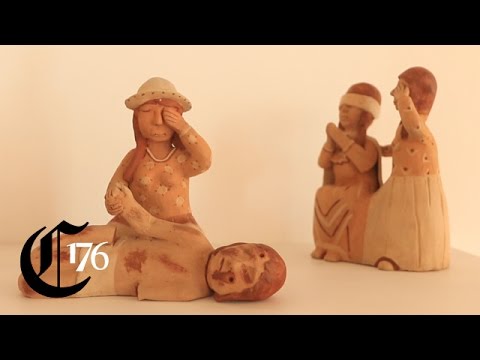
Place of Memory: a space so as not to forget
Video
2015
"Greetings from Los Cabitos". Documentary. Fragment 3
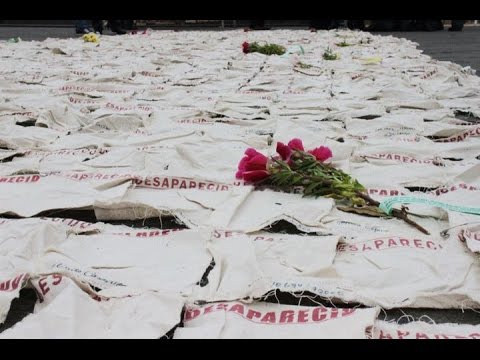
Other Memories: Akito Bertran 15,000/70,000
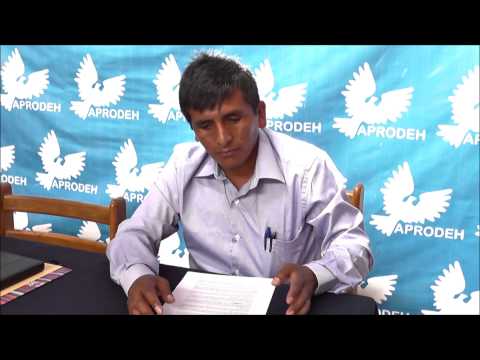
Cayara case. Interview with mayor David Ccayo.
Video
2015
"Greetings from Los Cabitos". Documentary. Fragment 2

"Greetings from Los Cabitos". Documentary. Trailer
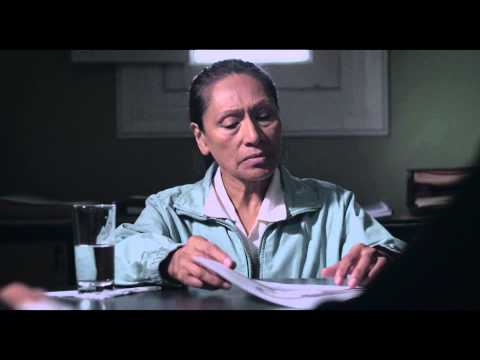
"NN". Film. Trailer.
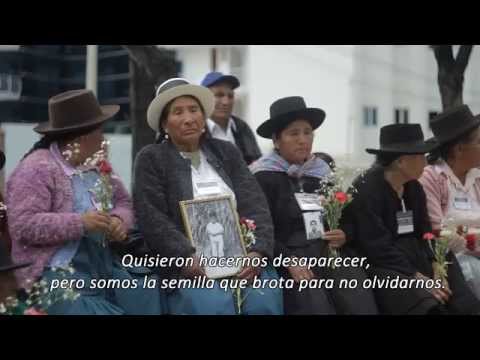
"La hoyada: Sanctuary of memory". Documentary
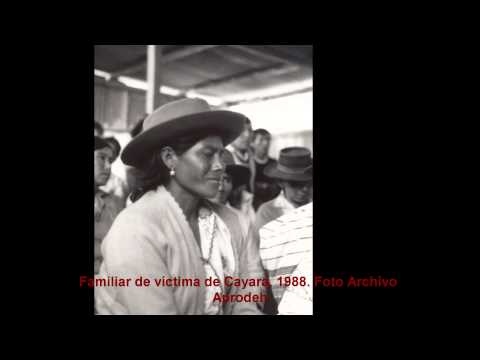
27 years after the Cayara massacre
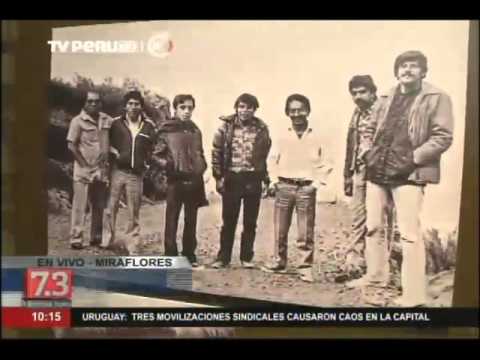
Inauguration of the "Place of Memory"
"Walkers of Memory". Documentary film.

"Cabanino: the death express". Documentary.
30 years for equality, justice and dignity. Aprodeh anniversary
"Accomarca". Documentary

Martyrs of Uchuraccay. Fragment of the documentary "Traces of the path"
Interview with Gloria Cano. CVR+10
Other memories: Memory. Gabriela Flores.
War photographers. Report.
Other memories: The fighter.
Other memories: Graphics against the dictatorship. Álvaro Portales.

Interview with former CVR commissioners: Sofía Macher and Carlos Tapia. On the Final Report.
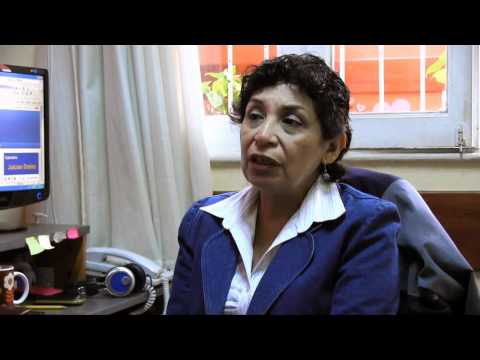
Los Cabitos case. Interview with Gloria Cano, from APRODEH

The secret life of Abimael Guzmán - First part

Interview with Gloria Cano on impunity. Cases like La Cantuta and the Colina Group.
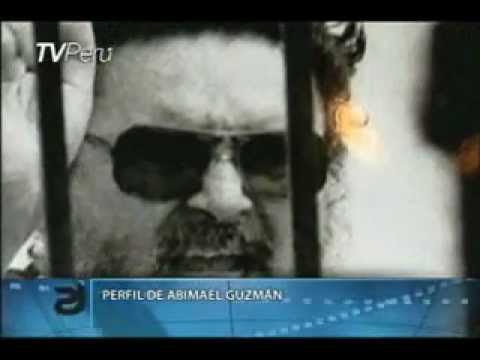
Shining Path: The terror that a Peruvian must not forget. Report

The secret life of Abimael Guzmán - Second part
Sexual violence during the armed conflict. Television spot
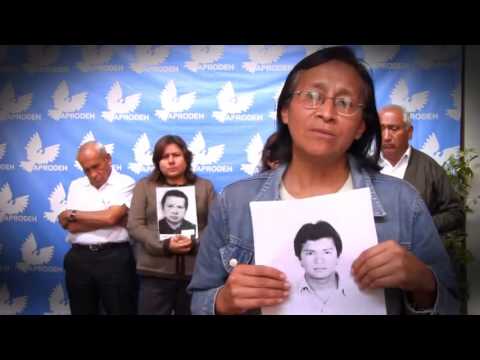
In defense of the Inter-American Human Rights System
A day in memory - Blog

"Traces of the path" - Documentary. Trailer
"Spreading the truth". Documentary.
Tragedy in Ayacucho - Photographs
"It's Christmas and we are still waiting for them". 1/2

Extradition of Telmo Hurtado in connection with the Accomarca case. Journalistic report

Museum or Place of Memory in Peru: a historical fraud?

Mother Covadonga - Report
"It's Christmas and we are still waiting for them". 2/2
Cayara massacre. Video clip. Students of UNSA

Relatives of victims of internal war in Peru demand justice

"Chungui, horror without tears". Documentary

Caves of Terror (Part 2)
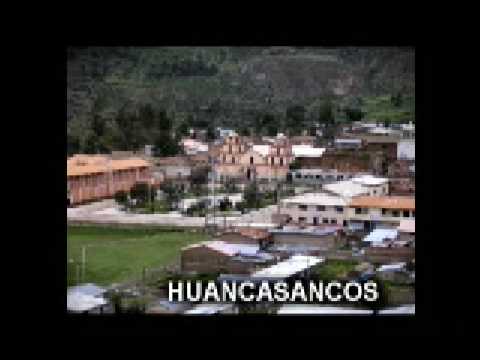
Crimes in Huancasancos (Ayacucho). Documentary

Caves of Terror (Part 1)
Magaly Solier speaks about the massacres in Ayacucho
![Fujimori: Guilty or innocent? pt 3 [of 5]](https://img.youtube.com/vi/JgDnXJ-A1Cg/hqdefault.jpg)
Fujimori: Guilty or innocent? pt 3 [of 5]
"Untitled, mixed technique", Yuyachkani group