
Photos & Videos
11 media items in Truth and Reconciliation Commission - Peru
Tag
campesinos
×

Caves of Terror (Part 3)

Caves of Terror (Part 2)

Caves of Terror (Part 1)
 2008
2008
If I don't come back, look for me in Putis

Peasant painting: Memory and images of our land
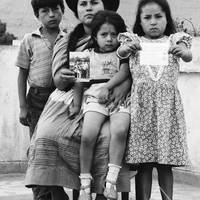 1987
1987
Woman and child survivors of the Umaro massacre
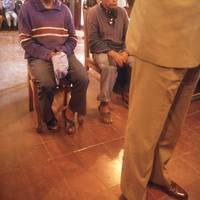 1984
1984
Two of the peasants accused of the murder in Uchuraccay
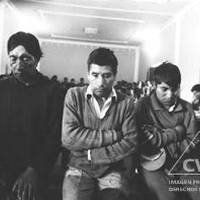 1984
1984
Peasants accused of the murders at Uchuraccay
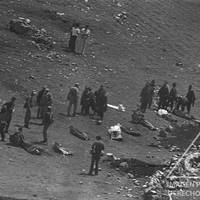 1983
1983
Peasants exhume the victims of the Uchuraccay massacre.
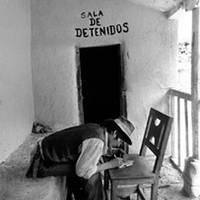 1982
1982
DETAINEE
Showing 1–11 of 11 items
Timeline Events 50
-
Uchuraccay trial remains open in reserve
In January 2003, on the 20th anniversary of the Uchuraccay massacre, it was expected that a ruling would be issued on the statute of limitations. However, the judicial authorities considered that the legal period for the process to remain in reserve is 30 years, which means that the statute of …
1 media 2 docs -
Disappearance of El Santa farmers
Disappearance of 9 peasants, leaders of the human settlements La Dacha, San Carlos and Javier Heraud de El Santa. The case has a high probability of involvement of the Colina Group as responsible for the human rights violations.
1 docs -
Seizure and Disappearance of Nine Campesinos
On May 2, 1992, nine campesinos were reportedly abducted, prompting their families to file a Habeas Corpus petition. Judge María Luisa Kuo Ying investigated the Naval Base and Police Delegation in Chimbote but found no trace of the detainees. The action of Habeas Corpus was ultimately declared inadmissible.
-
Kidnapping and murder of 9 peasants in the Santa region
On May 2, 1992, the Colina detachment kidnapped and murdered 9 peasants from Santa. The victims were detained and then executed or disappeared. The victims' relatives filed Habeas Corpus appeals that were declared inadmissible by the Judicial Power. The bodies were buried clandestinely using lime to make it difficult to …
3 docs -
Attack on Molinera San Dionisio
On March 29, 1992, the Molinera San Dionisio company in Santa, Peru, was attacked by approximately 30 subversive members of the Sendero Luminoso. The attackers placed explosives in the administrative offices, resulting in a fire that destroyed machines and around 50 bales of ginned cotton. This incident was part of …
-
Massacre in Ulcumayo
On February 8, 1992, a subversive incursion in the community of Ulcumayo resulted in the death of 15 peasants. This attack took place in the context of the intensification of violence in the Junín region during the 1989-1992 period, when the PCP-SL was developing its V Plan to "Develop Bases …
-
15 peasants killed in subversive raid in Ulcumayo
On February 8, 1992, a subversive incursion in the community of Ulcumayo, Junín, resulted in the death of 15 peasants. This event occurred in the context of 1992, when violence reached its highest peak in the central region. Dynamite attacks, blackouts, sabotage, assassinations, disappearances, extrajudicial executions, arbitrary detentions and guerrilla …
-
Massacre of 37 peasants in Santo Tomás de Pata
In November 1991, 37 peasants were massacred in the district of Santo Tomás de Pata, province of Angaraes, department of Huancavelica. The victims included women, the elderly and children. This event was part of the context of political violence that affected the country during the internal armed conflict. The massacre …
1 media 2 docs -
Murder of young layman Jorge Cerrón in Huancayo
The young layman Jorge Cerron was assassinated in Huancayo for his pastoral work at the university and with poor peasants. Shining Path murdered him for his pastoral work and commitment to the popular sectors. This crime shows that not only religious but also committed lay people were victims of Shining …
-
PCP-SL Column acts in Quiñota, Livitaca, Llusco and Ccapacmarca
An unofficial version reported that in Quiñota, Livitaca, Llusco and Ccapacmarca a column of the PCP-SL was acting. To date, 5 peasants have been killed. This information shows the active presence of the PCP-SL in the high provinces of Cuzco.
-
Detention of Fr. David Ritter Walker in Nazca
David Ritter Walker, a U.S. citizen, was arrested by members of the Armed Forces after a violent raid on his home for supporting the demands of the peasants for better conditions for agriculture. Monsignor Guido Breña reacted in defense of Fr. Ritter with a communiqué and made representations to the …
-
Disappearance of farmers in Chuschi
Four peasants from the community of Chuschi, province of Cangallo in Ayacucho, disappeared on March 14, 1991. Those responsible were identified as the head of the local police post and military personnel from the Pampa Cangallo base. This event occurred in a context of intensified political violence in the department …
1 media 9 docs -
Murder of 23 peasants in Ayna
On February 23, 1991, subversives murdered 23 peasants in the district of Ayna, province of La Mar, department of Ayacucho. This event occurred in the context of the political violence affecting the country during the first year of Alberto Fujimori's government. The event took place in the midst of an …
-
Attack of the PCP-SL to the SAIS Sollocota
On July 10, 1990, the PCP-Sendero Luminoso attacked the SAIS Sollocota in the province of Azángaro, department of Puno, killing 7 peasants. This attack was part of the PCP-SL's strategy to destroy the associative enterprises created by the agrarian reform, in opposition to the peasant mobilizations that sought the democratic …
-
Attack on SAIS Sollocota and market of Azángaro
In the early morning of January 20, 1990, the Main Force of the PCP-SL headed by Juan Carlos Olivares attacked the SAIS Sollocota with 30 of its activists, resulting in the murder of 7 peasants. That same day, during an attack on the Azángaro market, 5 additional people were killed. …
-
Execution of 5 peasants by subversives and death of Luis Valer by paramilitaries
5 peasants were executed by subversives in Chumbivilcas. The following day, Luis Valer, brother of Tany Valer, IU deputy, was tortured by paramilitaries and died in the hospital in the province of Espinar. These events are evidence of the violence exercised by both subversive and paramilitary groups.
1 docs -
Massacre of 10 peasants by military in civilian clothes in Ccachahui
In Ccachahui, Ranrapata, Chumbivilcas province, 21 soldiers dressed as peasants murdered 10 people: Balvino Huamaní Medina, Juan Huisa Pacco, Rosa Huisa Pacco, Rubén Alférez Triveño, Marcos Zacarías Huisa Llamoca, Quintín Alférez Cjuro, Telésforo Alférez Achinquipa, Marcos Torres Saihua, Julio Huamaní and José Huamaní Charccahuana. This massacre is evidence of human …
-
Death of 14 peasants in Ccasiahui
A military patrol intercepted and killed 14 peasants returning to their community of Ccasiahui, in the province of Chumbivilcas, Cuzco. The event occurred in the context of the general elections and the intensification of counter-subversive actions in the country. The peasants were intercepted when they were returning to their community. …
-
Detention and Torture of Campesinos in Tirani
On the evening of April 23, a patrol arrived at Cristina Salhua Iqueño's house in Tirani, where they detained several individuals, including Eustaquio Apfata Salhua. The following day, the patrol moved to Nanrapata with the detainees. In a related incident, seven individuals searching for a stolen donkey were either killed …
-
Massacre in Chumbivilcas
Between April 20 and 30, 1990, a massacre took place in the province of Chumbivilcas that marked a milestone in the internal armed conflict in the region. The Peruvian Army implemented a new counter-subversive strategy, acting as an army of occupation in the area. As a result of these military …
-
Arrest in Llaclla of Esau Moreno Cotrina and others
In 1990, in the town of Llaclla, province of Bolognesi, peasant Esau Moreno Cotrina, Nilton Loli Mauricio (Director of the Educational Center) and teacher Saturnino Cerrate were arrested by members of the National Police Special Operations Directorate. All three were accused of being Shining Path members. This arrest took place …
-
Handing over of weapons to peasants organized by President Alan García
President Alan Garcia Perez held a ceremony in which he handed over weapons to organized peasants. The ceremony took place after the speeches of the commander called Huayhuaco. This delivery of weapons was part of a government strategy in the context of the anti-subversive struggle. The event took place at …
-
Army destroys MRTA camp in Iscozacín
In December 1989, the Peruvian Army destroyed an MRTA camp in Iscozacin, province of Oxapampa. According to the official version, 43 alleged subversives were killed in the operation. However, there is an alternative version that states that most of the victims could have been local farmers and not MRTA militants. …
1 docs -
43 suspected MRTA members killed in Iscozacín
In December 1989, the Army destroyed an MRTA camp in Iscozacín, Oxapampa, resulting in the death of 43 alleged subversives. However, there is an alternative version that indicates that most of the victims may have been local farmers and not MRTA members. This event occurred a few days after the …
1 docs -
14 peasants murdered for not complying with the armed strike
Members of the PCP-SL murdered 14 peasants for not complying with an 'armed strike' called by the subversive organization. This event occurred days after the PCP-SL destroyed electrical towers and caused a blackout in the city, carrying out 13 detonations in several areas as part of the imposition of the …
-
Murder of peasants in Santa Rosa de Pachaclla
On April 4, 1989, 10 peasants were murdered in the community of Santa Rosa de Pachaclla, in the department of Huancavelica. According to the report, the victims were identified as presumably Shining Path members. This event is part of the chronology of violent acts registered in the region of Huancavelica …
-
Attack on Santa Rosa de Pachaccalla community
Members of the PCP-SL attacked the community of Santa Rosa de Pachaccalla, killing ten peasants. This attack was part of the Shining Path offensive in Huancavelica during 1989, when the organization sought to regain presence in areas from which its columns had been dislodged.
-
Killing of peasants in Pucallpa during march
Eight peasants and one student were killed while marching to celebrate the end of a strike over refuge prices for corn and rice. The police shot at the demonstrators believing that Sendero Luminoso was involved, but it was not true. The wounded took refuge in the Vicariate as they feared …
-
Massacre of 8 farmers during mobilization
On February 9, 1989, 8 peasants were massacred during a mobilization in Pucallpa. This event was denounced by the Catholic Church through the Human Rights Office of the Vicariate of Pucallpa. The massacre took place in the context of generalized violence in the department of Ucayali, where both subversive groups …
-
Repression of the Pucallpa March
On February 9, 1989, a large march organized by the Confederation of Campesinos of Peru (CCP) in Pucallpa was repressed by the National Police's Special Operations Directorate (DOES), resulting in the death of eight campesinos. The march was a response to the failure of state enterprises to pay for agricultural …
-
Confrontation in Pucallpa: ten dead
In Pucallpa, Ucayali, peasants lifted a 16-day strike and celebrated with a demonstration the agreements reached with the government. The prefect denied permission for the demonstration, which provoked a confrontation. The police intervened in the mobilization carried out by the Federation of Peasants of Ucayali when they tried to deactivate …
-
El Pucallpazo de 1989
The 'Pucallpazo' refers to a violent event in 1989 in Pucallpa, Peru, where a protest by over five thousand people, mainly peasants, against the government led to a severe police crackdown. The protestors were demanding attention to their grievances, which they felt were ignored by the central government. The police …
-
Murder of 10 peasants in Santa Rosa de Pachaclla
In February 1989, ten peasants were killed in the community of Santa Rosa de Pachaclla. According to the CVR report, the victims were identified as presumed Shining Path members. This event occurred in the context of the expansion of political violence in the Junin region, during a period of intense …
-
Murder of 25 peasants in Santo Tomás de Pata
In 1989, subversives raided the town of Santo Tomás de Pata, where they killed 25 peasants. This attack was part of a series of violent incursions in the area, including the town of Chupacc where 30 peasants were killed. The zone was under the administration of the political-military command, in …
-
Clashes in Santo Tomás de Paca
In 1989, there were confrontations between the PCP-Sendero Luminoso and organized peasants from the communities of Chupaca and Santo Tomás de Paca. These confrontations left twenty-five community members dead in Santo Tomás de Paca. The confrontations occurred in the context of peasant resistance against the control and demands of the …
-
Hyperinflation and farmers' payment crisis
With the explosion of hyperinflation in 1989, the state-owned companies ENCI and ECASA were unable to pay for the peasants' products. This economic crisis led the Confederation of Peruvian Peasants (CCP) to promote regional peasant strikes throughout the country. In Ucayali, the peasants grouped in the Federation of Peasants of …
-
Murder of 30 farmers in Chupacc
In 1989, subversives raided the town of Chupacc, where they killed 30 peasants. This attack was part of a series of violent incursions in the area, as in the same year they also attacked Santo Tomás de Pata, killing 25 peasants. These events occurred in a context where the zone …
-
Clashes in Chupaca
In 1989, violent confrontations took place between the PCP-Sendero Luminoso and organized peasants from the communities of Chupaca and Santo Tomás de Paca in the department of Junín. These confrontations resulted in thirty community members dead in Chupaca and twenty-five community members dead in Santo Tomás de Paca. The confrontations …
-
Resistance Against Sendero Luminoso in Espinar
In 1989, the Federation of Campesinos in Espinar organized local defense groups known as 'rondas campesinas' to resist the influence of the Sendero Luminoso (Shining Path) insurgents. A notable incident involved a young man who escaped from the insurgents, seized their weapons, and alerted the local community. The community then …
-
Callejón de Huaylas farmers' strike begins
On October 13, 1988, the peasants of the Callejón de Huaylas began a strike to demand lower prices for agricultural inputs. This mobilization took place in the context of a serious national economic crisis and coincided with a national strike called by the CGTP in protest against the economic measures …
-
Attack on Puyhuán
In October 1988, a column of the Shining Path PCP attacked the town of Puyhuán in the province of Junín. During this attack, the subversive group killed 15 peasants. This attack was part of a series of violent incursions by the PCP-SL in the region during that period, including a …
-
Attack by hikers on educational project in San Juan de Jarpa
A small group of Shining Path guerrillas attacked an educational project for peasants run by Jesuit priests in the town of San Juan de Jarpa, located two hours from Huancayo. This attack is part of the Shining Path's strategy of attacking educational institutions linked to the Catholic Church. The objective …
2 docs -
PCP-SL ambush at Rondos Bridge
In an ambush on a military patrol at the Rondos bridge, 13 soldiers were killed, generating a brutal response in which 20 presumed Shining Path members lost their lives, although according to family members, most of them were peasants who were not part of the subversion.
-
Attack on Cuticsa
In June 1988, a Shining Path PCP column attacked the village of Cuticsa in the department of Junin. During this attack, 11 peasants were killed. This attack was part of a series of violent incursions by the PCP-SL in the region during that period, which also included the attack on …
-
Murder of 11 farmers in Cuticsa
In June 1988, in the area of Cuticsa, province of Angaraes, a column of Shining Path members disguised as soldiers entered the town and killed 11 peasants. This attack occurred after two years of relative tranquility in the area, when the Shining Path restarted their actions taking advantage of the …
-
Massacre of peasants in Cayara
A massacre of peasants was committed by the Peruvian Army in Cayara. Not only was a machinery of silence and impunity set up, but also unjustifiable political maneuvers in the Congress of the Republic effectively prevented the official acceptance of the serious facts. The investigation had to be paralyzed due …
5 media 21 docs -
Massacre in Cayara: fifty peasants killed
On May 14, 1988, members of the Peruvian Army, in retaliation for an ambush on a convoy, entered the district of Cayara in the province of Victor Fajardo. They gathered the entire population and killed 35 peasants without explanation. On May 21, the Presidency of the Council of Ministers denied …
8 media 7 docs -
Attack on Pichiwillca and the Rise of CAD's Offensive
On April 13, 1988, a group of 40 Shining Path (PCP-SL) members, supported by hundreds of local campesinos, launched an attack on Pichiwillca, the main base of the DECAS in the VRA. The attack was repelled with the help of local ronderos and a military detachment, resulting in the deaths …
-
Death of peasants in El Collpín
In 1988, in the locality of El Collpín, province of Santiago de Chuco, the Peruvian Army allegedly killed several peasants. This event occurred in the context of the counter-subversive offensive in the northern region of the department of Lima and southern Ancash, where the military forces were responding to the …
-
Attack on Lachocc Farm
On August 9, 1987, a Shining Path column attacked the Lachocc Farm, located near the city of Huancavelica, owned by INIA (National Institute of Agricultural Research). During the attack, PCP-SL militants killed 9 peasants working on the farm. In addition to the murder of the workers, the attackers slit the …
Documents 50
The Peasantry and Shining Path
A monographic study carried out at the Faculty of Humanities of the Universidad Nacional del Comahue, Argentina, in which the author attempts to demonstrate that the armed movement led by …
Cusco: 26 Bodies of Terrorism Victims Identified
After three decades, more victims of the terrorist violence of Sendero Luminoso that bled the country continue to emerge. It was announced yesterday that the remains of twenty-six Apurimeño peasants, …
And After the Violence, What Remains? Victims, Citizens and Reparations in the Post-CVR Context in Peru
The objective of this research is to study the meaning of being or feeling like a victim in Peru after the internal armed conflict. More than a study on the …
Guzmán Ordered the Murder of Peasants in Soras
The Judiciary is prosecuting Abimael Guzmán and his Senderista central political committee for having ordered in 1984 the violent execution of 104 peasants from the Ayacucho district of Soras who …
The Disappeared in Peru Matter to Us
The Final Report of the Truth and Reconciliation Commission reported approximately 69,000 people disappeared in the context of the political violence that took place in the period 1980–2000 in our …
Cusco: 26 Peasant Families Were Able to Bury the Remains of Relatives Who Died in the 1980s
Twenty-six peasant families in Cusco recovered this Tuesday the remains of their loved ones who died in the 1980s in the crossfire unleashed between the armed forces and the terrorist …
WOLA: Serious Setback in Efforts to Achieve Truth and Justice in Peru
On July 20, the Supreme Court of Peru issued a highly controversial ruling in a case involving members of the annihilation squad known as the Grupo Colina. According to human …
The Trial in the Accomarca Case
The streets around the Castro Castro prison, located in the upper part of the district of San Juan de Lurigancho on the outskirts of Lima, are made of dirt and …
The Excess Theory and the Supreme Court
The case of the massacre of Parcco and Pomatambo (Vilcashuamán, Ayacucho), perpetrated by elements of the Army on October 23, 1986, is not only an emblematic example of the crimes …
28 YEARS AFTER THE LARGEST MASSACRE, IT STILL HURTS
On December 13, 1984, in the locality of Putis – San José de Secce, the largest massacre recorded during the period of political violence was perpetrated: 123 people were killed …
Relatives of Shining Path's Largest Massacre Seek Justice
For 26 years, Gregoria Aguilar has mourned her dead in this city in the department of Cusco, where she lives. She lost her son, her son-in-law, and her nephew in …
State of the Art. The Conflict in Peru
This document presents different angles of the conflict by offering several studies that analyze not only the actors who participated in the conflict but also the periods preceding it, in …
Children of Putis - Opinion Column
The CVR report, six years later. This Saturday, the remains of 25 of the 123 people — men, women, and children — who have been identified after nearly twenty-five years …
From "PISCITUMNA" to a HOLY GROUND
Last Friday, June 26, in the city of Ayacucho, while I was heading to buy my return ticket to Lima, I heard the moaning of a guitar and the nostalgic …
Remains of the Disappeared from the Chaupiorcco Case to Be Delivered in Abancay
In an unprecedented act for the Apurímac region, the Ministerio Público will hand over this Friday, November 13, the remains of five people who were killed and disappeared by military …
Putis: A City Without Ghosts
Putis is a ghost town. In the ruins left by the dead, there is not the slightest trace of human life. The abandonment of the village can be felt to …
Los Cabitos. Torture and Extermination Center in Peru
The account of survivors of the Los Cabitos barracks in Peru, who claim that this place was a center of torture and extermination, is corroborated as more corpses clandestinely buried …
Crime Without Punishment
Army Commander General Edwin Donayre abandoned last Tuesday his repeated commitment to the ongoing human rights investigations and chose to upend the table: "Excesses and human rights violations must be …
HUMAN RIGHTS-PERU: Face to Face with the Killer of Accomarca
For Peruvians Teófila Ochoa and Cirila Pulido, coming face to face with retired Major Telmo Hurtado, dressed in prison clothes and with shackles on his ankles, was the closest thing …
The Accomarca Massacre
Account of events related to the massacre, which occurred on August 14, 1985, of 69 peasants from the Ayacucho district of Accomarca, extrajudicially executed in the area known as LLoccllapampa …
The Lieutenants' War. Memories of the War with Shining Path
While the country was sinking into one of the worst economic crises in its history due to an incompetent government, Sendero Luminoso, the Maoist group, tried to impose its rule …
The Sleeping Giant
On the third anniversary of the Final Report of the Comisión de la Verdad y Reconciliación (CVR), the issue of racism emerged in a forceful and surprising way. In fact, …
Justice Was Done in Chuschi
It took more than 16 years for the next of kin of Manuel Pacotaype, Martín Cayllahua, Marcelo Cabana, and Isaías Huamán to find justice. Their case was that of so …
Access to Justice in Rural Areas
During 2006, the Instituto de Defensa Legal deepened its efforts to comprehensively reflect on and address one of the most important problems affecting the 54.8% of Peruvians in the lowest …
Peru: The Count of Atrocities
The National Truth and Reconciliation Commission held its first public hearing on Monday, seeking to clarify the facts and responsibilities of the political violence that occurred in the country between …
Accomarca, a Genocide by Telmo Hurtado and García Pérez
It was August 14, 1985, when an army patrol commanded by Second Lieutenant Telmo Hurtado arrived at the district of Accomarca, in Ayacucho. The military patrol forced a large group …
The Peasant Self-Defense Committees and Democracy in Peru
The peasant communities of the central highlands of Peru were convulsed by the violence unleashed by the subversive group Sendero Luminoso (SL) during the 1980s. As a spontaneous and autonomous …
Accomarca Massacre Turns 22 Years Unpunished
Cirila Pulido and Teófila Ochoa were 12 and 13 years old when on August 14, 1985, a Peruvian army patrol stormed their village, Accomarca, in the southern Andean region of …
Thought, Action, and Political Base of the Shining Path Movement. The War and the First Responses of the Community Members (1964-1983)
This text focuses on the political movement Sendero Luminoso (SL), which was formed as a splinter of the Partido Comunista Peruano (PCP), examining its political line, its actions, and the …
Mass Graves Are an Open Wound in Peru
The discovery of mass graves in Andean zones and in the jungle over the past eight months — containing the skeletal remains of victims of the war that ravaged Peru …
Cayara Case. Background Note
As part of "Operativo Persecución," on May 14, 1988, Army troops entered the town of Cayara, a province near Erusco, at around 9 in the morning. After killing the first …
Telapaccha. Infamy and Pain of Political Violence
After entering university in 1994, I began conducting research into the reality of my own people and district; based on data collection and the systematization of experiences, the problems were …
Ombudsman's Report No. 84. DISCOVERY OF GRAVES CONTAINING HUMAN REMAINS IN THE DISTRICT OF VINCHOS
This Ombudsman's Report describes the case of a group of 15 peasants who, in June 1984, were detained and killed in a military operation under suspicion of being terrorists. The …
Justice and Violence in Rural Areas (Seminar-Workshop)
This work documents the Workshop Seminar "Justice and Violence in Rural Areas: The Experience of the Andean Region," held from November 20 to 22, 2002, in Lima, with the participation …
Painful Truth. So That It Does Not Happen Again
The impact of the final report of the Comisión de la Verdad y Reconciliación (CVR) throughout Peru has been profound. The reactions it has generated constitute an X-ray of the …
Uchuraccay: The Politics of Death in Peru
The events of Uchuraccay — which include the deaths of 135 peasants — allow us to approach the divides that continue to distort Peruvian society. We suggest that the quasi-sacred …
Never So Close Did the Distant Strike. Memory and Political Violence in Peru
This work explores the scenario of violence and the ways in which the memory of Uchuraccay operates — a community that, after the massacre, became an emblematic reference point for …
The Truth Opens Up in Chuschi
Eighteen years later, the truth is emerging for the families of eight people allegedly murdered by members of the Army. Yesterday, five of the bodies buried in a mass grave …
Terror and the Privatized State: A Peruvian Parable
The authors argue that although violence is part of Peru's history, the level of violence against the civilian population unleashed by Sendero Luminoso is unprecedented in its cruelty and extent. …
Mass Graves with 80 Corpses Found in Peru
Four mass graves, containing at least 80 bodies, were discovered in a village in southern Peru, in an area that was the center of guerrilla violence more than a decade …
The Huanca Sancos Case
The Huanca Sancos case involves serious human rights violations committed systematically by members of the Army and Police in Huanca Sancos, in the Ayacucho region, between February and March 1983, …
Alan García Allegedly Ordered the Covering Up of Traces of the Cayara Massacre
On May 14, 1988, a group of soldiers under the command of General Luis Valdivia Dueñas savagely murdered peasants from the province of Cayara, in Ayacucho, in retaliation for an …
The Accomarca Case
The farmers of Accomarca, the Ayacuchan district, have been awaiting justice for nearly sixteen years. This August 14 will mark another anniversary of the massacre that wiped out more than …
How We Learned to Kill Our Neighbor: Memory, Violence and Reconciliation
We have always believed that to achieve true national reconciliation it was necessary to know the truth of what had occurred during the years of the war. In the following …
The Case of the Wanted Fugitives from Iscahuaca and San Miguel de Mestizas
This document is a testimony that accounts for what happened to 75 peasants from the communities of Iscahuaca and San Miguel de Mestizas in the district of Cotarusi, province of …
Justice Left the Office and Approached "Dog's Ear"
In an unprecedented event, 158 peasants from Ayacucho communities in the "Oreja de Perro" area, who were wanted for the crime of terrorism, were acquitted in a judicial process that …
Shining Path: A Case of Narco-Terrorism?
This work has two objectives: the first is to show how the Peruvian State was able to defeat an insurgent movement with the characteristics of Sendero Luminoso, and the second …
Death Corridor
Mass graves and investigative blunders. Remains found near the Callejón de Conchucos are old, but not as old as certain authorities would like to claim. In Ocros, skulls pierced by …
The Voltage of Fear. Savage Military Operation Against Peasants and Settlers of Chanchamayo and Oxapampa, Unjustly Accused of Terrorism
The languid jungle heat, the sticky fragrance of fruit trees, and the hum of mosquitoes gave no hint of the dreadful ordeal being lived by the residents of the provinces …