 1992
1992
Photos & Videos
3 media items in Truth and Reconciliation Commission - Peru
Tag
cads
×
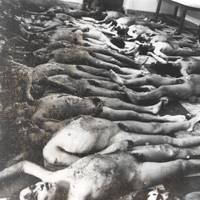
1992
 1992
1992
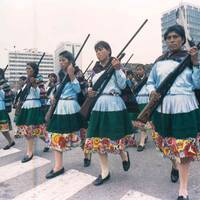
Women from the central highlands participate in the 1992 military parade
 1991
1991
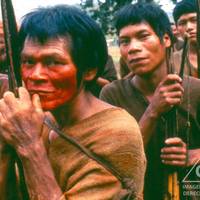
A group of Asháninkas organize into Self-Defense Committees
Showing 1–3 of 3 items
Timeline Events 48
-
Approval of CAD Regulations in Huanta
In February 2002, the Comités de Autodefensa Civil (CAD) in Huanta, organized under the Comité General de Autodefensas Civiles y Desarrollo de la Provincia de Huanta (CACIDH), approved a regulation entitled 'Comités de Autodefensa contra la delincuencia común'. This regulation addresses the challenges posed by post-internal war scenarios and increasing …
-
Quechua mother tongue victims in 2000
In 2000, 16 Quechua-speaking deaths and disappearances were reported. The Shining Path PCP was responsible for 8 victims, State Agents for 2, CADS for 1, and 5 cases were attributed to undetermined perpetrators or others. This year marks the end of the period analyzed by the CVR.
-
Quechua mother tongue victims in 1998
In 1998, 43 Quechua-speaking deaths and disappearances were reported. The Shining Path PCP was responsible for 22 victims, State Agents for 11, CADS for 2, and 8 cases were attributed to undetermined or other perpetrators.
-
Navy removes support to CAD's in Ucayali
In 1998, the Peruvian Navy withdrew support from the Self-Defense Committees (CAD's) in the Ucayali region. This decision was due to the fact that the CAD's became directly dependent on the Prefecture, thus changing the command and supervision structure of these organizations. The CAD's had been formed and supported by …
-
Quechua mother tongue victims in 1997
In 1997, 50 Quechua-speaking deaths and disappearances were recorded. The Shining Path PCP was responsible for 28 victims, State agents for 7, CADS for 2, and 13 cases were attributed to undetermined or other perpetrators.
-
Victims of Quechua mother tongue in 1996
In 1996, 66 Quechua-speaking deaths and disappearances were reported. The Shining Path PCP was responsible for 40 victims, State Agents for 13, CADS for 4, MRTA for 1, and 8 cases were attributed to undetermined perpetrators or others.
-
Clash in Quispincancha
In August 1995, there was an armed confrontation between the PCP-SL and the Quispincancha Self-Defense Committee (CAD), in the district of Iguain, province of Huanta. This event occurred in the context of the final phase of the internal armed conflict in the region. The confrontation is part of the history …
-
Victims of Quechua mother tongue in 1995
In 1995, 110 Quechua-speaking deaths and disappearances were recorded. The Shining Path PCP was responsible for 68 victims, State Agents for 15, CADS for 2, MRTA for 2, and 23 cases were attributed to undetermined perpetrators or others.
-
Murder of Miguel Rivera
Miguel Rivera, a leader of the Pujas community, was killed by the PCP-SL in 1995. Rivera was a community leader who had participated in the PCP-SL assault on the Ayzarca farm in 1980, but had subsequently distanced himself from the subversive group. At the time of his death, Rivera was …
-
Quechua mother-tongue victims in 1994
In 1994, 163 Quechua-speaking deaths and disappearances were reported. The Shining Path PCP was responsible for 96 victims, State Agents for 47, CADS for 2, MRTA for 6, and 12 cases were attributed to undetermined perpetrators or others.
-
First Departmental Congress of CAD in Ayacucho - Expulsion of the Huayhuaco Command
From September 16 to 18, 1993, the First Departmental Congress of Anti-Subversive Self-Defense Committees was held in Ayacucho. The Congress unanimously ratified the expulsion of Javier Pompeyo Rivera T., known as Commander Huayhuaco, who had been imprisoned for drug trafficking. He was declared persona non grata to the self-defense organizations …
2 media -
Diminishing influence of drug cartels in Tamaya and Imiria
Beginning in 1993, the drug cartels significantly decreased their influence in the Tamaya River and Imiria Lake areas. This decline was the result of increased repressive actions by the Navy and the anti-drug policy promoted by the Peruvian government. By this time, the military and political presence of the PCP-SL …
-
Quechua-speaking victims in 1993
In 1993, 391 Quechua-speaking deaths and disappearances were recorded. The Shining Path PCP was responsible for 278 victims, State Agents for 55, CADS for 12, MRTA for 7, and 39 cases were attributed to undetermined perpetrators or others. A significant decrease is observed after Guzman's capture.
-
ADC Caimito agreement with drug traffickers
In 1993, the Caimito Self-Defense Committee (CAD) reached an agreement with the drug traffickers to provide them with security in the face of increased crime and chaos on Lake Imiria. The Caimito ADC had been formed in 1991 as a sub-base of the Puerto Alegre ADC, with the objective of …
-
Quechua mother tongue victims in 1992
In 1992, 747 Quechua-speaking deaths and disappearances were reported. The Shining Path PCP was responsible for 505 victims, State Agents for 154, CADS for 11, MRTA for 13, and 64 cases were attributed to undetermined perpetrators or others. This year marked the capture of Shining Path leader Abimael Guzmán.
-
Spanish-speaking victims in 1992
In 1992, 534 Spanish-speaking victims were reported killed and disappeared, the year with the highest number of Spanish-speaking victims. The Shining Path PCP was responsible for 185 victims, State Agents for 254, CADS for 6, MRTA for 33, and 56 cases were attributed to undetermined perpetrators or others.
-
CAD training at Huipoca
In 1992, the Peruvian Navy successfully formed a Self-Defense Committee (CAD) in the hamlet of Huipoca, located in Padre Abad. This was one of the places where the Navy implemented its new counter-subversive strategy based on winning over the PCP-SL's social base through civic actions. It was the first time …
-
Formation and Activities of the Puerto Alegre Self-Defense Committee
The Puerto Alegre Self-Defense Committee (CAD) was formed on 21 March 1991 with logistical and technical support from the Peruvian Navy. The CAD played a crucial role in combating the PCP-SL (Shining Path) insurgency in the region, using their knowledge of the local geography to guide military operations. By 1994, …
-
CAD training in Puerto Alegre
The Puerto Alegre Self-Defense Committee (CAD) was formed on March 21, 1991, with logistical and technical advice from the Peruvian Navy. This CAD played a fundamental role in the counter-subversive struggle and in the defeat of PCP-SL in Lake Imiria and in some areas of the Tamaya River, due to …
-
Formation of CAD sub-base in Caimito
In 1991, after the formation of the Puerto Alegre ADC, Caimito became a sub-base of the Self-Defense Committee with the specific objective of monitoring and combating the presence of PCP-SL in Lake Imiria. Like other CAD's, Caimito's became a sort of security and order guarantor force, although its actions were …
-
Formation of CAD in Puerto Alegre
In 1991, the population of the hamlet of Puerto Alegre formed a Self-Defense Committee (CAD) which played a crucial role in the counter-subversive efforts against PCP-SL. The CAD was instrumental in defeating PCP-SL in the lake Imiria and some areas of the Tamaya river. This initiative was supported by the …
-
Natives join the CAD of Puerto Alegre
In 1991, the native communities of the area, particularly the Shipibo-Conibo of Lake Imiria, decided to join the Self-Defense Committee (CAD) of the hamlet of Puerto Alegre as a sub-base to combat subversion. This decision was made after PCP-Sendero Luminoso repeatedly tried to impose its laws and organize committees in …
-
Change of counter-subversive strategy in Ucayali
In 1991, the armed forces, particularly the Peruvian Navy, implemented a significant change in their counter-subversive strategy in Ucayali. This new strategy was based on winning over the social base of the PCP-SL through civic actions that demonstrated to the civilian population that the armed forces respected the lives of …
-
Enactment of Legislative Decree 741 and Legalization of the Counter-Subversive Patrols (Rondas Contrasubversivas)
At the end of 1991, the Peruvian government enacted Legislative Decree 741, which legalized the counter-subversive patrols, known as CAD, as community self-defense organizations. This decree was promoted by President Alberto Fujimori, who sought to strengthen peasant participation in the fight against insurgency. Although the decree was seen by some …
-
CAD training at Masisea
In 1991, with the change in the Peruvian Navy's counter-subversive strategy, a Self-Defense Committee (CAD) was formed in Masisea with advice from the Navy. This CAD was part of a broader strategy to win over the social base of PCP-SL in the Ucayali region and its tributaries. The Masisea ADC …
-
Quechua mother tongue victims in 1991
In 1991, 801 Quechua-speaking deaths and disappearances were recorded. The Shining Path PCP was responsible for 519 victims, State Agents for 190, CADS for 29, MRTA for 8, and 55 cases were attributed to undetermined perpetrators or others.
-
Victims of Spanish mother tongue in 1991
In 1991, 486 deaths and disappearances of native Spanish speakers were recorded. The Shining Path PCP was responsible for 168 victims, State Agents for 200, the CADS for 15, the MRTA for 42, and 61 cases were attributed to undetermined perpetrators or others.
-
Formation of Rondas Campesinas and CADs in Vilcashuamán
In 1991, the Rondas Campesinas were formed in Vilcashuamán by deserters of the Shining Path (Sendero Luminoso) due to personal grievances. These groups were organized with the support of the military and included the creation of Comités de Autodefensa (CADs). The CADs were established partly because of the absence of …
-
Victims of Spanish mother tongue in 1990
In 1990, 534 deaths and disappearances of native Spanish speakers were reported. The Shining Path PCP was responsible for 260 victims, State Agents for 161, CADS for 21, MRTA for 35, and 57 cases were attributed to undetermined perpetrators or others.
1 docs -
Victims of Quechua mother tongue in 1990
In 1990, 1,059 Quechua-speaking deaths and disappearances were reported. The Shining Path PCP was responsible for 673 victims, State Agents for 244, CADS for 49, MRTA for 9, and 84 cases were attributed to undetermined or other perpetrators.
-
Resistance and Formation of CAD in Caimito
In November 1989, the native community of Caimito resisted an incursion by the PCP-SL, refusing to organize under their influence due to their non-involvement in coca cultivation. The intervention of German anthropologist Bruno Illius helped prevent further insistence from the PCP-SL. Subsequently, the community formed a self-defense group (CAD) to …
-
PCP-SL incursion in Caimito
PCP-SL raided the hamlet of Caimito in November 1989 and forced the population to organize into committees. Subsequently, in 1991, after the formation of the Puerto Alegre Self-Defense Committee (CAD), Caimito became a sub-base with the objective of monitoring and combating the presence of PCP-SL in Lake Imiria. The Caimito …
-
Victims of Spanish mother tongue in 1989
In 1989, 483 deaths and disappearances of native Spanish speakers were recorded. The Shining Path PCP was responsible for 236 victims, State Agents for 149, CADS for 2, MRTA for 35, and 61 cases were attributed to undetermined or other perpetrators. There has been a significant increase in violence.
2 docs -
Victims of Quechua mother tongue in 1989
In 1989, 1,188 Quechua-speaking deaths and disappearances were recorded. The Shining Path PCP was responsible for 791 victims, State agents for 282, CADS for 14, MRTA for 13, and 88 cases were attributed to undetermined perpetrators or others. A new increase in violence is observed.
2 docs -
Attack on Pichiwillca and the Rise of CAD's Offensive
On April 13, 1988, a group of 40 Shining Path (PCP-SL) members, supported by hundreds of local campesinos, launched an attack on Pichiwillca, the main base of the DECAS in the VRA. The attack was repelled with the help of local ronderos and a military detachment, resulting in the deaths …
-
Quechua mother tongue victims in 1988
In 1988, 810 Quechua-speaking deaths and disappearances were reported. The Shining Path PCP was responsible for 541 victims, State Agents for 203, CADS for 8, MRTA for 5, and 53 cases were attributed to undetermined perpetrators or others.
-
Quechua mother tongue victims in 1987
In 1987, 572 Quechua-speaking deaths and disappearances were recorded. The Shining Path PCP was responsible for 410 victims, State Agents for 106, CADS for 9, and 47 cases were attributed to undetermined perpetrators or others.
-
Victims of Quechua mother tongue in 1986
In 1986, 456 Quechua-speaking deaths and disappearances were reported. The Shining Path PCP was responsible for 264 victims, State Agents for 161, CADS for 2, MRTA for 1, and 28 cases were attributed to undetermined perpetrators or others.
-
Quechua mother tongue victims in 1985
In 1985, 809 Quechua-speaking deaths and disappearances were recorded. The Shining Path PCP was responsible for 412 victims, State agents for 341, the CADS for 19, the MRTA for 3, and 34 cases were attributed to undetermined perpetrators or others. There was a decrease compared to the previous year.
3 docs -
Victims of Quechua mother tongue in 1984
In 1984, 2,354 Quechua-speaking deaths and disappearances were reported, the year with the highest number of victims of the conflict. The Shining Path PCP was responsible for 1,222 victims, State Agents for 964, CADS for 73, MRTA for 1, and 94 cases were attributed to undetermined perpetrators or others. This …
3 docs -
Victims of Quechua mother tongue in 1983
In 1983, 1,344 Quechua-speaking deaths and disappearances were recorded. The Shining Path PCP was responsible for 663 victims, State Agents for 593, CADS for 17, MRTA for 2, and 69 cases were attributed to undetermined perpetrators or others. This year represents a dramatic escalation in the violence of the conflict.
-
Victims of Quechua mother tongue in 1982
In 1982, 316 Quechua-speaking deaths and disappearances were reported. The Shining Path PCP was responsible for 197 victims, State agents for 90, the CADS for 5, and 24 cases were attributed to undetermined or other perpetrators. There was a significant increase in the number of victims compared to previous years.
-
Dead and missing reported to CVR in Peru
During the period 1980-2000, the Truth and Reconciliation Commission (CVR) recorded a total of 11,376 Quechua-speaking deaths and disappearances. The Shining Path PCP was responsible for 6,788 victims, State Agents for 3,491, the Self-Defense Committees (CADS) for 261, the MRTA for 71, and 765 cases were attributed to undetermined perpetrators …
8 media 32 docs -
Victims in the department of Junín
During the period 1980-2000, the department of Junín registered 984 Quechua-speaking and 807 Spanish-speaking deaths and disappearances. Among the Quechua-speaking victims, the Shining Path PCP was responsible for 666 victims, the State Agents for 128, the CADS for 60, the MRTA for 50, and 80 undetermined cases. Among the Spanish-speaking …
-
Victims in the department of Huánuco
During the period 1980-2000, the department of Huánuco registered 905 Quechua-speaking and 1,123 Spanish-speaking deaths and disappearances. Among the Quechua-speaking victims, the Shining Path PCP was responsible for 559 victims, State agents for 257, and 89 cases were attributed to undetermined perpetrators or others. Among the Spanish-speaking victims, Shining Path …
-
Victims in the department of Huancavelica
During the period 1980-2000, the department of Huancavelica registered 1,166 Quechua-speaking deaths and disappearances. The Shining Path PCP was responsible for 748 victims, State Agents for 317, CADS for 16, MRTA for 1, and 84 cases were attributed to undetermined perpetrators or others.
22 docs -
Victims in the department of Ayacucho
During the period 1980-2000, the department of Ayacucho was the most affected by the internal armed conflict. A total of 6,549 Quechua-speaking people were reported killed and disappeared in this department. The Shining Path PCP was responsible for 3,752 victims, State agents for 2,316, CADS for 170, MRTA for 3, …
1 media 1 docs -
Deaths and disappearances of Spanish mother tongue in Peru
During the period 1980-2000, the CVR recorded a total of 3,593 deaths and disappearances of native Spanish speakers. The Shining Path PCP was responsible for 1,734 victims, State Agents for 1,181, CADS for 49, MRTA for 190, and 439 cases were attributed to undetermined perpetrators or others. Spanish-speaking victims accounted …
4 media 13 docs