
Photos & Videos
32 media items in Truth and Reconciliation Commission - Peru
Tag
uchuraccay
×

Martyrs of Uchuraccay. Fragment of the documentary "Traces of the path"
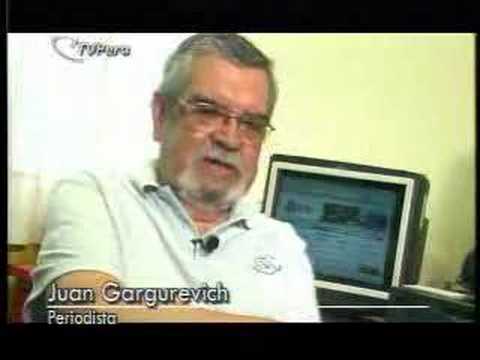
Uchuraccay: 25 years after the murder of journalists in Peru
Uchuraccay in memory
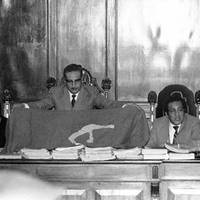 1986
1986
SPECIAL TRIBUNAL ON UCHURACCAY
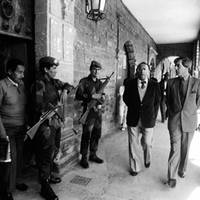 1984
1984
VARGAS LLOSA AND CASTRO ARENAS IN AYACUCHO
 1984
1984
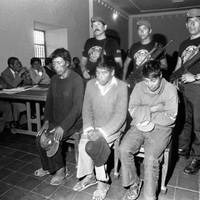
ACCUSED OF JOURNALISTS' MURDERS
 1984
1984
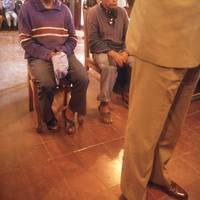
Two of the peasants accused of the murder in Uchuraccay
 1984
1984
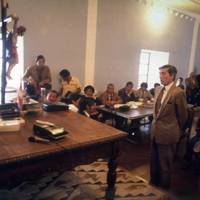
Mario Vargas Llosa gives his statement in the Uchuraccay case
 1984
1984
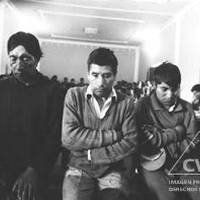
Peasants accused of the murders at Uchuraccay
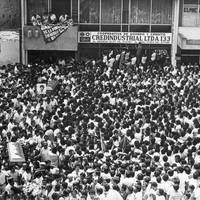 1983
1983
Funeral procession of the journalists murdered at Uchuraccay
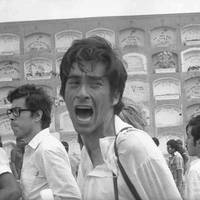 1983
1983
Expressions of grief and outrage during the funerals of the journalists killed at Uchuraccay
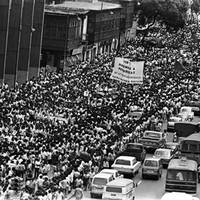 1983
1983
FUNERAL OF JOURNALISTS MURDERED IN UCHURACCAY
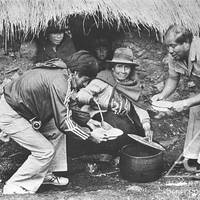 1983
1983
Amador García and Jorge Sedano receive food from a peasant woman
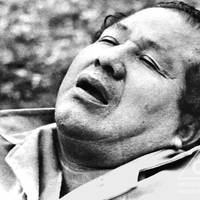 1983
1983
Jorge Sedano, photojournalist for the newspaper La República, days before dying in the Uchuraccay massacre
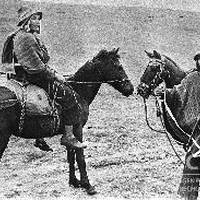 1983
1983
Peasants in the highlands of Huanta
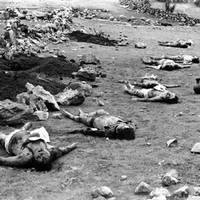 1983
1983
UCHURACCAY, MURDERED JOURNALISTS
 1983
1983
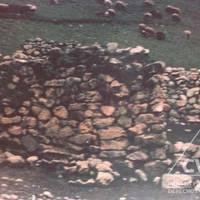
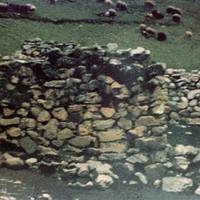
Stone wall of the community of Uchuraccay, in Huanta
 1983
1983
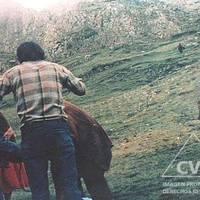
In Uchuraccay, Jorge Sedano on his knees and Félix Gavilano with hands raised
 1983
1983
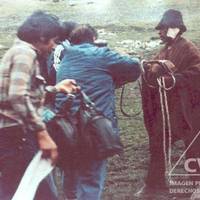
Meeting of eight journalists with a peasant from Uchuraccay
 1983
1983
UCHURACCAY, PHOTO BY WILLY RETTO
 1983
1983
UCHURACCAY, PHOTO BY WILLY RETTO
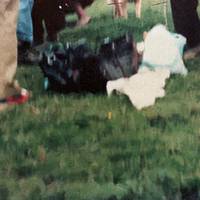 1983
1983
UCHURACCAY, PHOTO BY WILLY RETTO
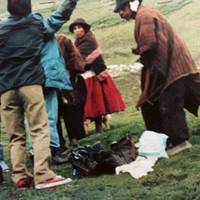 1983
1983
UCHURACCAY, PHOTO BY WILLY RETTO
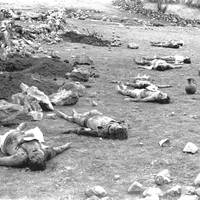 1983
1983
Bodies of the 8 journalists murdered in the community of Uchuraccay.
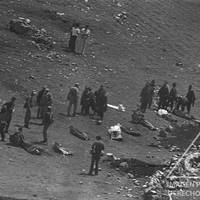 1983
1983
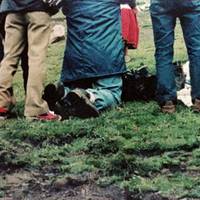
Peasants exhume the victims of the Uchuraccay massacre.
 1983
1983
UCHURACCAY, PHOTO BY WILLY RETTO
 1983
1983
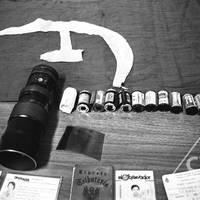
Objects handed over by the Uchuraccay community members
 1983
1983
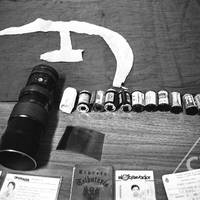
Objects handed over by the Uchuraccay community members
 1983
1983
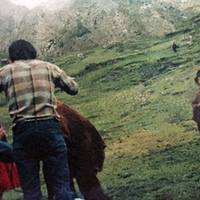
UCHURACCAY, PHOTO BY WILLY RETTO
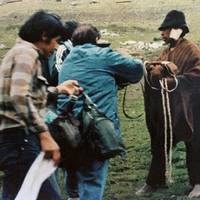 1983
1983
UCHURACCAY, PHOTO BY WILLY RETTO
 1983
1983
UCHURACCAY. PHOTO BY WILLY RETTO
Showing 1–32 of 32 items
Timeline Events 50
-
Community assembly with CVR in Uchuraccay
Commissioner Alberto Morote Sánchez held an assembly with the authorities of the Uchuraccay community and conducted interviews with the villagers. This visit was part of the Truth and Reconciliation Commission's work to collect testimonies about the violence that occurred in the community during the internal armed conflict. During this assembly, …
2 docs -
Uchuraccay trial remains open in reserve
In January 2003, on the 20th anniversary of the Uchuraccay massacre, it was expected that a ruling would be issued on the statute of limitations. However, the judicial authorities considered that the legal period for the process to remain in reserve is 30 years, which means that the statute of …
1 media 2 docs -
List of murdered uchuraccaínos submitted to the Truth and Reconciliation Commission
On June 1, 2002, the population of Uchuraccay handed over to the representatives of the Truth and Reconciliation Commission the "List of murdered Uchuraccaínos". This list was elaborated in two communal assemblies and documented the deaths of one hundred and thirty-five community members killed during the internal armed conflict. These …
1 media 1 docs -
Visit of the Truth and Reconciliation Commission to Uchuraccay
In May 2002, the Truth and Reconciliation Commission visited the community of Uchuraccay. Upon learning of the Commission's arrival, some community members initially thought that it was going to "judge them for the massacre of the journalists" that took place in 1983. Once they overcame their initial mistrust, the community …
8 docs -
135 dead uchuraccaínos list delivered to the CVR
In May 2002, the villagers of Uchuraccay handed over to the members of the Truth and Reconciliation Commission a list with the names of 135 Uchuraccaínos who died as a result of political violence between 1983 and 1984. This delivery was part of the TRC's documentation work on the victims …
6 docs -
Uchuraccay Massacre Aftermath
In the aftermath of the Uchuraccay massacre, Saturnina Figueroa, the widow of Severino Morales, recounted the threats she faced from local forces. She was spared from death but was warned to remain silent about the events, under the threat of death. The community was under pressure to hide the truth, …
-
Interview with Saturnina Figueroa, widow of Severino Morales, in Uchuraccay
Interview with Saturnina Figueroa, widow of Severino Huáscar Morales Ccente, in the community of Uchuraccay. Severino Morales was identified in Shining Path documents as 'commissary of the Popular Committee of Uchuraccay' and was locally responsible for the PCP-Sendero Luminoso in the community. The interview is part of the CVR's investigations …
1 docs -
Interview in Uchuraccay
Interview conducted in the community of Uchuraccay as part of the investigation of the Truth and Reconciliation Commission. The interview was carried out in the context of the collection of testimonies on the violent events that occurred during the internal armed conflict. The testimonies collected were part of the process …
1 docs -
I Meeting for peace and national reconciliation
On January 26, 1998, in commemoration of the fifteenth anniversary of the death of the eight journalists murdered in Uchuraccay, the first peace and national reconciliation meeting was held. This event was promoted by a group of journalists from Ayacucho and the authorities of the Tambo district, who contacted the …
7 docs -
I Encounter for Peace and National Reconciliation
On January 26, 1998, the 'I Encounter for Peace and National Reconciliation' was held in the community of Uchuraccay. This event was held in commemoration of the fifteenth anniversary of the death of the eight journalists murdered on January 26, 1983. The meeting was part of the national reconciliation efforts …
1 docs -
Withdrawal from Uchuraccay military base
A military base that had been installed in Uchuraccay to provide security for families returning to the community after displacement caused by violence was removed in March 1997. This military base had remained in the village since the return of the first displaced people in October 1993, providing the security …
-
Inauguration of Nuevo Uchuraccay
In 1995, the president of Peru inaugurated Nuevo Uchuraccay as part of the government's repopulation policy. The community was showcased as an example of this policy and was rebuilt on a new site on the hillside above the old town center. Nuevo Uchuraccay was composed of about fifty small houses …
-
Inauguration of Nuevo Uchuraccay
In 1995, President Alberto Fujimori inaugurated Nuevo Uchuraccay, a community rebuilt as part of his government's pacification policy. The new settlement consisted of small urban-style houses and was equipped with a health post, an ambulance, and computers, despite lacking electricity. This event was part of a broader effort to repopulate …
-
Return of twenty-four families to Uchuraccay
A group of twenty-four families returned to Uchuraccay after almost a decade of absence. This return was possible after months of coordination promoted by Elías Ccente, with the support of the National Evangelical Council of Peru. The community had been totally depopulated due to repeated attacks by the PCP-Sendero Luminoso, …
-
Return of families to Uchuraccay
On October 10, 1993, twenty-four families returned to Uchuraccay after a long period of absence, uprooting and diaspora. The community had ceased to exist in mid-1984 when the surviving families fled to nearby communities and towns in the highlands and jungle of Ayacucho, as well as to the cities of …
-
Return of Uchuraccay Families
In the early 1990s, the survivors of Uchuraccay faced significant challenges due to the stigma and fear associated with their community. Led by Elías Ccente, the displaced families from Uchuraccay were encouraged to return to their homeland. On October 10, 1993, supported by the Concilio Nacional Evangélico Peruano, twenty-four families …
-
Return of displaced families to Uchuraccay
On October 10, 1993, with the decrease of subversive action in the area, a group of twenty-four families supported by the Peruvian National Evangelical Council (CONEP) returned to Uchuraccay after years of forced displacement. Due to military reasons and to get away from the 'bad memories', the returnees decided to …
-
Visit of community member to abandoned Uchuraccay
In 1992, an Uchuraccaíño community member who was enrolled in the Self-Defense Committee of a neighboring community (San José de Secce) returned to see his hometown as part of a civil patrol. He arrived at a hill from where Uchuraccay could be seen and found the town in total silence. …
-
Murder of journalist Antonio Morales
Antonio Morales, a journalist known for his involvement in the Uchuraccay case and correspondent of El diario de Marka in Huamanga, Ayacucho, was murdered on July 13, 1991. Before his death, he had received death threats from the self-styled Comando de Liberación Antiterrorista (Anti-Terrorist Liberation Command). This murder took place …
1 docs -
Final judgment in the second instance of the Uchuraccay case
The Supreme Court of Justice issued its final judgment in the second instance of the Uchuraccay case, increasing to 15 years the prison sentence of defendants Dionisio Morales Pérez and Mariano Ccasani Gonzáles for the crime of simple homicide, confirming the rest of the sentence of the Special Court. The …
2 docs -
Attack on Ccarhuapampa group of displaced people
The Ccarhuapampa group of displaced people, where many Uchuraccaínos had fled after attacks on their community, was attacked by the Shining Path PCP in 1988. During the attack, several people were killed. The attackers used axes to kill the victims, hitting them in the head. This attack was part of …
4 docs -
Massacre of Uchuraccay Refugees
In 1988, a group of displaced individuals from Uchuraccay, who had sought refuge in Ccarhuapampa, were attacked by members of the PCP Sendero Luminoso. Several people were killed in the attack, including Paulina Ccasani Huicho, Fortunato Soto Ccasani, Dionisio Nawpa Gavilán, and Angélica Huachaca Gavilán. The attack is remembered as …
-
Death of Simeón Auccatoma Quispe in prison
Simeón Auccatoma Quispe, a member of the Uchuraccay community and one of the three defendants arrested for the massacre of journalists on January 26, 1983, died in prison of tuberculosis contracted in the Lurigancho prison. During the oral trial, Auccatoma Quispe was extremely affected and submissive, bursting into tears several …
2 docs -
Uchuraccay Massacre Trial
The Uchuraccay Massacre trial concluded with the sentencing of Dionisio Morales Pérez, Mariano Ccasani Gonzáles, and Simeón Auccatoma Quispe to ten, eight, and six years of imprisonment, respectively. The court found insufficient evidence to attribute deliberate intent to increase the suffering of the victims, considering the defendants' backgrounds as semi-illiterate …
-
Judgment of the Special Court on the Uchuraccay Case
The Special Court sentenced three peasants from Uchuraccay for the murder of eight journalists on January 26, 1983. Dionisio Morales Pérez was sentenced to 10 years in prison, Mariano Ccasani Gonzáles to 8 years and Simeón Auccatoma Quispe to 6 years, all for the crime of simple homicide. Although the …
3 media 3 docs -
Final court decision on the Uchuraccay case
The judiciary issued the final ruling in the criminal trial for the murder of eight journalists and two community members in Uchuraccay on January 26, 1983. The judicial process was extremely confusing and lengthy, lasting more than four years. The sentence convicted three peasants from Uchuraccay for murder: Dionisio Morales …
5 docs -
Uchuraccay Massacre Verdict
In March 1987, the Tribunal Correccional delivered a verdict on the Uchuraccay massacre, condemning three campesinos from the Ayacucho village for the crime. Additionally, charges were brought against General EP Clemente Noel Moral and seven other security force members for abuse of authority and obstruction of justice.
-
Condemnation of peasants for Uchuraccay massacre
Four years after the 1983 Uchuraccay massacre, the Correctional Court in charge of the case issued its conviction. The court convicted three peasants from the Ayacucho hamlet of Uchuraccay accused of the crime. This sentence came in March 1987, four years after the events that took the lives of eight …
1 media 2 docs -
Exhumation of Juan Argumedo's body
Juan Argumedo was one of the journalists murdered in the Uchuraccay massacre on January 26, 1983. His sister Juana Lidia Argumedo went to Uchuraccay with Judge Juan Flores Rojas on February 11, 1983 to perform the exhumation, but it could not be done because the body was not found. Some …
-
Oral trial with statements of mixed patrol in the Uchuraccay case
During the oral trial of the Uchuraccay case transferred to Lima, hearings were held between May and December 1986 in which members of the mixed patrol that arrived in Uchuraccay after the murder of the journalists on January 26, 1983 testified. The trial took place before the Special Tribunal that …
-
Constitution of Special Tribunal for the Uchuraccay case
In mid-April 1986, the Eighth Correctional Court of Lima became a Special Court dedicated exclusively to the Uchuraccay case. This tribunal was presided over by a doctor whose name is not fully specified in the excerpt. The Special Tribunal was constituted after the trial was transferred from Ayacucho to Lima …
-
Finding of Juan Argumedo's corpse
During the oral trial of the Uchuraccay trial that took place between May and December 1986, the body of Juan Argumedo was found. Juan Argumedo García had been captured on January 23, 1983, 5 kilometers from Uchuraccay, at the point called Yuracyacu, and taken to the community for interrogation. Argumedo …
-
Eighth Correctional Court takes over the Uchuraccay trial
On November 25, 1985, the Eighth Correctional Court of Lima was designated to take over the continuation of the judicial process for the Uchuraccay massacre. This transfer took place after the request of the journalists' relatives to transfer the trial from Ayacucho to Lima was declared well-founded on September 12, …
-
Declaration of transfer of the process to Lima
On September 12, 1985, the request of the relatives of the journalists murdered in Uchuraccay to transfer the judicial process to Lima was declared well-founded. This decision was made after the relatives requested the transfer of jurisdiction on July 18, 1985 and challenged all the members of the chamber of …
-
Recusation of members of the Superior Court of Ayacucho
The relatives of the journalists murdered in Uchuraccay recused all the members of the chamber of the Superior Court of Ayacucho during the judicial process. This recusal occurred after the last hearing of the oral trial held on July 24, 1985. The recusal was part of the multiple irregularities and …
-
Last hearing of the Uchuraccay massacre trial
On July 24, 1985, the last hearing of the oral trial against three peasants accused of the massacre of eight journalists in Uchuraccay was held. The oral trial had begun on September 28, 1984 and lasted ten months. The defendants present were Dionisio Morales Pérez, Mariano Ccasani Gonzáles and Simeón …
1 media 1 docs -
Request for transfer of the trial to Lima
On July 18, 1985, the relatives of the journalists murdered in Uchuraccay formally requested the transfer of jurisdiction of the trial from the Superior Court of Ayacucho to the city of Lima. This request came in the context of an extremely eventful and complex judicial process that had dragged on …
-
Inappropriateness of the withdrawal of the prosecutor's indictment in the Uchuraccay case
On June 21, 1985, the withdrawal of the prosecutor's indictment against the three peasants arrested for the Uchuraccay massacre was declared inadmissible. This judicial decision came after prosecutor Oscar Guerrero surprisingly requested, during the hearing of March 26, 1985, the withdrawal of the accusation against the three accused and their …
-
Prosecutor requests withdrawal of indictment in Uchuraccay case
During the hearing on March 26, 1985 in the oral trial for the Uchuraccay massacre, prosecutor Oscar Guerrero, to the astonishment of the audience, requested the withdrawal of the accusation against the three accused peasants (Dionisio Morales Perez, Mariano Ccasani Gonzales and Simeon Auccatoma Quispe) and their immediate release. The …
-
Start of the oral trial in Ayacucho for the Uchuraccay Massacre
On September 28, 1984, the oral trial of the Uchuraccay trial began with great expectation in the courtroom of the Superior Court of Ayacucho. The only three defendants present were the detained peasants Dionisio Morales Pérez, Mariano Ccasani Gonzáles and Simeón Auccatoma Quispe, who were Quechua speakers and required interpreters …
2 media 2 docs -
Arrest of Juana Lidia Argumedo
Juana Lidia Argumedo, sister of Juan Argumedo (guide of the journalists murdered in Uchuraccay in 1983), was arrested on September 15, 1984. After the Uchuraccay tragedy, Juana denounced the responsibility of the armed forces in the events. As a result of these denunciations, she was detained by the forces of …
-
Detention and torture of witness in the Uchuraccay case
In mid-September 1984, a witness in the Uchuraccay case was detained by a group of Marines and taken to the Tambo military barracks. There she was tortured and raped, despite having the guarantees of the Peruvian Episcopate and the Ministry of the Interior due to her status as a witness …
2 media 8 docs -
Prosecution accusation against seventeen farmers of Uchuraccay
On August 14, 1984, the Public Prosecutor's Office filed the indictment against seventeen peasants from Uchuraccay accused of the massacre of journalists that occurred on January 26, 1983. The prosecution requested a minimum prison sentence of 25 years for the crime of multiple homicide. Of the seventeen defendants, only three …
2 media 1 docs -
Murders of Uchuraccay villagers by the army
In August 1984, the Peruvian army committed assassinations against villagers in Uchuraccay. The wife and young son of Faustino Gómez were killed, as well as the youngest daughter of Paulino Figueroa. Also killed were Angelina Llancce Puclla, Inocencia Llancce, Bonifacia Gálvez Farfán, Emilia Ccahuana Cunto and María Maule. These murders …
-
Uninhabited community of Uchuraccay
By August 1984, after multiple attacks by the Shining Path PCP and the armed forces, the villagers of Uchuraccay had no choice but to completely abandon their community. During the previous months, incursions by the PCP-SL, the Self-Defense Committees and the military arrived indiscriminately, burning houses, stealing belongings and livestock, …
-
Incursion of Carhuahuran patrols
In April 1984, the Carhuahurán rondas raided the community of Uchuraccay, which by then was practically uninhabited after multiple attacks. During this incursion, the ronderos took the church bells, as well as the school's folders and roof. This raid was part of a broader context in which communities organized in …
-
Prosecution accusation against three detainees and fourteen community members of Uchuraccay
In March 1984, the Public Prosecutor's Office charged three detained community members (Dionisio Morales Pérez, Mariano Ccasani Gonzáles and Simeón Auccatoma Quispe) and fourteen other community members from Uchuraccay for the massacre of journalists that took place on January 26, 1983. Subsequently, on August 14, 1984, the Public Prosecutor's Office …
2 docs -
Completion of judicial investigation of the Uchuraccay case
The investigation carried out by the ad hoc Court of Instruction ended on February 17, 1984, one year and one month after the events of the Uchuraccay massacre. The case file was transferred to the Superior Court of Justice of Ayacucho. Subsequently, on August 14, 1984, the Public Prosecutor's Office …
-
Judicial reconstruction of facts in Uchuraccay
On January 31, 1984, a judicial reconstruction of facts was carried out in Uchuraccay, related to the judicial process for the murder of the eight journalists that occurred on January 26, 1983. During this proceeding, the path taken by the journalists from their arrival in the area to the place …
-
Reconstruction of the events in Uchuraccay
On January 31, 1984, the judicial reconstruction of the events that occurred in the community of Uchuraccay took place. This judicial proceeding was part of the criminal process initiated after the massacre of eight journalists, a guide and a community member on January 26, 1983. The reconstruction was carried out …
Documents 47
Everyone Against the Truth! What You Always Wanted to Know About the CVR. Who Does Not Want to Disseminate the CVR Report? Is Shining Path Re-emerging?
Maintaining his direct style, without ambiguities or artifice, Morote unmasks those who attack the Comisión de la Verdad y Reconciliación to conceal their crimes, complicity, or silence committed during the …
Uchuraccay, Vargas Llosa's Nightmare
It has been a long time since Mario Vargas Llosa has referred to Uchuraccay, that horrific episode in the history of Peru that, on January 26, 1983, cost the lives …
Uchuraccay Massacre: The Story of the Guide Who Died with the Eight Journalists
The eight journalists, martyrs of Uchuraccay, murdered on January 26, 1983, have always been justly honored; but what happened to their guide, Juan Argumedo, and to a community member, Severino …
They Live in the Hearts of Those Who Loved Them
On January 26, 1983, eight journalists were killed in a frigid community on the Ayacuchan highlands. The whirlwind of violence then spreading across Peru suddenly engulfed those who had traveled …
Uchuraccay or the Silence of the Killers
The writer and journalist Alfredo Pita recalls that fateful day when he arrived in Uchuraccay immediately after the massacre, about which clear answers are still lacking due to what has …
Uchuraccay, 30 Years Later: The Same Shadows
Thirty years ago (January 26, 1983), eight journalists went to Uchuraccay to try to find out what had happened a week earlier in Huaychau, and to determine whether the official …
Uchuraccay and the Peru profundo of Mario Vargas Llosa
This is a true story that nobody believed when it became public. What happened there — and what was said about what happened there — constitutes an emblematic event for …
Visual Memory in Peru: Photographs from the Uchuraccay Case
On January 26, 1983, eight journalists, a guide, and a community member were murdered in the town of Uchuraccay, located in the highlands of Peru, while investigating the killings carried …
Comparative Analysis of the News Coverage of the Uchuraccay Case in the Newspapers El Comercio, La República, and Diario Marka
In the following investigation, each of the events that left us with reflection and above all a lesson about what it means to carry out journalistic work will be laid …
Uchuraccay: The Perpetual Mourning of the Press
Breathless, senseless: the Uchuraccay massacre and its subsequent politicization have been the worst tragedies in national journalism, without mercy. Every year, Javier Ascue — a leading journalist at El Comercio …
Comparative Analysis of News Coverage in the Newspapers El Comercio, La República, and El Diario Marka in the Uchuraccay Case
The following research captures each of the events that left us with reflection and above all a lesson about what it means to carry out journalistic work. Here, details of …
Comparative Analysis of News Coverage in the Newspapers El Comercio, La República, and El Diario Marka in the Uchuraccay Case
The objective of this monograph is to comparatively determine the level of information provided by the newspapers La República, El diario Marka, and El Comercio regarding the massacre of the …
CHRONICLE: The Uchuraccay Massacre Told from the Inside
Breathless, senseless: the Uchuraccay massacre and its subsequent politicization have been the worst tragedies in national journalism, without mercy. Every year, Javier Ascue, a representative journalist at El Comercio to …
The General's Labyrinth
Twenty-two years after the murder of the eight journalists in Uchuraccay — deaths that were wrongly attributed for years to a decision by General Clemente Noel — Judge Ayala of …
Violence, Memory and Imagination. Uchuraccay and Lucanamarca in Peru's Political Violence
Violence, memory, and representation are the three axes of analysis of this thesis for the degree of Master of Arts (History) at the University of Wisconsin, Madison. These levels are …
Report of the Truth and Reconciliation Commission: A Painful Mirror of Peru
What happened in Peru during the last 20 years of the 20th century that caused violence to produce an enormous number of deaths, which the Truth and Reconciliation Commission (CVR) …
Violence, Memory, and Imagination. Uchuraccay and Lucanamarca in Peru's Political Violence
Violence, memory, and representation are the three analytical axes of this thesis for the degree of Master of Arts (History) at the University of Wisconsin, Madison. These levels are approached …
Terror, Blood, Death in the Andes: Uchuraccay Silent Witness
"Terror, sangre, muerte en los andes: Uchuraccay mudo testigo" is not a novel, nor is it a fantasy born from the hallucination of feverish or perhaps dreaming states; none of …
Uchuraccay: The Politics of Death in Peru
The events of Uchuraccay — which include the deaths of 135 peasants — allow us to approach the divides that continue to distort Peruvian society. We suggest that the quasi-sacred …
Postcolonial Memory. Time, Space, and Discourse on the Events of Uchuraccay
Today we are at the moment of historicizing the era of violence in Peru. But this does not mean placing events and memories in the past in order to forget …
The Pursuer
Interview with Philip Bennett, an American who is currently the international affairs editor of the Washington Post. Before that, however, he worked in Peru, married a Lima woman of Cusco …
Uchuraccay or The Face of Barbarism. First Edition
The author states in this work: In 1989 I submitted this book (when it was 1,000 pages, 2 volumes) to CONCYTEC, which did not approve it, as that honor had …
Never So Close Did the Distant Strike. Memory and Political Violence in Peru
This work explores the scenario of violence and the ways in which the memory of Uchuraccay operates — a community that, after the massacre, became an emblematic reference point for …
Another Clue to Understanding What Happened in Uchuraccay
On January 23, 1983, General Noel, then the political-military commander of the Ayacucho zone, announced to the press that the villagers of Huaychao had killed seven Senderistas. To find out …
Vargas Llosa Exploited Our Pain
17 years later, the wounds of Uchuraccay are still open. Widows and mothers of the journalists murdered in Ayacucho are outraged when they recall the injustice that the writer covered …
Truth Commissions in Latin America
Most Latin American societies experienced, over the last four decades, ongoing situations of violence and internal conflict, due to serious conditions of injustice and economic and social inequality. Faced with …
High Risk. 13 Years Since the Uchuraccay Massacre and 22 Unresolved Cases
On January 26, thirteen years ago, the community of Iquicha, in the jurisdiction of Uchuraccay, was the scene of the massacre of eight journalists who, in their eagerness to document …
History of a Massacre
"Inquest in the Andes." This article was published on July 31, 1983 in the New York Times Magazine and subsequently, in 1991, the Spanish version appeared in "Sangre y mugre …
The Writer Insists on the Innocence of the Military
Judge Hermenegildo Ventura Huayhua will cause a national scandal in Peru in the coming days when he charges, as he himself has announced, the armed forces with the murder of …
Perpetrators of the Massacre Were Transferred to Ayacucho
Front page of El Comercio. February 2, 1983. Other headlines: Among them the Lieutenant Governor and several women. Lima gives a massive farewell to the murdered journalists. Relatives, upset at …
Massacre of Journalists in Huanta
Published January 31, 1983. Other headlines on the same page: Responsibility lies with the comuneros. Announced by the political-military command of the emergency zone. Uchurracai (sic) is characterized by conflict …
Uchuraccay. Testimony of a Massacre
Before January 26, 1983, no one knew where Uchuraccay was — a locality in the province of Huanta, department of Ayacucho. After that date, it was discovered that it "existed," …
The Tragedy of Uchuraccay: Report on Shining Path
Uchuraccay has not been the subject of any systematic study; in the mid-1980s an anthropological expedition from the Universidad de Huamanga, led by Professor Mario Benavides, made a frustrated attempt …
Report of the Investigative Commission on the Events of Uchuraccay
During the following months, Uchuraccay continued to be the scene of violence, death, and desolation: one hundred and thirty-five community members were killed as a result of attacks by the …
Report on Uchuraccay
Full report on the background, events, and consequences that took place in the community of Uchuraccay, resulting in the deaths of eight members of the national press, presented to the …
Vargas Llosa Defends His Report on the Murder of Eight Journalists in Ayacucho
Mario Vargas Llosa, president of the independent commission that investigated the murders of eight journalists in Ayacucho, believes that the recently discovered photographs confirm the commission's conclusions that the reporters …
Government Named Commission to Investigate Massacre
Front page of El Comercio. Thursday, February 3, 1983.
Journalists' Remains Were Buried in Separate Ceremonies
Wednesday, February 2, 1983. Other headlines: Relatives did not allow the coffins to be used for political ends. Cardinal calls for an investigation into the Uchuraccai massacre. Condolence messages continue …
Death of Eight Journalists in Uchuraccay Confirmed
Front page of El Comercio. Monday, January 31, 1983. Other headlines: Due to a misunderstanding, comuneros confused them with terrorists.
Report of the Investigative Commission on the Events at Uchuraccay.
The report — signed by Mario Vargas Llosa, Abraham Guzmán Figueroa, and Mario Castro Arenas — is divided into four parts. The first, under the title "How It Happened," reconstructs …