Barrios Altos and La Cantuta are the cases that could put former President Fujimori behind bars. Most Peruvians know fragments of what happened — broken accounts, painful images — but …

Books & Articles
53 documents in Truth and Reconciliation Commission - Peru
The Idehpucp, together with Abogados sin Fronteras – Canadá, Human Rights Research and Education Centre, University of Ottawa, Fundación para el Debido Proceso, Clinique internationale de défense des droits humains, …
Family members of the victims in the Barrios Altos and La Cantuta cases, along with their legal defense team comprising APRODEH, COMISEDH, FEDEPAZ, and IDL — organizations that make up …
We greet you on behalf of the Coordinadora Nacional de Derechos Humanos (CNDDHH), an institutional platform that brings together 78 organizations at the national level that defend and promote human …
The Inter-American Court of Human Rights has underscored the role of truth commission reports in Latin America in establishing the facts that constitute the violation of a right, affirming the …
Lima accounts for only 2% of the disappeared at the national level. But this does not prevent the identification of a pattern of disappearances. Three moments are identified in the …
The obsessive question resurfaces: this time, when did Peru go wrong? How did this (another) missed opportunity come about? How has the crude and arrogant right — being a minority, …
During the Fujimontesinista decade, a pernicious style emerged and took hold — one that few of us denounced and that the majority refused to see or confront. Society accepted it …
This year, in connection with the sentence issued by the Corte Suprema de Justicia in the Barrios Altos case, crimes against humanity returned to the top of the public agenda …
On July 20, the Supreme Court of Peru issued a highly controversial ruling in a case involving members of the annihilation squad known as the Grupo Colina. According to human …
The Consejo Nacional de la Magistratura, as the sole disciplinary body for Supreme Court judges, agreed yesterday to open a preliminary investigation into the magistrates of the Sala Penal of …
Last Friday the Sala Penal Permanente of the Corte Suprema de Justicia made public the ruling in the Barrios Altos case, following a television interview with the president of that …
It should be recalled that the amnesty laws were enacted in 1995 because of this case, as the existence of a military organization dedicated to killing people, and its connection …
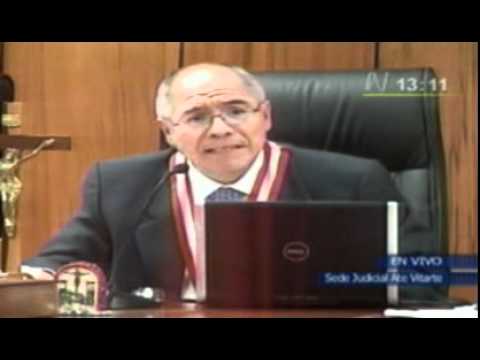
Exactly 2 years ago, the Special Criminal Chamber, presided over by magistrate César San Martín Castro, issued a condemnatory sentence against former president Alberto Fujimori Fujimori for the commission of …
With only a few days remaining before sentence is handed down against former president Alberto Fujimori (1990–2000) for the crimes of Barrios Altos and La Cantuta, the prosecutor in the …
In a historic ruling, a Peruvian court sentenced former President Alberto Fujimori to 25 years in prison for human rights violations. Fujimori, 70, was accused of being the intellectual author …
The First Transitional Criminal Chamber of the Supreme Court confirmed the 25-year prison sentence for Alberto Fujimori for the murders in the Barrios Altos and La Cantuta cases, and for …
Resolution of the Peruvian State ratifying the sentence against Alberto Fujimori. Published on December 30, 2009.
"People were no longer asking how you were, but who had been murdered," recalled former president Alberto Fujimori in a passage of his self-defense begun on Wednesday the 1st. He …
The trial of Alberto Fujimori Fujimori for the commission of serious crimes against human rights is, without doubt, the most important in our history, not only because a former president …
In order to highlight and analyze the Fujimori trial in comparative perspective, as well as other proceedings for human rights violations currently underway in various parts of Latin America, the …
The Washington Office on Latin America (WOLA) sent Dr. Jo-Marie Burt, professor of political science at George Mason University, to Lima to observe the trial of former Peruvian President Alberto …
The opinions of former attorney Antonio Maldonado and José Miguel Vivanco, of Human Rights Watch, constitute a long and compelling list of arguments why the Chilean justice system must rule …
A compilation of the events and investigations that brought Alberto Fujimori to the defendant's bench.
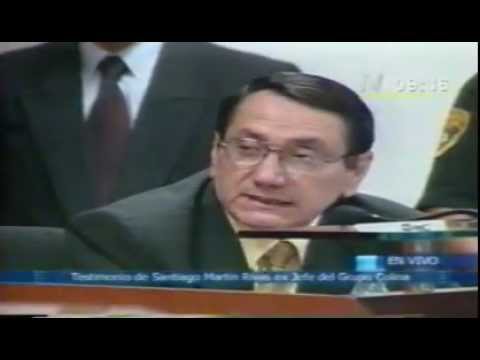
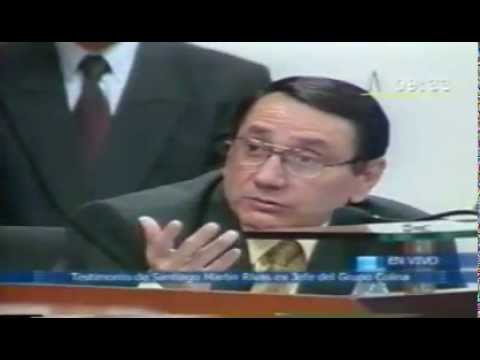
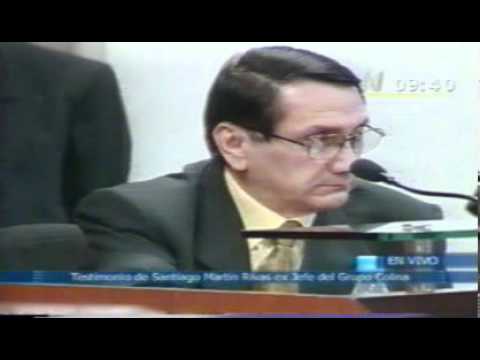
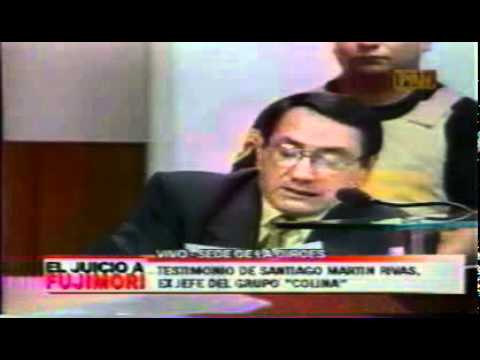
In a testimony that, as is known, appears in the book "Eye for an Eye" ("Ojo por ojo") by journalist Umberto Jara, Major EP (r) Santiago Martin Rivas, former operational …
Peruvian authorities captured on Monday one of the most wanted men by the country's justice system. He is Santiago Martín Rivas, former leader of the paramilitary group "Colina," a squad …
More than 10 years have passed since the night when the killers burst into the old building on Jirón Huanta 840. If until then many had doubted the magnitude of …
In the Barrios Altos case, the Inter-American Court of Human Rights issues the present Judgment: 1. To accept the acknowledgment of international responsibility made by the Peruvian State. 2. To …
One of the most complex problems faced by processes of democratic re-institutionalization, such as the one currently underway in the country, is overcoming and resolving the human rights violations that …
An intelligence agent who participated as a member of the "Special Team" self-styled "Grupo Colina" and an officer who held a senior position in the Army Intelligence Service (SIE) have …
The criminal proceedings brought against former president Alberto Fujimori in the Barrios Altos and La Cantuta cases, and the case of the Basements of the Army Intelligence Service (SIE), has …
This Ombudsman's report presents the background and the political, institutional, and legal context in which the amnesty laws were enacted, along with the parameters for evaluating, analyzing, and resolving the …
The Inter-American Court of Human Rights issued a forceful and unequivocal pronouncement on the withdrawal of the government of Peru from its jurisdiction.
Judge Antonia Saquicuray waited in vain from last Monday onward for the military personnel and SIN officials she had summoned to give testimony about the Barrios Altos crime, which occurred …
The Shining Path attacks following the promulgation of the Amnesty Law and the Barrios Altos law show that the counter-insurgency war is far from over. The car-bomb attack on Víctor …
Once again the Poder Judicial will face a test of its autonomy and independence with the jurisdictional dispute raised by the military courts regarding the Barrios Altos massacre case, which …
Twenty minutes after the "Barrios Altos law" was passed in the CCD, the magistrates who had been staging a Japanese strike — working more than normal — at the Palacio …
Alberto Fujimori's bad temper is growing, as protests mount against the infamous amnesty law promulgated last week. On Tuesday he went to a highland village — with the cameras of …
The Amnesty Law bill emerged, in the middle of the night, from the folder of congressman Gilberto Siura. "This is the same parliamentarian who presented the disgraceful ruling on the …
The outrage provoked by the Amnesty Law enacted on Thursday the 16th reached unforeseen levels, as reflected in an Apoyo S.A. poll. But that popular sentiment had equally unexpected counterparts, …
This cable contains information provided by a source that has been [CENSORED], according to which the investigation into the 1991 Barrios Altos killings and other information point to the same …
The U.S. Embassy's Political Counselor discusses death squad allegations with a Peruvian officer. The officer notes that the death squad was responsible for Barrios Altos and La Cantuta, and corroborates …
Secretary of State James Baker instructs the U.S. Ambassador in Lima to seek a meeting with President Fujimori in order to discuss the Barrios Altos massacre. This cable sets out …
Showing 1–50 of 53 documents
Timeline Events 28
-
Nullification of the Barrios Altos Case Resolution
In October 2001, the Supreme Council of Military Justice in Peru nullified a previous resolution in compliance with the Inter-American Court of Human Rights' interpretation on the Barrios Altos Case. This decision required the case to revert to its procedural state prior to the application of amnesty, and mandated the …
-
Barrios Altos Massacre Case
The Inter-American Court of Human Rights ruled on the Barrios Altos massacre case, declaring the nullity of amnesty laws that shielded perpetrators from accountability. This landmark decision emphasized the inadmissibility of legal provisions that prevent the investigation and punishment of serious human rights violations, such as torture and forced disappearances.
-
Barrios Altos Case Ruling by the Inter-American Court of Human Rights
The Inter-American Court of Human Rights ruled that amnesty laws, which aim to provide impunity for international crimes and serious human rights violations, are incompatible with the American Convention on Human Rights. This ruling, specifically in the Barrios Altos case, declared such laws to have no legal effect, prompting Peruvian …
-
Corte Interamericana de Derechos Humanos Ruling on Barrios Altos Case
On March 14, 2001, the Inter-American Court of Human Rights ruled against the Peruvian laws of 'Auto-amnistía' No. 26475 and No. 26492, which had previously allowed the release of members of the 'Destacamento Colina' involved in human rights violations. The court declared these laws incompatible with the American Convention on …
-
Barrios Altos Case Verdict
The Barrios Altos case was a significant legal proceeding in Peru, where the Inter-American Court of Human Rights ruled on March 14, 2001, that the amnesty laws No. 26479 and No. 26492 were null and void as they violated the American Convention on Human Rights. This ruling had a broad …
-
Barrios Altos Case
The Inter-American Court of Human Rights ruled that the self-amnesty laws in Peru were incompatible with the American Convention on Human Rights. As a result, these laws were deemed to have no legal effect and could not obstruct the investigation and punishment of those responsible for human rights violations. This …
-
Inter-American Court of Human Rights Ruling on Peru's Amnesty Laws
On March 14, 2001, the Inter-American Court of Human Rights ruled that Peru's amnesty laws, specifically Laws No. 26479 and No. 26492, were incompatible with the American Convention on Human Rights. These laws, which were enacted to provide amnesty for acts committed during the fight against terrorism from 1980 to …
-
Barrios Altos Massacre Legal Proceedings
In 2001, the Peruvian judiciary reopened the investigation into the Barrios Altos massacre, following a ruling by the Inter-American Court of Human Rights. The case involved high-profile figures such as Vladimiro Montesinos Torres and Nicolás de Bari Hermoza Ríos, who were accused of serious crimes including homicide and public disturbance. …
-
Matanza de Barrios Altos and Subsequent Legal Actions
On 25 October 2000, the Coordinadora Nacional de Derechos Humanos filed a criminal complaint against Vladimiro Montesinos Torres and other military officials for crimes against humanity, including forced disappearance and homicide, related to the 'Matanza de Barrios Altos' case. This was part of a broader investigation into human rights violations …
-
Barrios Altos Massacre and Amnesty Laws
In 1995, the Peruvian government enacted laws that granted amnesty to individuals involved in human rights violations during the fight against terrorism. The 'Ley Barrios Altos' effectively halted judicial proceedings against those implicated in the Barrios Altos massacre, leading to the release of detainees. This controversial legislation was criticized for …
-
Promulgation of the Controversial Amnesty Law by President Alberto Fujimori
In July 1995, President Alberto Fujimori promulgated Law 26492, making the controversial Amnesty Law mandatory. This law nullified the judicial resolution by Judge Antonia Saquicuray Sánchez, which had previously declared the amnesty inapplicable to those involved in the Barrios Altos case. The Eleventh Criminal Chamber of the Superior Court ruled …
-
Approval of the Controversial Amnesty Law in Peru
In July 1995, President Alberto Fujimori of Peru promulgated a controversial Amnesty Law (Law 26492) that mandated the application of amnesty to military personnel involved in human rights abuses, notably in the Barrios Altos case. This law was met with significant opposition from the judiciary, public protests, and international criticism, …
-
Barrios Altos Massacre and Legal Proceedings
The Barrios Altos massacre involved the extrajudicial execution of fifteen people and the injury of four others. In 1995, Judge Antonia Saquicuray declared the Amnesty Law No. 26479 inapplicable to the Barrios Altos case, arguing that crimes against humanity cannot be subject to amnesty. This decision was supported by Senior …
-
Amnesty Law in Peru
On 15 June 1995, the Peruvian Congress passed an amnesty law granting general amnesty to military, police, and civilian personnel involved in crimes during the internal conflict. This law was passed with 47 votes in favor and 11 against, and it aimed to prevent investigations into cases involving military and …
-
Approval of the General Amnesty Law in Peru
In a controversial move, the Peruvian Congress approved the General Amnesty Law (Law 26479) on June 14, 1995. This law granted amnesty to individuals convicted of human rights violations during the fight against terrorism, as well as those involved in the attempted coup of November 13, 1992. The approval came …
-
Barrios Altos Massacre and Subsequent Legal Controversy
The Barrios Altos massacre involved the killing of civilians by paramilitary forces, with evidence linking the vehicles used to official government entities. On April 28, 1995, the Supreme Council of Military Justice claimed jurisdiction over the case, leading to a legal dispute with the Supreme Court. Subsequently, on June 14, …
-
Barrios Altos Massacre Investigation
On April 7, 1995, the 41st Provincial Criminal Prosecutor's Office of Lima formally charged several military agents, including General Julio Salazar Monroe, for their alleged involvement in the Barrios Altos massacre. The charges were based on media investigations and reasonable evidence of their participation in the murder and injury of …
-
Barrios Altos Massacre and Subsequent Amnesty
In April 1995, a criminal complaint was filed by Prosecutor Ana Magallanes against five army members for extrajudicial executions in Barrios Altos. The case was initially opened by Judge Antonia Saquicuray, but a jurisdictional dispute arose. The case was ultimately closed when the Amnesty Law (26479) was enacted on June …
-
Barrios Altos Massacre and Subsequent Amnesty Law
In 1995, the Peruvian government passed the controversial Law Nº 26479, granting amnesty to military personnel involved in human rights violations, including the Barrios Altos massacre where fifteen people were executed extrajudicially. This law was challenged for its constitutionality, particularly concerning the Barrios Altos case, but the Congress responded by …
-
Investigation and Trial of La Cantuta and Barrios Altos Cases
In 1994, the government of Alberto Fujimori was compelled to prosecute and convict those responsible for the 'La Cantuta' crime, although the process was deemed unconstitutional due to the involvement of the military court. Despite evidence linking the convicted individuals to the 'Barrios Altos' massacre, the military court irregularly took …
-
Denunciation of the Barrios Altos Massacre and La Cantuta Disappearances
On 5 May 1993, General Rodolfo Robles Espinoza publicly denounced that the Barrios Altos massacre and the disappearances at the Universidad Nacional de Educación Enrique Guzmán y Valle 'La Cantuta' were perpetrated by a criminal structure within the Peruvian state. This structure was reportedly under the control of General Nicolás …
-
Barrios Altos Massacre and La Cantuta Case
The Barrios Altos massacre and La Cantuta case involve the extrajudicial killing of nine students and a professor from the Universidad Nacional de Educación 'Enrique Guzmán y Valle' in July 1992. The Inter-American Court of Human Rights ruled against the Peruvian state for these human rights violations. Despite the court's …
-
Barrios Altos Massacre and Subsequent Political Events
The Barrios Altos massacre involved the killing of several individuals in a district of Lima, Peru, and was linked to anti-terrorism operations by state forces. Following the massacre, a commission was formed by the Senate to investigate the incident. However, the investigation was halted when President Alberto Fujimori dissolved the …
-
Barrios Altos and La Cantuta Massacres
The Barrios Altos and La Cantuta massacres were carried out by the Colina Group, a death squad within the Peruvian Army, under the influence of Vladimiro Montesinos, the presidential advisor to then-President Alberto Fujimori. These operations were coordinated with high-ranking military officials and involved the use of resources from the …
-
Barrios Altos Massacre
In December 1991, the Peruvian Episcopal Conference published a significant document entitled 'Peace on Earth' in response to the Barrios Altos massacre. The document condemned the violence in Peru, highlighting the impact on poor communities and criticizing both terrorist groups and certain members of the security forces for human rights …
-
Barrios Altos Massacre and Subsequent Investigations
On June 1, 1991, several individuals were detained in Barrios Altos, Lima, Peru, under accusations of terrorism. This event was linked to the activities of a paramilitary death squad known as the 'Destacamento Colina,' which was reportedly connected to state intelligence services. Investigations into these activities were met with resistance …
-
Intervention of Intelligence Agents in Barrios Altos
In April 1991, three agents from the National Intelligence Service (SIN) were detained by the National Police near Plaza Italia in Barrios Altos, Lima. This incident led to a Senate motion expressing dissatisfaction with the information provided by the ministers of Interior and Defense. The ministers were called to provide …
-
The Barrios Altos Massacre
In 1991, the Barrios Altos Massacre shocked Peru as it marked the first mass killing of civilians in the capital amidst escalating political violence in urban centers. The massacre led to a Senate Human Rights Commission hearing on November 10, 1991, where former Interior and Defense Ministers were questioned but …
Photos & Videos 41
Huanta 840 - Documentary
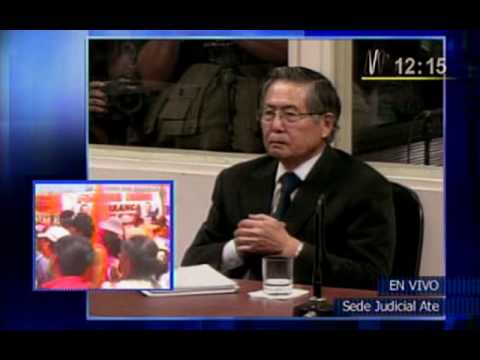
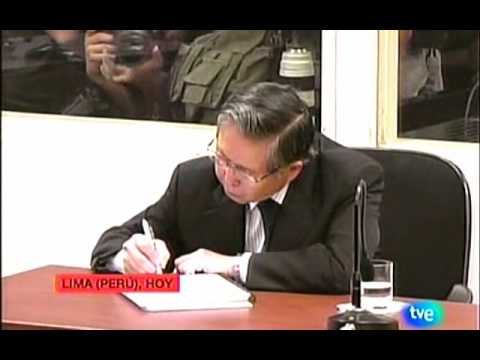
Former president Alberto Fujimori is sentenced (07-04-09)
Fujimori: Guilty or innocent? pt 5 [of 5]
Fujimori: Guilty or innocent? pt 4 [of 5]
Fujimori: Guilty or innocent? pt 3 [of 5]
Fujimori: Guilty or innocent? pt 2 [of 5]
Fujimori sentenced for crimes against humanity
Fujimori: Guilty or innocent? pt 1 [of 5]
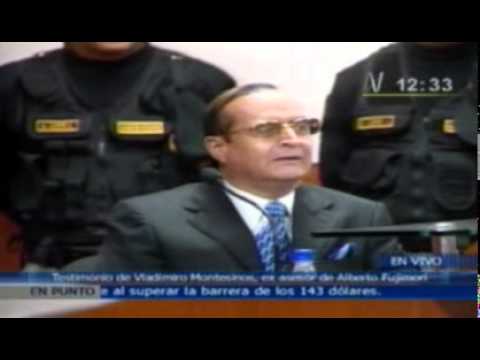
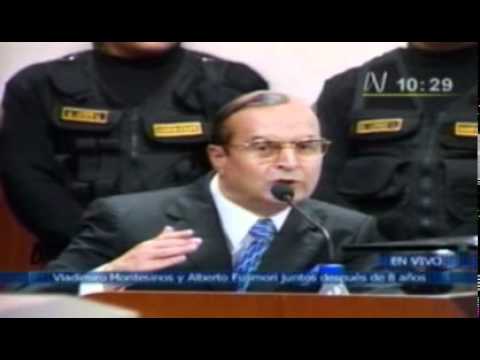
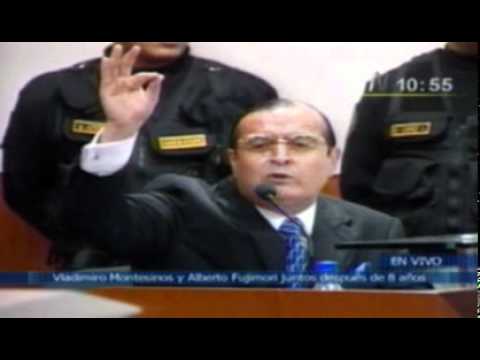
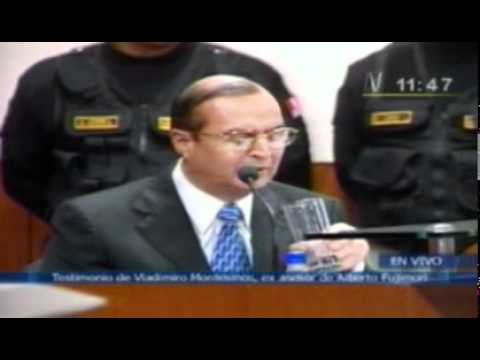
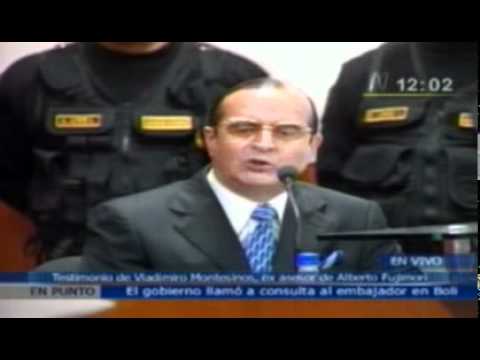
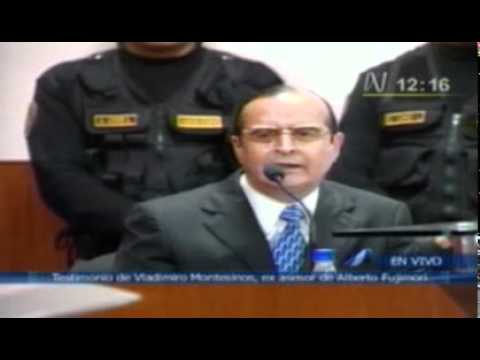
Vladimiro Montesinos testifies at the Fujimori trial. Part 10
Thus spoke Martin Rivas. Interview
Vladimiro Montesinos testifies at the Fujimori trial. Part 4
Vladimiro Montesinos testifies at the Fujimori trial. Part 5
Vladimiro Montesinos testifies at the Fujimori trial. Part 6
Vladimiro Montesinos testifies at the Fujimori trial. Part 7
Vladimiro Montesinos testifies at the Fujimori trial. Part 8
Vladimiro Montesinos testifies at the Fujimori trial. Part 9
Vladimiro Montesinos testifies at the Fujimori trial. Part 11
Vladimiro Montesinos testifies at the Fujimori trial. Part 12
Vladimiro Montesinos testifies at the Fujimori trial. Part 13
The Barrios Altos massacre. Report
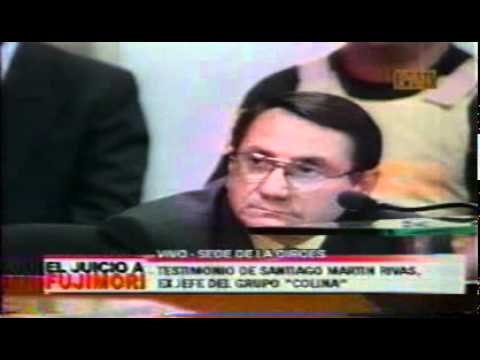
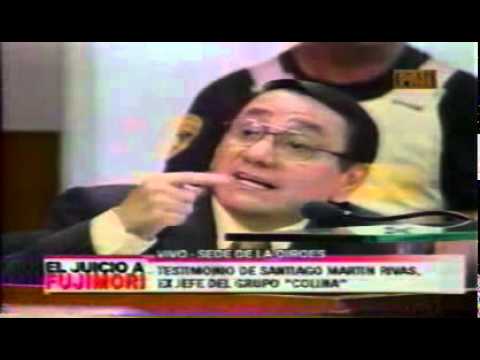
Santiago Martin Rivas testifies at the Fujimori trial. Part 1
Santiago Martin Rivas testifies at the Fujimori trial. Part 2
Santiago Martin Rivas testifies at the Fujimori trial. Part 3
Santiago Martin Rivas testifies at the Fujimori trial. Part 4
Santiago Martin Rivas testifies at the Fujimori trial. Part 5
Santiago Martin Rivas testifies at the Fujimori trial. Part 6
Santiago Martin Rivas testifies at the Fujimori trial. Part 7
Santiago Martin Rivas testifies at the Fujimori trial. Part 8
Vladimiro Montesinos testifies at the Fujimori trial. Part 1
Vladimiro Montesinos testifies at the Fujimori trial. Part 2
Vladimiro Montesinos testifies at the Fujimori trial. Part 3
The Barrios Altos massacre. Part III
The Barrios Altos massacre. Part II
Without Remorse: Testimony of a Former SIN Agent. Part 2.
The Barrios Altos massacre. Part I
Without Remorse: Testimony of a Former SIN Agent. Part 1.
1998
Martin Rivas escapes through one of the side windows of Congress
1991
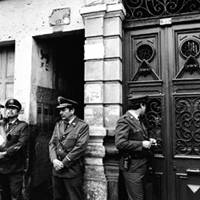
BARRIOS ALTOS MASSACRE
1991
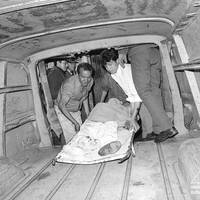
One of the victims of the Barrios Altos massacre is transported to the Lima Morgue.
1991
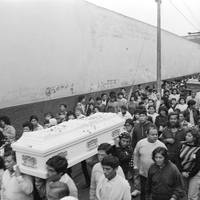
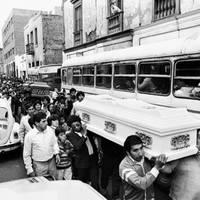
Funerals of victims of the Barrios Altos massacre
1991