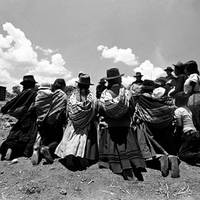
Yuyarisun is an archive of testimonies from community members of Ayacucho and Huancavelica, Peru, that document the political violence of Peru's last two decades. The archive is organized into four …
Books & Articles
57 documents in Truth and Reconciliation Commission - Peru
According to the Public Prosecutor's Office, the victims were tortured by Sendero Luminoso. The bereaved last saw their disappeared relatives in 1989.
The CVR's Final Report captures not only the results of two years of investigations, interviews with more than 17,000 people, public hearings, and debate; it also synthesized a long process …
IDL has worked in regional processes to try to reconstruct the past. The work in Huancavelica was intensive. Little was known about what happened in that department, unlike Ayacucho, where …
Interview with Kimberly Theidon and Edith Del Pino. Both researchers have been working for several years on the aftermath of the internal armed conflict in Ayacucho, Huancavelica, and the VRAE. …
The Instituto de Defensa Legal, through its Governance and Rights Area, publishes this study on the perceptions of victims of political violence regarding the reparations process, in the communities of …
This post-graduate thesis in anthropology addresses the phenomenon of displacement in Peru and attempts to shed light on the reality experienced by a large sector of the civilian population during …
The Peruvian prosecutor's office reported on Friday that the eight bodies exhumed from a mass grave in Huancavelica show signs that the victims were executed, presumably during the conflict that …
Within the framework of the Social Construction of Memory project sponsored by MISEREOR, this document offers a set of notions about what is expected of a national space dedicated to …
1. GENERAL DESCRIPTION OF THE CASE. 2. PROCEDURAL DESCRIPTION. 3. OBSERVATION OF THE NEW ORAL TRIAL.
Peru will begin delivering individual economic reparations to victims of political violence (1980–2000), with priority given to the elderly living in the most remote villages. The government already has four …
This publication is the result of joint work between the Registro Nacional de Identidad y Estado Civil (RENIEC) and the Instituto de Defensa Legal (IDL), launched at the end of …
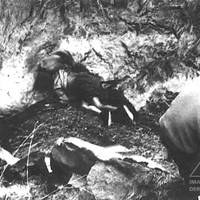
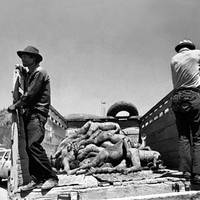
25 years ago, La República published on its front page the discovery of a clandestine grave in Pucayacu — on the border between Ayacucho and Huancavelica — containing 50 victims …
The rejection and subsequent acceptance by the Peruvian Government of the German donation for the construction of a museum that would house the history of the events that occurred during …
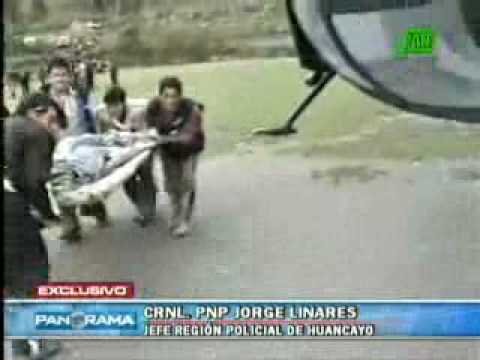
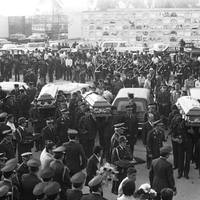
Starting at 9:00 this morning, the Ministerio Público will proceed with the handover of 105 bodies that were exhumed in the district of Santo Tomás de Pata, province of Angaraes, …
Head of State Alan García Pérez transferred 3,998,904 soles to 28 local governments to carry out works in 7 regions of the country in favor of residents whose human rights …
With this book, the Study for the Defense of Women's Rights (DEMUS) seeks to make a contribution to the processes of justice and reparation for cases of human rights violations …
It is encouraging to present a study such as this one, which contributes to the design and implementation of public mental health policies and outlines an essential line of review …
At this moment, although pacification has been achieved, much remains to be done on the path toward justice, reparation, and reconciliation. "Anco, haciendo memoria" (Anco, Making Memory) is a proposal …
The districts of the northern cone of Huancavelica, belonging to the micro-basin of the Río Vilca, were severely affected by the internal armed conflict that Peru experienced in the 1980s …
The primary objective of "El umbral de la memoria" is to preserve the collective memory of the seven provinces of the department of Huancavelica (highlands of Peru), which suffered and …
One of the tragedies left by the internal armed conflict in Huancavelica was the incredible loss of a large number of civil registry records. That is, officially, many people do …
The Regional Victims Registration Campaign in Huancavelica has concluded, collecting more than 5,000 requests from victims or their close relatives. The data constitute the first step of a plan aimed …
CVR recommendations and Huancavelica. A broad survey conducted in Huancavelica forms the starting point for a project that seeks to improve governance and governability. How? By working simultaneously in four …
Huancavelica had grown tired of waiting. Aware of what its population had suffered during the years of armed conflict, its Regional Government decided to take the first step: on September …
The Memory and Identity team began bibliographic research on the topic of violence in Huancavelica, and in November a researcher joined the team. That month, trips to Huancavelica began to …
Registering victims can be understood as a cold tally of casualties: so many dead, so many wounded, and that is that. But, as conceived by the Comisión de la Verdad …
After entering university in 1994, I began conducting research into the reality of my own people and district; based on data collection and the systematization of experiences, the problems were …
This publication compiles eight of the nine volumes of the CVR's Final Report, selecting from each one the information relating to acts of violence that took place in the regions …
A detailed assessment of the issue of reparations for victims of violence: from the proposals gathered in the Comprehensive Reparations Plan drawn up by the CVR, to the responses that …
This document aims to collect, highlight, and restore value to women as human beings who acted during the violence experienced by the country. On the other hand, it seeks to …
This ombudsman's report constitutes a contribution to the process of truth and justice initiated in the country with the delivery of the Final Report of the Comisión de la Verdad …
Steps that must be taken for a region ravaged by violence, exclusion, and their aftermath to make the CVR Report its own.
The framework of this essay is a study of the community of Santa Bárbara to understand three elements of its cultural paradigm. We will see how the members of the …
With the publication of the book "Los desplazados en el Perú," the CICR aims to contribute to the efforts of many organizations and of the affected people themselves to place …
Yuyachkanikum is an educational resource prepared using testimonies collected by the Defensorías Comunitarias of Huancavelica. These bodies carry out important work promoting and monitoring human rights in their communities and …
Through "Una mirada a la verdad" (A Look at the Truth), we aim to contribute to the work carried out by the CVR and to initiatives that other entities may …
This book brings together the chapters of the CVR's Final Report dealing with aggressions against women, with the aim of promoting reflection on the severity of the suffering endured by …
This report is a broad overview of the issue of displacement in Peru, based on the registry of NGOs from the Regional Roundtables that accompany displaced populations in the departments …
On January 23, 1983, General Noel, then the political-military commander of the Ayacucho zone, announced to the press that the villagers of Huaychao had killed seven Senderistas. To find out …
The discovery of mass graves in Andean and jungle areas over the past eight months, containing the remains of victims of the war that ravaged Peru, has become an open …
Showing 1–50 of 57 documents
Timeline Events 50
-
Testimony on murder of family members in Moya, Huancavelica
Testimony collected in Lima in January 2003 from a resident of Moya, Huancavelica, Huancavelica. The affiant suffered the murder of her parents and other family members by members of the Armed Forces. The testimony is part of the documentation on the psychological and emotional impacts of violence, specifically related to …
1 docs -
Husband missing in San Carlos
The affiant recounts the disappearance of her husband in San Carlos, Huancavelica. This testimony was collected in November 2002 in Huancayo. The case is one of many testimonies of forced disappearances that occurred during the internal armed conflict in Peru. The disappearance of her husband left the affiant in a …
-
Disappearance of a Husband in San Carlos, Huancavelica
In November 2002, a woman recounted the disappearance of her husband in San Carlos, Huancavelica. This event is part of a broader context of violence and unrest in Peru, which led to increased consumption of coca and alcohol as coping mechanisms among the affected population.
-
Disappearance of husband in San Carlos, Huancavelica
Testimony collected at CVR Headquarters in November 2002. The affiant narrates the disappearance of her husband in San Carlos, Huancavelica. The testimony is part of an analysis of coca and alcohol consumption as coping mechanisms in the face of traumatic experiences of violence. The affiant recounts how these practices intensified …
-
Disappearance in San Carlos
The affiant recounts the disappearance of her husband in San Carlos, Huancavelica. The testimony was collected at the Central Headquarters in November 2002. This case is part of the numerous testimonies of forced disappearances documented by the CVR in the region of Huancavelica during the internal armed conflict.
-
Testimony on husband's murder in Huaytara, Huancavelica
Testimony number 302397 collected at the Central Regional Headquarters of the CVR in November 2002. The declarant narrates the murder of her husband in Huaytara, Huancavelica. The testimony is part of the documentation on cases of violence and loss of family members during the internal armed conflict. The witness recounts …
2 docs -
Disappearances in Ayacucho and Huancavelica
In November 2002, testimonies were collected from individuals in Ayacucho and Huancavelica, Peru, detailing the disappearance of family members during a period of political violence. These accounts highlight the long-lasting emotional and social impacts on survivors, who often grew up in disrupted family structures. The testimonies underscore the need for …
-
Testimony on disappearance of husband in San Carlos
A witness told the CVR about the disappearance of her husband in San Carlos, Huancavelica. The testimony was collected in November 2002 at the Central Regional Headquarters. This case is part of the testimonies on forced disappearances that represented 18.70% of the facts reported to the TRC. Most of the …
2 docs -
Murder in Huaytara
The witness recounts the murder of her husband in Huaytara, Huancavelica. The testimony was collected in November 2002 at the Central Regional Headquarters. This case is part of the multiple murders documented during the internal armed conflict in the Huancavelica region. The testimony reflects the emotional and psychological impact that …
3 docs -
Testimony on husband's murder in Ticrapo
Testimony collected in September 2002 in Lima on the murder of the declarant's husband in Ticrapo, province of Castrovirreyna, department of Huancavelica. The testimony is part of the documentation compiled by the CVR on the acts of violence that occurred during the internal armed conflict. The declarant narrates the facts …
3 docs -
Public Hearing in Huancavelica
During a public hearing held in Huancavelica on May 25-26, 2002, Olga Huamán shared the mysterious circumstances surrounding the disappearance of her husband, Víctor Gonzalo, at the hands of unknown individuals. Although lacking concrete evidence or testimonies from the perpetrators, the hearing provided Huamán an opportunity to express her grief …
-
Murder of parents and family members in Moya
A resident of Moya, Huancavelica, Huancavelica suffered the murder of her parents and other family members by members of the Armed Forces. The testimony was collected in Lima in January 2003. This case illustrates the victims' adaptive attempts that included passivity and accommodation to the new situation following the violence. …
-
Explosion kills police officers in Huancavelica
On July 26, 1995, an explosion occurred in Huancavelica that killed seven policemen. Among the victims was a major of the Peruvian National Police (PNP). The event occurred in the context of the political violence that affected the department of Huancavelica during the 1990s. This attack was part of the …
-
Santa Bárbara case definitively closed due to amnesty
The Superior Court of Huancavelica issued resolution 27/93 ordering the definitive dismissal of the Santa Barbara case in application of amnesty law 26479. The resolution argued that the crimes were committed during the fight against terrorism in an emergency zone, and therefore the amnesty should be applied. This decision consolidated …
4 docs -
Application of Amnesty Law in the Santa Barbara case
The Criminal Chamber of the Superior Court of Huancavelica declared Amnesty Law No. 26479 applicable to the process followed against Lieutenant EP Javier Bendezú Vargas and his subordinates, ordering the cutting of the sequel of the process and its definitive archiving. They also annulled the judicial and police records of …
2 docs -
Application of Amnesty Law in Huancavelica
On July 4, 1995, the Penal Chamber of the Superior Court of Huancavelica applied Amnesty Law No. 26479 to the case against Lieutenant Javier Bendezú Vargas and his subordinates. This decision led to the termination and definitive archiving of the legal proceedings against them, as well as the annulment of …
-
Prosecutor's opinion on the Santa Barbara case in Huancavelica
The Superior Deputy Prosecutor of Huancavelica issued ruling No. 05/95 in the case of the Santa Barbara community, concluding that the general amnesty of Law 26479 was applicable to the military-police defendants for the crimes they were being prosecuted for. This ruling exemplifies how the justice system applied amnesty laws …
4 docs -
Withdrawal from Marks Military Base
In June 1994, the military base that had been in operation for almost a decade was withdrawn from the district of Marcas, in the province of Angaraes. This withdrawal took place in the context of a significant decrease in subversive activity after the capture of Abimael Guzmán in 1992 and …
-
Withdrawal of Military Base from Marcas district
In June 1994, the military base installed in the district of Marcas withdrew from the area. This withdrawal took place in a context of declining subversive activity in the region, after years of military presence aimed at combating the Shining Path. The withdrawal of military forces marked a change in …
-
Hiking excursion in Balcón y Picota
In February 1994, a Shining Path column raided the villages of Balcón and Picota as they attempted to enter the district of Santo Domingo. This event occurred in the context of Shining Path's final actions in the province of Angaraes, Huancavelica. The incursion occurred after the area had experienced years …
-
Murder of Santiago Lizana Acha by police officers in Julcani
In February 1994, members of the National Police murdered Santiago Lizana Acha, a mine worker, with a bullet to the head in the mining center of Julcani, Huancavelica. The police accused him of being a terrorist. This murder occurred in a context of repression against mine workers and union leaders …
-
Incursion in Balcón and Picota
In February 1994, a Shining Path column raided the villages of Balcón and Picota, located in the district of Santo Domingo. This event occurred in a context of declining subversive activity, after the capture of Abimael Guzmán in 1992 and the 1993 peace accords. Subversive activity was so low at …
-
Events in Huancavelica Military Base
The CVR report mentions the Huancavelica Military Base in the context of sexual violence during the internal armed conflict. Specific reference is made to cases of rape that resulted in pregnancies of the victims. The facts are documented in testimonies that indicate that the victims in both testimonies related to …
-
Rape of a woman in the presence of her husband and children on a farm
A Shining Path column entered the hacienda where the affiant worked, capturing her entire family. Later they stole their belongings and took them to an abandoned house, where they raped the affiant in the presence of her husband and children. The case is evidence of sexual violence as a form …
-
Murder of Juvenal Martinez in mobilization in Julcani
In November 1993, during a workers' mobilization at the Julcani mining center, worker Juvenal Martínez was shot and killed by military personnel. The murder was perpetrated by a major identified as Rubén Rodríguez Rebanal, who shot Martínez at point-blank range. The mobilization was in protest against the mine's industrial relations …
-
Murder of Juvenal Martinez by the military in Julcani
In 1993, the PCP-SL assassinated the industrial relations officer of the Julcani mine in one of its last bloody actions in the mining centers. Since then, the military and the police have been controlling the mining centers. During a workers' mobilization in the Julcani mining center, worker Juvenal Martinez was …
-
Murder of industrial relations officer in Julcani
In October 1993, the Communist Party of Peru-Shining Path (PCP-SL) shot and killed the industrial relations manager of the Julcani mine. This was one of the last bloody acts of the PCP-SL in the mining centers of the region. After this assassination, the military and the police carried out greater …
-
Murder of industrial relations manager in Julcani
In October 1993, the PCP-SL (Shining Path) shot and killed the industrial relations manager of the Julcani mine, in one of its last bloody actions in the mining centers of Huancavelica. This murder was part of the PCP-SL strategy of attacking authorities and administrative personnel of mining companies. As a …
-
Start of mining privatizations
Beginning in 1993, the mining centers of Pasco, Junín and Huancavelica entered into a privatization process that resulted in massive layoffs of workers. As an example, Caudalosa Grande had 1,500 workers in 1980, but by 2000 only 100 workers remained. This privatization process was considered by many workers as arbitrary …
1 docs -
Massive layoffs due to privatization in Huancavelica mining centers
Beginning in 1993, the mining centers of Huancavelica entered into a privatization process similar to that which occurred in the mining centers of Pasco and Junín. This process resulted in massive layoffs of mine workers, many of them considered arbitrary by those affected. One specific testimony mentions that at Caudalosa …
-
Rape and murder in Vilca
On April 6, 1992, soldiers attacked a family in the community of Vilca. According to the testimony of a woman from the community, the soldiers beat and raped her two sisters and her mother, and then killed them. The victims were calling for help during the attack. The events occurred …
-
Capture of Abimael Guzman
The capture of Abimael Guzmán, the main leader of the PCP-Sendero Luminoso, occurred in 1992 and marked a turning point in the Peruvian internal armed conflict. This event occurred during the period of the so-called 'leap to strategic balance' when PCP-SL members had intensified their attacks against police and military …
4 docs -
Rape by the military in Huancavelica
In 1992, fifteen soldiers intercepted a witness and his wife in Huancavelica, accusing them of having seen terrorists passing by. The soldiers raped the witness's wife in front of him. The testimony documents how sexual violence was used by military personnel as a form of intimidation and punishment against civilians …
-
Attack against police detachment in Acobamba or Angaraes
In 1992 there was an attack against a police detachment in the provinces of Acobamba or Angaraes, in the department of Huancavelica. The attack resulted in the death of 4 policemen. This event occurred in the context of the end of violence in the area, shortly before the capture of …
-
Shining Path attack on police station in Huancavelica
In 1992, Shining Path attacked a police station in the province of Huancavelica, resulting in the death of 4 policemen. This attack took place in a context where the communities of Julcamarca, with the support of the army and the ronderos of Lircay, were consolidating the Rondas Campesinas. The attack …
-
Consolidation of Rondas Campesinas in Julcamarca
In 1992, the communities of Julcamarca managed to consolidate the Rondas Campesinas with the support of the army and the ronderos of Lircay. This consolidation process took place in a context of intensifying violence in the area, where the Shining Path had been systematically attacking members of the Rondas Campesinas. …
1 docs -
Operation APOLONIA and Subsequent Legal Proceedings
Operation APOLONIA was a military operation conducted by the Jefatura Político Militar of Huancavelica aimed at capturing or destroying terrorist elements in the Rodeo Pampa area. Following the operation, a criminal process was initiated against several military personnel, including Teniente EP Javier Bendezú Vargas, for their involvement in a massacre. …
-
Massacre of 37 peasants in Santo Tomás de Pata
In November 1991, 37 peasants were massacred in the district of Santo Tomás de Pata, province of Angaraes, department of Huancavelica. The victims included women, the elderly and children. This event was part of the context of political violence that affected the country during the internal armed conflict. The massacre …
1 media 2 docs -
Murder of 10 peasant farmers in Huari
In November 1991, PCP-Sendero Luminoso terrorists assassinated 10 peasants in the town of Huari for belonging to the peasant patrols. This attack was part of a broader offensive against self-defense organizations in the area. The same month, another Shining Path column had raided the district of Santo Tomás de Pata, …
1 docs -
Murder of 37 ronderos in Santo Tomás de Pata
In November 1991, a Shining Path column raided the district of Santo Tomás de Pata and killed 37 members of the peasant patrols. This attack took place in the context of a PCP-SL offensive against the Self-Defense Committees, considered by the Shining Path as the main obstacle to its political-military …
1 media 1 docs -
Attempt to erase evidence in Mysteriosa mine
Army soldiers detained a group of community members who were coming to the aid of the court for the removal of corpses, holding them in an abandoned house from 10:00 in the morning until 5:30 in the afternoon. At approximately 3:30 the detainees felt an explosion, due to the fact …
1 docs -
Massacre at the 'Misteriosa' Mine
On July 11, 1991, Viviano Hilario Mancha discovered the semi-buried body of his grandson, Héctor Hilario, along with other unrecognizable bodies at the entrance of the 'Misteriosa' mine. The initial attempt to recover the bodies was thwarted by the military, who detained a group of villagers assisting the authorities. Witnesses …
-
Corpses found in Mysteriosa mine
Viviano Hilario Mancha, father and grandfather of the disappeared, found the half-buried body of his grandson Héctor Hilario at the entrance of the 'Misteriosa' mine, along with other bodies that he could not recognize. He reported the discovery the next day to the Huancavelica Provincial Prosecutor's Office and to the …
3 docs -
Santa Barbara massacre in Huancavelica
In the early morning of July 4, 1991, a military patrol arrived at the Rodeo Pampa annex and entered the homes of the Hilario family. Francisco Hilario Torres, his wife, two daughters, daughter-in-law and five minor grandchildren were arrested, as well as neighbors Ramón Hilario Morán, his wife and two …
9 docs -
Military Incursion in Santa Bárbara
In 1991, the community of Santa Bárbara experienced a military incursion where a group of villagers was kidnapped and subsequently killed by dynamite at the Misteriosa mine. This event marked the beginning of the end of the conflict in the area, as continuous military patrols and self-defense actions nearly eradicated …
-
Extrajudicial executions in Santa Bárbara - Mina Misteriosa
An Army patrol under the command of Infantry Lieutenant Javier Bendezú Vargas killed fifteen people, including adults and children, in a mine known as 'Misteriosa'. The detainees were taken into the tunnel, riddled with FAL bullets and then dynamite explosive charges were set off, causing a deflagration that ended up …
-
Detention of farmers in Rodeo Pampa
An Army patrol under the command of Lieutenant Javier Bendezú Vargas arrived at the Rodeo Pampa annex and arrested the members of the Hilario family, accusing them of belonging to the subversion. They set fire to their homes to force them to leave, keeping them detained for the rest of …
2 docs -
Kidnapping and execution of community members in Santa Bárbara
On July 4, 1991, a military patrol entered the community of Santa Barbara and kidnapped a group of community members. According to testimonies gathered by the CVR, the kidnapped community members were later dynamited in the Misteriosa mine. This fact represents one of the cases of human rights violations committed …
-
Departure of military patrols from Lircay Base
Two military patrols departed from the Lircay Base in execution of the 'Apolonia' operation. The 'Escorpio' patrol was commanded by Infantry Lieutenant Javier Bendezú Vargas and departed at 6:00 p.m. to the area known as Cochajaccsa. The patrol 'Angel' was commanded by Lieutenant Abel Gallo Coca. Both patrols went to …
1 docs -
Santa Barbara Community Case
The case involves incidents that occurred in July 1991 during routine patrols in Huancavelica, a region declared a zone of emergency due to subversive activities. The patrols aimed to ensure security against crimes and human rights violations by subversive elements. The case was reopened following a ruling by the Inter-American …
Photos & Videos 8
Terrorist ambush. Shining Path (Part 1 of 2)
Terrorist ambush. Shining Path (Part 2 of 2)
CVR public hearings: Huancayo and Huancavelica, May 2002
1991
Shining Path murders peasants in the community of Santo Tomás de Pata in Angaraes
1990
VICTIM
1984
PUCAYACU MASSACRE, HUANCAVELICA
1984
PUCAYACU MASSACRE
1982