Sendero Luminoso
Organization

Sendero Luminoso

Wikipedia

Timeline Events 609

  1. Guerrilla of 65

    The 1965 guerrilla movement was an insurgent movement that had a significant impact on the communities in the Oreja de Perro area. After these events, the communities of Mollebamba, Santa Carmen, Oronqoy, among others, created communal schools in 1967. In 1973, Abimael Guzman gave a talk at the Ongoy high …

    Perú (Oreja de Perro: Mollebamba, Santa Carmen, Oronqoy) Informe CVR (páginas 112, 114, 115)
  2. Talk by Abimael Guzman in Ongoy

    In 1973, the high school of Ongoy, located in the province of Andahuaylas, experienced a process of politicization. Abimael Guzman, leader of the Shining Path, visited the school and gave a talk to the students. In his presentation, Guzman addressed topics such as poverty in Peru, Agrarian Reform and made …

    Ongoy, provincia de Andahuaylas, Apurímac, Perú Informe CVR
  3. Formation of 'Organismos Generados' by Sendero Luminoso

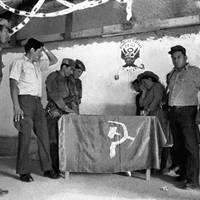
    In 1973, during the III Plenary Session of its Central Committee, Sendero Luminoso (SL) decided to expand beyond its university confines by creating 'organismos generados' or movements generated by the proletariat across various work fronts. These organizations were ideologically aligned with the party, aimed at mass mobilization, and adhered to …

    Peru Chunk 231.0
  4. Internal Armed Conflict in Peru Initiated by Sendero Luminoso

    The internal armed conflict in Peru began with the decision of the Communist Party of Peru, Sendero Luminoso (PCP-SL), to seize power through armed struggle. Their strategy involved targeting individuals who represented the old state, particularly local authorities and social leaders, resulting in the deaths of approximately 1680 such individuals. …

    Peru
  5. Demolition of high-voltage electrical towers

    Between 1980 and 1991, the subversion caused the loss of two billion dollars by destroying the structure of high-tension electricity towers. According to ELECTRO-PERU, the number of towers demolished in 1989 was 335. Total losses were estimated at US$ 600 million according to ELECTRO-PERU. This destruction of electrical infrastructure was …

    Perú Informe CVR, páginas 4358-4359
  6. Conflict Initiated by Sendero Luminoso

    In May 1980, the Communist Party of Peru, known as Sendero Luminoso, initiated an armed conflict against the Peruvian state and society. This conflict, marked by extreme violence, resulted in Sendero Luminoso being responsible for 54% of the reported fatalities, with an estimated total of 31,331 deaths. The conflict highlighted …

    Peru Capítulo sobre Sendero Luminoso
  7. 8-year-old girl witnesses massacre, cares for dying mother

    An 8-year-old girl witnessed her parents and older siblings being beaten by the Shining Path. The children began to scream but out of fear they had to stay quiet. Many urinated and relieved themselves on their clothes. Despite the girl's pleas for mercy and compassion, they killed her mother and …

    Comunidad de Hierba Buenayoc, provincia de La Mar, departamento de Ayacucho, Perú Informe CVR, página 3155
  8. Conflict and Human Rights Violations in Peru

    The internal armed conflict in Peru began in May 1980, marked by significant human rights violations. The conflict involved subversive groups like Sendero Luminoso and MRTA, as well as state agents, leading to arbitrary executions and massacres. Despite international human rights treaties in place, such as the International Covenant on …

    Peru CVR. Audiencia pública de casos en Huancayo. Caso 17. Tercera sesión, 23 de Mayo del 2002
  9. Violence and Human Rights Violations in Ayacucho

    In May 1980, the burning of ballot boxes by Shining Path (Sendero Luminoso) in Chuschi marked the beginning of a period of intense political violence in Ayacucho, Peru. This violence soon spread to neighboring regions such as Apurímac and Huancavelica. The response from the state included harsh counterinsurgency measures by …

    Ayacucho, Peru BDI-II-P668
  10. Assault in Chuschi - Beginning of the armed struggle of the PCP-SL

    On the eve of the presidential elections of May 1980, the PCP-SL broke into Chuschi, Cangallo, Ayacucho, attacking the electoral registry office. This event marked the symbolic beginning of the internal war unleashed by the Shining Path. The action culminated with the capture of four suspects. The event was barely …

    Chuschi, Cangallo, Ayacucho, Perú Informe CVR
  11. Attack on Hierba Buenayoc with baby killing

    During a massacre in the community of Hierba Buenayoc, female Shining Path terrorists mercilessly butchered babies, arguing that it was difficult to raise them and that they should kill them. An 8-year-old witness witnessed how they picked up the babies like rabbits and butchered them. This act exemplifies the extreme …

    Comunidad de Hierba Buenayoc, provincia de La Mar, departamento de Ayacucho, Perú Informe CVR, página 3152
  12. Killing of children who resisted conscription

    The Shining Path gathered children to take them to the bush at the point of beatings. When some of the children resisted, the terrorists grabbed one of them, beat him even more, and forced the other children to grab him tightly. In the presence of everyone, they cut off his …

    Comunidad de Hierba Buenayoc, provincia de La Mar, departamento de Ayacucho, Perú Informe CVR, página 3158
  13. Beginning of the Armed Conflict by Sendero Luminoso

    On 17 May 1980, in Chuschi, Ayacucho, a group of armed militants from Sendero Luminoso initiated their political and military plans by burning election materials. This marked the beginning of a series of violent actions aimed at involving the masses and gaining experience for their cadres. Subsequent attacks included dynamiting …

    Chuschi, Ayacucho, Peru Página 30
  14. Beginning of the internal armed conflict and first appearance of Sendero Luminoso (Shining Path)

    In 1980, President Fernando Belaunde Terry restored freedom of the press in his first act of government. That same year, Sendero Luminoso made its first official appearance, initiating terrorist acts. The violence broke out in a period of democracy and free press, causing initial bewilderment in the media, which had …

    Perú Informe CVR, páginas 1154-1156
  15. Hikers attack on the provincial municipality of Chupaca

    On May 17, 1980, Shining Path members, presumably led by comrades "Feliciano" and "Johan", dynamited the premises of the provincial municipality and Educational Center No. This attack is part of the chronology of political violence in the mining centers of the Central Highlands of Peru. The event marks one of …

    Chupaca, Perú Informe CVR, página 217
  16. Molotov cocktail bomb attack against the municipality of San Martin de Porres

    Militants of the Workers and Classist Workers Movement (MOTC), an organization of the Shining Path, threw explosive devices known as Molotov cocktails against the district municipal headquarters of San Martin de Porres in Lima. This attack was part of the first armed actions of the PCP-SL in the capital of …

    San Martín de Porres, Lima, Perú Informe CVR, páginas 653-684
  17. Explosive attack against General Juan Velasco Alvarado's tomb

    An explosive device was detonated at the tomb of General Juan Velasco Alvarado, who was the first president of the military government that ruled Peru between 1968 and 1975. This attack, attributed to the PCP-Sendero Luminoso, was part of the first armed actions of the subversive organization and occurred when …

    Lima, Perú Informe CVR, páginas 653-684
  18. Attack with dynamite firecrackers at the Provincial Council of Tarma

    On August 26, 1980, Shining Path militants threw dynamite firecrackers at the Provincial Council of Tarma. This attack was part of the first subversive actions of the PCP-SL in the department of Junin, during the first months of the beginning of the so-called "people's war". The attack was part of …

    Tarma, Junín, Perú Informe CVR, página 191
  19. Attack against High Voltage towers in Angaraes

    In December 1980, there was an attack on the high voltage towers that left the entire province of Angaraes in darkness. This type of sabotage to the electrical infrastructure was one of the initial tactics used by the Shining Path in their campaign of political violence. The attack was part …

    Provincia de Angaraes, Huancavelica, Perú Informe CVR
  20. Arrest of Edith Lagos

    Edith Lagos Sáez, a former law student at San Martín de Porres University, was arrested in Ayacucho and was accused of being one of the 'four most important leaders of the Shining Path'. Guzman later denied this characterization in an interview with the CVR, pointing out that the press had …

    Ayacucho, Perú Informe CVR, página 257
  21. Assassination of Benigno Medina and Ricardo Lizarbe

    On December 24, 1980, Benigno Medina, an administrator of a medium-sized farm known as Fundo de San Agustín de Ayzarca, was brutally tortured and murdered in front of the farm workers. Alongside him, a young employee named Ricardo Lizarbe was also killed. The attack was carried out by a group …

    Fundo de San Agustín de Ayzarca, Pomatambo-Vilscashuamán, Peru CVR. Testimonio 301073
  22. Shining Path incursion in Alto Huallaga

    In 1981, the PCP-SL (Shining Path) appeared in Alto Huallaga, taking advantage of the climate of social chaos created by drug trafficking. They presented themselves as the executioner of a corrupt and inefficient bureaucratic state and assumed the supposed defense of the interests of coca growers, who were being attacked …

    Alto Huallaga, Perú Informe CVR, páginas 384-385
  23. Presentation of PCP-SL in Alto Huallaga

    In 1981, the PCP-SL appeared in Alto Huallaga, taking advantage of the climate of social chaos created by drug trafficking. They presented themselves as the executioner of a corrupt and inefficient bureaucratic state and assumed the supposed defense of the interests of the coca growers, who were being attacked by …

    Alto Huallaga, Perú Informe CVR, páginas 384-385
  24. Promulgation of the 'Ley Antiterrorista' in Peru

    In 1981, the Peruvian government, led by Acción Popular, promulgated the 'Antiterrorist Law' in response to increasing subversive activities by groups like Sendero Luminoso. The law was intended to curb terrorism by criminalizing actions such as the destruction of public and private property. However, it faced strong opposition from leftist …

    Peru 173
  25. Internal Conflicts and Hostilities in Peruvian Prisons

    During the early 1980s, members of the Shining Path (Sendero Luminoso) in Peruvian prisons like El Frontón and Lurigancho organized themselves with strict discipline, viewing imprisonment as a continuation of their struggle against the state. This led to internal conflicts and hostilities, particularly against inmates from other leftist parties, creating …

    El Frontón and Lurigancho, Peru 718
  26. Promulgation of the Anti-Terrorism Legislative Decree 046

    On March 10, 1981, the Peruvian government, under the authority of Law 23230, promulgated Legislative Decree 046, which defined the crime of terrorism and established procedural norms for such cases. This decree was introduced amidst the rise of subversive activities by the group Sendero Luminoso, which created significant political tension …

    Peru página 204
  27. The Rise of Sendero Luminoso

    In May 1981, the revolutionary group Sendero Luminoso, led by Abimael Guzmán, initiated a violent campaign to overthrow the Peruvian government. This campaign involved brutal attacks on police posts and state authorities, as well as efforts to establish new power structures in rural areas. Despite early warnings and intelligence reports, …

    Ayacucho, Peru Página 20, CVR. BDI. P150 y P139
  28. Shining Path attack against Centromín in La Oroya

    In November 1981, Shining Path carried out a dynamite attack against the installations of the state-owned company Centromín Perú in La Oroya. The Shining Path dynamited the doors of the Industrial Relations and Social Service offices of the mining company. This attack was part of the Shining Path's first incursions …

    La Oroya, Junín, Perú Informe CVR, p. 217
  29. Shining Path incursion in Huancavelica mining centers

    In December 1981, Shining Path carried out raids in three important mining centers in the department of Huancavelica: Cobriza, Julcani and La Mejorada. During these raids, the Shining Path took abundant explosive material from the mining facilities. This action was part of the first Shining Path operations in the mining …

    Cobriza, Julcani y La Mejorada, Huancavelica, Perú Informe CVR, página 217 (Cronología de la violencia política en los centros mineros de la Sierra Central del Perú)
  30. Promulgation of Law 24150 and Militarization of Anti-Subversive Efforts in Peru

    In 1982, the Peruvian government, facing increasing subversive threats, enacted Law 24150, which marked a significant shift towards militarization in the fight against insurgent groups like Sendero Luminoso. This law was enacted amidst a change in government and was criticized for undermining democratic civilian power by granting more control to …

    Peru Página 210
  31. Sendero Luminoso's Control and Violence in Ayacucho

    In 1982, the militant group Sendero Luminoso (Shining Path) established control over the districts of Sancos, Lucanamarca, and Sacsamarca in Ayacucho, Peru. They implemented 'popular schools' and declared Sacsamarca a liberated zone. The year marked the beginning of significant violence, including the assassination of Alejandro Marquina Martínez in Sancos, and …

    Sancos, Lucanamarca, and Sacsamarca, Ayacucho, Peru página 81
  32. Corruption in the Peruvian Police Intelligence Directorate (DIRIN)

    In 1982, the Peruvian Police Intelligence Directorate (DIRIN) was heavily affected by corruption, which severely hindered its ability to conduct effective counterinsurgency operations. The corruption within DIRIN allowed the insurgent group Sendero Luminoso to grow more rapidly than it might have otherwise. General Teófilo Aliaga, who was not part of …

    Peru
  33. Torture and Murder of Valerio Flores

    In 1982, Valerio Flores, a student accused of being a member of the Sendero Luminoso (Shining Path), was tortured and murdered by the Guardia Republicana and local ronderos in Oronqoy, Peru. This event occurred amidst a period of intense conflict and violence in the region, as government forces and local …

    Oronqoy, Peru p. 115
  34. Installation of military bases in Huancavelica

    In 1982, the Peruvian army installed military bases in the districts of Castrovirreyna and Santa Inés in the department of Huancavelica. These military installations were established in the context of the internal armed conflict and the presence of the Shining Path in the region. The bases were strategically located in …

    Castrovirreyna y Santa Inés, Huancavelica, Perú Informe CVR, página 198

Showing 1–50 of 609 events

Photos, Videos & Documents 786

Showing 1–50 of 786 items