Organization

Shining Path

Timeline Events 272

  1. Formation of the Comité Regional '14 de Junio'

    On 14 November 1972, the Comité Regional '14 de Junio' was formed as part of the Shining Path's efforts to establish 'generated organisms' among workers in various production sectors. This marked a significant step in expanding the organization's influence beyond Ayacucho, with small groups of militants also present in Lima …

    Lima, Peru Chunk 238.0
  2. Publication of Mariátegui's Influence on Maoism

    In 1973, a publication emerged from the Universidad Nacional de San Cristóbal de Huamanga (UNSCH) that reinterpreted the works of José Carlos Mariátegui, presenting him as a precursor of Maoism and establishing a new orthodoxy. This publication was part of a broader strategy by the Shining Path to use the …

    Huamanga, Peru página 18, Centro de Trabajo Intelectual Mariátegui: Esquemas de estudio, Huamanga, 1973
  3. Assassination of Medina

    The assassination of Medina occurred in 1980 and was reportedly carried out by members of the local community, including individuals from Pujas. The event is interpreted as an act of self-defense against an abusive landowner, aligning with the Shining Path's agenda to eliminate oppressive authorities and redistribute land for a …

    Vilcashuamán, Peru
  4. Violence in the Region of Huánuco and Pasco

    In 1980, the region of Huánuco and Pasco in Peru experienced significant violence linked to the actions of the Shining Path (PCP-SL). The group established an operational corridor in these areas, conducting subversive acts such as burning electoral urns in Chuschi and detonating dynamite in the Provincial Council of Pasco. …

    Huánuco, Pasco, Peru Región Nor Oriental, Zona I, 1980-2000
  5. Subversive Actions by PCP-SL in Huancayo

    In 1980, the PCP-SL (Shining Path) initiated a series of subversive actions in Huancayo, Peru. These actions included the use of explosives against police stations, municipal buildings, and infrastructure such as transmission towers and mining facilities. The campaign marked the beginning of a period of intensified violence and sabotage aimed …
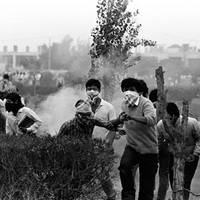
    Huancayo, Peru
  6. Expansion of PCP-SL in the Northern Highlands of Lima

    In 1980, the Shining Path (PCP-SL) systematically deployed its members across various communities and institutions in the northern highlands of Lima, particularly in the province of Cajatambo. This expansion involved recruiting militants from universities and strategically placing them in key positions within educational and cultural institutions. The PCP-SL's efforts to …

    Northern Highlands of Lima, including Cajatambo, Paca, Nunumia, Cochas, Suro, Gorgor, Manás, Huancapón, Copa
  7. Violence and Human Rights Violations in Ayacucho

    In May 1980, the burning of ballot boxes by Shining Path (Sendero Luminoso) in Chuschi marked the beginning of a period of intense political violence in Ayacucho, Peru. This violence soon spread to neighboring regions such as Apurímac and Huancavelica. The response from the state included harsh counterinsurgency measures by …

    Ayacucho, Peru BDI-II-P668
  8. Beginning of the Shining Path's Armed Conflict in Peru

    On May 17, 1980, the Shining Path (PCP SL) initiated its 'people's war' against the Peruvian state with a series of explosive attacks on public facilities, focusing heavily on Ayacucho. These early actions included the burning of ballot boxes in Chuschi and incendiary bomb attacks in San Martín de Porres. …

    Peru, with significant actions in Ayacucho, Lima, and La Oroya
  9. Attack on Chuschi and the Beginning of the Shining Path's 'People's War'

    On May 17, 1980, in Chuschi, Ayacucho, a group of five masked individuals attacked a location storing ballot boxes and registers for the upcoming national elections, burning eleven of them. This event, though initially receiving little media attention, was symbolically significant as it marked the beginning of the Shining Path's …

    Chuschi, Ayacucho, Peru
  10. Rise of PCP-SL Amidst Cocaine Trade and State Corruption

    In 1981, the PCP-SL (Shining Path) capitalized on the social chaos created by the cocaine trade and state corruption in Peru. They positioned themselves as defenders of coca farmers against both narco-traffickers and state repression. This period saw the establishment of PCP-SL bases in various villages, including Huanuco, as they …

    Huanuco, Peru p. 385
  11. First Sendero Luminoso Incursion in Angasmarca

    In 1981, the Shining Path (PCP-SL) conducted its first incursion in Angasmarca, a strategic location in Santiago de Chuco, Peru. The group destroyed the cooperative, killed a police officer, and established Angasmarca as a 'liberated zone'. This event marked the beginning of the Shining Path's expansion in the region, leading …

    Angasmarca, Santiago de Chuco, Peru p. 484
  12. Internal Conflicts and Hostilities in Peruvian Prisons

    During the early 1980s, members of the Shining Path (Sendero Luminoso) in Peruvian prisons like El Frontón and Lurigancho organized themselves with strict discipline, viewing imprisonment as a continuation of their struggle against the state. This led to internal conflicts and hostilities, particularly against inmates from other leftist parties, creating …

    El Frontón and Lurigancho, Peru 718
  13. Peruvian Government's Military Response to PCP-SL in 1982

    In 1982, the Peruvian government, led by President Belaunde, faced significant challenges from the terrorist activities of the PCP-SL (Shining Path). The government's military response included an ultimatum issued on December 27, followed by the deployment of around 2000 army personnel to the emergency zone on December 31. Despite these …

    Peru p. 257
  14. Military Intervention and Internal Control in Peru

    In 1982, the Peruvian government faced a severe internal crisis as the PCP-SL (Shining Path) undermined the state's legal and institutional structures in the central Andes. The military was tasked with controlling the internal order in the emergency zone, a mission complicated by the absence of a functioning legal system …

    Peru Página 258-259
  15. Violence and Land Redistribution in the Pampas Region

    In 1982, the Pampas region of Peru experienced significant violence as part of a broader movement against landowners, known as 'gamonales'. This period saw the dismantling of semi-feudal estates and the redistribution of land, with the PCP-SL (Shining Path) targeting both traditional and newly affluent landowners. The violence was part …

    Pampas Region, Peru Página 40
  16. Assassination of a Teacher and Her Partner by PCP-SL in Chalcos

    On May 26, 1982, a group of approximately 200 members of the Shining Path (PCP-SL), led by an individual known as 'René', entered the community of Chalcos in the Lucanas province of Ayacucho, Peru. They accused a local teacher and her partner, an engineer, of being informants and subsequently murdered …

    Chalcos, Lucanas, Ayacucho, Peru Región Sur Central, Zona VI, 1980-2000
  17. Pasco Jailbreak by PCP-SL

    On June 28, 1982, militants of the Shining Path (PCP-SL) assaulted the jail in Pasco, Peru. During the attack, they liberated 11 individuals who had been accused of terrorism. The incident resulted in the death of one GR (presumably a guard or government representative) and left another injured.

    Pasco, Peru p. 150
  18. Death and Funeral of Edith Lagos

    Edith Lagos, a young member of the Shining Path, was shot dead in an encounter with the police on August 2, 1982, near Andahuaylas, Peru. Her death and subsequent funeral in Ayacucho were highly publicized, with media coverage focusing on the dramatic aspects of her life and death. The portrayal …

    Near Andahuaylas, Peru página 511
  19. Death of Edith Lagos

    Death of Edith Lagos, one of the Shining Path members who escaped from the Huamanga prison, in a clash with members of the police. Following her death, there were massive demonstrations of support that included a funeral mass celebrated by the bishop of Ayacucho and a mass burial in which …

    Ayacucho, Perú Informe CVR, página 64
  20. Assault on Erapata Police Post and Subsequent Events

    On 27 September 1982, an assault on the police post in Erapata, Incahuasi, Cusco, resulted in the death of a police officer. This event was linked to the presence of the PCP-SL (Shining Path) in the region. In response, police forces from Illahuasi intervened in Mollebamba, arresting seven community members …

    Erapata, Incahuasi, Cusco, Peru CVR BDI-I-P643
  21. PCP-SL Activities in Huancasancos and Surrounding Areas

    In December 1982, the Shining Path (PCP-SL) carried out a series of actions in Huancasancos and nearby areas, including Sancos, Lucanamarca, and Sacsamarca. They expropriated and redistributed livestock and goods from local communities, causing unrest among the residents. The subversive group also disrupted transportation by blocking roads and demanding payments …

    Huancasancos, Sancos, Lucanamarca, Sacsamarca, Peru CVR. BDI Entrevista en profundidad P323, Sacsamarca (Huancasancos), abril de 2002
  22. Human Rights Violations in Ayacucho During the Internal Conflict in Peru

    During the early 1980s, the Peruvian government, under President Fernando Belaúnde Terry, faced criticism for its handling of human rights violations amid the internal conflict with the Shining Path (PCP-SL). Despite reports from organizations like Amnesty International about extrajudicial killings by state security forces, the government largely ignored these allegations. …

    Ayacucho, Peru
  23. Violent Reaction Against PCP-SL in Huanta

    In January 1983, a significant violent reaction against the Shining Path (PCP-SL) occurred in the highlands of Huanta, Peru. The local community of Huaychao retaliated against the PCP-SL by killing seven of its members in response to the murder of their communal authorities. This event marked a turning point in …

    Huanta, Peru Capítulo: El inicio de la violencia: 1980-1982, página 90

Showing 1–50 of 272 events

Photos, Videos & Documents 44

Showing 1–44 of 44 items