Timeline Events 757

  1. State colonization of Pichari

    The state colonization of Pichari in the 1960s and the road from Tambo to the port of San Francisco, opened in 1964, accelerated the process of occupation of the valley by Ayacucho peasant settlers whose properties are larger than those available to peasant families in the highlands. The San Francisco …

    Pichari, La Convención, Cuzco Informe CVR, página 86
  2. Toma de la Hacienda Pomacocha

    In 1961, a group of campesinos took over the Hacienda Pomacocha in Vilcashuamán, Ayacucho. This event was one of the significant points of regional unrest in Ayacucho, reflecting the broader political and social tensions in the area. It occurred in a context of increasing political activism and demands for social …

    Vilcashuamán, Ayacucho, Peru
  3. Opening of road to San Francisco

    The road from Tambo to the port of San Francisco was opened in 1964, accelerating the process of occupation of the valley by peasant settlers from Ayacucho. This road infrastructure allowed the important fair of Tambo, which was the end of the road, to 'drop off' towards the jungle as …

    Tambo a San Francisco, Ayacucho Informe CVR, página 86
  4. Construction of Ayacucho-Tambo-San Francisco highway

    The Ayacucho-Tambo-San Francisco highway was built in 1964, modifying the traditional transit routes in the region. Before its construction, Uchuraccay was an important transit route used by the villagers on their way to the Huanta valleys and the Apurímac jungle. This infrastructure project was part of the road integration process …

    Ayacucho-Tambo-San Francisco, Perú Informe CVR (página no especificada en el fragmento)
  5. ELN guerrilla in the Apurimac River Valley

    The first important event that affected the Apurímac River Valley was the 1965 guerrilla war, led by a group of the ELN headed by Héctor Béjar. This guerrilla definitely disrupted the existing order in the province of La Mar. The process of land appropriation accelerated later with the application of …

    Valle del Río Apurímac, Ayacucho Informe CVR, página 88
  6. Creation of the Frente de Defensa del Pueblo de Ayacucho (FDPA)

    In 1966, the rector of the Universidad Nacional de San Cristóbal de Huamanga (UNSCH), Efraín Morote Best, called upon the local civil society to form a 'Frente pro-rentas para la UNSCH' in response to the central government's attempt to cut the university's budget. This movement saw participation from various community …

    Huamanga, Ayacucho, Peru
  7. Establishment of Colegio Nacional Los Andes

    In 1967, the Colegio Nacional Los Andes was established in Huancasancos, Ayacucho, to provide secondary education to local youth who previously had to travel to Huancapi or Huamanga. The school gained a strong reputation for its quality of education, attracting students from various communities, including those from economically disadvantaged areas. …

    Huancasancos, Ayacucho, Peru página 54
  8. Student Mobilizations in Ayacucho

    In 1969, significant student mobilizations occurred in Ayacucho, Peru, in response to a government decree threatening the free secondary education. These protests were part of a broader movement for educational rights and were influenced by the Frente de Defensa del Pueblo, which had connections to future members of the PCP-SL. …

    Ayacucho, Peru
  9. Repression of the Movement for Free Education in Ayacucho and Huanta

    In 1969, the movement advocating for free education in Ayacucho and Huanta faced significant repression from the government. This weakened the Frente de Defensa and associated neighborhood organizations. Despite this, the movement found refuge within the University of Huamanga, where it continued to survive and influence the political landscape throughout …

    Ayacucho and Huanta, Peru p. 17
  10. Student Movements in Huanta and Ayacucho

    In 1969, student movements in Huanta and Ayacucho were led by secondary school students influenced by politically active university groups. These movements were primarily focused on defending free education, which was perceived to be under threat by the government of General Juan Velasco Alvarado. This period marked a significant instance …

    Huanta and Ayacucho, Peru página 558
  11. La lucha por la gratuidad de la enseñanza

    In June 1969, the Peruvian military government promulgated decree 006, which reduced the coverage of free education. This led to significant social mobilization, particularly in Ayacucho and Huanta, where the movement became violent with the involvement of peasants. The government's harsh repression and imprisonment of protest leaders ultimately failed to …

    Ayacucho, Huanta, Peru 577
  12. Fight for free education in Huanta

    In June 1969, the Military Government issued decree 006, which cut the coverage of free education. This measure generated an important social mobilization of rejection in which the presence of the Association of Small Landowners and organizations linked to the Red Flag party stood out. In Ayacucho the struggle was …

    Huanta y Ayacucho, Perú Informe CVR, páginas 2367-2368
  13. Formation of the PCP-Sendero Luminoso

    In 1970, following internal conflicts within the PCP-Bandera Roja, Abimael Guzmán established the PCP-Sendero Luminoso (Shining Path) in Ayacucho, Peru. This new faction emerged from the CR 'José Carlos Mariátegui' and was influenced by Guzmán's ideological vision. The split was marked by Guzmán's isolation from the main party, leading to …

    Ayacucho, Peru página 16
  14. Formation of the Comité Regional '14 de Junio'

    On 14 November 1972, the Comité Regional '14 de Junio' was formed as part of the Shining Path's efforts to establish 'generated organisms' among workers in various production sectors. This marked a significant step in expanding the organization's influence beyond Ayacucho, with small groups of militants also present in Lima …

    Lima, Peru Chunk 238.0
  15. Peruvian Elections of 1978

    During the government of General Morales Bermúdez, Peru experienced significant political activity from leftist groups, despite their fragmentation. The elections of 1978 saw the formation of alliances like the Unidad Democrático Popular (UDP) as leftist groups sought to unify and participate in the electoral process. Despite a boycott from Maoist …

    Peru, specifically Ayacucho página 27
  16. Creation of FECVRA (Peasant Federation of the Apurimac River Valley).

    In 1979, the Peasant Federation of the Apurimac River Valley (FECVRA) was formed in an attempt to stop the abuses of large traders in the area. This organization would become one of the largest and most important social organizations in the entire department of Ayacucho, with more than one hundred …

    Valle del Río Apurímac, Ayacucho Informe CVR, página 88
  17. Victims in the department of Ayacucho

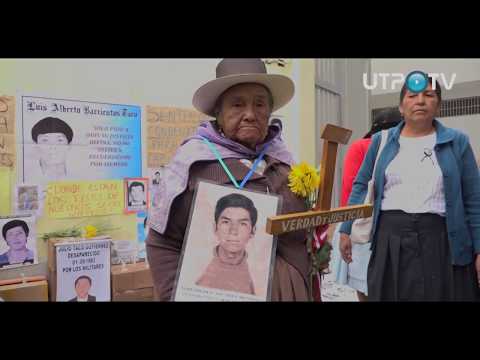
    During the period 1980-2000, the department of Ayacucho was the most affected by the internal armed conflict. A total of 6,549 Quechua-speaking people were reported killed and disappeared in this department. The Shining Path PCP was responsible for 3,752 victims, State agents for 2,316, CADS for 170, MRTA for 3, …

    Ayacucho, Perú Informe CVR, página 5205
  18. PCP-SL contact with mining settlements in Huancavelica

    By the last months of 1980, the PCP-SL had already made contact with some mining settlements in Huancavelica, specifically those located near the department of Ayacucho. The mining centers contacted were Cobriza, Julcani and La Mejorada, located in the provinces of Churcampa and Angaraes respectively. This contact was relatively early …

    Cobriza, Julcani y La Mejorada, Huancavelica, Perú Informe CVR, página 198
  19. PCP-SL Infiltration in Pasco

    In late 1980, militants of the Communist Party of Peru - Shining Path (PCP-SL) began infiltrating the rural areas of Pasco, including the city of Cerro de Pasco. These militants, reportedly of Ayacuchan origin, aimed to establish support bases by engaging with local populations and promoting their ideology of 'people's …

    Cerro de Pasco, Pasco, Peru Región Central, Zona IV, 1980-2000
  20. Fire in the municipality of San Martin de Porres

    The burning of the municipality of San Martin de Porres was one of the first acts of violence of the PCP-Sendero Luminoso in Lima, occurring almost parallel to the founding attack in Chuschi, Ayacucho, which marked the beginning of the armed struggle. This act was part of the initial conception …

    San Martín de Porres, Lima, Perú Informe CVR
  21. Subversive indoctrination in Oronqoy's school

    In 1980, subversive teachers began indoctrinating students in the Oronqoy high school. This school had been created in 1978 by directorial resolution as a mixed state school No. 38692 under the name of Neri Garcia Zarate. The subversive teachers indoctrinated students from the 19 communities of Oreja de Perro. This …

    Oronqoy, Chungui, Ayacucho, Perú Informe CVR, p. 114
  22. Rape of woman while she was collecting firewood

    The declarant narrates that when she was gathering firewood she was chased by a subversive who subsequently raped her. The subversive told her: 'if you are not going to accept me, I am going to kill you'. The victim screamed for help but no one came to her aid.

    Distrito de Santiago de Pischa, provincia de Huamanga, departamento de Ayacucho, Perú Informe CVR, página 2828
  23. Decrease in the EAP in Ayacucho and Huancavelica between census periods

    Between census periods, the economically active population (EAP) in Ayacucho decreased from 154,000 to 131,000 people, and in Huancavelica from 107,000 to 104,000. This decrease was mainly due to the impact of the internal armed conflict in these regions, which were the most affected by violence. The reduction of the …

    Ayacucho y Huancavelica, Perú Informe CVR, página 4352
  24. Formation of the Coordinadora Nacional de Derechos Humanos

    The Coordinadora Nacional de Derechos Humanos was formed as a result of organized efforts by local and regional human rights groups in Peru. Supported by Christian communities and the Church, this organization played a crucial role in defending human rights across the country. Despite opposition from figures like the Archbishop …

    Peru página 398
  25. First Military School of the PCP-SL

    In April 1980, the Central Committee of the PCP-SL held the first Military School in Jicamarca, Chaclacayo. This school was personally directed by Abimael Guzmán, maximum leader of the PCP-SL. The main objective of this military school was to develop the militarization of the party and to prepare for the …

    Jicamarca, Chaclacayo, Lima, Perú Informe CVR
  26. Assault in Chuschi - Beginning of the armed struggle of the PCP-SL

    On the eve of the presidential elections of May 1980, the PCP-SL broke into Chuschi, Cangallo, Ayacucho, attacking the electoral registry office. This event marked the symbolic beginning of the internal war unleashed by the Shining Path. The action culminated with the capture of four suspects. The event was barely …

    Chuschi, Cangallo, Ayacucho, Perú Informe CVR
  27. Violence and Human Rights Violations in Ayacucho

    In May 1980, the burning of ballot boxes by Shining Path (Sendero Luminoso) in Chuschi marked the beginning of a period of intense political violence in Ayacucho, Peru. This violence soon spread to neighboring regions such as Apurímac and Huancavelica. The response from the state included harsh counterinsurgency measures by …

    Ayacucho, Peru BDI-II-P668
  28. Attack on Chuschi and the Beginning of the Shining Path's 'People's War'

    On May 17, 1980, in Chuschi, Ayacucho, a group of five masked individuals attacked a location storing ballot boxes and registers for the upcoming national elections, burning eleven of them. This event, though initially receiving little media attention, was symbolically significant as it marked the beginning of the Shining Path's …

    Chuschi, Ayacucho, Peru
  29. Beginning of the Armed Conflict by Sendero Luminoso

    On 17 May 1980, in Chuschi, Ayacucho, a group of armed militants from Sendero Luminoso initiated their political and military plans by burning election materials. This marked the beginning of a series of violent actions aimed at involving the masses and gaining experience for their cadres. Subsequent attacks included dynamiting …

    Chuschi, Ayacucho, Peru Página 30
  30. Beginning of the Shining Path's Armed Conflict in Peru

    On May 17, 1980, the Shining Path (PCP SL) initiated its 'people's war' against the Peruvian state with a series of explosive attacks on public facilities, focusing heavily on Ayacucho. These early actions included the burning of ballot boxes in Chuschi and incendiary bomb attacks in San Martín de Porres. …

    Peru, with significant actions in Ayacucho, Lima, and La Oroya

Showing 1–50 of 757 events

Photos, Videos & Documents 523

Showing 1–50 of 523 items

Sub-entities 8