Fuerzas Armadas
Organization

Fuerzas Armadas

Wikipedia

Timeline Events 224

  1. Law enforcement casualties in 1981

    During 1981, Peruvian law enforcement suffered 4 fatal casualties as a result of the internal armed conflict, representing 0.2% of the total number of law enforcement casualties during the entire period under investigation. According to information submitted by the Ministry of the Interior and the Joint Command of the Armed …

    Perú Informe CVR, páginas 190-192
  2. Declaration of a state of emergency in Ayacucho

    The government placed five of the seven provinces of Ayacucho - Huamanga, Huanta, Cangallo, La Mar and Victor Fajardo - under a state of emergency, suspending constitutional guarantees regarding individual freedom for 60 days. This presidential decision included the suspension of guarantees, but not the entry of the Armed Forces.

    Huamanga, Huanta, Cangallo, La Mar y Víctor Fajardo, Ayacucho, Perú Informe CVR, páginas 472-473
  3. Conflict limited to Ayacucho

    Between 1982 and 1985, the internal armed conflict was practically confined to the department of Ayacucho. In December 1982, the Armed Forces (FFAA) were charged with leading the counter-subversive struggle, which marked the beginning of a notable escalation of violence, especially from 1983 onwards. The year 1984 corresponds to the …

    Ayacucho, Perú Informe CVR, páginas 164-187
  4. First cycle of hiker violence in Ayacucho

    Between 1982 and 1985, the first cycle of intense violence of the internal armed conflict took place, concentrated basically in the department of Ayacucho. During these years, about a third of the murders perpetrated by the PCP-Sendero Luminoso reported to the CVR were committed. This cycle was related to the …

    Departamento de Ayacucho, Perú Informe CVR, páginas 204-205
  5. Initial period of the conflict in Ayacucho

    Between 1982 and 1985, the internal armed conflict was practically confined to the department of Ayacucho. In December 1982, the Armed Forces (FFAA) were charged with leading the counter-subversive struggle, which marked the beginning of a notable escalation of violence, especially from 1983 onwards. The year 1984 corresponds to the …

    Ayacucho, Perú Informe CVR, páginas 164-187
  6. Attacks on Abimael Guzman's birthday

    The PCP-SL celebrated Abimael Guzmán Reinoso's birthday with simultaneous attacks in Lima and Ayacucho during December 1982. This wave of attacks was part of an escalation of violence that characterized the end of that year. The attacks occurred in a context of growing terrorist activity that led the Armed Forces …

    Lima y Ayacucho Informe CVR, páginas 67-68
  7. Armed Forces are in charge of the counter-subversive struggle in Ayacucho.

    In December 1982, the Armed Forces (FFAA) were charged with conducting the counter-subversive struggle in the department of Ayacucho. This event marked a crucial turning point in the Peruvian internal armed conflict. From that moment on, there was a notable escalation of violence, especially from 1983 onwards, reaching its highest …

    Ayacucho, Perú Informe CVR, páginas 164-187
  8. Officialization of the People's Guerrilla Army of PCP-SL

    On Abimael Guzman's birthday, the PCP-SL decided to make official the birth of its so-called 'People's Guerrilla Army'. This decision marked a milestone in the military structure of the subversive organization. Shortly after this officialization, the Armed Forces took charge of the counter-subversive struggle in Ayacucho.

    Ayacucho, Perú Informe CVR, página 251
  9. Attack on Mayor Víctor Jorge Jáuregui

    On December 11, 1982, in the middle of a public act, the provincial mayor of Huamanga, Víctor Jorge Jáuregui, a Popular Action (AP) militant, was wounded by two presumed members of the PCP-SL. The attackers were driving a motorcycle from where they shot him three times in the face. This …

    Huamanga, Ayacucho Informe CVR, página 68
  10. Entry of the Armed Forces to Ayacucho

    The first 450 Army reinforcements were sent to Ayacucho and the three battalions that had been barracked were deployed. On December 29, the entry of the Armed Forces in the fight against subversion was made official. The Marine Infantry also entered. With the establishment of the Political Military Command (CPM), …

    Ayacucho, Perú Informe CVR, páginas 374-375
  11. Belaunde's ultimatum to subversives

    President Fernando Belaunde Terry issued an ultimatum to the subversives to surrender their weapons before the Armed Forces took control of the emergency zone. This ultimatum took place in the context of a growing wave of terrorist attacks, especially in Ayacucho, and preceded the decision of the Armed Forces to …

    Perú Informe CVR, página 68
  12. Armed Forces take control of internal order in Ayacucho

    On December 29, 1982, the government extended the state of emergency and entrusted the control of internal order to the Armed Forces. In January 1983, the Political Military Command was established in Ayacucho. The province of Huanta remained under the control of the Navy until part of 1985, when the …

    Ayacucho, Perú Informe CVR, páginas 1204-1205
  13. Entrustment of the Armed Forces for internal control in Ayacucho

    On December 29, 1982, through Supreme Decree 068-82-IN, the Peruvian government instructed the Armed Forces to assume internal control in five Ayacucho provinces. This decision marked a turning point in the internal armed conflict, transferring the responsibility of public order control from the National Police to the Armed Forces. The …

    Provincias de Huamanga, Huanta, Cangallo, La Mar y Víctor Fajardo, Ayacucho, Perú Informe CVR, páginas 130-131
  14. Internal Control Order to Armed Forces in Ayacucho

    On December 29, 1982, Supreme Decree 068-82 IN was issued ordering the Armed Forces to assume internal control of the Department of Ayacucho. The command was assigned to General Roberto Clemente Noel Moral. This measure was taken in the context of increased violence by the PCP-Sendero Luminoso and marked the …

    Ayacucho, Perú Informe CVR, páginas 161-186
  15. Declaration of State of Emergency under military control in Ayacucho

    On December 29, 1982, by means of Supreme Decree Nº068-82-IN, the Constitutional Government entrusted the control of internal order to the Armed Forces and conferred Political-Military authority to the military chief. Thus, the Government reintroduced the institution of the Political-Military Command. This decision determined a profound change in the strategy …

    Ayacucho, Perú Informe CVR, páginas 3008-3009
  16. FFAA takes control of emergency zones in Ayacucho

    On December 31, 1982, the Armed Forces assumed internal control of the department of Ayacucho in the face of a growing wave of attacks. A total of 2,000 military troops took possession of the provinces declared in a state of emergency, starting with the rural areas. This decision was precipitated …

    Ayacucho Informe CVR, páginas 68-69
  17. Marine Infantry Installation in Huanta

    In January 1983, the Marine Infantry took control of the province of Huanta as part of the intervention of the Armed Forces in Ayacucho. This military installation took place during the first weeks of January, after the government instructed the Armed Forces to assume internal control in five Ayacucho provinces …

    Huanta, Ayacucho, Perú Informe CVR, p. 130
  18. Creation of the Political-Military Command

    In January 1983, the Political-Military Command was installed in the provinces of Ayacucho, Huancavelica and Apurímac as a response of the Peruvian State to the expansion of the Shining Path. This measure implied the entry of the Armed Forces into the areas affected by subversive violence. The Command established a …

    Perú (Ayacucho, Huancavelica, Apurímac) Informe CVR, páginas 199-221
  19. Entry of the Armed Forces in Ayacucho

    In January 1983, the Armed Forces took control of the counter-subversive struggle in Ayacucho through the installation of the political-military command. The new head of the political-military command of Ayacucho, General Clemente Noel Moral, arrived in the region with the idea, shared by the "hard" sectors of the army, of …

    Ayacucho Informe CVR, páginas 72-73
  20. Murder of journalists in Uchuraccay

    In 1983, a group of journalists was murdered in Uchuraccay, Ayacucho. Juan Argumedo acted as the journalists' guide during this tragic event. After the tragedy, his sister Juana Lidia Argumedo denounced the responsibility of the armed forces in the events. As a result of her denunciation, Juana was arrested on …

    Uchuraccay, Ayacucho, Perú Informe CVR, página 359
  21. Events in Province of Cangallo

    During 1983, there were multiple violent events in the province of Cangallo, Ayacucho. The Pampacangallo Military Base is specifically mentioned as one of the places where violence occurred. The document refers to general events in the province during this year, in the context of the internal armed conflict. The marines …

    Provincia de Cangallo, Departamento de Ayacucho Informe CVR
  22. Early stages of the internal armed conflict in Ayacucho

    The first phases of the internal armed conflict were marked by its eminently Ayacucho character and by the high peaks of violence reached in 1983 and 1984. Between 1982 and 1985, the conflict was practically confined to the department of Ayacucho. In December 1982, the Armed Forces (FFAA) were charged …

    Ayacucho, Perú Informe CVR, páginas 164-187
  23. First stage of massive and indiscriminate state repression

    During 1983 and 1984 there was a significant concentration of cases of arbitrary executions, forced disappearances and torture by State agents. This stage was characterized by the application of a strategy of massive and indiscriminate repression, especially in the rural areas of the department of Ayacucho. The members of the …

    Departamento de Ayacucho, Perú Informe CVR, páginas 210, 223
  24. Impunidad de Violaciones Sexuales por Fuerzas Armadas en Perú

    In 1983, rape committed by members of the Peruvian Armed and Police Forces was common. Perpetrators adopted nom de guerre and hid their ranks to avoid being identified, contributing to a culture of impunity. Military authorities protected the perpetrators, and victims faced difficulties in reporting due to fear and shame.

    Perú página 517-518
  25. Statement by Gen. Clemente Noel on extermination of terrorist outbreaks

    General EP Clemente Noel Moral declared on January 1 in El Comercio that the Peruvian Army will remain only two months in Ayacucho, time he has foreseen as 'necessary to exterminate the terrorist outbreaks'. This declaration marked the beginning of military operations in the emergency zone of Ayacucho, where the …

    Ayacucho Informe CVR, página 71
  26. Entry of the Armed Forces into emergency areas

    In 1983, the Armed Forces entered the zones that had been declared in a state of emergency, establishing political-military commands as the only real power. After two years of repression, assassinations, extrajudicial executions and torture on both sides, the number of victims between 1982 and 1984 increased notably, most of …

    Zonas de emergencia, Perú Informe CVR, páginas 1159-1160
  27. Escalation of violence in Ayacucho

    From 1983 onwards, there was a notable escalation of violence in the department of Ayacucho, especially after the armed forces were put in charge of the counter-subversive struggle in December 1982. The year 1984 corresponds to the moment of greatest intensity of the conflict, which caused the highest number of …

    Ayacucho, Perú Informe CVR, páginas 164-187
  28. Detention and disappearance in the province of Vilcashuamán

    The detainee's wife, accompanied by the Astanya authorities, went to the Concepción Military Base to ask for her husband, but they were not given any reason. On the contrary, they threatened them and chased them out of the place firing shots in the air saying 'why are you coming, go …

    Provincia de Vilcashuamán, Ayacucho, Perú Informe CVR, página 2614
  29. Report on paramilitaries in Ayacucho

    Marka's newspaper reported that groups of paramilitaries had been armed and trained to kill by the Political Command of the declared emergency zone. The head of the Political Military Command was General EP Clemente Noel Moral. This denunciation took place in the context of the anti-subversive struggle in Ayacucho, where …

    Ayacucho Informe CVR, página 72
  30. Disappearance of 15 residents of Huancaraylla

    In April 1983, fifteen villagers from Huancaraylla, a district in the province of Victor Fajardo, were disappeared by military personnel from the Cangallo base. This event occurred in the context of the military offensive that began in January 1983, when the Armed Forces entered the area to combat the PCP-Sendero …
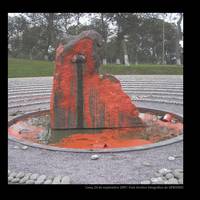
    Huancaraylla, Víctor Fajardo, Ayacucho Informe CVR, página 55
  31. Arrest and killings in Totos

    In April 1983, several residents of Totos, a district in the province of Cangallo, were detained by members of the Peruvian Army. Some of the detainees were later killed. This event took place in the context of the military offensive initiated in January 1983 against supposed support bases of the …

    Totos, Cangallo, Ayacucho Informe CVR, páginas 54-55
  32. Acocro Massacres

    In May and June 1983, in the rural area of Huamanga, the Acocro massacres occurred, which were among those with the greatest public impact in the region. These massacres occurred in the context of the entry of the Armed Forces into the region and the installation of the political-military command …

    Acocro, Huamanga, Ayacucho Informe CVR (páginas 72-84)
  33. Matará's razing

    In May 1983, members of the Peruvian Army razed the community of Matará in the district of Accocro. During the operation, they burned houses, killed, tortured and disappeared approximately 25 people. This event was part of the strategy of indiscriminate repression implemented by the Armed Forces after taking control of …

    Matará, Accocro, Huamanga, Ayacucho Informe CVR, página 83
  34. Arrest of 15 authorities of Quispillacta

    In May 1983, the military detained 15 authorities and community members from Quispillacta, Cangallo district. The detainees were taken to the Totos barracks. They were later killed and buried in a mass grave. This event was part of the counter-subversive strategy implemented by the Armed Forces after entering the area …

    Quispillacta, Cangallo, Ayacucho Informe CVR
  35. Meeting of the National Defense Council

    On May 9, 1983, the National Defense Council met, presided over by the President of the Republic Fernando Belaunde Terry. In this meeting, the evolution of the counter-subversive struggle in the country was discussed. This meeting took place in a context of intensified political violence, particularly in the department of …

    Perú Informe CVR, página 74
  36. Murder of peasants in San José de Secce

    According to testimonies gathered by the CVR, on May 20, 1983, about 80 peasants were murdered in San José de Secce, in the district of Santillana. The victims had been previously kidnapped by members of the Peruvian Navy. The testimonies designate members of the Navy as responsible for these deaths. …

    San José de Secce, Santillana, Huanta, Ayacucho Informe CVR (página 75)
  37. Detention, torture and rape of María Magdalena Monteza Benavides

    One affiant was detained for the first time on May 26, 1983 in the Parque de Las Leyendas, a zoo located in the district of Maranga. In April 1983, 40 soldiers and 3 Sinchis, all carrying firearms, entered her home. The text mentions this detention in the context of cases …

    Parque de Las Leyendas, Distrito de Maranga, Lima, Perú Informe CVR, página 365
  38. Relief of Republican Guard by Civil Guard in Andarapa

    In June 1983, there was a change in police forces in the district of Andarapa, province of Andahuaylas. The Republican Guard that had been operating in the area was replaced by members of the Civil Guard. This change in law enforcement occurred in the context of the intensification of the …

    Andarapa, Andahuaylas, Apurímac Informe CVR, página 112

Showing 1–50 of 224 events

Photos, Videos & Documents 119

Showing 1–50 of 119 items