Coordinadora Nacional de Derechos Humanos
Organization

Coordinadora Nacional de Derechos Humanos

Wikipedia

Timeline Events 26

  1. Formation of the Coordinadora Nacional de Derechos Humanos

    The Coordinadora Nacional de Derechos Humanos was formed as a result of organized efforts by local and regional human rights groups in Peru. Supported by Christian communities and the Church, this organization played a crucial role in defending human rights across the country. Despite opposition from figures like the Archbishop …

    Peru página 398
  2. Creation of the Coordinadora Nacional de Derechos Humanos

    In 1985, various institutions and individuals committed to defending human rights during Peru's internal armed conflict established the Coordinadora Nacional de Derechos Humanos. This organization became a crucial entity for providing legal support and refuge to victims of violence. Despite facing attacks from both the authoritarian regime of Alberto Fujimori …

    Peru
  3. March for Life and for Peace in Lima

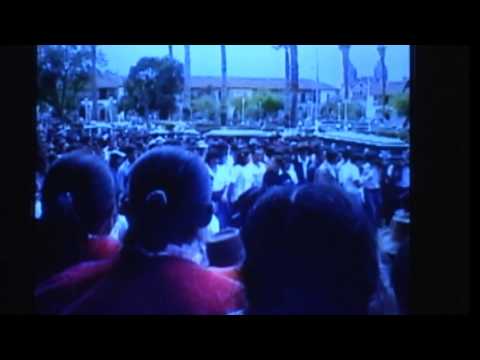
    More than ten thousand people mobilized through the center of Lima in the great march for Life and Peace, organized by the National Human Rights Coordinating Committee. Under the slogan 'The Fifth: Do not kill', numerous Christian groups from various parishes of Lima, lay apostolic movements, populous districts of Lima, …

    Centro de Lima, Perú Informe CVR, página 1068
  4. Inmate massacre in Lima's prisons

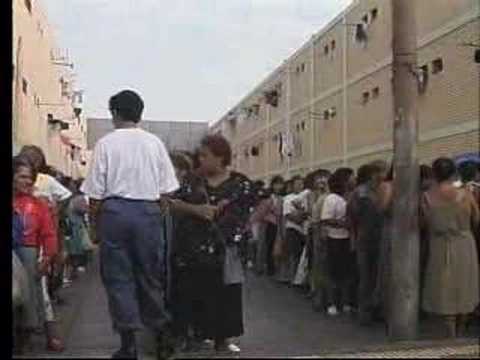
    There was a massacre of prisoners accused or sentenced for terrorism in Lima's prisons. After this event, the demand for truth and justice was explicitly raised by a broad coalition of civil society organizations united around the nascent National Human Rights Coordinating Committee. These organizations demanded a comprehensive and clear …

    Lima, Perú Informe CVR, página 21
  5. Detention of priest and CEAS workers in Ayacucho

    In Ayacucho, the priest Carlos Gallagher, Pilar Coll (executive secretary of the National Human Rights Coordinating Committee), two social workers from CEAS, Reiner Uhle (German) from SERPAJ and Guadalupe Callcunto (vice-president of the Association of Relatives detained in the emergency zone) were detained under accusation of being terrorists. After efforts …

    Ayacucho, Perú Informe CVR, página 1058
  6. Increase in Wrongful Imprisonment Due to 1992 Antiterrorism Legislation

    In 1992, a new antiterrorism legislative framework was enacted, leading to a significant increase in the number of innocent individuals wrongfully imprisoned. This legislation was criticized for violating fundamental rights and due process, resulting in numerous innocent people being prosecuted and convicted of terrorism or treason. The issue was highlighted …

    nan
  7. Human Rights Violations in Moyuna

    In April 1994, the Coordinadora Nacional de Derechos Humanos received reports of severe human rights violations in Moyuna, Huánuco. These reports included allegations of torture and extrajudicial executions by the Army against local residents. Additionally, there were claims of indiscriminate bombings in areas along the left bank of the Huallaga …

    Moyuna, district Crespo y Castillo, province Leoncio Prado, Huánuco, Peru
  8. Launching of Operation Aries

    Operation Aries was a large-scale military operation launched in April 1994 in the Huallaga region, as part of the counter-subversive strategy in an area that remained a hotbed of violence while the rest of the country was increasingly pacified. The operation was part of the Army's concentrated efforts to combat …

    Región Huallaga, Perú Informe CVR (páginas 144-145)
  9. Start of Operation Aries

    Operation Aries was a counter-subversive military operation carried out by the Peruvian armed forces that began on April 5, 1994 on the left bank of the Huallaga River. The operation was carried out in two phases (April-May and June-July 1994) with the objective of dismantling the last Shining Path strongholds …

    Bolsón Cuchara y Bolsón Primavera, margen izquierda del río Huallaga, distrito de José Crespo y Castillo, provincia de Leoncio Prado, departamento de Huánuco Informe CVR, páginas 387-410
  10. Communiqué of the Political Military Command of the Huallaga Front

    On April 20, 1994, the Political Military Command of the Huallaga Front issued an official communiqué (N° 019/RRPP/F-H) in response to the denunciations of the National Human Rights Coordinating Committee (CNDDHH) regarding human rights violations during Operation Aries. The communiqué denied the alleged bombing of the civilian population and clarified …

    Frente Huallaga, Huánuco, Perú Informe CVR, páginas 387-411
  11. Official communiqué from the Political Military Command of the Huallaga Front on Operation Aries

    On April 20, 1994, the Political Military Command of the Huallaga Front issued an official communiqué (N° 019/RRPP/F-H) in response to the denunciations of the National Human Rights Coordinating Committee (CNDDHH) regarding human rights violations during Operation Aries. The communiqué denied the alleged bombing of the civilian population and clarified …

    Frente Huallaga, Huánuco, Perú Informe CVR, páginas 387-410
  12. Human Rights Violations during Operation Aries

    During Operation Aries, the Coordinadora Nacional de Derechos Humanos (CNDDHH) reported human rights abuses by the armed forces against civilians in the Alto Huallaga region. The military denied allegations of bombings, claiming instead that they conducted 'rocketeos' with limited range. The operation included psychological strategies to encourage subversive leaders to …

    Alto Huallaga, Peru página 399
  13. Denies bombing of civilian population during Operation Aries

    On April 21, 1994, the Political Military Command of the Huallaga Front issued an official communiqué denying the alleged bombing of the civilian population during anti-terrorist operations in Alto Huallaga. The communiqué was released to the press on April 20 and was in response to the National Human Rights Coordinator's …

    Frente Huallaga, Huánuco, Perú Informe CVR, páginas 390-410
  14. Statement by Colonel Jano on rocking in the Huallaga Front

    On April 21, 1994, Colonel Jano, Chief of the Operational Staff of the Huallaga Front, made public statements in response to reports of bombing of civilians during Operation Aries. Colonel Jano denied that the armed forces had carried out bombings, clarifying that they were actually rocket attacks, arguing that this …

    Frente Huallaga, Huánuco, Perú Informe CVR, página 399
  15. Hermosa's invitation to Red Cross to inspect Operation Aries area

    On April 23, 1994, the Commander General of the Armed Forces, Nicolás de Bari Hermosa Ríos, invited representatives of the International Red Cross to inspect the conflict zone where Operation Aries was being carried out. The invitation established that the inspection was to be carried out accompanied by a commando …

    Alto Huallaga, Huánuco, Perú Informe CVR, página 408
  16. Visit of the Attorney General to Venenillo during Operation Aries

    The Prosecutor of the Nation, Blanca Nélida Colán, made an inspection visit to Venenillo and other towns in the area where Operation Aries was taking place, flying over the area by helicopter. During this visit, the Prosecutor stated that the allegations made by the National Human Rights Coordinator about alleged …

    Venenillo, Huánuco, Perú Informe CVR, página 407
  17. Prosecutor's second visit to Moyuna

    National Prosecutor Blanca Nélida Colán made a second visit to Moyuna on April 29, 1994, accompanied by a military patrol and two medical examiners. On this occasion, unlike her first visit where she stated that there were no dead, she performed the autopsy of five people (four men and one …

    Moyuna, Huánuco, Perú Informe CVR, página 407
  18. Motion of condemnation against CNDDHH passed

    The pro-Fujimori congressman Oswaldo Sandoval presented a motion of condemnation against the National Human Rights Coordinator (CNDDHH) for having disseminated, according to him, "without objective and real evidence", the accusations against the armed forces during Operation Aries. The motion was approved by the government majority of the Democratic Constituent Congress …

    Lima, Perú Informe CVR
  19. End of first phase of Operation Aries

    The first phase of Operation Aries ended on May 26, 1994, after fifty days of operations which began on April 5. The operation had to be stopped definitively due to serious allegations of human rights violations received by the National Human Rights Coordinator (CNDDHH) and the Human Rights Commission of …

    Bolsón Cuchara y Bolsón Primavera, distrito de José Crespo y Castillo, provincia de Leoncio Prado, departamento de Huánuco, Perú Informe CVR, páginas 387-410
  20. Arrest of Operation Aries

    Operation Aries was a large-scale military operation launched in April 1994 in the Huallaga region, as part of the counter-subversive strategy in an area that remained violent while the rest of the country was increasingly pacified. However, the operation was halted in May of the same year in the face …

    Región Huallaga, Perú Informe CVR, página 144
  21. Report on disappearance of Asháninka communities

    In 1995, the United Nations Commissioner for Refugees, Francis Deng, visited the Asháninka area to report on their situation. That same year, the National Human Rights Coordinator published a report on the disappearance of Asháninka communities. During the internal armed conflict, out of 55,000 Asháninka, nearly 10,000 were forcibly displaced …

    Valles del Ene, Tambo y Perené, Selva Central, Perú Informe CVR
  22. Conflict and Displacement of the Asháninka Communities

    In 1995, the United Nations High Commissioner for Refugees, Francis Deng, visited the Selva Central region of Peru to highlight the situation of the Asháninka communities. The Coordinadora Nacional de Derechos Humanos published a report on the disappearance of these communities, which were significantly affected by the internal armed conflict. …

    Selva Central, Peru Página 241
  23. Widespread Torture in Peru

    A report by the Coordinadora Nacional de Derechos Humanos in 1999 highlighted the extensive use of torture across Peru. The report documented 4,601 cases, with 84% involving detainees accused of terrorism or political crimes. The practice was particularly prevalent in rural areas with limited access to social and state protection …

    Peru Página 224
  24. Matanza de Barrios Altos and Subsequent Legal Actions

    On 25 October 2000, the Coordinadora Nacional de Derechos Humanos filed a criminal complaint against Vladimiro Montesinos Torres and other military officials for crimes against humanity, including forced disappearance and homicide, related to the 'Matanza de Barrios Altos' case. This was part of a broader investigation into human rights violations …

    Peru página 574
  25. Establishment of the Interinstitutional Working Group for the Truth Commission

    One of the first acts of the transitional government was the formation of the Inter-Institutional Working Group to propose the creation of a Truth Commission. This group included the participation of the Ministries of Justice, Interior, Defense, Promotion of Women and Human Development, the Ombudsman's Office, the Peruvian Episcopal Conference, …

    Lima, Perú Informe CVR, página 22
  26. Human Rights Violations in Bolsón Cuchara and Bolsón Primavera

    In May 2002, severe human rights violations were reported in the Bolsón Cuchara and Bolsón Primavera regions. Witnesses described scenes of extreme violence, including torture, decapitations, and sexual assaults. These events were documented and brought to public attention by the Coordinadora Nacional de Derechos Humanos and various journalists, highlighting military …

    Caserío de Santa Martha, Distrito de José Crespo y Castillo, Provincia de Leoncio Prado CVR - chunk 2377.0

Showing 1–26 of 26 events

Photos, Videos & Documents 46

Showing 1–46 of 46 items