
Photos & Videos
9 media items in Truth and Reconciliation Commission - Peru
Tag
Alan García
×
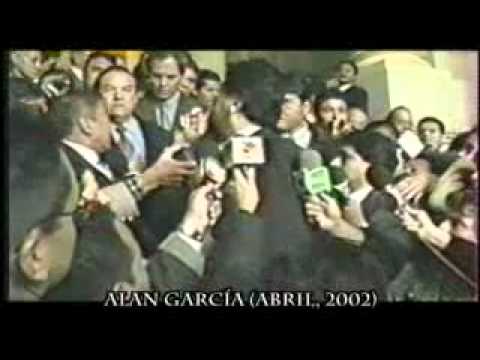
Unpublished testimonies about the El Frontón massacre. Report
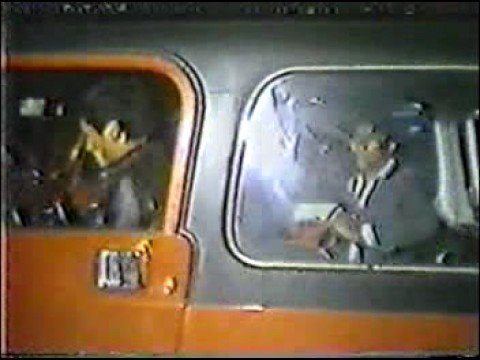
Alan García and the prison massacre
 1989
1989
PRESIDENT ALAN GARCIA IN MOLINOS
 1987
1987
Passersby are immobilized by members of the Republican Guard
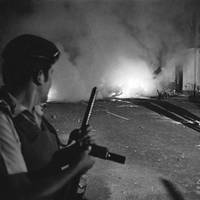 1987
1987
A car bomb explodes three blocks from an APRA rally
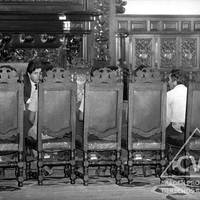 1985
1985
President of the Republic Alan García Pérez speaks at the Government Palace with former Shining Path members
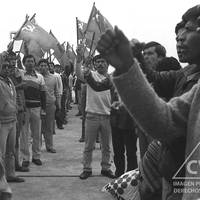 1985
1985
Shining Path chants at the El Frontón prison island
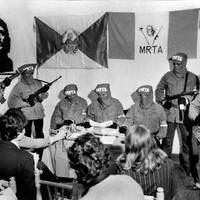 1985
1985
MRTA PRESS CONFERENCE
Showing 1–9 of 9 items
Timeline Events 46
-
Prevention of Constitutional Accusation Against Former President García
In November 1990, the Peruvian Congress, with the support of officialist and APRA deputies, blocked a constitutional accusation against former President Alan García. The accusation was related to his alleged responsibility in the 1986 prison massacres. This event highlighted the political maneuvering and alliances formed by President Fujimori to prevent …
-
Popular Trial of Héctor Delgado by MRTA
During his captivity, businessman Héctor Delgado was subjected to a 'popular trial' by the MRTA, accused of corruption in the purchase of Mirage aircraft by the government of Alan García and of orchestrating a psychological warfare campaign against the MRTA. The trial was conducted by revolutionary tribunals led by members …
-
Human Rights Violations at El Frontón Prison
In 1990, a Commission was formed to investigate accusations against former President Alan García Pérez regarding events at El Frontón prison. The Inter-American Court of Human Rights found that the Peruvian state violated the fundamental rights of inmates during a prison uprising. The court mandated reparations for victims' families and …
-
U.S. Invasion of Panama and Peru's Diplomatic Response
In December 1989, the United States invaded Panama, leading to international reactions. The Peruvian government, led by President Alan García Pérez, expressed its rejection of the invasion and temporarily withdrew its diplomatic representation from Washington. Additionally, Peru suspended its anti-drug operations with U.S. cooperation as a protest against the invasion.
-
Implementation of Premilitary Instruction in Peruvian Schools
In March 1989, during the administration of Mercedes Cabanillas Bustamante, the Peruvian government implemented a course of Premilitary Instruction in schools. This initiative was part of a broader strategy to combat subversion by militarizing educational spaces, a move that faced opposition from the teachers' union SUTEP. The course was managed …
-
Military Intervention in Peru
In 1989, President Alan García ordered the intervention of the Armed Forces through the Comando Político Militar in response to escalating violence. This period saw a significant increase in violence, with the majority of deaths occurring between 1989 and 1993. The intervention aimed to prevent tactics that could result in …
-
Creation of the Comando Político Militar del Huallaga
In 1989, during the presidency of Alan García, the Comando Político Militar del Huallaga was established as part of a strategy to combat subversive activities and narcotics trafficking in the region. This initiative included the installation of military bases and a shift in focus from persecuting coca farmers to targeting …
-
Formation of Rondas Campesinas in Ayacucho
In 1989, under the presidency of Alan García Pérez, the Peruvian government began arming local peasant patrols known as 'rondas campesinas' in Ayacucho to combat the insurgent group PCP-SL. This movement was partly a response to increased violence from the PCP-SL and was supported by both military coercion and the …
-
State of Emergency Declared in Junín
In response to increasing violence from the PCP-SL and MRTA, the government of Alan García declared a State of Emergency in all provinces and districts of Junín in November 1988. This led to the military taking control, resulting in numerous human rights violations, including threats, kidnappings, torture, extrajudicial killings, and …
-
Peru's Economic Adjustment and Protests
In September 1988, the Peruvian government, led by President Alan García Pérez, announced a series of orthodox economic measures to combat inflation and stabilize the economy. These measures were met with widespread public protests, including a notable 'march of empty pots' on September 22, which was repressed by the police. …
-
Alan García's Controversial Speech in Ayacucho
In early July 1988, President Alan García delivered a controversial speech at the VII Congress of the Aprista Youth in Ayacucho. He praised the dedication of the Sendero Luminoso (Shining Path) members, suggesting it as an example for the youth of his party, which was seen as provocative by some …
-
VII National Congress of the Aprista Youth
During the VII National Congress of the Aprista Youth in May 1988, President Alan García delivered a controversial speech that was later leaked to the press. In his address, García acknowledged the dedication and commitment of the militants of Sendero Luminoso, a subversive group, and compared it to the lack …
-
Attack on Pichiwillca and the Rise of CAD's Offensive
On April 13, 1988, a group of 40 Shining Path (PCP-SL) members, supported by hundreds of local campesinos, launched an attack on Pichiwillca, the main base of the DECAS in the VRA. The attack was repelled with the help of local ronderos and a military detachment, resulting in the deaths …
-
State of Emergency Declared in Chanchamayo, Oxapampa, and Satipo
In 1988, the Peruvian government under President Alan García declared a state of emergency in the provinces of Chanchamayo, Oxapampa, and Satipo due to the increasing subversive activities and territorial expansion of the PCP-SL and MRTA. This measure was taken as the insurgent groups were establishing control over various regions, …
-
Reorganization of the Peruvian Ministry of Defense
In 1987, under President Alan García, Peru attempted to reorganize its Ministry of Defense to increase civilian control over the military. The new structure aimed to integrate the Ministry of Defense more closely with civilian government, but ultimately failed to achieve significant control. The military retained substantial autonomy, and the …
-
Statization of the Banking System in Peru
On July 28, 1987, the President of Peru announced the nationalization of the banking and financial system. This move was met with strong opposition from the business community, bankers, and political parties such as PPC and AP. The announcement temporarily boosted President García's popularity but ultimately failed to succeed, leading …
-
Coordination Challenges between Police and Military in Peru
In early 1987, a session of the Council of Ministers in Peru was convened by President Alan García, involving police and military intelligence specialists. Despite efforts to improve coordination, significant challenges persisted between the police and the armed forces, particularly in emergency zones where the military held decision-making power. This …
-
Nationalization of Banks and Financial System in Peru
In 1987, the Peruvian government under President Alan García Pérez decided to nationalize the banking and financial system. This decision was a response to the lack of positive reactions from the business sector to the government's economic measures. The nationalization marked a significant shift in economic policy, reflecting the challenges …
-
MRTA Guerrilla Campaign in San Martín
In 1987, the MRTA ended its truce with President Alan García and launched a guerrilla campaign in the San Martín department. This campaign was heavily publicized, occurring shortly after the controversial attempt to nationalize the banking sector, which had intensified opposition against the government. Despite the significant media coverage and …
-
Recognition of Rondas Campesinas and Comités de Autodefensa in Peru
In the 1980s, two types of peasant patrols, or 'rondas campesinas', were formed in Peru. On November 6, 1986, the government of Alan García Pérez officially recognized the peaceful, democratic, and autonomous peasant patrols in the northern departments of Cajamarca and Piura. Meanwhile, in the central highlands, armed 'rondas contrasubversivas' …
-
Massacre in Peruvian Prisons
In June 1986, the Peruvian government, under President Alan García, faced a severe crisis following a violent crackdown on a prison uprising. The government's response, which resulted in the killing of prisoners who had already surrendered, was criticized for its heavy-handed approach and marked a departure from democratic principles. This …
-
Prison Riots in Lima
On June 18, 1986, prisoners accused of belonging to the PCP-SL rioted and took hostages in three Lima prisons: Santa Bárbara, Lurigancho, and El Frontón. The government responded by deploying security forces to restore order, resulting in the deaths of 244 people. The incident drew criticism from the IU, which …
-
The 1986 Peruvian Prison Massacres
In June 1986, a violent prison uprising occurred in Peru when inmates resisted transfer orders and took hostages in the prisons of El Frontón, Santa Bárbara, and Lurigancho. The government, led by President Alan García, responded with a military operation that resulted in a large-scale massacre, with 118 inmates killed …
-
Prison Massacres in Peru
On June 18, 1986, during the suppression of a prison riot in Peru, military forces executed a large number of inmates who had surrendered. The events took place in the San Pedro (Lurigancho) and San Juan Bautista (El Frontón) prisons. The Commission of Truth and Reconciliation later reported that these …
-
Massacre of the Prisons in Lima
In June 1986, a massacre occurred in the prisons of Lima, marking a significant turning point in the armed conflict in Peru. This event undermined the possibility of a counter-subversive strategy that respected human rights, as promised by President Alan García. The massacre aligned with the strategy of the Communist …
-
Lurigancho Prison Incident
In June 1986, allegations emerged of extrajudicial executions at Lurigancho prison in Peru, following a rebellion that had been subdued by the military. The government, led by President Alan García, admitted the possibility of excessive force and initiated investigations. The investigations found responsibility among members of the Guardia Republicana, leading …
-
Prison Riots and Massacre in Lurigancho, Santa Bárbara, and Frontón
In June 1986, inmates accused of terrorism and belonging to the PCP-Sendero Luminoso staged riots in the prisons of Lurigancho, Santa Bárbara del Callao, and the island of Frontón. The prisoners took control of the facilities, captured weapons, and held hostages, aiming to discredit the government of President Alan García. …
-
Slaughter of the penitentiaries
In June 1986, a significant event known as the Matanza de los Penales occurred in Peru, which undermined efforts towards a democratic approach to counterinsurgency. This massacre diminished the credibility of peaceful alternatives and contributed to the polarization and escalation of the conflict, which was marked by severe human rights …
-
Slaughter in San Pedro and El Frontón prisons
In June 1986, a violent crackdown occurred in the Peruvian prisons of San Pedro and El Frontón, where numerous prisoners accused of terrorism were killed. The most severe actions took place at El Frontón, where the Navy's Demolition Unit destroyed the Blue Pavilion, housing 150 subversives. The government acknowledged excesses …
-
Confrontation at Empresa Rural de Propiedad Social Kunurana
On February 7, 1986, the Peruvian government promulgated Supreme Decrees 005 and 006, initiating a land restructuring process. This led to tensions in Puno, where President Alan García criticized local leaders and his party members for their handling of the situation. The Empresa Rural de Propiedad Social Kunurana became a …
-
Matanza de los Penales de 1986
In 1986, during the presidency of Alan García Pérez, a significant event known as the 'Matanza de los Penales' occurred, marking a turning point in the relationship between the executive power and the military high command in Peru. This event involved the killing of inmates in various prisons, highlighting the …
-
Expansion of PCP-SL and Political Tensions in Peru
In 1986, the Communist Party of Peru - Shining Path (PCP-SL) expanded its operations across the Peruvian highlands, challenging the newly elected government of Alan García. Despite initial hopes for a change in counter-subversive policies, the PCP-SL, led by Abimael Guzmán, sought to delegitimize the APRA government by inciting violent …
-
Land Redistribution Conflicts in Puno
In 1986, the region of Puno in Peru experienced significant conflict over land redistribution. The reform efforts initiated by the government of Alan García aimed to redistribute 1,100,000 hectares to local communities. However, these efforts were met with resistance from vested interests, leading to spontaneous land seizures by frustrated campesinos …
-
MRTA Declares Hostilities Against Alan García's Government
The Movimiento Revolucionario Túpac Amaru (MRTA) declared the government of Alan García as an enemy of the people, accusing it of betraying the nationalist, democratic, and popular mandates for which it was elected. This declaration marked the beginning of hostilities, including a symbolic grenade attack on the Government Palace. The …
-
Implementation of the PROEM Program in Peru
In 1986, the Peruvian government introduced the PROEM program, which allowed companies to hire workers without job stability for up to two years. This program was extensively used by employers to circumvent labor stability, leading to increased underemployment and impacting union representation. The initiative was part of broader labor reforms …
-
Investigation of the Accomarca Massacre
In August 1985, President Alan García of Peru initiated an investigation into the Accomarca massacre, where the military was accused of killing civilians. This decision led to the dismissal of high-ranking military officials who failed to account for the events. The investigation was part of García's broader strategy to address …
-
Massacres in Peru
In August 1985, shortly after Alan García assumed power, members of the Peruvian Armed Forces committed a series of massacres in Pucayacu, Accomarca, Umaro, and Bellavista. These events occurred during a period of political and social tension in Peru, as García's government attempted to address internal conflicts and economic challenges. …
-
Alan García Assumes Presidency of Peru
Alan García assumed the presidency of Peru on 28 July 1985, following the April elections where the PAP secured the first place but did not win outright in the first round. The second round was not held due to the withdrawal of the opposing candidate from the Izquierda Unida. In …
-
Implementation of Law 24150 and Its Impact on Military and Government Relations in Peru
On June 5, 1985, the outgoing government of President Fernando Belaúnde Terry enacted Law 24150, which regulated the powers of the Military Political Command in areas declared under a state of emergency. This law granted military authorities significant control over political and judicial matters, a move that was not opposed …
-
Promulgation of DL 24150 and Military Control in Peru
In 1985, a month and a half before President Alan García assumed office, the Peruvian government promulgated DL 24150. This decree allowed the military to assume control over internal order in certain zones, effectively limiting the power of civilian authorities. Despite this, elections and appointments of authorities continued, highlighting the …
-
Case of Accomarca and Changes in Human Rights Discourse under Alan García
Upon being elected president, Alan García Pérez shifted the official discourse on the internal conflict in Peru by criticizing human rights violations committed by the armed forces. This led to the creation of a Peace Commission and attempts to change the purely military approach to dealing with insurgency. A significant …
-
Temporary Suspension of Military Patrols in Peru
In 1985, upon assuming the presidency, Alan García Pérez identified the indiscriminate nature of military actions in Ayacucho, where reports indicated numerous alleged subversives were killed without evidence of confiscated weapons. This led him to temporarily suspend military patrols in emergency zones to reassess the counter-subversive strategy. This decision contributed …
-
Alan García's First Presidency in Peru
In 1985, Alan García became the President of Peru, marking the first time the American Popular Revolutionary Alliance (PAP) came to power after nearly six decades. His presidency began amidst a challenging economic crisis and an expanding armed conflict, with García aiming to implement a popular and democratic program. Despite …
-
Alan García's Election as President of Peru
In 1985, Alan García, the candidate of the American Popular Revolutionary Alliance (APRA), was elected as the President of Peru. This marked the first time a political party with significant popular support gained power in the country. García's presidency began with promises of societal reforms aimed at benefiting the majority, …
-
Uchuraccay Massacre
In early 1983, the massacre of journalists in Uchuraccay drew significant criticism from political parties in Peru, including the Partido Aprista Peruano (PAP) and leftist groups. The incident highlighted the tensions between the government and political parties over the military's counterinsurgency tactics in Ayacucho. Alan García, a prominent PAP leader, …
-
PAP National Congress elects Alan Garcia Perez as National Secretary
In October 1982, the Peruvian Aprista Party (PAP) held its National Congress in which Alan Garcia Perez was elected National Secretary of the party. This event marked an important moment in Garcia's political career within the PAP. Subsequently, in February 1984, Alan Garcia Perez would be elected candidate to the …