IDL has worked in regional processes to try to reconstruct the past. The work in Huancavelica was intensive. Little was known about what happened in that department, unlike Ayacucho, where …
Books & Articles
33 documents in Truth and Reconciliation Commission - Peru
In our country there is a discrepancy between our perception of the needs of the relatives of disappeared persons and the actions we have proposed on their behalf. It is …
In this text the author argues that the IF of the CVR failed to articulate a coherent discourse in explaining the causes and dynamics of the internal armed conflict, and …
Six years after the presentation of the Truth Commission (CVR) report, reconciliation among Peruvians has not been achieved due to the "existing bias" of that document against the Armed Forces …
The subject has been widely commented on in the media and in blogs. One angle I found important is how to address the issue of memory and the promotion of …
Vargas Llosa criticizes the comments of Defense Minister Florez Aráoz, in which he justifies Alan García's government's rejection of Germany's offer to build a Museum of Memory.
Discussion in the Congressional Commission on National Defense and Internal Order regarding Alan García's government's rejection of Germany's donation for a museum of memory. Participants included: Edgar Nuñez, Lourdes Alcorta, …
"What ethical demands does thinking after what we have experienced in Ayacucho, Apurímac, and Huallaga impose on us? What political tasks does the reconstruction of democracy set for us after …
Following the presentation of the Final Report of the Truth Commission, the Asociación Paz y Esperanza decided to contribute to the reconciliation process through its ongoing work. As soon as …
The work is divided into two large sections. The first is titled: Civil Society, Different Agendas and Accompaniments, in which the problem of the causes of violence is discussed, along …
The instituto Bartolomé de las Casas organized in August 2006 the international seminar: Conditions for Achieving Reconciliation in Peru. This was a gathering of analysts from various disciplines who, from …
The theme of reconciliation evokes many echoes in the Christian faith and therefore involves us today in this country. What contribution can we make as Christians to this great task …
At this moment, although pacification has been achieved, much remains to be done on the path toward justice, reparation, and reconciliation. "Anco, haciendo memoria" (Anco, Making Memory) is a proposal …
In this working document, the Instituto de Democracia y Derechos Humanos de la Pontificia Universidad Católica del Perú (IDEHPUCP) proposes a discussion on the relevance of the concept of postwar …
"Historical Memory and a Culture of Peace: Learning from the Past to Build the Future" was the name of an international conference held in October 2005 in the cities of …
The Instituto de Democracia y Derechos Humanos de la Pontificia Universidad Católica del Perú (IDEHPUCP) makes available to the interested public this working document, which analyzes the scenarios that have …
This document is a record of the work carried out during the forum: "Hacia la reparacion y la reconciliacion: responsabilidades compartidas." It contains the presentations delivered and the analysis and …
In recent decades our region has experienced many violent conflicts and also their endings. This book allows us to better understand the situation in several countries of the Latin American …
This work revolves around the problem of violence, memory, and what is called the reconciliation process in Peru from the Ayacucho perspective. The author's concern centers on what happened in …
"As we argue in this text, the rural Quechua-speaking population manages theories both of the etiology of their ailments and of the methods for treating what ails them. Their therapeutic …
The texts of Salomón Lerner Febres, carefully selected by the Centro de Estudios y Publicaciones, are pieces of philosophical depth but were also a call to attention for Peruvians regardless …
The country that emerges from a calm reading of the CVR report is striking. The country as a whole, in fact — not just the period the commission was tasked …
Almost two centuries after independence, "the Peruvian promise" — the possibility of a dignified life for all — remains a distant horizon. The multiple social ruptures have conspired against the …
The book presents the position of the Peruvian Armed Forces and the police regarding the events that occurred during the Peruvian internal armed conflict between 1980 and 2000. This is …
Twenty years of political violence, internal war, and an authoritarian regime in which human rights were set aside deserve to be evaluated and brought to light in order to build …
We have always believed that to achieve true national reconciliation it was necessary to know the truth of what had occurred during the years of the war. In the following …
This work takes it as understood that pacification, beyond victory over armed insurgency and beyond the terrorist characterization, allows us to dwell on the multiple facets that feed a substantive …
Showing 1–33 of 33 documents
Timeline Events 11
-
Delivery of the CVR Final Report
On August 27, 2003, the Truth and Reconciliation Commission delivered its Final Report to the country. The report documents the human rights violations that occurred during the internal armed conflict between 1980 and 2000. The document includes general conclusions, recommendations and a record of approximately 24,000 identified victims. FAP Lieutenant …
36 media 301 docs -
University Workshop on Reconciliation in Huamanga
The TRC organized a university workshop on reconciliation in Huamanga where ideas on reparations were discussed. Participants proposed to design and implement development policies, create a National Reparation Commission, institutionalize free access to education, honor and name recognition, indemnification and economic and moral compensation, and that the justice system should …
4 docs -
Workshop with Grassroots Communities on Reconciliation in Satipo
The TRC organized workshops with Asháninka communities in Satipo to discuss reconciliation. The communities expressed hope for reparations but also distrust towards the State. The participants stated that the State, through its institutions, has not participated in anything, has not repaired the damage, has not done justice and has not …
7 docs -
University Workshop on Reconciliation in Puno
The TRC organized a university workshop in Puno where the strengthening of the Rule of Law was discussed. Participants proposed linking police work with an eminently human and community service work, for which police personnel should be trained. It was also recommended to restructure the rules and sanctions for police …
2 docs -
Seminar with Social Scientists on Reconciliation
The Truth and Reconciliation Commission held a seminar with social scientists to discuss reconciliation issues. This event raised fundamental questions about the link between reparation and reconciliation, questioning what the State does to repair what happened with the war, who is being repaired, who is reconciled and how they are …
5 docs -
Workshop with Grassroots Communities on Reconciliation in Huanta
The TRC held a workshop with grassroots peasant communities in Huanta to discuss reconciliation. The communities expressed their needs for support from the government and regional and local authorities with food, clothes and other basic necessities. The participants stated that because of violence and corruption they were left without the …
6 docs -
Visit of the Truth and Reconciliation Commission to Uchuraccay
In May 2002, the Truth and Reconciliation Commission visited the community of Uchuraccay. Upon learning of the Commission's arrival, some community members initially thought that it was going to "judge them for the massacre of the journalists" that took place in 1983. Once they overcame their initial mistrust, the community …
8 docs -
University Workshop on Reconciliation in Huanuco
The TRC held a university workshop in Huánuco to discuss reconciliation issues. Issues related to physical and mental health reparations were addressed, and the role of the State in providing security, stability, equity and rational distribution of resources for citizens was discussed. Participants reflected on the ultimate purpose of the …
1 docs -
I Encounter for Peace and National Reconciliation
On January 26, 1998, the 'I Encounter for Peace and National Reconciliation' was held in the community of Uchuraccay. This event was held in commemoration of the fifteenth anniversary of the death of the eight journalists murdered on January 26, 1983. The meeting was part of the national reconciliation efforts …
1 docs -
I Meeting for peace and national reconciliation
On January 26, 1998, in commemoration of the fifteenth anniversary of the death of the eight journalists murdered in Uchuraccay, the first peace and national reconciliation meeting was held. This event was promoted by a group of journalists from Ayacucho and the authorities of the Tambo district, who contacted the …
7 docs -
Return of twenty-four families to Uchuraccay
A group of twenty-four families returned to Uchuraccay after almost a decade of absence. This return was possible after months of coordination promoted by Elías Ccente, with the support of the National Evangelical Council of Peru. The community had been totally depopulated due to repeated attacks by the PCP-Sendero Luminoso, …
Photos & Videos 8
Puntaman puririsu (We keep moving forward) - Documentary
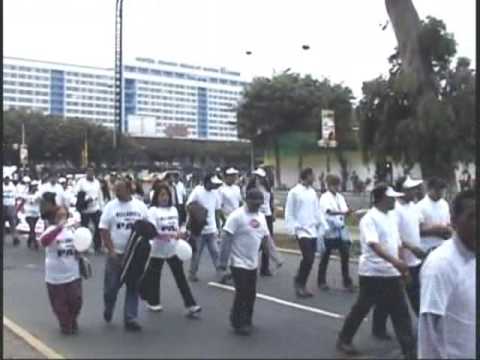
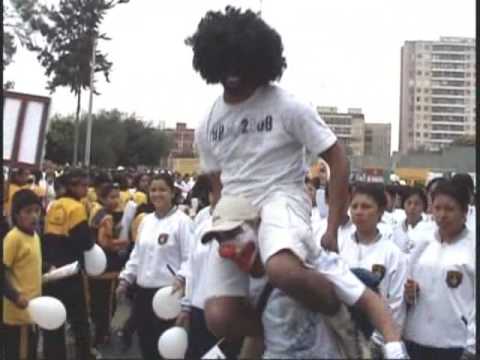
Great march for peace. Second part
Great march for peace. First part
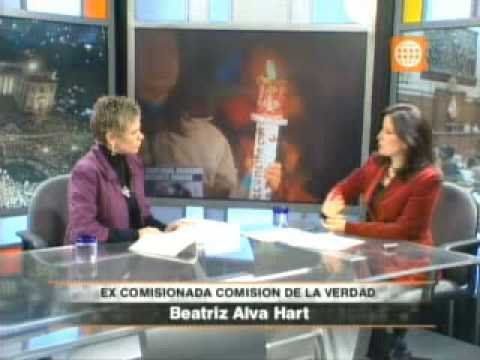
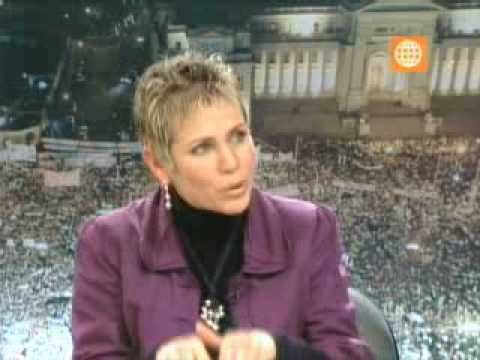
Fifth Anniversary of the CVR - Interview with Beatriz Alva Hart (Part 1)
Fifth Anniversary of the CVR - Interview with Beatriz Alva Hart (Part 2)
Peasant painting: Memory and images of our land
The anger in the eye. Interview