Photos & Videos
22 media items in Truth and Reconciliation Commission - Peru
Tag
Alberto Fujimori
×
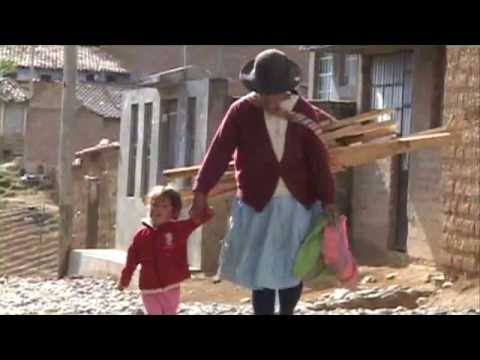
"Pending justice" - Documentary. Forced sterilizations
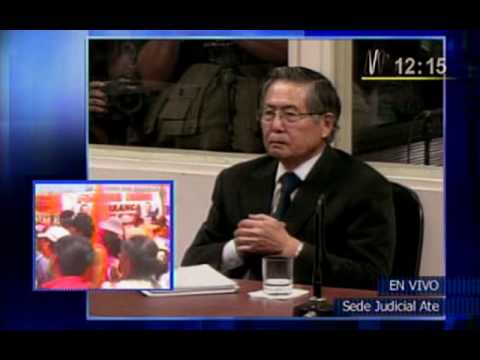
Former president Alberto Fujimori is sentenced (07-04-09)
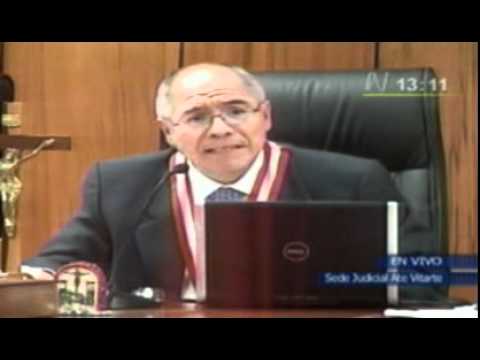
Vladimiro Montesinos testifies at the Fujimori trial. Part 13
Vladimiro Montesinos testifies at the Fujimori trial. Part 12
Vladimiro Montesinos testifies at the Fujimori trial. Part 11
Vladimiro Montesinos testifies at the Fujimori trial. Part 10
Vladimiro Montesinos testifies at the Fujimori trial. Part 9
Vladimiro Montesinos testifies at the Fujimori trial. Part 8
Vladimiro Montesinos testifies at the Fujimori trial. Part 7
Vladimiro Montesinos testifies at the Fujimori trial. Part 6
Vladimiro Montesinos testifies at the Fujimori trial. Part 5
Vladimiro Montesinos testifies at the Fujimori trial. Part 4
Vladimiro Montesinos testifies at the Fujimori trial. Part 3

Vladimiro Montesinos testifies at the Fujimori trial. Part 2
Vladimiro Montesinos testifies at the Fujimori trial. Part 1
Supporters of Alberto Fujimori sabotage fifth anniversary of the CVR

"Three years that changed history". Pro-Fujimori documentary. Part 1

"Three years that changed history". Pro-Fujimori documentary. Part 2
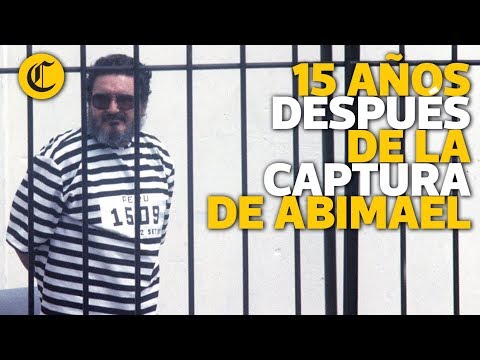
15 years after the capture of Abimael

Abimael Guzmán: Shining Path of terror
 1992
1992
Surrender of inmates at Castro Castro prison
Showing 1–22 of 22 items
Timeline Events 50
-
Investigation and Legal Proceedings Against Peruvian Military Officials
In 2003, the Peruvian judicial system initiated legal proceedings against several military officials, including Vladimiro Montesinos Torres and Nicolás de Bari Hermoza Ríos, for their involvement in the homicide of Eduardo Nicolás Cruz Sánchez, Herma Luz Meléndez Cueva, and Víctor Salomón Peceros Pedraza. The investigation, led by the Peruvian National …
-
Alleged Arbitrary Executions During Fujimori's Presidency
The report discusses the alleged arbitrary executions of subversives Herma Luz Meléndez Cueva and Víctor Salomón Peceros Pedraza, which are linked to a military operation under the command of former President Alberto Fujimori. The operation involved high-ranking officials like Vladimiro Montesinos and General Nicolás de Bari Hermoza. The incident raises …
-
Assassination Plot Against Pedro Huilca Tecse
On July 10, 2003, Alayo Calderón reaffirmed his allegations before a subcommittee investigating a constitutional complaint against former President Alberto Fujimori. The complaint involved the assassination of Pedro Huilca Tecse, a union leader allegedly targeted by the Colina Group, a death squad. Calderón testified about a plan to eliminate Huilca …
-
Aftermath of the Military Rescue Operation in Peru
Following a military rescue operation, authorities conducted actions including the removal and clandestine burial of fourteen deceased members of the MRTA. The necropsies were performed under irregular conditions as ordered by higher authorities, including President Alberto Fujimori. The official government narrative stated that the MRTA members died in combat, but …
-
Nullification of Peru's Antiterrorism Legislation
In 2002, the Constitutional Tribunal of Peru declared much of the anti-terrorism legislation enacted under former President Alberto Fujimori null and void. This decision followed rulings by the Inter-American Court of Human Rights, which found violations of due process in the trials of individuals accused of terrorism and treason. As …
-
Creation of the Truth and Reconciliation Commission in Peru
In December 2001, following the collapse of Alberto Fujimori's regime, a transitional government led by Dr. Valentín Paniagua initiated the formation of a Truth and Reconciliation Commission. This move was part of a broader effort to address the demands for truth and justice regarding human rights abuses during Fujimori's rule. …
-
Overturning of Peru's Amnesty Laws by the Inter-American Court of Human Rights
In the 1990s, the Peruvian government under President Alberto Fujimori enacted a series of amnesty laws that granted immunity to military and civilian personnel involved in human rights violations during the internal armed conflict. These laws were heavily criticized for obstructing justice and protecting perpetrators of serious crimes. On March …
-
Resignation of President Alberto Fujimori and Transition of Power
In November 2000, President Alberto Fujimori of Peru announced his resignation while on a trip to Asia. His resignation was confirmed by the President of the Council of Ministers, Federico Salas Guevara, and was followed by the resignation of the cabinet to allow for a new government. On November 22, …
-
Matanza de Barrios Altos and Subsequent Legal Actions
On 25 October 2000, the Coordinadora Nacional de Derechos Humanos filed a criminal complaint against Vladimiro Montesinos Torres and other military officials for crimes against humanity, including forced disappearance and homicide, related to the 'Matanza de Barrios Altos' case. This was part of a broader investigation into human rights violations …
-
Accusations by President Alberto Fujimori Against the Opposition
On July 29, 2000, President Alberto Fujimori accused the opposition of planning to set fire to the Congress of the Republic to prevent his inauguration. He compared their plans to those of the Movimiento Revolucionario Túpac Amaru (MRTA) and criticized them for inciting chaos and destruction in Lima. Fujimori claimed …
-
March of the Four Yours
The Marcha de los Cuatro Suyos was a three-day protest led by former presidential candidate Alejandro Toledo against the fraudulent re-election of President Alberto Fujimori. The protest began peacefully but escalated on July 28, 2000, when demonstrators clashed with police, leading to acts of vandalism and arson in central Lima. …
-
Alberto Fujimori Begins Third Presidential Term
In July 2000, President Alberto Fujimori Fujimori of Peru began his third presidential term. He appointed Federico Salas Guevara as the President of the Council of Ministers and Minister of Education. Fujimori outlined his administration's priorities for the next five years, focusing on strengthening democratic institutions and improving employment and …
-
Controversial Re-election of Alberto Fujimori in Peru
The re-election of President Alberto Fujimori in Peru on May 28, 2000, was met with significant controversy and international criticism. The United States government rejected the legitimacy of the election, citing concerns about its validity and the lack of a legitimate opposition candidate. In response to the situation, the OAS …
-
Peruvian General Elections of 2000
The Peruvian general elections of 2000 were marked by controversy and allegations of fraud. Initial exit polls suggested that Alejandro Toledo was leading, but as the official count progressed, President Alberto Fujimori was declared the winner. The elections were scrutinized by international observers, and various irregularities were reported, leading to …
-
Peruvian Presidential Election of 2000
The Peruvian presidential election of 2000 saw incumbent President Alberto Fujimori Fujimori receiving 49.9% of the vote, just shy of the majority needed to avoid a runoff. Alejandro Toledo, his main opponent, garnered 40.2% of the vote. The election was marked by controversy and allegations of electoral fraud, leading to …
-
Creation of the Truth and Reconciliation Commission (CVR) in Peru
In 2000, the Peruvian government initiated the process of establishing the Truth and Reconciliation Commission (CVR) to address crimes committed during the internal conflict. The Ministry of Justice recognized these crimes as 'grave violations of Human Rights and International Humanitarian Law.' The commission aimed to apply both national and international …
-
Capture of Óscar Ramírez Durand ('Feliciano')
In 1999, Óscar Ramírez Durand, also known as 'Feliciano', a leader of the 'Sendero Rojo' faction of the Shining Path, was captured. The Peruvian government, led by Alberto Fujimori, used this event for propaganda purposes to bolster its image as a pacifier ahead of the 2000 presidential elections. The capture …
-
End of the Hostage Crisis in Peru
The hostage crisis in Peru ended with a military intervention that successfully liberated the hostages. Among the 17 victims were Carlos Giusti Acuña, a Supreme Court judge, two military officers, and 14 MRTA insurgents who had attacked the residence. The operation significantly boosted President Alberto Fujimori's approval ratings, though there …
-
Operation Chavín de Huántar
The Operativo Chavín de Huántar was a military operation carried out by the Peruvian government to rescue hostages held by the Túpac Amaru Revolutionary Movement (MRTA) at the Japanese ambassador's residence in Lima. President Alberto Fujimori highlighted the roles of General Hermoza and Vladimiro Montesinos in the operation's execution and …
-
Japanese Vice President's Involvement in the MRTA Hostage Crisis
In March 1997, the MRTA hostage crisis in Lima, Peru, reached a critical point as Néstor Cerpa Cartolini rejected asylum options and demanded the release of his comrades. Japanese Vice President Masahiko Komura visited Lima to urge President Alberto Fujimori to expedite a peaceful resolution. The crisis, marked by stalled …
-
Negotiations between the Peruvian Government and MRTA
In February 1997, negotiations began between the Peruvian government, represented by Domingo Palermo Cabrejos, and the MRTA, represented by Roly Rojas, with the presence of the Commission of Guarantors. By the end of the month, eight meetings had taken place, with Néstor Cerpa Cartolini participating in some. These discussions were …
-
Promulgation of the Amnesty Law for General Rodolfo Robles Espinoza
In November 1996, President Alberto Fujimori of Peru promulgated a Law of Amnesty to release General Rodolfo Robles Espinoza. Robles Espinoza had been detained and processed by military justice following serious accusations he made against the National Intelligence Service (SIN) after an attack in Puno. The arrest and subsequent events …
-
Operation Chavín de Huántar
In 1996, during the presidency of Alberto Fujimori, a military operation was planned to rescue hostages held at the Japanese embassy in Lima, Peru. The operation, known as 'Nipón 96', involved the creation of a Tactical Operations Center and the training of a specialized unit called 'Patrulla Tenaz'. The plan …
-
Ley de Interpretación Auténtica y Eventos de Violencia Política en Perú
In 1996, the Peruvian legislature was reshuffled in favor of the ruling party, which led to the approval of Law No. 26657, known as the Authentic Interpretation Law, which paved the way for the reelection of President Alberto Fujimori. That same year, the Ad Hoc Commission was created to review …
-
Judicial Reform under Alberto Fujimori
In 1995, the government of Alberto Fujimori initiated a judicial reform process aimed at improving the organization and modernizing the structures of the judicial system in Peru. The creation of the Executive Commission of the Judiciary, through Law N° 26546, temporarily suspended the powers of existing judicial management bodies to …
-
Promulgation of the Controversial Amnesty Law by President Alberto Fujimori
In July 1995, President Alberto Fujimori promulgated Law 26492, making the controversial Amnesty Law mandatory. This law nullified the judicial resolution by Judge Antonia Saquicuray Sánchez, which had previously declared the amnesty inapplicable to those involved in the Barrios Altos case. The Eleventh Criminal Chamber of the Superior Court ruled …
-
Promulgation of Peru's Amnesty Laws
In 1995, the Peruvian government, under President Alberto Fujimori, passed two controversial amnesty laws. The first law, Law 26479, was promulgated on June 15, 1995, granting amnesty to military personnel accused of human rights violations. The second law, Law No. 26492, was quickly passed on June 29, 1995, without public …
-
Approval of Amnesty Laws in Peru
In June 1995, the Peruvian Congress approved two controversial laws, 26479 and 26492, under the regime of President Alberto Fujimori. These laws effectively granted amnesty to state perpetrators of human rights violations, prohibiting judicial investigations into crimes that had not been previously reported. The laws were met with widespread condemnation …
-
Peruvian Presidential Elections of 1995
The Peruvian presidential elections were held on April 9, 1995. Incumbent President Alberto Fujimori won a decisive victory with 64% of the vote, securing his re-election. The elections were marked by allegations of state infrastructure being used to favor Fujimori's campaign and concerns over the credibility of polls.
-
Amnesty Law and the La Cantuta Massacre
In 1995, the government of Alberto Fujimori in Peru enacted an Amnesty Law that granted amnesty to military, police, and civilian personnel accused of human rights violations during the fight against terrorism. This law led to the release of officers convicted for the La Cantuta massacre and other human rights …
-
IV World Women's Conference in Beijing
The IV World Conference on Women took place in Beijing, China, in 1995. The conference was a significant event in the global movement for gender equality, bringing together representatives from around the world to discuss and promote women's rights. Alberto Fujimori, the President of Peru, attended the conference and criticized …
-
Inauguration of Nuevo Uchuraccay
In 1995, President Alberto Fujimori inaugurated Nuevo Uchuraccay, a community rebuilt as part of his government's pacification policy. The new settlement consisted of small urban-style houses and was equipped with a health post, an ambulance, and computers, despite lacking electricity. This event was part of a broader effort to repopulate …
-
Dismissal of Susana Higuchi Miyagawa from First Lady Duties
In August 1994, Susana Higuchi Miyagawa, the wife of President Alberto Fujimori, publicly demanded changes to the Electoral Law, which led to significant media attention. Following her public statements and departure from the Presidential Palace, President Fujimori removed her from her duties as First Lady. This event highlighted tensions within …
-
Military Operations Against PCP-SL in Peru
In April 1994, the Peruvian government under President Alberto Fujimori prioritized the elimination of the PCP-SL (Shining Path) insurgency. Reports indicated conflicting information about the strength and organization of the PCP-SL, with military sources providing varying estimates of their numbers. The military operations faced scrutiny from human rights defenders, which …
-
Investigation and Trial of La Cantuta and Barrios Altos Cases
In 1994, the government of Alberto Fujimori was compelled to prosecute and convict those responsible for the 'La Cantuta' crime, although the process was deemed unconstitutional due to the involvement of the military court. Despite evidence linking the convicted individuals to the 'Barrios Altos' massacre, the military court irregularly took …
-
Operation Aries
In 1994, the government of Alberto Fujimori launched a large-scale military operation called Operation Aries to combat the PCP-SL (Shining Path) in the Alto Huallaga region. This operation aimed to impose peace in the area following the capture of Abimael Guzmán and the implementation of a repentance law for PCP-SL …
-
Promulgation of the New Constitution of Peru
On December 29, 1993, the new Constitution of Peru was promulgated. During the ceremony, President Alberto Fujimori announced a national mobilization program aimed at economic growth and reform consolidation. Sixteen members of the Democratic Constituent Congress refused to sign the new Constitution in protest against the government's refusal to allow …
-
Approval of the New Peruvian Constitution
The Democratic Constituent Congress (CCD) of Peru approved a new Constitution on August 26, 1993, after 31 days of deliberation. The new Constitution included provisions for the immediate presidential re-election, the dissolution of the Legislative Power by the President under certain conditions, and a new electoral system. The opposition presented …
-
Detention and Torture of Juan Mallea
Juan Mallea was detained and tortured by the DINCOTE, the anti-terrorism police in Peru, in July 1993. He was presented at a press conference as the author of plans that led to the discovery of the remains of the disappeared from 'La Cantuta'. The event was used to accuse him …
-
Psychological Torture Involving Alberto Fujimori
On June 12, 1993, during a radio interview, then-President Alberto Fujimori described an incident involving psychological torture as a means to demonstrate the cowardice of accused terrorists. Fujimori recounted an event where a high-ranking MRTA leader was threatened with being thrown from an Antonov aircraft, which was intended to instill …
-
Abimael Guzmán's Proposal for Peace Negotiations
In 1993, Abimael Guzmán, leader of the Shining Path (PCP-SL), proposed a peace negotiation with the Peruvian government led by Alberto Fujimori. Guzmán suggested ceasing military actions and dissolving the Guerrilla Army in exchange for a general amnesty and the release of prisoners of war. Despite the proposal, the Shining …
-
Assassination of Pedro Crisólogo Huilca Tecse
Pedro Crisólogo Huilca Tecse, a prominent union leader, was assassinated in 1992. His partner, Martha Flores Gutiérrez, accused the government of then-President Alberto Fujimori of being responsible for his death, claiming it was not the work of insurgent groups like Sendero Luminoso or MRTA. Huilca was killed while actively opposing …
-
Assassination of Pedro Huilca
Pedro Huilca, a prominent labor leader in Peru, was assassinated on December 18, 1992. His death was initially attributed to the Shining Path (Sendero Luminoso), a Maoist guerrilla group. However, there were allegations and suspicions that the assassination might have been orchestrated by the Grupo Colina, a death squad linked …
-
Assassination of Pedro Huilca Tecse
Pedro Huilca Tecse, the Secretary General of the Confederación General de Trabajadores del Perú (CGTP), was assassinated on December 18, 1992. Prior to his assassination, he had attended the Annual Conference of Executives (CADE) and called for a national agreement addressing labor issues. His assassination followed a period of tension …
-
Sendero Luminoso Peace Negotiation Initiative
On October 28, 1992, the Peruvian government released a letter signed by key members of the Shining Path, including Osmán Morote and Martha Huatay, supporting a peace initiative proposed by Abimael Guzmán, also known as 'Presidente Gonzalo'. The letter, addressed to President Alberto Fujimori, called for peace talks to end …
-
Negotiations Between Abimael Guzmán and Alberto Fujimori
In October 1992, Abimael Guzmán, leader of the Shining Path, sent letters to President Alberto Fujimori to negotiate a peace agreement. The first letter was made public during Fujimori's presentation at the United Nations on October 1, 1992, and initially seemed to bolster Fujimori's political standing. However, a second letter …
-
Capture of Abimael Guzmán and Peace Negotiations
In September 1992, Abimael Guzmán, the leader of the Shining Path (PCP-SL), was captured. Following his capture, Guzmán requested peace negotiations with the government of President Alberto Fujimori, signaling a potential end to the internal armed conflict in Peru. This marked a significant shift in the dynamics of the conflict, …
-
Barrios Altos Massacre and La Cantuta Case
The Barrios Altos massacre and La Cantuta case involve the extrajudicial killing of nine students and a professor from the Universidad Nacional de Educación 'Enrique Guzmán y Valle' in July 1992. The Inter-American Court of Human Rights ruled against the Peruvian state for these human rights violations. Despite the court's …
-
Dissolution of the National Parliament by Alberto Fujimori
On April 5, 1992, President Alberto Fujimori, with the support of the military, announced the dissolution of the National Parliament of Peru. This move marked the beginning of an autogolpe, or self-coup, where Fujimori assumed full legislative and judicial powers. The event led to significant political changes and was met …
-
Castro Castro Prison Riot
In May 1992, a violent riot occurred at Castro Castro Prison in Lima, Peru, resulting in the deaths of numerous inmates. Official reports stated that 35 prisoners were killed, but other sources claimed the number was as high as 80. The incident marked a turning point in President Alberto Fujimori's …
Documents 1
What Happened to the Hunters?
A few months after the capture of Abimael Guzmán, the Fujimori government dismantled the GEIN. The officers of that time accused the regime of wanting to overshadow the team's work. …