Truth and Reconciliation Commission - Peru

Complete database of events related to the internal armed conflict in Peru, extracted from the Final Report of the Truth and Reconciliation Commission (CVR). 5,159 events documented from 1817 to 2003.

Years All years
1817 2003
Tag educación × Browse all tags
  1. Group interview with Venenillo teachers

    Group interview conducted with teachers from the village of Venenillo in the province of Leoncio Prado, department of Huánuco, as part of the Truth and Reconciliation Commission's work to collect testimonies. The teachers provided information on the impact of the internal armed conflict on the educational community and the local …
    Venenillo, provincia de Leoncio Prado, Huánuco, Perú Informe CVR, BDI-I-P288
  2. Decree Law No. 25880 on apology as treason to the homeland.

    Decree Law No. 25880, enacted on November 26, 1992, typified the apology made by teachers with their students as a crime of treason. This norm was part of the anti-terrorist legislation enacted after the coup d'état of April 1992. The decree was part of the policy of expanding the conducts …

    Perú Informe CVR, página 388
  3. Murder of Juan Crisóstomo Casasola Zavala

    Juan Crisóstomo Casasola Zavala, former leader of the "Canto Grande" housing association and deputy director of the Ricardo Palma National Mixed School, was murdered on April 30, 1992. His death occurred in the context of a wave of selective murders against neighborhood leaders in San Juan de Lurigancho during April …

    San Juan de Lurigancho, Lima, Perú Informe CVR (página 432)
  4. Óscar de la Puente Raygada assumes Education portfolio

    Óscar de la Puente Raigada assumed the Ministry of Education on December 12, 1991, in the context of ministerial changes during the government of Alberto Fujimori Fujimori. This appointment took place at a time of political tension between the Executive and the Congress, with multiple legislative decrees being issued and …

    Perú Informe CVR, página 206
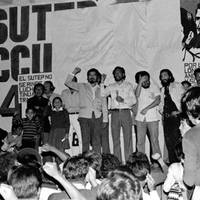
  5. SUTEP teachers strike

    On May 8, 1991, a strike of 260,000 state teachers affiliated to SUTEP began under the leadership of Secretary General Jose Ramos Bosmediano. The strike was a protest against the low salaries of teachers and the union was demanding a general salary increase from the government. During the strike, the …

    Perú Informe CVR, páginas 1252-1254
  6. Indefinite strike by SUTEP, health and university workers

    In May 1991, an indefinite strike of SUTEP (Sindicato Unitario de Trabajadores en la Educación del Perú) began, together with health workers and national university workers. The strike lasted several months, significantly affecting the country's education sector. The government declared a state of emergency in the education sector in July …

    Perú Informe CVR, páginas 196, 198, 201
  7. SUTEP and health care workers strike

    In May 1991, an indefinite strike of SUTEP (Sindicato Unitario de Trabajadores en la Educación del Perú), health workers and national university workers began. The strike continued during June 1991, while the government maintained its position. In July, faced with the continuation of the SUTEP strike, the government declared a …

    Perú Informe CVR, páginas 196-202
  8. Labor protests in Lima

    On March 21, 1991, Lima endured one of the most agitated labor days of the period. Protests were sparked by multiple sectors on strike simultaneously, including nurses, Ministry of Health workers, members of the CITE (Confederación Intersectorial de Trabajadores Estatales), the Federación Nacional de Trabajadores Universitarios del Perú (FENTUP) and …

    Lima, Perú Informe CVR, página 194
  9. Murder of Valentín López Molina

    Valentín López Molina, director in charge of the Higher Pedagogical Institute of Huancavelica, was murdered on September 14, 1990. The CVR report notes that it is difficult to establish the authorship of this murder, suggesting that it could have been committed by both subversive forces and State agents. This crime …

    Huancavelica, Perú Informe CVR, página 216
  10. Presidential Observation to the Teacher's Act

    President Alan Garcia Perez observed the Teacher's Law that had been approved by the Legislative Branch, which generated protests from the Teachers' Union. In response to this observation, the Ministry of Economy issued a communiqué stating that the financial quantification of the benefits presented in the law represented amounts that …

    Perú Informe CVR, página 179
  11. Fourth extraordinary legislature

    The fourth extraordinary session of the Peruvian Congress was held from February 12 to 22. During this session, several important legislative projects were approved, including the Regional Development Bank system, the participation of urban cooperatives before the Regional Assemblies, the University Development Fund and amendments to the Law for Teachers. …

    Perú Informe CVR, página 176
  12. Death of Alcides Palomino Aronés

    Alcides Palomino Aronés, leader of SUTEP (Sindicato Único de Trabajadores en la Educación del Perú), was assassinated on December 10, 1989 in Ayacucho. According to the report, the perpetrator was allegedly a military patrol. This murder took place in a context of systematic violence against union and social leaders during …

    Ayacucho, Perú Informe CVR, página 362
  13. Attack on Waqrani Rural Education Institute

    On May 21, 1989, the PCP-SL attacked the Waqrani Rural Education Institute, an educational center run by the South Andean Catholic Church. This attack was part of the violent actions of the subversive group in the southern Andean region of the country. Days after the attack, on May 25, the …

    Instituto de Educación Rural Waqrani, Perú Informe CVR, página 164
  14. Attack by hikers on educational project in San Juan de Jarpa

    A small group of Shining Path guerrillas attacked an educational project for peasants run by Jesuit priests in the town of San Juan de Jarpa, located two hours from Huancayo. This attack is part of the Shining Path's strategy of attacking educational institutions linked to the Catholic Church. The objective …

    San Juan de Jarpa, Huancayo, Junín, Perú Informe CVR, página 1051
  15. Explosive attack at the University of Huamanga

    In March 1988, an explosive device went off in the San Cristobal de Huamanga National University. This attack marked the beginning of the presence of paramilitary groups in the city of Huamanga. The attack was part of an escalation of violence that would later affect university teachers and workers. The …

    Universidad Nacional San Cristóbal de Huamanga, Huamanga, Ayacucho, Perú Informe CVR
  16. Military intervention in universities

    On February 13, 1987, military forces intervened in Peruvian universities, generating protests by the rectors of these educational institutions. The rectors strongly protested against this measure of military intervention on university campuses. This action was framed in the context of the state of emergency prevailing in the country and the …

    Perú Informe CVR, página 129
  17. Police interventions in La Cantuta

    In 1987 there were police interventions in the National University of Education La Cantuta as part of a repressive wave of the State against the presence of the PCP-SL in public universities. These interventions were a response to the Shining Path's takeover of symbolic and doctrinal spaces in the university, …

    Universidad Nacional de Educación Enrique Guzmán y Valle (La Cantuta), Lima, Perú Informe CVR (páginas 426-427)
  18. Terrorist attacks against five private schools

    During March 1986, five private schools were targets of terrorist attacks that caused serious material damage. The schools affected were Inmaculada, Pedagógico, León Pinelo, Markham and Maristas del Callao. These attacks occurred in the context of a state of emergency and curfew which had been extended for sixty days in …

    Lima y Callao, Perú Informe CVR
  19. Approval of teacher's law regulations

    The government approved the regulation of the teacher's law during the government of Fernando Belaunde Terry. This regulation established several aspects related to the rights of teachers in the country. Among the most important aspects, the regulation stated that teachers have the right to free unionization. This measure took place …

    Perú Informe CVR, página 104
  20. Start of classes at the 1236 Educational Center of Huaycán

    Exactly one month after the occupation of Huaycán, classes began at Educational Center 1236. The school building was built on a communal site with seven classrooms, restrooms and an office for the principal. The neighbors contributed materials and built the first folders. Two months later, the Lima Department of Education …

    Huaycán, Ate-Vitarte, Lima, Perú Informe CVR, página 2213
  21. Death of Patrocinio Quicha Espinoza and other SUTEP leaders

    Patrocinio Quicha Espinoza, Hernán Gutiérrez Araujo, Virgilio Huaranca and Estilo Ayala, all members of SUTEP (Sindicato Único de Trabajadores en la Educación del Perú), were victims of violence on May 26, 1983. This event is part of a series of deaths and disappearances of union leaders and workers during the …

    Perú Informe CVR, página 361-362
  22. Entry of PCP-SL to San Juan de Yacán

    In May 1983, the PCP-SL had entered the district of Paucar with a contingent of approximately 200 militants on May 21, 1983. In San Juan de Yacán, a group of subversives, among them children and adolescents wearing red ribbons on their foreheads, marched towards the school, shouting "armed struggle" and …

    San Juan de Yacán, distrito de Páucar, Perú Informe CVR
  23. Murder of Huancaraylla Teacher

    On November 10, 1982, a teacher from Huancaraylla was murdered by the PCP-Sendero Luminoso. This murder was part of a series of systematic executions of authorities and people accused of 'snitching' that the PCP-SL carried out during that period in the province of Fajardo. The assassination occurred in the context …

    Huancaraylla, Fajardo, Ayacucho Informe CVR, página 49
  24. Command of the PCP-SL in Carlos Wiese School

    A PCP-SL commando, led by an armed woman wearing a black hood, entered the Carlos Wiese school in Comas during the school's anniversary celebration. At the time, 1,500 students were gathered in the school's courtyard. The members of the commando launched subversive slogans and made a call to armed struggle …

    Colegio Carlos Wiese, Comas, Lima Informe CVR, página 66
  25. Regional Congress of SUTE-SM in Sauce

    In 1981, the Regional Congress of the Unitary Union of Education Workers of San Martin (SUTE-SM) was held in the town of Sauce, province of San Martin. During this congress the Board of Directors of SUTE-SM was renewed for a period of two years. This event was part of the …

    Sauce, provincia de San Martín, departamento de San Martín, Perú Informe CVR, página 311
  26. Attack on the Tinta Communal Educational Center

    On November 9, 1980, the PCP-Sendero Luminoso carried out its first attack in the department of Cuzco. The target was the Communal Educational Center located in the town of Tinta, capital of the province of Canchis. This attack marked the beginning of the Shining Path's violent actions in the Cuzco …

    Tinta, provincia de Canchis, departamento de Cuzco, Perú Informe CVR, página 267
  27. Subversive indoctrination in Oronqoy's school

    In 1980, subversive teachers began indoctrinating students in the Oronqoy high school. This school had been created in 1978 by directorial resolution as a mixed state school No. 38692 under the name of Neri Garcia Zarate. The subversive teachers indoctrinated students from the 19 communities of Oreja de Perro. This …

    Oronqoy, Chungui, Ayacucho, Perú Informe CVR, p. 114
  28. Creation of the Túpac Amaru II secondary school in Chungui

    In 1979, a secondary school was created in the district capital of Chungui under the name of Túpac Amaru II. This creation took place in a context where other communities in the area were also establishing secondary schools. A year earlier, in 1978, the mixed state school No. 38692 had …

    Chungui, La Mar, Ayacucho, Perú Informe CVR, Anexo I: Cronología
  29. SUTEP teachers' strike

    SUTEP begins an indefinite national strike that would last until July. On July 27, after eighty days of strike, the government finally agreed to meet the teachers' union's demands. The strike was one of the most important mobilizations in the education sector during this period.

    Perú Informe CVR, páginas 4704, 4706
  30. Establishment of state co-educational school No. 38692 in Oronqoy

    In 1978, a director's resolution created the mixed state school No. 38692 in the community of Oronqoy with the name of Neri García Zárate. This school was established after the communities of Oreja de Perro, including Mollebamba, Santa Carmen and Oronqoy, created communal schools following the guerrilla events of 1965. …

    Oronqoy, Ayacucho, Perú Informe CVR, p. 114
  31. Creation of the Túpac Amaru II school

    In 1978, the community of Chungui decided to fund the creation of the Túpac Amaru II secondary school, where teachers trained at the UNSCH (National University of San Cristóbal de Huamanga) would teach. From the beginning, some Shining Path university students worked as teachers, preparing the young people for the …

    Chungui, La Mar, Ayacucho Informe CVR (página 89)
  32. Creation of a high school in Oronqoy

    In 1978, at the initiative of a young man from the community who had studied in Andahuaylas, a communal secondary school was created in Oronqoy. As in other schools in the area, such as Túpac Amaru II in Chungui, some Shining Path university students worked as teachers from the beginning. …

    Oronqoy, Ayacucho Informe CVR, página 89
  33. Osmán Morote Barrionuevo's arrival at UNCP as a professor

    Osmán Morote Barrionuevo, an anthropologist who had participated in the II National Meeting of Organisms Generated by the PCP-SL in March 1977, was hired as an assistant professor in the Social Sciences Program, Academic Department of Anthropology of the UNCP. He taught courses such as Introduction to Social Sciences, History …

    Universidad Nacional del Centro del Perú, Huancayo, Junín, Perú Informe CVR, páginas 2452-2453
  34. MIR-EM controls SUTECOP

    The Movimiento de Izquierda Revolucionaria - El Militante (MIR-EM) managed to capture the largest number of followers and control the unions in Ucayali, where most people were sympathizers of Patria Roja. In 1975, the MIR-EM took over the Unitary Union of Education Workers of Coronel Portillo (SUTECOP), consolidating its presence …

    Ucayali, Perú Informe CVR, páginas 346-347
  35. Talks by Abimael Guzman in Ongoy's school

    Abimael Guzmán visited the Ongoy school in 1975, invited by the school's teachers, when one of the interviewees was a high school student. The talks dealt with the national reality and the problem of the peasantry, focusing his discourse on criticizing the Agrarian Reform and the seizure of land. He …

    Ongoy, Chincheros, Apurímac Informe CVR, página 107
  36. Politicization of high school in Ongoy

    In 1973, the high school of Ongoy, located in the province of Andahuaylas, experienced a process of politicization. Abimael Guzman, leader of the Shining Path, visited the school and gave a talk to the students. In his presentation, Guzman addressed issues such as poverty in Peru, Agrarian Reform and made …

    Ongoy, provincia de Andahuaylas, Apurímac, Perú Informe CVR, Anexo I: Cronología, p. 114
  37. Talk by Abimael Guzman in Ongoy

    In 1973, the high school of Ongoy, located in the province of Andahuaylas, experienced a process of politicization. Abimael Guzman, leader of the Shining Path, visited the school and gave a talk to the students. In his presentation, Guzman addressed topics such as poverty in Peru, Agrarian Reform and made …

    Ongoy, provincia de Andahuaylas, Apurímac, Perú Informe CVR
  38. Creation of community schools in Oreja de Perro

    After the guerrilla events of 1965, the communities of the area known as Oreja de Perro decided to create communal schools. The communities involved in this educational initiative were Mollebamba, Santa Carmen, Oronqoy, among others. This action represents an organized community response in the post-guerrilla context of the mid-1960s. The …

    Oreja de Perro: Mollebamba, Santa Carmen, Oronqoy, Ayacucho, Perú Informe CVR, página 114
  39. Start of UNSCH activities

    The Universidad Nacional San Cristobal de Huamanga restarted its activities with 228 students after being reopened by law in 1957. The university was conceived as an entity to promote local development in the context of the modernization process of the State.

    Ayacucho, Perú Informe CVR, página 2364
  40. Foundation of a school in Uchuraccay

    Since 1959 the community of Uchuraccay had a small school that offered the first years of primary education. This school was mainly supported by the community's own peasants. The existence of this educational institution contradicts the image of Uchuraccay as a completely isolated and primitive community that spread after the …

    Uchuraccay, Huanta, Ayacucho, Perú Informe CVR (página no especificada en el fragmento proporcionado)

Showing 1–50 of 51 events