Truth and Reconciliation Commission - Peru

Complete database of events related to the internal armed conflict in Peru, extracted from the Final Report of the Truth and Reconciliation Commission (CVR). 5,159 events documented from 1817 to 2003.

Years All years
1817 2003
Tag terrorismo × Browse all tags
  1. Constitutional Court ruling on unconstitutionality of anti-terrorist decrees

    The Constitutional Tribunal of Peru issued a ruling declaring unconstitutional various articles of Decree Laws No. 25475, 25659, 25708, 25880 and 25744, related to anti-terrorist legislation. This ruling questioned fundamental aspects of the emergency legislation enacted after the 1992 coup d'état, including the violation of the principle of legality, the …

    Perú Informe CVR, páginas 381-405
  2. Disappearance in Putaqa

    A female affiant recounts the disappearance of her son and husband in Putaqa, San Miguel, La Mar, Ayacucho. The testimony was collected in December 2002 in Ayacucho. The affiant describes the situation of extreme poverty in which she was left after these events, pointing out that her daughter suffers from …

    Putaqa, San Miguel, La Mar, Ayacucho Informe CVR, BDI-SM-P250, BDI-II-P716 Testimonio 201017
  3. Medical Report N°081 from the Instituto Materno Perinatal on pregnancy of María Magdalena Monteza Benavides

    The Maternal Perinatal Institute of the Ministry of Health (Maternidad de Lima) issued Medical Report No. 081 on October 11, 2002. This medical report was used as evidence to determine the gestation time of María Magdalena Monteza Benavides. The document, together with Medical Record No. 3343 of the INPE Prison …

    Instituto Materno Perinatal (Maternidad de Lima), Lima, Perú Informe CVR, página 382
  4. Tax ruling on the responsibility of MRTA members

    On January 31, 2002, the Ad-Hoc Provincial Criminal Prosecutor's Office for Terrorism cases issued its opinion in which it stated that the criminal responsibility of the defendants for the commission of the crime against Public Tranquility in its modality of Terrorism, related to the kidnapping of Raúl Hiraoka Torres, has …

    Lima, Perú Informe CVR, página 3805
  5. Report of the United Nations Working Group on Arbitrary Detention on its Mission to Peru

    The United Nations Working Group on Arbitrary Detention issued a report on its mission to Peru, evaluating the situation of detentions and anti-terrorist legislation. The report noted that the crime of treason as a crime in law has nothing to do with terrorism, calling it an obvious abuse of language …

    Perú Informe CVR, página 404-405
  6. Presidential pardon to María Magdalena Monteza Benavides

    On June 6, 1998, the President of the Republic granted a pardon to María Magdalena Monteza Benavides through Supreme Resolution Nº105-98-JUS, on the recommendation of the Ad Hoc Commission created by Law 26655. The Commission established a reasonable presumption that María Magdalena Monteza Benavides was not linked to terrorist activities, …

    Perú Informe CVR, páginas 381-383
  7. Administrative Resolution N°001-97 on Superior Corporate Criminal Court for Terrorist Crimes

    Administrative Resolution No. 001-97, issued on December 12, 1997, established the Superior Corporate Criminal Court in charge of trying cases for the crime of terrorism. This resolution was part of the anti-terrorist legal framework implemented during the government of Alberto Fujimori. The creation of this specialized court was part of …

    Perú Informe CVR, página 388
  8. Supreme Decree No. 005-97 on prison regime for terrorism and treason

    Supreme Decree No. 005-97, promulgated on June 24, 1997, established the Regulations for the regime of life and progressive treatment of inmates for terrorism and treason. This norm was part of the anti-terrorist legislation implemented during Alberto Fujimori's government. The decree regulated the conditions of confinement and the specific penitentiary …

    Perú Informe CVR, página 388
  9. Release of innocent people by pardon

    Between 1996 and 1999, the Peruvian State had to pardon 502 people unjustly convicted of terrorism and treason. This was a consequence of the serious errors committed by the system implemented to prosecute the accused, which violated elementary principles of due process. The magnitude of these errors demonstrated the structural …

    Perú Informe CVR, página 225
  10. Law No. 26537 on faceless court terms

    Law No. 26537, enacted on October 13, 1995, established a new term for faceless tribunals in Peru. This law was framed within the anti-terrorist legislation of Alberto Fujimori's government, which had implemented these special tribunals after the 1992 coup d'état. The faceless courts were a distinctive feature of the Peruvian …

    Perú Informe CVR, página 388
  11. Law No. 26447 on the end of faceless tribunals

    Law No. 26447, enacted on April 21, 1995, put an end to faceless courts in Peru. This law was part of the anti-terrorist legislation of Alberto Fujimori's government. The faceless tribunals had been implemented after the coup d'état of April 1992 as part of the scheme for trying crimes of …

    Perú Informe CVR, páginas 388-389
  12. Supreme Decree N°01-95 on the presentation of detainees

    Supreme Decree No. 01-95, promulgated on January 6, 1995, prohibited the public presentation of those detained for terrorism. This measure was part of the set of anti-terrorist norms implemented during the government of Alberto Fujimori, specifically during his first presidential term (1990-1995). The decree was part of the emergency legislation …

    Perú Informe CVR, página 388
  13. Law No. 26345 on the term of validity of the repentance law

    Law No. 26345 was enacted on August 30, 1994 during the government of Alberto Fujimori. This law established the term of the law of repentance, which was part of the anti-terrorist legal framework implemented after the 1992 coup d'état. The Law of Repentance was a rule of penal law that …

    Perú Informe CVR, página 388
  14. Modification of terrorism conviction by the Supreme Court

    The Supreme Court of Justice modified the sentence imposed on María Magdalena Monteza Benavides for the crime of terrorist collaboration. Originally, on June 18, 1993, the Special Terrorism Chamber of the Superior Court of Lima had sentenced her to twenty years imprisonment. The Supreme Court reduced the sentence to fifteen …

    Perú Informe CVR, página 382-383
  15. Law N°26248 modifying decrees on terrorism

    Law No. 26248, enacted on November 25, 1993, modified Decree Law 25659 on treason and Decree Law 25475 on terrorism. This law was part of the set of anti-terrorist regulations enacted during the government of Alberto Fujimori after the 1992 self-coup. The law was part of the emergency legislation that …

    Perú Informe CVR, página 388
  16. Birth Certificate N°2852 - Daughter of María Magdalena Monteza Benavides

    On August 14, 1993, Birth Certificate N°2852 was issued by the Chief of the Civil Registry of the Municipality of Metropolitan Lima, corresponding to K.E.M.B., daughter of María Magdalena Monteza Benavides. The minor was born on July 14, 1993 at the Perinatal Maternal Institute of the Ministry of Health (Maternity …

    Lima Metropolitana, Perú Informe CVR, página 382
  17. Dynamite attack on Yamobamba hydroelectric power plant

    On July 18, 1993, the PCP-Sendero Luminoso carried out a bomb attack that completely destroyed the Yamobamba hydroelectric plant, which supplied electricity to the city of Huamachuco. As a result of the attack, the entire city was without electricity for more than 8 months. This attack took place in the …
    Yamobamba, Huamachuco, Sánchez Carrión, La Libertad, Perú Informe CVR
  18. Birth of daughter to María Magdalena Monteza Benavides

    On July 14, 1993, María Magdalena Monteza Benavides gave birth to her daughter K.E.M.B. in the context of her detention. The pregnancy was the result of a multiple rape suffered during her clandestine detention by members of the Army in October 1992. The child was conceived around the last days …

    Lima, Perú Informe CVR, páginas 381-383
  19. Special Terrorism Court convicts María Magdalena Monteza Benavides

    On June 18, 1993, the Special Terrorism Chamber of the Superior Court of Lima sentenced María Magdalena Monteza Benavides to twenty years imprisonment for the crime of terrorist collaboration, based on the police investigation. On March 11, 1994, the Supreme Court of Justice modified the sentence and sentenced her to …

    Lima, Perú Informe CVR, páginas 381-383
  20. Supreme Decree No. 015-93, repentance regulation

    Supreme Decree No. 015-93, promulgated on May 8, 1993, established the regulations for the law of repentance in the context of the anti-terrorist legislation of Alberto Fujimori's government. This norm regulated the procedures and conditions under which persons convicted or prosecuted for terrorist crimes could benefit from sentence reduction, exemption …

    Perú Informe CVR, página 388
  21. Acquittal of San Ignacio forest defenders

    The Specialized Chamber of the Superior Court of Justice of Lambayeque issued a sentence acquitting the eleven defendants. The Court considered that the National Police proceeded in an unusual manner and without a correct evaluation of facts and evidence, that it was not established with certainty that the defendants were …

    Lambayeque, Perú Informe CVR, páginas 3077-3078
  22. Statement of María Magdalena Monteza Benavides in the prison on torture and rape

    On February 20, 1993, María Magdalena Monteza Benavides made a statement at the Lima police station. During this statement, she denounced having been subjected to physical and psychological torture, including rape, by members of the Peruvian Army during her detention on October 30, 1992. This statement was made in the …
    Alcaidía, Lima, Perú Informe CVR, página 379 (nota al pie 557)
  23. Decree Law No. 25916 on Prison Benefits

    Decree Law No. 25916, enacted on December 2, 1992, maintained the prohibition of penitentiary and procedural benefits for persons convicted of terrorism. This norm was part of the anti-terrorist legislation enacted after the coup d'état of April 1992. The decree eliminated rights such as parole, semi-liberty, probation, redemption of sentences …

    Perú Informe CVR, páginas 388, 394
  24. María Monteza's statement on pregnancy status

    On November 23, 1992, María Magdalena Monteza Benavides declared before the judge that she believed she was pregnant. This fact has been argued in different instances as proof of the rape suffered during her detention. Subsequently, a medical examination showed that Magdalena was in fact approximately eight and a half …

    Perú Informe CVR, páginas 381-383
  25. Forensic Medical Certificate N°39050-L - Examination of María Magdalena Monteza Benavides

    Forensic medical examination requested by DINCOTE to María Magdalena Monteza Benavides, issued by doctors Yolanda Cáceres Bocanegra and Judith Maguiña Romero of the Institute of Forensic Medicine of Peru. The examination showed ecchymosis and swelling in the left knee that did not require disability. This certificate was one of several …

    Perú Informe CVR, páginas 381-382
  26. Prosecutor charges Magdalena Monteza Benavides for terrorism

    On November 13, 1992, the provincial prosecutor filed a formal complaint against María Magdalena Monteza Benavides for the crime of terrorism in the form of collaboration. This act took place after Magdalena was detained, tortured and allegedly raped by members of the Army. On the same day a forensic medical …

    Lima, Perú Informe CVR, páginas 381-383
  27. Medical examination of María Magdalena Monteza Benavides by the National Police.

    The medical examination performed by the Peruvian National Police on María Magdalena Monteza Benavides resulted in the presence of small ecchymosis on the left knee anterior face, considered as a recent injury, with no old injuries observed. Forensic Medicine Report No. 11605/92 concluded that the person presented signs of recent …

    Perú Informe CVR, páginas 381-383
  28. María Magdalena Monteza Benavides transferred to DINCOTE after detention and torture

    On November 3, 1992, four days after her initial detention by military personnel from the Intelligence Department of the 1st Division of the Army's Special Forces, María Magdalena Monteza Benavides was handed over to the National Directorate against Terrorism (DINCOTE). During her previous detention in military facilities, Monteza was subjected …

    DINCOTE, Lima, Perú Informe CVR, páginas 376-380
  29. Senior prosecutor's indictment in San Ignacio case

    The Superior Prosecutor of Lambayeque indicted the defendants for the crimes of terrorism, homicide, serious injuries, minor injuries, robbery and damages. He stated that the defendants and other unidentified terrorists belonging to MRTA entered the INCAFOR camp with firearms and dynamite, proceeding to set fire to machinery and houses, and …

    Lambayeque, Perú Informe CVR, página 3077
  30. Final Report questioning accusation of terrorism in San Ignacio case

    The head of the First Specialized Criminal Court of Chiclayo issued her Final Report contradicting the Prosecutor's Opinion. She questioned the way in which the proceedings aimed at proving the alleged commission of the crime of terrorism were carried out and concluded that the events that took place in the …
    Chiclayo, departamento de Lambayeque, Perú Informe CVR, página 3077
  31. Decree Law No. 25728 on Convictions in Absentia

    Decree Law No. 25728, enacted on September 18, 1992, empowered the courts to convict in absentia persons accused of terrorist crimes. This law was part of the anti-terrorist legislation enacted after the coup d'état of April 1992. The decree was part of a package of emergency laws that substantially modified …

    Perú Informe CVR, página 388
  32. Prosecutor's criminal responsibility ruling in the San Ignacio case

    The Eighth Criminal Prosecutor's Office of Chiclayo issued an opinion stating that the defendants were criminally responsible for committing the crime of terrorism. This opinion contradicted the evidence that would later lead to the acquittal of the defendants, and was part of the irregular judicial process followed against the defenders …

    Chiclayo, departamento de Lambayeque, Perú Informe CVR, página 3077
  33. Supreme Resolution N°114-92 on visits to inmates on terrorism charges.

    Supreme Resolution No. 114-92, enacted on August 14, 1992, approved the Regulations for Visits to inmates for the crime of Terrorism. This regulation was part of the set of decree laws issued after the coup d'état of April 1992, which established a restrictive legal framework for persons accused or convicted …

    Perú Informe CVR, página 388
  34. Decree Law No. 25659 creating the crime of treason.

    Decree Law No. 25659 of August 13, 1992 created the crime of treason, denaturalizing its traditional conception and limiting it to a legal denomination of the aggravated type of the crime of terrorism. The law established that treason is committed by those who use car bombs, explosive devices or weapons …

    Perú Informe CVR, páginas 387-404
  35. Creation of the crime of treason

    In August 1992, the Peruvian Executive Branch created the crime of treason through anti-terrorist legislation. This crime punished with life imprisonment the leaders or leaders of subversive groups or those who participated in or collaborated with the carrying out of attacks through the use of explosive or similar materials. This …

    Perú Informe CVR, página 376
  36. Car bomb in Tarata

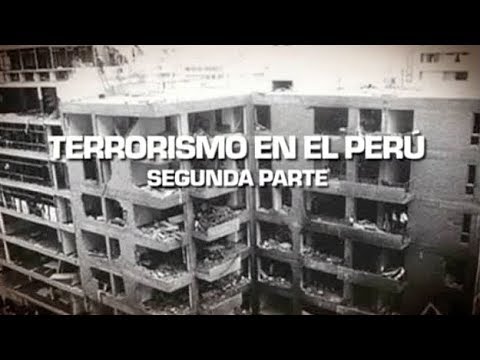
    Car bomb attack perpetrated on Tarata Street in the Miraflores district of Lima. This attack was part of the escalation of violence by the PCP-Sendero Luminoso during 1992, a year in which the subversive organization intensified its terrorist actions in the capital. The attack occurred a little more than a …

    Tarata, Miraflores, Lima, Perú Informe CVR, página 207
  37. Car bomb in Tarata Street

    On July 16, 1992, the PCP-Sendero Luminoso detonated a car bomb on Tarata Street, in the heart of the residential district of Miraflores in Lima. This action was part of the Shining Path's strategy of "sounding board" and "strategic balance" that sought to demonstrate their ability to strike even in …

    Calle Tarata, Miraflores, Lima Metropolitana, Perú Informe CVR
  38. Attack on Tarata Street, Miraflores

    The horrendous attack in Tarata Street, Miraflores, perpetrated by Sendero Luminoso (Shining Path) took place. Gustavo Gutiérrez wrote about the horror that turns taciturn and the falsehood that wears out the language as an effect and cause of the cervical fear and radical distrust that advances unstoppable in the country. …

    Calle Tarata, Miraflores, Lima, Perú Informe CVR, página 1078
  39. Explosion in Tarata Street

    On July 16, 1992, a car bomb exploded on Tarata Street in the Miraflores district of Lima. This attack occurred in a context of intensifying violence in the capital, where the subversive groups Sendero Luminoso and MRTA increased their actions by carrying out continuous attacks against public and private entities. …

    Calle Tarata, Miraflores, Lima, Perú Informe CVR, página 377
  40. Opening of investigation against San Ignacio's forest defenders

    The Eighth Specialized Criminal Court of Chiclayo opened an investigation against the ten residents of San Ignacio arrested on June 27, accusing them of the crime of terrorism against the State. The opening order stated that they had seized dynamite, explosives, PCP pamphlets and other items. Despite the fact that …

    Chiclayo, departamento de Lambayeque, Perú Informe CVR, página 3076
  41. Tarata bombing

    Terrorist car bomb attack on Tarata Street, the most serious car bomb attack carried out by Shining Path in Lima. Through these attacks, the Shining Path accelerated its offensive on the capital while calculating the possibility of a U.S. intervention that would unleash a war of national liberation in the …
    Tarata, Miraflores, Lima, Perú Informe CVR, página 74

Showing 1–50 of 186 events