Truth and Reconciliation Commission - Peru

Complete database of events related to the internal armed conflict in Peru, extracted from the Final Report of the Truth and Reconciliation Commission (CVR). 5,159 events documented from 1817 to 2003.

Years All years
1817 2003
Tag represión × Browse all tags
  1. Murder of Juvenal Martinez in mobilization in Julcani

    In November 1993, during a workers' mobilization at the Julcani mining center, worker Juvenal Martínez was shot and killed by military personnel. The murder was perpetrated by a major identified as Rubén Rodríguez Rebanal, who shot Martínez at point-blank range. The mobilization was in protest against the mine's industrial relations …
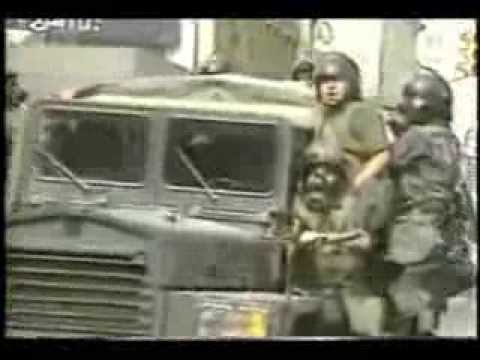
    Julcani, Huancavelica, Perú Informe CVR, página 212
  2. Promulgation of decree law 25880 on apology of terrorism against teachers

    On November 26, 1992, Decree Law 25880, the law on the apology of teaching terrorism, was enacted. Article 1 established that the teacher or professor who, taking advantage of his or her condition, influences his or her students by advocating terrorism would be considered as the author of the crime …

    Perú Informe CVR, páginas 1256-1257
  3. Murder of La Cantuta students

    On July 18, 1992, university students from La Cantuta were assassinated, accused as terrorists by intelligence agents and the troops installed in the university. This event took place in the context of the militarized intervention of the university since 1991, when military bases were installed in La Cantuta, Huaycán and …

    Universidad Nacional de Educación Enrique Guzmán y Valle (La Cantuta), Lima, Perú Informe CVR (páginas 426-427)
  4. Alberto Fujimori's coup d'état

    On April 5, 1992, Alberto Fujimori executed a coup d'état. On April 6, union leaders of SUTEP and CGTP rejected and condemned the coup. The union premises remained surrounded by military and police. Days later, a leader denounced the disappearance of Olmedo Auris, who was forcibly removed from the union …

    Lima, Lima, Perú Informe CVR, página 1256
  5. Fujimori's self-coup

    On April 5, 1992, President Alberto Fujimori executed a self-coup d'état in Peru. This event marked a turning point in the counter-subversive strategy of the internal armed conflict. After the self-coup, repression intensified in a selective manner, with continuous reports of arbitrary detentions, torture and disappearances by counter-subversive forces. The …

    Perú Informe CVR, páginas 264-266
  6. March for peace in Cono Norte

    On December 1, 1991, several neighborhood organizations from the districts of the Northern Cone carried out a March for Peace, in rejection of violence. This mobilization took place at a time when the Fujimori government was establishing harsh repressive measures against the population with raids and selective police operations. The …

    Cono Norte, Lima, Perú Informe CVR, página 445
  7. Installation of Army military base in Raucana

    On September 6, 1991, the Army installed a military base in the Raucana Human Settlement, which remained in place until the year 2000. This military installation put an end to the organization of daily life that the PCP-SL had established in the settlement since its founding on July 28, 1990. …

    Asentamiento Humano Félix Jorge Raucana, Lima, Perú Informe CVR
  8. Balance of the teachers' strike of 1991

    On August 22, 1991, the long teachers' strike was suspended. According to the newspaper La República, 2,000 teachers were arrested, twenty disappeared and 15 were murdered. The SUTEP Human Rights Secretariat attributed the deaths, which occurred in towns in a state of emergency, to the PCP-SL (5), paramilitary forces (4), …

    Perú Informe CVR, páginas 1253-1254
  9. March of SUTEP leaders to Government Palace

    On May 30, 1991, the leaders of SUTEP (Sindicato Único de Trabajadores en la Educación del Perú), accompanied by three parliamentarians and other union members, marched across Lima's Plaza de Armas towards the Government Palace. The objective of the march was to request an audience with the wife of President …

    Plaza de Armas de Lima, camino a Palacio de Gobierno, Lima, Perú Informe CVR, páginas 361-363
  10. Detention of seven teachers by the Peruvian Army in Ayacucho

    On May 17, 1991, seven teachers were arrested by the Peruvian Army in the province of Ayacucho. This arrest occurred in the context of the teachers' strike that began on May 8, 1991, whose repression resulted in the temporary arrest of 2,000 teachers, twenty disappearances and 14 murders. The teachers …

    Provincia de Ayacucho, Ayacucho, Perú Informe CVR, página 363
  11. Start of SUTEP teachers' strike

    The World Confederation of Organizations of Professional Teachers (CMOPE) alleges a series of murders, arrests and acts of violence against teachers who were members of the Single Union of Education Workers of Peru (SUTEP) since the beginning of the strike on May 8, 1991. The repression of this strike resulted …

    Perú Informe CVR, página 362-363
  12. SUTEP teachers strike

    On May 8, 1991, a strike of 260,000 state teachers affiliated to SUTEP began under the leadership of Secretary General Jose Ramos Bosmediano. The strike was a protest against the low salaries of teachers and the union was demanding a general salary increase from the government. During the strike, the …

    Perú Informe CVR, páginas 1252-1254
  13. New arrest strategy 'la leva

    Beginning in 1991, the military implemented a new detention strategy called 'la leva' in the central region of Peru. This strategy consisted of arresting all "undocumented" persons in the squares and streets, who were then transferred to the military base. Once at the military base, those who were identified were …

    Región Central, Perú Informe CVR, página 211
  14. Disappearances of MRTA students in urban area

    During 1991, 1992 and 1993, the MRTA suffered heavy repression in the urban areas of the department of Junín, particularly in Huancayo. Many student members of the MRTA disappeared in simultaneous disappearances. The situation worsened with the enactment of the Repentance Law, at which time many good cadres from the …

    Zona urbana, Huancayo, Junín, Perú Informe CVR
  15. Installation of military bases in Huaycán and Raucana

    In 1991, military bases were installed in Huaycán and Raucana as part of the Peruvian State's counterinsurgency strategy. In Raucana, the Army installed a military base on September 6, 1991, which was maintained until the year 2000, militarizing and socially controlling daily life among the population. This organization of daily …

    Huaycán y Raucana, Lima, Perú Informe CVR (páginas no especificadas en el fragmento)
  16. Army and police intervention at Universidad Nacional del Centro campus

    The Army and the police intervened twice on the campus of the Universidad Nacional del Centro in May 1989 in search of subversive elements. This intervention took place in a context of increasing violence at the university, where the Shining Path PCP had murdered three university students on the same …

    Campus de la Universidad Nacional del Centro (UNC), Perú Informe CVR
  17. Intervention at Universidad Nacional del Centro

    The Peruvian Army (EP) and the Peruvian National Police (PNP) twice raided the Universidad Nacional del Centro in the department of Junín. The interventions were carried out in search of possible subversives. The military and police action was motivated by the distribution of flyers announcing an armed strike scheduled for …

    Universidad Nacional del Centro, Junín, Perú Informe CVR, página 163
  18. Installation of military base in Morococha

    In the last months of 1989, after a series of dynamite attacks by the PCP-SL against Centromín Perú's facilities in Morococha, a military base was installed in the mining camp. The installation of this base occurred shortly after the formation of a defensive brigade by the workers, whose purpose was …

    Campamento minero de Morococha, Yauli, Junín, Perú Informe CVR, página 211
  19. Strike of the Defense Front of Huanuco

    Indefinite strike called and led by the Huanuco Defense Front during June 1988. The strike was motivated by disagreements over the regionalization project that the government was implementing at that time. The protest was violently repressed by the forces of law and order. A UNMSM university student was killed by …

    Huánuco, Perú Informe CVR, página 146
  20. Presidency denies massacre of peasants in Cayara

    On May 21, the Presidency of the Council of Ministers pointed out the "falsity of an alleged massacre of peasants" in Cayara. The authorities stated that they had found "no evidence of bombings, fires or fighting in the locality". The presidency affirmed that most of the testimonies presented to the …

    Lima, Perú Informe CVR, páginas 139-154
  21. MRTA raid in Juanjui

    In November 1987, the MRTA raided Juanjui as part of the 'Tupac Amaru Vive' Military Campaign. This action forced the government to decree a state of emergency and a curfew in San Martin. The incursion unleashed a strong state repression that included the persecution of union and popular leaders, especially …

    Juanjui, San Martín, Perú Informe CVR, páginas 313-315
  22. Day of mobilization and land seizures on May 19

    The IV Board of Directors of the FDCP called for a day of mass mobilization to take land and establish communal enterprises. Thousands of community members from all over the department marched towards the land they claimed as their own. The mobilization was concentrated mainly in Melgar, Azángaro and Carabaya. …

    Puno, Perú Informe CVR, páginas 2326-2331
  23. Murder of 6 young evangelicals in Callqui

    On August 1, 1984, six young men belonging to the Evangelical Presbyterian Church were murdered by members of the Marine Infantry in the place called "pago" of Callqui, in the province of Huanta. This event occurred in the context of the indiscriminate repression exercised by the armed forces in the …

    Callqui (pago), Huanta, Ayacucho Informe CVR, páginas 76-77
  24. Invasion of Huaycán

    On July 15, 1984, the first invasion of Huaycán was organized as part of the 'Special Program for Urban Development of the Huaycán area', implemented during the municipal administration of Alfonso Barrantes. This invasion was part of the urban expansion process of Metropolitan Lima towards the peripheral cones. The event …

    Huaycán, Lima, Perú Informe CVR, páginas 400-423
  25. Disappearance of residents of Macachacra

    In July 1984, members of the Navy carried out the forced disappearance of eight residents of Macachacra, Iguain district, Huanta province. Among the victims were Ramón Vicaña, Sebastián de la Cruz and six other villagers. This event took place in the context of the indiscriminate repression exercised by the Marine …

    Macachacra, Iguain, Huanta, Ayacucho Informe CVR, página 84
  26. Murder of 32 villagers of Huarapite

    In April 1984, members of the Peruvian Army murdered 32 inhabitants of Huarapite, a town in the district of Chiara in the province of Huamanga. This event occurred in the context of the indiscriminate repression carried out by the Armed Forces in the area during 1984, a year that registered …

    Huarapite, Chiara, Huamanga, Ayacucho Informe CVR (páginas 83-84)
  27. Motion of censure against Minister of the Interior Luis Pércovich Roca

    A motion of censure was presented in the Chamber of Deputies against the Minister of the Interior, Luis Pércovich Roca, due to the violent repression of the national strike that had taken place previously. This motion was presented in the context of growing criticism of the government's handling of the …

    Lima Informe CVR, página 86
  28. National strike organized by Asamblea Nacional Popular

    On March 22, 1984, a national strike called by the National Popular Assembly was held, which was described as successful. This mobilization took place in a context of growing social and political conflict in the country, with multiple protests from different sectors. The strike generated violent repression by the forces …

    Perú Informe CVR, página 85
  29. Repression in San José de Secce after hiker ambush

    In 1984, following a Shining Path ambush against a patrol of Marines on the road between San José de Secce and Juncos, indiscriminate repression was unleashed against the population. When a wounded terrorist shot and killed several Marines with an instalaza, excesses took place in the town and nearby villages. …

    San José de Secce, Ayacucho, Perú Informe CVR, página 4174
  30. National strike - Death of workers

    During the national strike of March 10, 1983, four workers were murdered in Lima (Comas) by the Republican Guard. The victims were Sixto Pérez Sánchez, José Antonio Monayco, Liborio Alfonso Aguilar and Hermenegildo Julián Huatuco. This event was documented in complaints filed with the International Labor Organization (ILO) as part …

    Lima (Comas), Perú Informe CVR, página 361
  31. First stage of massive and indiscriminate state repression

    During 1983 and 1984 there was a significant concentration of cases of arbitrary executions, forced disappearances and torture by State agents. This stage was characterized by the application of a strategy of massive and indiscriminate repression, especially in the rural areas of the department of Ayacucho. The members of the …

    Departamento de Ayacucho, Perú Informe CVR, páginas 210, 223
  32. Entry of the Armed Forces into emergency areas

    In 1983, the Armed Forces entered the zones that had been declared in a state of emergency, establishing political-military commands as the only real power. After two years of repression, assassinations, extrajudicial executions and torture on both sides, the number of victims between 1982 and 1984 increased notably, most of …

    Zonas de emergencia, Perú Informe CVR, páginas 1159-1160
  33. Strike at Juan Guerra and Tabalosos

    In 1982 there was a strike in the towns of Juan Guerra and Tabalosos that revealed a leadership vacuum in the region's social movement. The strike had a violent and tragic outcome. This event motivated the formation of the Comando Unitario de Lucha (CUL) in Tarapoto, presided over by professor …

    Juan Guerra y Tabalosos, San Martín, Perú Informe CVR, página 315
  34. Longest teachers' strike in Peruvian history - 118 days

    In 1979, the longest teachers' strike in Peruvian history took place: 118 days. It was motivated by the non-fulfillment of government promises from the previous strike. The government's repressive response implied the recess of several educational centers and the refusal to engage in dialogue with the SUTEP leadership, which was …

    Perú Informe CVR, páginas 1222-1223
  35. May national strike called by trade unions

    The economic measures recently taken by the government lead to a national strike on May 23 and 24. The main governmental measures in response to the unrest were the suspension of constitutional guarantees and the declaration of a state of emergency throughout the country. Several political and union leaders (Ricardo …

    Perú Informe CVR, páginas 4704-4705
  36. 80-day teachers' strike

    In 1978 there was a teachers' strike that lasted eighty days. The union demanded a general salary increase of 100% (frozen since 1965), reinstatement of teachers subrogated and transferred in retaliation for their participation in union activities, and legal recognition of SUTEP. The reaction of the State was manifested in …

    Perú Informe CVR, página 1222
  37. Fight for free education in Huanta

    In June 1969, the Military Government issued decree 006, which cut the coverage of free education. This measure generated an important social mobilization of rejection in which the presence of the Association of Small Landowners and organizations linked to the Red Flag party stood out. In Ayacucho the struggle was …

    Huanta y Ayacucho, Perú Informe CVR, páginas 2367-2368

Showing 1–50 of 50 events