Truth and Reconciliation Commission - Peru

Complete database of events related to the internal armed conflict in Peru, extracted from the Final Report of the Truth and Reconciliation Commission (CVR). 5,159 events documented from 1817 to 2003.

Years All years
1817 2003
Tag 1992 × Browse all tags
  1. Statement of Julio Rodriguez Cordova before the Permanent Court on the detention and rape of Maria Magdalena Monteza Benavides

    EP Lieutenant Colonel Julio Alberto Rodríguez Córdova testified before the Second Permanent Court of the Army's Second Judicial Zone about the detention operation of María Magdalena Monteza Benavides on October 30, 1992. In his statement, Rodriguez Cordova affirmed that he had authorization from the Command to carry out the operation …
    2º Juzgado Permanente de la IIª Zona Judicial del Ejército, Perú Informe CVR, páginas 378-379
  2. Assassination of CGTP General Secretary Pedro Huilca

    Pedro Huilca, General Secretary of the CGTP (General Confederation of Peruvian Workers), was assassinated on December 18, 1992. This crime occurred in a context of extreme violence in Lima, where the subversive groups Sendero Luminoso and MRTA had intensified their terrorist actions. Huilca's murder was part of a series of …

    Lima, Perú Informe CVR, página 376
    2 media 2 docs
  3. Promulgation of the Law on Apology for Terrorism by Teachers in Peru

    On November 26, 1992, the Peruvian government under President Alberto Fujimori enacted decree law 25880, which criminalized the act of teachers making an apology for terrorism. This law targeted educators accused of promoting the ideology of the Shining Path (PCP-SL) in schools, particularly in Lima. The law led to a …

    Peru, specifically Lima and the district of Comas Página 592
  4. Arrest in Magdalena district

    The declarant was detained on November 18, 1992 in the district of Magdalena, Lima. This case is part of the testimonies compiled by the CVR on detentions during the internal armed conflict. The detention occurred in the context of operations against subversion in the capital during 1992. The testimony documents …

    Distrito de Magdalena, Lima Informe CVR
  5. Anti-terrorism legislation: treason against the homeland

    Alberto Fujimori's government enacted anti-terrorist legislation that made it a crime of treason to justify terrorism. This measure was part of a set of anti-terrorist laws implemented during 1992, in the context of the Emergency and National Reconstruction Government established after the April 5 self-coup. The legislation was part of …

    Perú Informe CVR, página 207
    1 docs
  6. Attempted Military Coup Against Fujimori

    On November 13, 1992, a group of retired and active military officers attempted a coup against President Alberto Fujimori in Peru. The coup was organized by retired generals Jaime Salinas Sedó, José Pastor Vives, and Ernesto Obando, among others. Although Fujimori briefly left the government palace, the coup was quickly …

    Peru
  7. Formation and Actions of Rondas Campesinas in Peru

    In response to insurgent activities, the Peruvian government formalized the use of armed civilian defense groups, known as rondas campesinas, through legal decrees. These groups, sometimes formed autonomously and other times under military pressure, played a significant role in counterinsurgency efforts. Notably, in Tulumayo and Andamarca, these groups expelled and …

    Tulumayo and Andamarca, Peru
  8. Assassination of Colonel Manuel Alberto Tumba

    On 5 November 1992, Colonel Manuel Alberto Tumba, a key figure in the DINCOTE and involved in the capture of Abimael Guzmán, was assassinated by a specialized detachment of the PCP-SL. This targeted killing was part of the PCP-SL's strategy to eliminate police officers and dealt a significant blow to …

    Intersection of Avenidas Angamos and República de Panamá, Lima, Peru
  9. Murders in Zarin

    On November 5, 1992, a group of hikers entered the town of Zarin, in the province of Sanchez Carrion (Huamachuco) at night. During this incursion, the PCP-SL selectively assassinated three local authorities: the Judge, the Governor and the Mayor of the town. This attack was part of the Shining Path's …

    Zarín, Huamachuco, Sánchez Carrión, La Libertad, Perú Informe CVR, página 498 (cronología)
  10. María Magdalena Monteza Benavides transferred to DINCOTE after detention and torture

    On November 3, 1992, four days after her initial detention by military personnel from the Intelligence Department of the 1st Division of the Army's Special Forces, María Magdalena Monteza Benavides was handed over to the National Directorate against Terrorism (DINCOTE). During her previous detention in military facilities, Monteza was subjected …

    DINCOTE, Lima, Perú Informe CVR, páginas 376-380
    1 docs
  11. Assassination Attempt on PNP Commander in Surquillo

    In November 1992, a special detachment from the Zona Sur agreed in San Juan de Miraflores to plan an assassination attempt on a PNP Commander from the Surquillo station. The operation was in retaliation for the commander's involvement in the capture of President Gonzalo. The plan involved a tactical operation …

    San Juan de Miraflores, Peru página 592
  12. Medical Examination and Human Rights Investigation of María Magdalena Monteza Benavides

    In November 1992, María Magdalena Monteza Benavides underwent a series of medical examinations by the National Police of Peru and the Institute of Legal Medicine. These examinations revealed recent contusions and signs of past trauma. The case highlights the procedures and findings related to potential human rights violations, including possible …

    Peru Informe Final Nº 119-96/2do. JMP/(58-95)
  13. Ninja" case

    The 'Ninja Case' involved the murder of eight drug traffickers in Balsayacu, San Martin, on October 28, 1992. The perpetrators, including Captain José Penas Sandoval and Lieutenant Werner Huamaní Tipismana, committed the crime to steal 300 kilos of drugs. This event highlights the intersection of military personnel and drug trafficking …

    Balsayacu, San Martín
  14. Massacre in Huayao

    On October 18, 1992, a massacre occurred in the community of Huayao, resulting in the deaths of 47 people. The attack left 50 children orphaned and numerous families devastated. The perpetrators, identified as terrorists, also stole livestock and destroyed homes, leaving the community in ruins.

    Huayao, near the district of Tambo, La Mar, Peru página 229
  15. Negotiations Between Abimael Guzmán and Alberto Fujimori

    In October 1992, Abimael Guzmán, leader of the Shining Path, sent letters to President Alberto Fujimori to negotiate a peace agreement. The first letter was made public during Fujimori's presentation at the United Nations on October 1, 1992, and initially seemed to bolster Fujimori's political standing. However, a second letter …

    Peru
  16. Attack on Mayor Johnny Rodríguez in Pachacamac

    On 19 September 1992, Mayor Johnny Rodríguez was attacked by presumed members of the Shining Path while investigating land registration in Pachacamac, an area with significant Shining Path presence. Although Rodríguez survived the attack, a local resident named David Velásquez was killed. The incident highlighted the ongoing influence and violence …

    Pachacamac, Peru página 521
  17. Formation of the Ronda Campesina of Chongos Alto

    On 15 September 1992, the Ronda Campesina of Chongos Alto was formed with Zenón Lapa Campuzano as its president. The Peruvian Army organized and trained 1586 ronderos from 17 communities in Alto Canipaco in military tactics and weapon handling to patrol and maintain order in the region. This initiative was …

    Chongos Alto, Alto Canipaco, Peru p. 161
  18. Capture of Abimael Guzmán and Key Members of PCP-Sendero Luminoso

    On September 12, 1992, the Special Intelligence Group (GEIN) of the Counter-Terrorism Directorate (DIRCOTE) successfully captured key figures of the PCP-Sendero Luminoso, including its leader Abimael Guzmán Reynoso, also known as 'Presidente Gonzalo'. This event marked a significant blow to the subversive group, leading to the initiation of their VI …

    Lima, Peru página 588
  19. Capture of Abimael Guzmán and its Impact on Forced Disappearances

    Following the capture of Abimael Guzmán Reynoso, the leader of the PCP-Sendero Luminoso, in September 1992, there was a notable decrease in reported cases of forced disappearances by state agents in Peru. This decline was attributed to the disbanding of the Sendero Luminoso organization and the implementation of anti-terrorism legislation …

    Peru
  20. Capture of Abimael Guzmán and Peace Negotiations

    In September 1992, Abimael Guzmán, the leader of the Shining Path (PCP-SL), was captured. Following his capture, Guzmán requested peace negotiations with the government of President Alberto Fujimori, signaling a potential end to the internal armed conflict in Peru. This marked a significant shift in the dynamics of the conflict, …

    Peru página 145-426
  21. Sexta Convención de la CUAVES and PCP-SL Influence

    The Sixth Convention of CUAVES was marked by significant political tension as the municipal government accused the CUAVES leadership of collusion with the PCP-SL. Despite losing its central role, CUAVES remained symbolically important, and its takeover by PCP-SL demonstrated the group's growing influence in VES and across Lima. This event …

    VES, Lima, Peru página 513
  22. Formation of the First Autonomous Ronda Campesina in Rodiobamba

    On 17 August 1992, the first 'Ronda Campesina, Pacífica, Solidaria, Democrática y Autónoma' was organized in Rodiobamba, Cajamarca. This initiative was a response to the pressures from the PCP-SL and aimed to end the subversive violence in the region. The formation of this round marked a significant moment of citizen …

    Rodiobamba, Cajamarca, Peru 493
  23. Supreme Resolution N°114-92 on visits to inmates on terrorism charges.

    Supreme Resolution No. 114-92, enacted on August 14, 1992, approved the Regulations for Visits to inmates for the crime of Terrorism. This regulation was part of the set of decree laws issued after the coup d'état of April 1992, which established a restrictive legal framework for persons accused or convicted …

    Perú Informe CVR, página 388
  24. Decree Law No. 25659 creating the crime of treason.

    Decree Law No. 25659 of August 13, 1992 created the crime of treason, denaturalizing its traditional conception and limiting it to a legal denomination of the aggravated type of the crime of terrorism. The law established that treason is committed by those who use car bombs, explosive devices or weapons …

    Perú Informe CVR, páginas 387-404
    2 docs
  25. Decree Law N°25660 modifying the Code of Criminal Procedure

    Decree Law No. 25660 was enacted on August 13, 1992, modifying Article 136° of the Code of Criminal Procedure. This norm was part of the anti-terrorist legislation enacted after the coup d'état of April 1992. The decree was framed in a context of expanded police and military powers for the …

    Perú Informe CVR, páginas 387-388
  26. Capture of Abimael Guzmán and the PCP-SL Leadership

    On 12 August 1992, Peruvian police forces successfully captured Abimael Guzmán, the leader of the Shining Path (PCP-SL), along with key members of the organization's Central Committee. The operation took place in a house located in the Urbanización Los Sauces, Surquillo, after months of surveillance. This event marked a significant …

    Surquillo, Lima, Peru página 212-222
  27. Kidnapping of Hory Chlimper

    Hory Chlimper was kidnapped and held for seven months in harsh conditions that affected his physical health. He was released on August 4, 1992, after his family complied with the kidnappers' demands, which included distributing food in Lima's poor neighborhoods and paying a large sum of money. The kidnapping was …

    San Isidro, Lima, Peru
  28. Creation of the crime of treason

    In August 1992, the Peruvian Executive Branch created the crime of treason through anti-terrorist legislation. This crime punished with life imprisonment the leaders or leaders of subversive groups or those who participated in or collaborated with the carrying out of attacks through the use of explosive or similar materials. This …

    Perú Informe CVR, página 376
  29. The Influence of PCP-SL in VES and the Sixth Convention of CUAVES

    In August 1992, the Sixth Convention of CUAVES in Villa El Salvador was heavily influenced by the PCP-SL, a Peruvian insurgent group. The convention, which was marked by political violence and manipulation, saw the PCP-SL exert significant control, leading to the removal of Roque Quispe as secretary general. The event …

    Villa El Salvador (VES), Peru Página 452
  30. Murder of authorities in Inchupalla

    On Sunday, July 29, 1992, a detachment of the PCP-Sendero Luminoso raided the district of Inchupalla, province of Huancané, department of Puno. During this action, the subversives killed four local authorities and a child. This attack was part of an upsurge of subversive violence in Puno during 1991 and 1992, …

    Inchupalla, Huancané, Puno, Perú Informe CVR, página 133
  31. Detention of Samuel Dyer Ampudia

    On the night of 27 July 1992, Samuel Dyer Ampudia was detained at the Jorge Chávez Airport in Lima, Peru, while attempting to board a flight to Miami. The detention was carried out by Major PNP Migdonio Torres Aliaga under orders from Colonel PNP Víctor Arcila Dupp, despite Dyer having …

    Aeropuerto Jorge Chávez, Lima, Peru Página 601
  32. Detention and Abuse in Lima, Peru

    On July 23, 1992, an individual was detained in the district of San Martín de Porres, Lima, Peru. The detainee reported experiencing severe abuse, including attempted sexual violence, during their detention at the DINCOTE. The incident highlights the human rights violations occurring in Peru during this period.

    San Martín de Porres, Lima, Peru CVR, páginas 174-175, 309
  33. March for Peace in Miraflores

    The March for Peace was called by the municipality of Miraflores in response to the simultaneous attacks that occurred during the trekking escalation of July 1992. The march was attended by the Minister of Economy, members of the Executive and former parliamentarians. This event took place a few days after …

    Miraflores, Lima, Perú Informe CVR, página 464
    4 media
  34. Disappearance of La Cantuta students

    On July 18, 1992, students from the Enrique Guzmán y Valle National University of Education, known as La Cantuta, disappeared. This event occurred in a context of intensifying political violence in the country, a few months after the self-coup of April 5, 1992. The disappearance occurred during the period of …

    La Cantuta, Lima, Perú Informe CVR, página 207
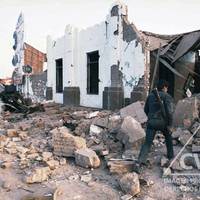
  35. Explosion in Tarata Street

    On July 16, 1992, a car bomb exploded on Tarata Street in the Miraflores district of Lima. This attack occurred in a context of intensifying violence in the capital, where the subversive groups Sendero Luminoso and MRTA increased their actions by carrying out continuous attacks against public and private entities. …

    Calle Tarata, Miraflores, Lima, Perú Informe CVR, página 377
    3 media 9 docs
  36. Tarata Street Bombing

    On July 16, 1992, the Shining Path (PCP-SL) orchestrated a car bombing on Tarata Street in the Miraflores district of Lima, Peru. The attack involved a Datsun vehicle loaded with approximately 400 kilos of dynamite and ANFO, which exploded at around 9:20 PM, causing significant destruction to residential buildings. This …

    Miraflores, Lima, Peru CVR, BDI-I-P416
  37. Formation of Self-Defense Groups in Huaycán

    In 1992, amidst rising crime and insecurity, the community of Huaycán formed a self-defense group led by Pascuala Rosado. On July 15, 1992, over 300 men and women took an oath to protect their community through mixed patrols. Despite these efforts, violence and fear persisted, with several leaders being assassinated, …

    Huaycán, Peru CVR 2003

Showing 1–50 of 238 events

Photos & Videos 1