Truth and Reconciliation Commission - Peru

Complete database of events related to the internal armed conflict in Peru, extracted from the Final Report of the Truth and Reconciliation Commission (CVR). 5,159 events documented from 1817 to 2003.

Years All years
1817 2003
Tag Alberto Fujimori × Browse all tags
  1. Investigation and Legal Proceedings Against Peruvian Military Officials

    In 2003, the Peruvian judicial system initiated legal proceedings against several military officials, including Vladimiro Montesinos Torres and Nicolás de Bari Hermoza Ríos, for their involvement in the homicide of Eduardo Nicolás Cruz Sánchez, Herma Luz Meléndez Cueva, and Víctor Salomón Peceros Pedraza. The investigation, led by the Peruvian National …
    Peru CVR, chunk 4419.0, página 727
  2. Alleged Arbitrary Executions During Fujimori's Presidency

    The report discusses the alleged arbitrary executions of subversives Herma Luz Meléndez Cueva and Víctor Salomón Peceros Pedraza, which are linked to a military operation under the command of former President Alberto Fujimori. The operation involved high-ranking officials like Vladimiro Montesinos and General Nicolás de Bari Hermoza. The incident raises …

    Peru Resolución del 4 de agosto del 2003, Investigación Nº110-2002, página 734
  3. Assassination Plot Against Pedro Huilca Tecse

    On July 10, 2003, Alayo Calderón reaffirmed his allegations before a subcommittee investigating a constitutional complaint against former President Alberto Fujimori. The complaint involved the assassination of Pedro Huilca Tecse, a union leader allegedly targeted by the Colina Group, a death squad. Calderón testified about a plan to eliminate Huilca …

    Peru 45, 46
  4. Aftermath of the Military Rescue Operation in Peru

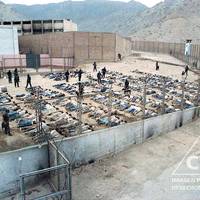
    Following a military rescue operation, authorities conducted actions including the removal and clandestine burial of fourteen deceased members of the MRTA. The necropsies were performed under irregular conditions as ordered by higher authorities, including President Alberto Fujimori. The official government narrative stated that the MRTA members died in combat, but …

    Lima, Peru
  5. Nullification of Peru's Antiterrorism Legislation

    In 2002, the Constitutional Tribunal of Peru declared much of the anti-terrorism legislation enacted under former President Alberto Fujimori null and void. This decision followed rulings by the Inter-American Court of Human Rights, which found violations of due process in the trials of individuals accused of terrorism and treason. As …

    Peru página 224
  6. Creation of the Truth and Reconciliation Commission in Peru

    In December 2001, following the collapse of Alberto Fujimori's regime, a transitional government led by Dr. Valentín Paniagua initiated the formation of a Truth and Reconciliation Commission. This move was part of a broader effort to address the demands for truth and justice regarding human rights abuses during Fujimori's rule. …

    Peru Página 144
  7. Overturning of Peru's Amnesty Laws by the Inter-American Court of Human Rights

    In the 1990s, the Peruvian government under President Alberto Fujimori enacted a series of amnesty laws that granted immunity to military and civilian personnel involved in human rights violations during the internal armed conflict. These laws were heavily criticized for obstructing justice and protecting perpetrators of serious crimes. On March …

    Peru Página 231
  8. Matanza de Barrios Altos and Subsequent Legal Actions

    On 25 October 2000, the Coordinadora Nacional de Derechos Humanos filed a criminal complaint against Vladimiro Montesinos Torres and other military officials for crimes against humanity, including forced disappearance and homicide, related to the 'Matanza de Barrios Altos' case. This was part of a broader investigation into human rights violations …

    Peru página 574
  9. Accusations by President Alberto Fujimori Against the Opposition

    On July 29, 2000, President Alberto Fujimori accused the opposition of planning to set fire to the Congress of the Republic to prevent his inauguration. He compared their plans to those of the Movimiento Revolucionario Túpac Amaru (MRTA) and criticized them for inciting chaos and destruction in Lima. Fujimori claimed …

    Lima, Peru Página 135-136
  10. Alberto Fujimori Begins Third Presidential Term

    In July 2000, President Alberto Fujimori Fujimori of Peru began his third presidential term. He appointed Federico Salas Guevara as the President of the Council of Ministers and Minister of Education. Fujimori outlined his administration's priorities for the next five years, focusing on strengthening democratic institutions and improving employment and …

    Peru página 332
  11. Peruvian General Elections of 2000

    The Peruvian general elections of 2000 were marked by controversy and allegations of fraud. Initial exit polls suggested that Alejandro Toledo was leading, but as the official count progressed, President Alberto Fujimori was declared the winner. The elections were scrutinized by international observers, and various irregularities were reported, leading to …

    Peru Chunk 5661.0
  12. Creation of the Truth and Reconciliation Commission (CVR) in Peru

    In 2000, the Peruvian government initiated the process of establishing the Truth and Reconciliation Commission (CVR) to address crimes committed during the internal conflict. The Ministry of Justice recognized these crimes as 'grave violations of Human Rights and International Humanitarian Law.' The commission aimed to apply both national and international …

    Peru Página 18
  13. Capture of Óscar Ramírez Durand ('Feliciano')

    In 1999, Óscar Ramírez Durand, also known as 'Feliciano', a leader of the 'Sendero Rojo' faction of the Shining Path, was captured. The Peruvian government, led by Alberto Fujimori, used this event for propaganda purposes to bolster its image as a pacifier ahead of the 2000 presidential elections. The capture …

    Peru, specifically the eastern region of the central highlands Chunk 830.0
  14. Promulgation of the Amnesty Law for General Rodolfo Robles Espinoza

    In November 1996, President Alberto Fujimori of Peru promulgated a Law of Amnesty to release General Rodolfo Robles Espinoza. Robles Espinoza had been detained and processed by military justice following serious accusations he made against the National Intelligence Service (SIN) after an attack in Puno. The arrest and subsequent events …

    Peru página 283
  15. Ley de Interpretación Auténtica y Eventos de Violencia Política en Perú

    In 1996, the Peruvian legislature was reshuffled in favor of the ruling party, which led to the approval of Law No. 26657, known as the Authentic Interpretation Law, which paved the way for the reelection of President Alberto Fujimori. That same year, the Ad Hoc Commission was created to review …

    Perú
  16. Promulgation of the Controversial Amnesty Law by President Alberto Fujimori

    In July 1995, President Alberto Fujimori promulgated Law 26492, making the controversial Amnesty Law mandatory. This law nullified the judicial resolution by Judge Antonia Saquicuray Sánchez, which had previously declared the amnesty inapplicable to those involved in the Barrios Altos case. The Eleventh Criminal Chamber of the Superior Court ruled …

    Peru página 265
  17. Promulgation of Peru's Amnesty Laws

    In 1995, the Peruvian government, under President Alberto Fujimori, passed two controversial amnesty laws. The first law, Law 26479, was promulgated on June 15, 1995, granting amnesty to military personnel accused of human rights violations. The second law, Law No. 26492, was quickly passed on June 29, 1995, without public …

    Peru página 487
  18. IV World Women's Conference in Beijing

    The IV World Conference on Women took place in Beijing, China, in 1995. The conference was a significant event in the global movement for gender equality, bringing together representatives from around the world to discuss and promote women's rights. Alberto Fujimori, the President of Peru, attended the conference and criticized …

    Pekín, China
  19. Dismissal of Susana Higuchi Miyagawa from First Lady Duties

    In August 1994, Susana Higuchi Miyagawa, the wife of President Alberto Fujimori, publicly demanded changes to the Electoral Law, which led to significant media attention. Following her public statements and departure from the Presidential Palace, President Fujimori removed her from her duties as First Lady. This event highlighted tensions within …

    Peru página 249
  20. Military Operations Against PCP-SL in Peru

    In April 1994, the Peruvian government under President Alberto Fujimori prioritized the elimination of the PCP-SL (Shining Path) insurgency. Reports indicated conflicting information about the strength and organization of the PCP-SL, with military sources providing varying estimates of their numbers. The military operations faced scrutiny from human rights defenders, which …

    Alto Huallaga, Peru página 400
  21. Investigation and Trial of La Cantuta and Barrios Altos Cases

    In 1994, the government of Alberto Fujimori was compelled to prosecute and convict those responsible for the 'La Cantuta' crime, although the process was deemed unconstitutional due to the involvement of the military court. Despite evidence linking the convicted individuals to the 'Barrios Altos' massacre, the military court irregularly took …

    Peru página 483
  22. Approval of the New Peruvian Constitution

    The Democratic Constituent Congress (CCD) of Peru approved a new Constitution on August 26, 1993, after 31 days of deliberation. The new Constitution included provisions for the immediate presidential re-election, the dissolution of the Legislative Power by the President under certain conditions, and a new electoral system. The opposition presented …

    Peru Congreso (p. 234)
  23. Assassination of Pedro Crisólogo Huilca Tecse

    Pedro Crisólogo Huilca Tecse, a prominent union leader, was assassinated in 1992. His partner, Martha Flores Gutiérrez, accused the government of then-President Alberto Fujimori of being responsible for his death, claiming it was not the work of insurgent groups like Sendero Luminoso or MRTA. Huilca was killed while actively opposing …

    Peru Chunk 4330.0
  24. Assassination of Pedro Huilca

    Pedro Huilca, a prominent labor leader in Peru, was assassinated on December 18, 1992. His death was initially attributed to the Shining Path (Sendero Luminoso), a Maoist guerrilla group. However, there were allegations and suspicions that the assassination might have been orchestrated by the Grupo Colina, a death squad linked …

    Lima, Peru
  25. Assassination of Pedro Huilca Tecse

    Pedro Huilca Tecse, the Secretary General of the Confederación General de Trabajadores del Perú (CGTP), was assassinated on December 18, 1992. Prior to his assassination, he had attended the Annual Conference of Executives (CADE) and called for a national agreement addressing labor issues. His assassination followed a period of tension …

    Peru CVR - Unidad de Investigaciones Especiales
  26. Sendero Luminoso Peace Negotiation Initiative

    On October 28, 1992, the Peruvian government released a letter signed by key members of the Shining Path, including Osmán Morote and Martha Huatay, supporting a peace initiative proposed by Abimael Guzmán, also known as 'Presidente Gonzalo'. The letter, addressed to President Alberto Fujimori, called for peace talks to end …

    Peru Documento citado: CVR, ref. 15 (Diarios, Lima, 29 de octubre de 1992)
  27. Negotiations Between Abimael Guzmán and Alberto Fujimori

    In October 1992, Abimael Guzmán, leader of the Shining Path, sent letters to President Alberto Fujimori to negotiate a peace agreement. The first letter was made public during Fujimori's presentation at the United Nations on October 1, 1992, and initially seemed to bolster Fujimori's political standing. However, a second letter …

    Peru
  28. Capture of Abimael Guzmán and Peace Negotiations

    In September 1992, Abimael Guzmán, the leader of the Shining Path (PCP-SL), was captured. Following his capture, Guzmán requested peace negotiations with the government of President Alberto Fujimori, signaling a potential end to the internal armed conflict in Peru. This marked a significant shift in the dynamics of the conflict, …

    Peru página 145-426
  29. Barrios Altos Massacre and La Cantuta Case

    The Barrios Altos massacre and La Cantuta case involve the extrajudicial killing of nine students and a professor from the Universidad Nacional de Educación 'Enrique Guzmán y Valle' in July 1992. The Inter-American Court of Human Rights ruled against the Peruvian state for these human rights violations. Despite the court's …

    Peru Página 244

Showing 1–50 of 86 events

Photos & Videos 22

Documents 1

PDF
What Happened to the Hunters?

HINOJOSA, Ghiovani

La Republica · 2012

A few months after the capture of Abimael Guzmán, the Fujimori government dismantled the GEIN. The officers of that time accused the regime of wanting to overshadow the team's work. …

Alberto Fujimori gein montesinos sin sendero luminoso