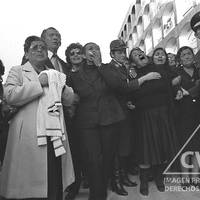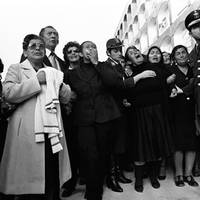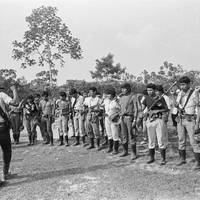
Alto Huallaga
Place

Alto Huallaga

Timeline Events 113

  1. Population of Alto Huallaga in 1940

    In 1940, Alto Huallaga was home to 11,623 inhabitants, representing a relatively small population compared to later decades. This figure contrasts significantly with the subsequent population growth: in 1981 it reached 134,600 inhabitants and in 1988 it had a population of 200,000 people. Population growth was related to the colonization …

    Alto Huallaga, Perú Informe CVR, página 384
  2. Occupation of the Upper Huallaga by colonists

    The Alto Huallaga area was occupied with greater intensity since the beginning of the 1950s by settlers and migrants coming mainly from the highlands of Huánuco, Huancayo, Junín and Cerro de Pasco. These settlers were encouraged, most of the time, by the State through colonization projects (such as Tingo María-Tocache-Campanilla), …

    Alto Huallaga, Perú Informe CVR
  3. Officialization of the first managed colonization program in the Upper Huallaga region

    In 1964, the first directed colonization program in the Upper Huallaga was made official. This program was part of the Tingo Maria-Tocache-Campanilla colonization project, which classified 180,000 hectares as suitable for agricultural use. Many of the farmers who obtained land titles had already settled in the Tingo Maria, Tocache and …

    Alto Huallaga, Perú Informe CVR
  4. Colonization of the Alto Huallaga Region

    The colonization of the Alto Huallaga region was intensified in the 1950s and 1960s, driven by state-led projects and spontaneous migration from the Andean regions. In 1964, the Peruvian government under President Belaunde launched an official colonization program, identifying large tracts of land for agricultural use. Despite initial successes in …

    Alto Huallaga, Peru página 381
  5. Coca leaf production for traditional demand in the Alto Huallaga region

    Until 1975, coca leaf production in Alto Huallaga was mainly destined to supply the traditional demand. Its main consumers were the peasants of Huánuco, Cerro de Pasco, Junín and Andean migrants in Lima and other departments of the northern coast. The business was profitable and many coastal and highland traders …

    Alto Huallaga, Perú Informe CVR
  6. Operativo Cerrojo

    The Operativo Cerrojo marked the beginning of large-scale interdiction efforts against drug trafficking in the Alto Huallaga region of Peru. Initiated in 1976, it was followed by a series of operations including Verde Mar I and II, Bronco, Condor, and Snowcap. These operations were characterized by complex interactions between various …

    Alto Huallaga, Peru página 2-3 del informe CVR
  7. Operatives Verde Mar I and II by Sinchis

    The anti-drug operations Verde Mar I and II were carried out by the Sinchis commandos along the right bank of the Huallaga River in 1979 and 1980, respectively. These operations inaugurated a series of large-scale interdictions against drug trafficking in the region. These operations are remembered in local memories as …

    Margen derecha del río Huallaga, Alto Huallaga, Perú Informe CVR, página 279
  8. Presence of PCP-SL begins to be noticed in Alto Huallaga

    The presence of the PCP-SL in Alto Huallaga did not begin to be felt until 1980-81, approximately six years after the beginning of the drug boom in the area. The Shining Path cadres would have initiated their party's political work in the countryside taking as their cause the defense of …

    Alto Huallaga, Perú Informe CVR, páginas 279-281
  9. Presentation of PCP-SL in Alto Huallaga

    In 1981, the PCP-SL appeared in Alto Huallaga, taking advantage of the climate of social chaos created by drug trafficking. They presented themselves as the executioner of a corrupt and inefficient bureaucratic state and assumed the supposed defense of the interests of the coca growers, who were being attacked by …

    Alto Huallaga, Perú Informe CVR, páginas 384-385
  10. Shining Path incursion in Alto Huallaga

    In 1981, the PCP-SL (Shining Path) appeared in Alto Huallaga, taking advantage of the climate of social chaos created by drug trafficking. They presented themselves as the executioner of a corrupt and inefficient bureaucratic state and assumed the supposed defense of the interests of coca growers, who were being attacked …

    Alto Huallaga, Perú Informe CVR, páginas 384-385
  11. First armed action of the PCP-SL in the Huallaga: attack to a police post in Pucayacu.

    The first armed action of the PCP-SL in the Huallaga was an attack on the Forest Police post of Pucayacu in 1982. This attack took place near the Gocen-Nueva Esperanza area, which would have been the first PCP-SL nucleus in the Upper Huallaga. At the beginning of 1982, groups of …

    Pucayacu, Alto Huallaga, Perú Informe CVR, página 2532
  12. Attack on Pucayacu forest police post

    In 1982, the PCP-SL carried out an armed attack against the Pucayacu forest police post. This attack was one of the first armed actions of the subversive group in Alto Huallaga. The attacked post was located near the area of Gocen-Nueva Esperanza, on the right bank of the Huallaga River, …

    Pucayacu, Alto Huallaga, Perú Informe CVR, página 281
  13. Non-fatal assassination attempt against former mayor Augusto Tovar Tovar

    At the end of 1982, the PCP-SL carried out a non-fatal attack against former mayor Augusto Tovar Tovar in Aucayacu. This attack was part of a series of selective actions against local authorities that the PCP-SL carried out in the Alto Huallaga area during that period. The attack against Tovar …

    Aucayacu, Perú Informe CVR
  14. First subversive action against CORAH

    The first subversive action recorded in Alto Huallaga occurred in 1983 against the facilities of the Control and Reduction of Coca Cultivation in Alto Huallaga (CORAH) project, located in Tingo Maria. This attack marked the beginning of the PCP-Sendero Luminoso's actions in the Alto Huallaga region. The PCP-SL sought to …

    Tingo María, Huánuco, Perú Informe CVR (página 387)
  15. PCP-SL installs its own authorities in rural hamlets

    Between 1983 and 1985, the PCP-SL proceeded to install its own authorities, with varying degrees of clandestinity, in most of the rural hamlets from Tulumayo to Yanajanca. Within these places, the PCP-SL's popular committees controlled coca leaf cultivation, regulated the purchase/sale of PBC (cocaine base paste) and, in places where …

    Tulumayo hasta Yanajanca, Perú Informe CVR, páginas 281-283
  16. Murder in Pucate cooperative

    In 1984, the PCP-Sendero Luminoso attacked the Pucate cooperative located in the district of José Crespo y Castillo, in the Huallaga basin. During this attack, the PCP-SL assassinated the President of the cooperative along with six leaders and members. This attack was part of a series of violent actions that …

    Cooperativa Pucate, distrito de José Crespo y Castillo, Huánuco, Perú Informe CVR
  17. Murder of CORAH workers and destruction of police post in Aucayacu

    In 1984, the PCP-Sendero Luminoso assassinated a group of workers of the Control and Reduction of Coca Cultivation in Alto Huallaga (CORAH) project and destroyed the Aucayacu police post. This action was part of the PCP-SL's strategy to achieve political hegemony in the Alto Huallaga area. The attack followed a …

    Aucayacu, Huánuco, Perú Informe CVR (página 387)
  18. Second attack on Civil Guard post in Aucayacu

    On July 4, 1984, the second attack by the PCP-SL against the Civil Guard post in Aucayacu took place. This attack occurred five months after the first attack on January 31, 1984. A UMOPAR unit arrived several hours after the attack, when the hikers had already withdrawn, and retaliated against …

    Aucayacu, Perú Informe CVR (página 282)
  19. Murder of ten homosexuals and prostitutes in Aucayacu

    During 1985, in the rural area of Alto Huallaga, the Shining Path PCP executed ten homosexuals and prostitutes in Aucayacu. This action was part of a PCP-SL strategy to gain prestige among coca farmers by killing people considered criminals or undesirables. The report mentions that these actions, together with ambushes …

    Aucayacu, Leoncio Prado, Huánuco, Perú Informe CVR
  20. Territorial control of PCP-SL in Alto Huallaga

    From 1986 to 1992, the PCP-SL had control of the Alto Huallaga area, subordinating coca growers and drug traffickers to its interests, and overcoming all counter-subversive operations by the armed forces and police. During this period, the PCP-SL imposed its social order through a catalog of laws that regulated the …

    Alto Huallaga, Huánuco, Perú Informe CVR, páginas 387, 390, 411
  21. Sendero Luminoso Takes Control of Uchiza and Tocache

    In 1986, the town of Uchiza faced a significant confrontation with the PCP-SL (Sendero Luminoso), marking the first such encounter in the Alto Huallaga region. Initially, the local population resisted the insurgents, but within a year, the PCP-SL, with the support of narco-traffickers, took control of Uchiza and Tocache. These …

    Uchiza and Tocache, Peru Página 344
  22. Two men executed in Paraiso

    On August 26, 1986, members of the PCP-Sendero Luminoso gathered the population of the hamlet of Paraíso and several of the surrounding sectors to publicly execute two unknown men. According to the Shining Path, these men were thieves and therefore deserved to die. This event was part of the PCP-SL's …

    Paraíso, Alto Huallaga, Perú Informe CVR, página 283
  23. Slaughter in Plaza de Armas of Paraíso

    The PCP-SL executed seven workers in the Plaza de Armas of Paraíso. According to some versions, the victims were part of a group of eleven Machi workers that PCP-SL personnel saw talking on the radio with their boss and mistakenly thought they were communicating with the army. The Shining Path …

    Plaza de Armas de Paraíso, San Martín, Perú Informe CVR, página 290
  24. Transformation into hikers' weapons

    Between 1987 and 1988 there was a significant transformation in the weaponry used by the PCP-SL Shining Path groups in their war actions in the Upper Huallaga. This improvement in the military arsenal was the result of agreements established with drug traffickers, who began to bring in weapons of war …

    Alto Huallaga, Perú Informe CVR, página 290
  25. Enfrentamiento entre el PCP-SL y el MRTA en la Cuenca del Huallaga

    In 1987, a sustained conflict emerged between the PCP-SL and the MRTA in the Huallaga River basin. The territory was pragmatically divided, with the Alto Huallaga becoming a stronghold for the PCP-SL, while the Huallaga Central and Bajo Huallaga were controlled by the MRTA. Both groups engaged with local drug …

    Cuenca del Huallaga, Junín, San Martín, Peru 358
  26. PCP-SL attack to the Uchiza police station

    At the end of May 1987, the PCP-SL attacked the Uchiza police post as part of its strategy of territorial control in the Upper Huallaga. This was the first significant attack on Uchiza, which preceded the better known and devastating second attack on March 17, 1989. The attack occurred in …

    Uchiza, San Martín, Perú Informe CVR, página 290
  27. Road blockage between Tulumayo and Nuevo Progreso

    In June 1987, the PCP-SL declared an armed strike in Alto Huallaga. Between Tulumayo and Nuevo Progreso, it forced the rural population to participate in blocking the road, destroying the asphalt and painting the facades of houses along the Marginal Highway. These first strikes constituted a powerful measure of force …

    Entre Tulumayo y Nuevo Progreso, Carretera Marginal, Alto Huallaga, Perú Informe CVR, página 290
  28. Armed strike declared by the PCP-SL in Alto Huallaga

    At the end of May 1987, the PCP-SL attacked the Uchiza police post and in June declared an armed strike throughout Alto Huallaga. Between Tulumayo and Nuevo Progreso, the PCP-SL forced the rural population to participate in blocking the road, destroying asphalt and painting the facades of houses along the …

    Alto Huallaga, Perú Informe CVR, página 290
  29. Lightning Operation in Tocache

    On July 15, 1987, paratroopers from specialized police units took the town of Tocache in a major operation called 'Relámpago'. Apparently the PCP-SL and the drug traffickers were aware of the police counterattack because both groups withdrew from the urban area before the arrival of the first troops. This operation …

    Tocache, San Martín, Perú Informe CVR, página 290
  30. Recovery of Tocache by law enforcement forces

    On July 17, 1987, the combined forces of the police, Army and Air Force carried out an impressive operation to recapture the town of Tocache, which had been taken by the Shining Path PCP. Law enforcement arrived in helicopters in a coordinated operation. This action came after the PCP-SL had …

    Tocache, San Martín, Perú Informe CVR, página 123
  31. PCP-SL ambush at the entrance to Paraíso

    In November 1987, there was an episode that would take on legendary overtones in the Alto Huallaga conflict. PCP-SL forces ambushed at the entrance to the town of Paraíso. This event occurred in the context of confrontations between the PCP-SL and elements operating in the area, including a character wearing …

    Paraíso, San Martín, Perú Informe CVR, página 290
  32. PCP-SL Activities in Alto Huallaga

    In 1988, the Shining Path (PCP-SL) was active in the Alto Huallaga region of Peru. The organization had a structured military presence, with the 'Fuerza Principal' forming a mobile network and the 'Fuerza Local' operating within organized territories. Willy, a local involved with the PCP-SL, was appointed as the logistics …

    Alto Huallaga, Peru Página 303
  33. PCP-SL recruits coca growers in Ucayali

    During 1988, the Communist Party of Peru - Shining Path (PCP-SL) consolidated its presence in Ucayali by assuming as its slogan the defense of coca leaf cultivation. The Shining Path militants, taking advantage of their status as professors, stirred up the spirits of the coca growers in the province of …

    Provincia de Padre Abad, Ucayali, Perú Informe CVR, páginas 350-352
  34. Population of Alto Huallaga during the armed conflict

    In 1988, the population of Alto Huallaga reached approximately 200,000 inhabitants, in a context of extreme violence generated by the simultaneous presence of the PCP-SL, drug traffickers and the armed forces. The area was experiencing social chaos as a result of the failure of state colonization projects, the expansion of …

    Alto Huallaga, Perú Informe CVR, páginas 362-384
  35. Kidnappings of drug traffickers in Alto Huallaga by Escorpio group

    The Escorpio group, commanded by Captain EP Martin Rivas, carried out kidnappings of drug traffickers in Alto Huallaga during 1989. These kidnappings were part of a series of criminal activities that included collecting quotas related to drug traffickers and merchants, carried out under the cover of military intelligence operations.

    Alto Huallaga, Perú Informe CVR, página 801
  36. Large-scale army operations in the Upper Huallaga region

    Beginning in 1989, the Peruvian army implemented large-scale operations in the Upper Huallaga that marked a turning point in the conflict with the PCP-SL. These operations began after the second attack on Uchiza on March 17, 1989, which resulted in a massacre of police and led to the re-declaration of …

    Alto Huallaga, Perú Informe CVR, páginas 290-306
  37. Initiation of aerial interdiction by the FAP

    Beginning in 1989, the Peruvian Air Force (FAP) began aerial interdiction operations in the Upper Huallaga with support from the U.S. Southern Command. This measure was part of a confluence of obstacles that affected drug trafficking in the area, especially in Uchiza, which was the largest market in the valley. …

    Alto Huallaga, Perú Informe CVR, páginas 290-293

Showing 1–50 of 113 events

Photos, Videos & Documents 21

Showing 1–21 of 21 items