Organization

Peruvian Government

Timeline Events 117

  1. Operation 'Mar Verde' and Subsequent Military Actions in Peru

    In 1979, the Peruvian government initiated Operation 'Mar Verde' as an anti-narcotics effort, which later influenced military strategies against subversive forces in the region. By 1984, the military had established over 60 bases in the emergency zone to counteract the activities of the PCP-SL, a subversive group. Despite increased military …

    Huamanga, San Francisco, Peru Página 263
  2. Internal Conflict in the Central Jungle of Peru

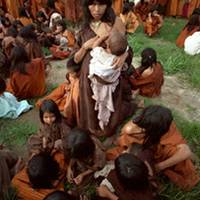
    In 1980, the Peruvian government initiated the 'Paraíso Terrenal' colonization plan, leading to the migration of various groups into the Apurímac forest. This period saw increased conflict in the central jungle region, with the presence of insurgent groups such as the MRTA and PCP-SL. The local communities, including native Asháninkas …

    Central Jungle of Peru, including Satipo, Chanchamayo, and Oxapampa página 226
  3. Return of Media to Private Ownership in Peru

    In November 1980, the Peruvian government, under President Fernando Belaúnde Terry, formalized the return of media outlets to private ownership. This marked a significant shift from the previous military regime's control, which had expropriated television and newspaper companies in the early 1970s. The return to democracy allowed media outlets to …

    Peru Página 491
  4. The Rise of Sendero Luminoso

    In May 1981, the revolutionary group Sendero Luminoso, led by Abimael Guzmán, initiated a violent campaign to overthrow the Peruvian government. This campaign involved brutal attacks on police posts and state authorities, as well as efforts to establish new power structures in rural areas. Despite early warnings and intelligence reports, …

    Ayacucho, Peru Página 20, CVR. BDI. P150 y P139
  5. State of Emergency Declared in Ayacucho, Peru

    On October 12, 1981, the Peruvian government declared a state of emergency in five provinces of Ayacucho. This marked the first use of such measures following the return to civilian government. The state of emergency allowed the military to assume control over internal order, leading to a suspension of constitutional …

    Ayacucho, Peru Página 220
  6. Peruvian Government's Military Response to PCP-SL in 1982

    In 1982, the Peruvian government, led by President Belaunde, faced significant challenges from the terrorist activities of the PCP-SL (Shining Path). The government's military response included an ultimatum issued on December 27, followed by the deployment of around 2000 army personnel to the emergency zone on December 31. Despite these …

    Peru p. 257
  7. Military Intervention and Internal Control in Peru

    In 1982, the Peruvian government faced a severe internal crisis as the PCP-SL (Shining Path) undermined the state's legal and institutional structures in the central Andes. The military was tasked with controlling the internal order in the emergency zone, a mission complicated by the absence of a functioning legal system …

    Peru Página 258-259
  8. Promulgation of Law 24150 and Militarization of Anti-Subversive Efforts in Peru

    In 1982, the Peruvian government, facing increasing subversive threats, enacted Law 24150, which marked a significant shift towards militarization in the fight against insurgent groups like Sendero Luminoso. This law was enacted amidst a change in government and was criticized for undermining democratic civilian power by granting more control to …

    Peru Página 210
  9. Sendero Luminoso Offensive and State of Emergency in Peru

    In July 1982, the Sendero Luminoso launched its largest offensive since the beginning of its armed struggle, with 34 terrorist actions and five mass incursions into small towns. This included attacks on municipalities in Ayacucho and the assassination of local officials. In response to the escalating violence, the Peruvian government …

    Ayacucho, Peru Página 40
  10. State of Emergency Declared in Southern Central Highlands of Peru

    In December 1982, the Peruvian government declared a state of emergency in the southern central highlands, transferring control to the military. This decision was made in response to increasing violence and unrest caused by the activities of the PCP Sendero Luminoso, which had been intensifying its attacks on public infrastructure …

    Southern Central Highlands, Peru página 102
  11. Military Presence in Ayacucho

    In 1983, various military bases were established in the Ayacucho region of Peru, including the Base Militar de Ccoisa and the Base Militar de Cayara. These bases were part of the Peruvian government's efforts to combat insurgent activities during a period of internal conflict.

    Ayacucho, Peru Página 331
  12. Military Control and Media Pressure in Ayacucho and Huancavelica

    In January 1983, the armed forces assumed control over the regions of Ayacucho and Huancavelica in Peru. This period saw increased pressure from the government and military on the press in conflict areas, alongside actions to influence public perception. The regional press adopted the government's labeling of PCP-SL members as …

    Ayacucho and Huancavelica, Peru p. 537
  13. Amnesty International's Report on Forced Disappearances in Peru

    In 1983, Amnesty International presented a report to the Peruvian government under President Fernando Belaunde Terry, highlighting the issue of forced disappearances during the internal armed conflict. This report, along with subsequent actions by human rights lawyers in 1984, brought international attention to the human rights violations occurring in Peru. …

    Peru
  14. Appointment of the Uchuraccay Events Investigation Commission (Vargas Llosa Commission).

    On February 2, 1983, the Peruvian government appointed the Uchuraccay Events Investigation Commission, chaired by writer Mario Vargas Llosa. This commission was created to investigate the massacre of eight journalists that occurred on January 26, 1983 in the community of Uchuraccay, province of Huanta, Ayacucho. According to the CVR report, …

    Perú Informe CVR (páginas mencionadas: 162, 175)
  15. Police Strike in Peru

    On May 25, 1983, a police strike occurred in Peru, primarily demanding salary improvements. The strike led to the government declaring a state of emergency in Lima and Callao, suspending constitutional guarantees, and deploying army tanks to patrol the streets. The strike resulted in the approval of salary homologation for …

    Lima and Callao, Peru Página 71
  16. Installation of Military Bases in Response to Subversive Activity

    In response to increased subversive activities by the PCP-SL, the Peruvian government declared a State of Emergency in various provinces, including Huancavelica. On 21 March 1984, military bases were established in the districts of Vilca and Manta to provide security. However, these military forces were reported to have committed human …

    Vilca and Manta, Huancavelica, Peru Capítulo sobre Violencia Sexual, Sección Crímenes y Violaciones a los Derechos Humanos; CVR Testimonio 310583; Manta y Vilca, 1982-1998
  17. Massacre in Ayacucho by Subversives

    On May 9, 1984, subversives attacked the village of Paiccas in the Province of La Mar, Ayacucho, killing 21 campesinos and injuring 45 others. This event was part of a larger wave of violence in the region, where members of the PCP-SL targeted several villages, resulting in the deaths of …

    Paiccas, Province of La Mar, Department of Ayacucho, Peru Página 129
  18. Peruvian Government's Response to Terrorist Actions in 1984

    In July 1984, following an increase in terrorist actions, the Peruvian government, led by President Fernando Belaunde Terry, engaged in discussions with military leaders to address the situation. The government decided to extend the state of emergency for thirty days, which included the suspension of constitutional guarantees. Despite concerns about …

    Peru
  19. Human Rights Violations in Peru, 1984

    In August 1984, a series of human rights violations were reported in Peru, including the murder of evangelists in Callqui-Nisperocniyoc, the disappearance of journalist Jaime Ayala, and the discovery of mass graves in Pucayacu. Despite these reports, the Peruvian government did not significantly alter its counterinsurgency strategy. The military leadership …

    Peru Página 24
  20. Promulgation of DL 24150 and Military Control in Peru

    In 1985, a month and a half before President Alan García assumed office, the Peruvian government promulgated DL 24150. This decree allowed the military to assume control over internal order in certain zones, effectively limiting the power of civilian authorities. Despite this, elections and appointments of authorities continued, highlighting the …

    Peru p. 37
  21. Reorganization of the Peruvian Police Forces

    In response to widespread corruption within the Peruvian Police of Investigations, highlighted by a scandal involving narcotics traffickers protected by former high-ranking police officials, the Peruvian government enacted a reorganization of the police forces. On August 14, 1985, the government passed law 24294, granting the Executive branch the authority to …

    Peru Chunk 396.0
  22. Massacres in Pucayacu and Accomarca

    In September 1985, reports emerged of clandestine graves linked to massacres carried out by military patrols in Pucayacu and Accomarca, resulting in 7 and 69 deaths, respectively. The Peruvian government launched an investigation, leading to the resignation of military leaders and marking a shift from previous governmental responses. This swift …

    Pucayacu and Accomarca, Peru
  23. Culmination of oil negotiations

    On December 27, 1985, negotiations between the Peruvian government and foreign oil companies culminated. These negotiations took place in the context of President Alan Garcia Perez's decision to terminate the oil operation contracts with Occidental Petroleum Corporation del Peru, Belco Petroleum Company and the Oxy-Bridas Consortium. The government had announced …

    Perú Informe CVR, página 111
  24. Prison Regime and Human Rights Violations in Peru

    In 1986, the largest collective crime in Peru occurred in three penitentiary establishments. This event, along with other significant incidents in 1985 and 1992, highlighted the incompatibility of the Peruvian prison regime with international human rights standards. International human rights organizations repeatedly warned the Peruvian government about these violations, especially …

    Peru
  25. Prison Riots and Massacre in Lurigancho, Santa Bárbara, and Frontón

    In June 1986, inmates accused of terrorism and belonging to the PCP-Sendero Luminoso staged riots in the prisons of Lurigancho, Santa Bárbara del Callao, and the island of Frontón. The prisoners took control of the facilities, captured weapons, and held hostages, aiming to discredit the government of President Alan García. …

    Lurigancho, Santa Bárbara del Callao, and Frontón, Peru Página 169
  26. Prison Riots and Military Intervention in Peru

    On June 17, 1986, inmates associated with the Shining Path at the Lurigancho, El Frontón, and Santa Bárbara prisons in Peru took hostages and seized control of their pavilions, demanding their conditions be met. The Peruvian government, led by President García, handed control to the military, resulting in a violent …

    Lurigancho, El Frontón, and Santa Bárbara, Peru página 216

Showing 1–50 of 117 events

Photos, Videos & Documents 15

Showing 1–15 of 15 items