 1986
1986
Photos & Videos
3 media items in Truth and Reconciliation Commission - Peru
Tag
vilcashuamán
×
1986
 1986
1986
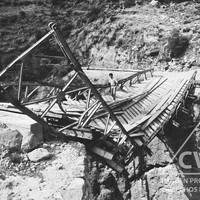
Vischongo Bridge in the province of Vilcashuamán, Ayacucho, after an attack.
 1985
1985
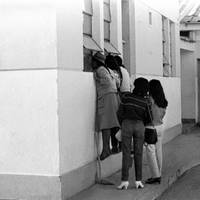
ACCOMARCA MASSACRE, VILCASHUAMÁN
Showing 1–3 of 3 items
Timeline Events 50
-
Murder in Vilcas
A female affiant recounts the murder of her husband in Vilcas, Vilcashuaman, Ayacucho. The testimony was collected in December 2002. The woman relates how the loss of her husband seriously affected her health, especially her eyesight, due to the intense pain and crying she experienced. As a result of this …
-
Testimony on husband's murder in Vilcas, Vilcashuamán
Testimony of a woman who narrates the murder of her husband in Vilcas, Vilcashuamán, Ayacucho. The affiant describes the serious consequences to her physical and emotional health following the loss of her husband. She specifically mentions vision problems caused by excessive crying, noting that she can no longer distinguish well. …
-
Killing of Benigno Medina
Benigno Medina, a prominent figure in Pujas, Vilcashuamán, was killed under the pretext of being an embodiment of oppression by the PCP-SL. While some community members remember him as generous and supportive, others accuse him of exploiting women, with the tacit consent of their husbands. His death and the subsequent …
-
Public Hearing - Testimony of Exaltación Vargas Rojas
Exaltación Vargas Rojas gave her testimony in a public hearing held in Accomarca, Vilcashuamán, Ayacucho. Her testimony is part of case N° 7 of the second session of CVR public hearings. The testimony is related to experiences of detention and torture, being cited in the context of documenting the extreme …
4 docs -
Testimony on the Accomarca massacre
In June 2002, the TRC conducted focus groups with women in Accomarca, Vilcashuamán, Ayacucho, and took field notes from interviews with witnesses of the Accomarca massacre. Women participants shared testimonies about violence experienced since childhood, describing how exposure to violence had affected them psychologically, manifesting aggression and other traumatic effects. …
3 docs -
Focus group with women in Accomarca
Focus group conducted with women in Accomarca, Vilcashuamán, Ayacucho, as part of CVR's research activities. During this meeting, women participants shared testimonies about aggressive manifestations and psychological sequels derived from the violence experienced during the internal armed conflict. One of the participants recounted how she became aggressive after witnessing violence …
5 docs -
Public Hearing in Accomarca
Public hearing held by the Truth and Reconciliation Commission in Accomarca, Vilcashuamán district, department of Ayacucho, in June 2002. This hearing was part of the process of gathering testimonies on human rights violations that occurred during the internal armed conflict. The document refers to testimonies collected in this hearing related …
4 docs -
Political Influence of PCP-SL in Vilcashuamán
In Vilcashuamán, political debates were organized by teachers of varying political beliefs at the General Córdova school. The PCP-SL (Shining Path) propagated their ideology in the classrooms, using Marxist manuals to appeal to a generation seeking answers to social inequalities. The local population was influenced by the promise of fighting …
-
Violence and Coercion by PCP-SL in Vilcashuamán
During the period of violence in Vilcashuamán, the PCP-SL (Shining Path) coerced local communities into participating in violent acts. Testimonies reveal that the population was forced to comply under threat of arms, and some individuals were captured and manipulated into actions against their will. The narrative highlights the use of …
-
Sendero Luminoso's Use of Popular Schools for Indoctrination
During the early 2000s, Sendero Luminoso, also known as the Shining Path, utilized 'popular schools' to indoctrinate young, intelligent leaders in Vilcashuamán, Peru. These schools focused on guerrilla warfare strategies and organizing local communities by neighborhoods. Attendance was mandatory for those committed, and those who did not participate were marked, …
-
Murder of Miguel Rivera
Miguel Rivera, a leader of the Pujas community, was killed by the PCP-SL in 1995. Rivera was a community leader who had participated in the PCP-SL assault on the Ayzarca farm in 1980, but had subsequently distanced himself from the subversive group. At the time of his death, Rivera was …
-
Murder of VEG and his brother by comrade Marcela of the PCP-SL in Pillucho
On the night of November 20, 1991, comrade Marcela entered the community of Pillucho with several other men looking for VEG, who worked as a baker for the Vilcas military base. When they did not find him, they arrested her brother, tortured and killed him. Comrade Marcela ordered him to …
-
Arbitrary execution of Mariscot Glicerio Santa Cruz Miranda and Rister León Espinoza
On August 24, 1991, Mariscot Glicerio Santa Cruz Miranda and Rister Leon Espinoza were murdered in the sector called Ñahuinpuquio, in Vilcashuamán. Handwritings were left next to their bodies attributing the act to the PCP-SL. Agent Carrion's diary mentions that at the end of August the group carried out the …
-
Arbitrary execution of Ladislao Huamaní Loayza and Gregoria Paquiyauri Farfán
On August 4, 1991, professor Ladislao Huamaní Loayza and his wife Gregoria Paquiyauri Farfán were murdered in Vilcashuamán. The event occurred in the early hours of the morning in a desolate area. The villagers said that the unknown men had their faces covered with balaclavas and used a different modality …
-
Formation of Rondas Campesinas and CADs in Vilcashuamán
In 1991, the Rondas Campesinas were formed in Vilcashuamán by deserters of the Shining Path (Sendero Luminoso) due to personal grievances. These groups were organized with the support of the military and included the creation of Comités de Autodefensa (CADs). The CADs were established partly because of the absence of …
-
Sexual violations in the community of Huamanmarca
Between the end of October and the beginning of November 1990, unknown men wearing ski masks entered the community of Huamanmarca and took people from their homes. The women were separated from the group of men and raped. The perpetrators singled out young women in particular, locking them in the …
1 media 3 docs -
Sexual violations in Contay
In 1990, in the village of Contay, district of Saurama, province of Vilcashuaman, department of Ayacucho, cases of rape were recorded. The event was documented in testimonies presented to the CVR. The facts were exposed during the Women's Public Hearing, Case No. 2, Single Session, held on September 10, 2002. …
-
PCP-SL raid in Huambalpa and assassination of rondero
When the police posts in the districts of Huambalpa, Carhuanca and Vischongo were withdrawn in 1990, terrorists immediately entered and began burning the Council. The PCP-SL assassinated those it considered traitors in raids on the district annexes, demonstrating that it had not completely disappeared from the area despite the military …
-
Sexual violations in Huambalaya
In 1990, in the district of Huambalaya, province of Vilcashuaman, department of Ayacucho, cases of rape were recorded in the context of the internal armed conflict. The testimony documents these events as part of the pattern of sexual violence that affected rural communities during the most intense years of the …
-
Saurama rape
In the district of Saurama, province of Vilcashuaman, department of Ayacucho, during 1990, cases of rape were registered in the context of the internal armed conflict. According to testimonies gathered by the CVR, both women and a mute person became pregnant as a result of these rapes. The children born …
-
Detention and torture of 33 teachers by military personnel in Vilcashuamán
In May 1989, the military detained 33 teachers from different places and took them to the Vilcashuamán base under the command of Lieutenant Oso. They remained there for approximately one week. Ten were transferred to Pampa-Cangallo and four of them to the Huamanga base. In all these places they were …
-
Formation of Self-Defense Committees in Vilcashuamán by military initiative.
The self-defense groups in the communities studied were formed at the initiative of the Cangallo and Vilcas military bases. The ronderos began to organize in 1987. At the beginning, they had no weapons and only served as an alarm for the Base. The Base forced the formation of ronderos, first …
-
Joint Command communiqué on death of subversives in confrontation
The Joint Command of the Armed Forces issued communiqué 74 CCFFAA/RRPP in response to an incident that occurred on Oct. 8 in Pujas, Vilcashuamán, during the town's patron saint festival. In the official communiqué, the Armed Forces stated that the subversives were killed during a confrontation. This statement came after …
1 docs -
Pujas massacre during patron saint festival
A Peruvian Army helicopter allegedly killed 32 people in Pujas, Vilcashuamán, during the town's patron saint festival on October 8, 1986. Subsequently, on October 23, the Armed Forces Command issued communiqué 74 CCFFAA/RRPP, stating that the subversives were killed during a confrontation. This incident occurred in a context of intensified …
-
Murder of 13 villagers of Pomatambo and Parcco Alto
In October 1986, the military killed 13 villagers in the towns of Pomatambo and Parcco Alto in the province of Vilcashuamán. This event occurred in the context of the military counteroffensive against the PCP-Sendero Luminoso in the region. The event took place during the period of intensification of the internal …
1 docs -
Forced transfer of farmers from Umaru to Pujas by PCP-SL
When the displacement of families to Vilcashuamán and Huamanga increased, the population in Pujas dropped considerably. The PCP-SL brought peasants from Umaru to Pujas to repopulate the area. The PCP-SL did not take over the farms of people who left the community or those who were killed, but rather they …
-
Arrest of peasants in Umaro and Bellavista
On August 27, 1985, the military detained several peasants from the communities of Umaro and Bellavista, Vilcashuamán province, in Ayacucho. The military forces surrounded the population who tried to flee during the operation. This event occurred in the context of intensified military operations in the emergency zone of Ayacucho. The …
1 media -
Massacre in Umaro and Bellavista
On August 27, 1985, a military patrol raided the communities of Umaro and Bellavista, in Vilcashuamán, and killed 59 peasants. This massacre occurred a few days after the well-known massacre of Accomarca (August 14, 1985), where 69 peasants were killed. Both events were part of military operations aimed at dealing …
-
Return of military patrols to the Vilcashuamán Base.
On August 15, 1985, the military left Accomarca for the Vilcashuamán Counter-Guerrilla Base. Sub-Lieutenant Telmo Hurtado informed the base chief that the operation had only involved the intervention of a "popular school" and that there had been no confrontation or violence. Infantry Captain Helber Gálvez Fernández reviewed the troops and …
1 media 4 docs -
Accomarca Massacre (Llocllapampa)
On August 14, 1985, a military patrol of 25 soldiers under the command of Sub-Lieutenant Telmo Hurtado Hurtado entered the community of Llocllapampa in Accomarca and killed 69 peasants, according to witnesses. Days before, on August 8, the Vilcas military base had ordered a joint operation of several patrols to …
6 media 34 docs -
Massacre of Accomarca - Operation Huancayoc
On August 14, 1985, military personnel from the Lince 6 and Lince 7 patrols, under the command of Sub-Lieutenant Telmo Hurtado Hurtado, executed the "Operational Plan Huancayoc". The military gathered the inhabitants of Lloqllapampa in the house of Alejandro Gamboa de la Cruz and separated men, women and children into …
6 media 23 docs -
Conflict and Resistance in Huancasancos and Vilcashuamán
In 1985, the province of Huancasancos in Peru was under the control of the PCP-SL (Shining Path), which made significant efforts to monitor the movement of people and goods due to its strategic position in commercial circuits. In contrast, the province of Vilcashuamán showed delayed and fragmented resistance to the …
-
Disappearance of 10 people from Huarcayocc
During the celebration of the patron saint's day in Huarcayocc, Vilcashuamán district, 10 people were arrested by the military. The detainees were taken to the Ocros military base. Subsequently, these people disappeared without any news of their whereabouts. This event took place in the context of military operations against alleged …
-
Murder of 6 hikers in Tantar
In June 1984, soldiers from the Concepción military base killed six people identified as Shining Path guerrillas in the town of Tantar, Vilcashuamán district. This event occurred in the context of the military counteroffensive initiated in 1983 against the PCP-Sendero Luminoso in the region. The Vilcashuamán military base had been …
-
Detention and torture of Vilcashuamán resident in Casa de las Torturas
A villager from the community of Accomarca was arrested in Vilcashuamán on February 28, 1984 by a lieutenant of the Armed Forces along with two men and three women. At the Asquipata barracks, the soldiers took their belongings, including their clothes, ponchos and hats. They were then taken to a …
5 docs -
Creation of the Province of Vilcashuamán
The Province of Vilcashuamán was created in 1984 during the period of internal conflict in Peru. Located in the southern part of the Ayacucho Department, the province has a population of 22,302 inhabitants and covers an area of 20,288.940 hectares. The region is characterized by active boundary disputes among communities, …
-
Internal Conflicts and Accusations in Vilcashuamán During the Presence of Sendero Luminoso
During the presence of Shining Path in Vilcashuamán, internal conflicts and accusations among locals became prevalent. People were often accused of being associated with Shining Path out of envy or personal vendettas, leading to violence and killings. The motivations for joining Sendero Luminoso shifted from ideological reasons to personal revenge …
-
Abuses by sinchis of Vilcashuamán
During 1984, members of the Vilcashuamán Sinchi station committed serious abuses against the civilian population. One affiant recounts that these police officers looted farms and animals, arbitrarily detained people, disappeared them and raped women. These abuses were part of a broader pattern of violence against the civilian population in the …
-
Military Abuses in Vilcashuamán
In 1984, during the internal armed conflict in Peru, military personnel committed severe abuses against civilians in Vilcashuamán, Ayacucho. These abuses included looting, detentions, disappearances, and sexual violence against women. The violence was part of retaliatory actions against communities suspected of supporting subversive groups.
-
Detention and Events in Vilcashuamán, Ayacucho
In 1984, significant events occurred in Vilcashuamán, Ayacucho, involving local authorities and military forces. The incidents were part of a broader context of counter-terrorism efforts in the region. These events were documented through interviews, including one with the former mayor of Vilcashuamán.
-
Rape in Parccocucho
In 1984, in the annex of Parccocucho, district of Vilcashuaman, department of Ayacucho, a case of rape occurred in the context of the internal armed conflict. The testimony mentions that two men picked up a girl and insulted her, accusing her of having relations with terrorists. Two hours later they …
-
11 people murdered in Accomarca
In November 1983, a military patrol killed 11 people in Accomarca, Vilcashuamán. This event was part of a series of military operations and collective murders that took place in the area during 1983, the year that registered the highest number of deaths in the region. The event is framed in …
1 docs -
Eleven members of a family murdered in Vilcashuamán by military personnel
On the night of September 1, 1983, Professor Mauro was captured and tortured by the military in Vilcashuamán after he revealed information about the PCP-SL while drinking. The soldiers violently entered Professor CQ's house and fired indiscriminately, killing eleven members of the same family, among them six women (one pregnant), …
-
Arrest and disappearance in Vischongo
The sister-in-law and mother-in-law of a complainant went to inquire about the whereabouts of their relative at the Asquipata barracks. On their return, in the place called Huarmiyacu, they were intercepted by military personnel. They arrested Mrs. Nelly Salvatierra Pomasoncco, put her in the car and returned her to the …
-
Clash between PCP-SL and ronderos of Vilcashuamán
In July 1983, there was an armed confrontation between columns of the PCP-Sendero Luminoso and ronderos from Vilcashuamán. This event took place in the context of the generalized violence that characterized 1983 in the area, with the highest number of deaths in the region. The confrontation was part of the …
-
Detention and disappearance in the province of Vilcashuamán
The detainee's wife, accompanied by the Astanya authorities, went to the Concepción Military Base to ask for her husband, but they were not given any reason. On the contrary, they threatened them and chased them out of the place firing shots in the air saying 'why are you coming, go …
-
Installation of a Military Base in Vilcashuamán
In 1983, a military base was established in Vilcashuamán, Peru, following consultations led by President Fernando Belaunde. The base was intended to protect the local population amidst the conflict involving the Peruvian Communist Party - Shining Path (PCP-SL). The local population found themselves caught between the violence of the military …
-
Murder of mayor and rape of his wife in Vilcashuamán
The mayor of a community had been threatened with death by the PCP-SL so that he would resign his post. When he refused, the Shining Path members entered the mayor's house, arrested his wife and murdered her. Her body showed signs of having been raped. The case is evidence of …
-
Attack on Vilcashuaman police station
On August 22, 1982, the PCP-SL attacked the Vilcashuaman police post, killing four policemen. This attack represented the high point of the panorama of abandonment of police posts in the region. The event was part of the PCP-SL's successful strategy between 1980 and 1982 that combined threats, assassinations, sabotage actions …
-
Attack on Vilcashuamán Police Post
On August 22, 1982, a detachment of the PCP-SL attacked the police post of the Guardia Civil in Vilcashuamán. The confrontation lasted five hours, resulting in the deaths of seven police officers. This event was part of a series of violent actions by the PCP-SL in the region during that …
Documents 1
The Excess Theory and the Supreme Court
The case of the massacre of Parcco and Pomatambo (Vilcashuamán, Ayacucho), perpetrated by elements of the Army on October 23, 1986, is not only an emblematic example of the crimes …