Organization

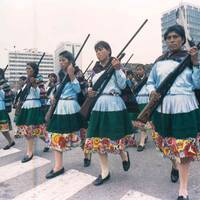
rondas campesinas

Timeline Events 48

  1. Internal armed conflict in Chungui

    The district of Chungui was one of the territories most affected by the internal armed conflict in Peru. Between 1980 and 2000, 1,381 people were recorded dead and missing, almost 17% of the district's population counted in 1981. The conflict involved actions by the PCP-Sendero Luminoso, the Armed Forces, and …

    Chungui, La Mar, Ayacucho, Perú Informe CVR, páginas 111-127
  2. Murders of 135 community members of Uchuraccay

    During the months following the murder of the journalists in January 1983, Uchuraccay continued to be the scene of violence, death and desolation. One hundred and thirty-five community members were killed as a result of attacks by the Communist Party of Peru - Shining Path, repression by counter-subversive forces and …

    Uchuraccay, Huanta, Ayacucho, Perú Informe CVR
  3. Events in Province of Cangallo

    During 1983, there were multiple violent events in the province of Cangallo, Ayacucho. The Pampacangallo Military Base is specifically mentioned as one of the places where violence occurred. The document refers to general events in the province during this year, in the context of the internal armed conflict. The marines …

    Provincia de Cangallo, Departamento de Ayacucho Informe CVR
  4. Marines came to the village and organized Rondas Campesinas

    In 1983, the marines arrived in an unspecified village where they organized the Rondas Campesinas. This event is part of the broader context of human rights violations documented by the CVR, where multiple abuses committed by members of the armed forces against the civilian population were recorded. The testimony mentions …

    No especificada Informe CVR
  5. Death of Flavia Gastelu

    Flavia Gastelu was a leader of Rondas Campesinas in Ayacucho who was assassinated in 1984. She held the position of President or leader of the Rondas Campesinas. Her death is part of the PCP-Sendero Luminoso offensive against social leaders, particularly women community leaders. The case of Flavia Gastelu represents one …

    Ayacucho, Perú Informe CVR, página 378
  6. Flight of surviving families from Uchuraccay

    In mid-1984, after months of continuous violence that left 135 community members murdered as a result of attacks by the Communist Party of Peru - Shining Path, repression by counter-subversive forces and the peasant patrols, Uchuraccay ceased to exist as an inhabited community. The surviving families fled the community, taking …

    Uchuraccay, Huanta, Ayacucho, Perú Informe CVR, páginas 118-119
  7. Repeated attacks and total abandonment of Uchuraccay

    Throughout 1984, Uchuraccay was repeatedly attacked by the PCP-Sendero Luminoso, the military and the peasant patrols of the surrounding communities. These attacks resulted in numerous deaths and the complete abandonment of the town. The survivors fled to the jungle, Tambo, Huanta, Huamanga and Lima. Not only did the State leave …

    Uchuraccay, Huanta, Ayacucho, Perú Informe CVR, páginas 162-177
  8. Clash in Maraypata

    On December 27, 1984, in the annex of Maraypata in Churcampa, the villagers confronted a group of the PCP-SL that tried to punish them for having formed peasant patrols. In the confrontation, several subversives died and were buried nearby. In April of the following year, a subversive detachment of approximately …

    Maraypata, Churcampa, Huancavelica, Perú Informe CVR, página 220
  9. Formation of Rondas Campesinas

    In 1985, Rondas Campesinas were formed in the main communities and annexes in the area of Acobamba, Huancavelica. This organization arose as a response to the intensification of murders by the Shining Path against the civilian population during 1984, when they also victimized the authorities of the districts and communities …

    Principales comunidades y anexos, Acobamba, Huancavelica, Perú Informe CVR
  10. Murders in Hualay

    In 1987, in the town of Hualay, province of Huamachuco (Sánchez Carrión), a group of PCP-Sendero Luminoso militants executed the president of the Rondas Campesinas, his wife and the Lieutenant Governor. This attack was part of the Shining Path's strategy to harass and eliminate local authorities and leaders who opposed …

    Hualay, Huamachuco, Sánchez Carrión, La Libertad, Perú Informe CVR, página 497
  11. Massacre of Local Authorities in Angasmarca

    On July 16, 1988, a group of subversives from the PCP-SL systematically assassinated local authorities in Angasmarca, Huánuco. The attack was part of a broader strategy to impose terror and control by eliminating those who opposed their orders. The victims, including Mauro Capcha Espinoza and Hilarión Capcha Callupe, were brutally …

    Angasmarca, Huánuco, Peru Página 330
  12. Formation of Rondas Campesinas in Ayacucho

    In 1989, under the presidency of Alan García Pérez, the Peruvian government began arming local peasant patrols known as 'rondas campesinas' in Ayacucho to combat the insurgent group PCP-SL. This movement was partly a response to increased violence from the PCP-SL and was supported by both military coercion and the …

    Ayacucho, Peru Capítulo: El final de la violencia: 1990-2000, página 100
  13. Administration by political-military command in Acobamba

    In 1989, the Acobamba zone was administered by the political-military command, representing the third attempt by the Armed Forces to consolidate the Rondas Campesinas committees in the region. This measure was part of the Peruvian State's counter-subversive strategy during the internal armed conflict. The military administration sought to establish territorial …

    Zona de Acobamba, Huancavelica, Perú Informe CVR
  14. Government involves peasant patrols in anti-subversive struggle

    In March 1989, the APRA government of President Alan García Pérez formally involved the peasant patrols in the anti-subversive struggle. On March 24, Alberto Valencia, the APRA deputy for Ayacucho, announced a new movement of peasant patrols that were organizing spontaneously to free themselves from the PCP-SL. The leader of …

    Perú Informe CVR, páginas 155-160
  15. Murder of more than 20 villagers in Mutuyccocha

    In July 1989, the PCP-Sendero Luminoso perpetrated a collective murder of more than 20 villagers in the locality of Mutuyccocha, district of Iguain, province of Huanta. This event was part of the period of intensification of the internal armed conflict between 1988-1991, when the PCP-SL launched a new offensive after …

    Mutuyccocha, Iguain, Huanta, Ayacucho Informe CVR, página 84
  16. Shining Path's Strategic Shift and the Rise of Campesino Resistance

    In 1990, Abimael Guzmán, leader of the Shining Path (PCP-SL), declared the completion of the 'strategic defensive' phase of their prolonged war, aiming to focus subversive actions in Lima due to setbacks in rural areas. The rise of 'rondas campesinas' and 'comités de autodefensa' marked a significant peasant resistance against …

    Peru Página 44-90
  17. Formation and Actions of the Rondas Campesinas in Tulumayo

    In early 1990, the communities in Tulumayo, Peru, organized self-defense groups known as rondas campesinas to combat the PCP-SL (Shining Path) insurgency. Initially met with skepticism by the Peruvian Army, the rondas demonstrated their resolve by ambushing and defeating a PCP-SL column in March 1990. This led to a collaboration …

    Tulumayo, Peru página 446
  18. Clash near Talhuis

    After the organization of peasant patrols in January 1990, the confrontation with the subversive detachments took place very close to the community of Talhuis in February 1990. The community members proceeded to cut off the heads of the fallen subversives, and those who managed to escape were found the following …

    Talhuis, Comas, Junín, Perú Informe CVR, páginas 174-176
  19. Attack against the premises of the Electoral Registry

    In March 1990, there was an attack against the local Electoral Registry in Acobamba, province of Huancavelica. This attack was part of a series of violent actions that intensified in the area during the late 1980s and early 1990s. The event occurred in a context where the area was administered …

    Acobamba, Huancavelica, Perú Informe CVR
  20. Arrest of Marcelino Valencia

    On September 24, 1990, a group of drunken policemen, according to testimonies, arrested lawyer Marcelino Valencia in Chumbivilcas. Valencia was an advisor to the Agrarian League and a defender of peasant communities. This event occurred in the context of military and police operations in the highland provinces of Cusco and …

    Chumbivilcas, Cusco, Perú Informe CVR, página 131
  21. Formation of Rondas Campesinas and CADs in Vilcashuamán

    In 1991, the Rondas Campesinas were formed in Vilcashuamán by deserters of the Shining Path (Sendero Luminoso) due to personal grievances. These groups were organized with the support of the military and included the creation of Comités de Autodefensa (CADs). The CADs were established partly because of the absence of …

    Vilcashuamán, Peru CVR. BDI Notas de campo P90, P15; agosto-septiembre de 2002
  22. Military detachment installed in Comas

    The military detachment installed in Comas in 1991 became a counter-subversive base in July 1992. Until then, since the first months of 1990, the peasant patrols were in charge of controlling internal order and the administration of justice, with relative autonomy, assuming all the functions of the communal and local …

    Comas, Junín, Perú Informe CVR, página 175
  23. Murder of 10 peasant farmers in Huari

    In November 1991, PCP-Sendero Luminoso terrorists assassinated 10 peasants in the town of Huari for belonging to the peasant patrols. This attack was part of a broader offensive against self-defense organizations in the area. The same month, another Shining Path column had raided the district of Santo Tomás de Pata, …

    Huari, Huancavelica, Perú Informe CVR
  24. Murder of 37 ronderos in Santo Tomás de Pata

    In November 1991, a Shining Path column raided the district of Santo Tomás de Pata and killed 37 members of the peasant patrols. This attack took place in the context of a PCP-SL offensive against the Self-Defense Committees, considered by the Shining Path as the main obstacle to its political-military …

    Santo Tomás de Pata, Angaraes, Huancavelica Informe CVR, páginas 120-121
  25. I Meeting of Rondas del Alto Mayo

    The I Encuentro de Rondas del Alto Mayo was organized by OPASM (Oficina Prelatural de Acción Social de Moyobamba) and the rondas campesinas in 1992 in Buenos Aires, San Martín. This meeting was part of a series of regional meetings of peasant patrols held that year to strengthen community organization. …

    Buenos Aires, San Martín, Perú Informe CVR, página 337
  26. Consolidation of Rondas Campesinas in Julcamarca

    In 1992, the communities of Julcamarca managed to consolidate the Rondas Campesinas with the support of the army and the ronderos of Lircay. This consolidation process took place in a context of intensifying violence in the area, where the Shining Path had been systematically attacking members of the Rondas Campesinas. …

    Julcamarca, Angaraes, Huancavelica, Perú Informe CVR
  27. Violence and Community Defense in Peru

    During the internal conflict in Peru, homes and schools became dangerous places due to the threat of being targeted by either the Shining Path (PCP-SL) or the military. Communities organized themselves into defense groups, such as rondas campesinas, to protect against violence. However, these groups sometimes resorted to cruel and …

    Cayena, Juanjui, Mariscal Cáceres, San Martín, Peru Página 204
  28. Counter-Subversive Base in Comas

    The military detachment installed in Comas in 1991 became a counter-subversive base in July 1992. Until then, since the first months of 1990, the peasant patrols were in charge of controlling internal order and the administration of justice, with relative autonomy, assuming all the functions of the communal and local …

    Comas, Junín, Perú Informe CVR, páginas 174-175
  29. Clash in Torrerumi

    In November 1992, there was a confrontation between the PCP-Sendero Luminoso and the peasant patrols in Torrerumi, Sivia district. The local ronderos went out to look for the Shining Path guerrillas after they had killed two villagers in a previous raid. This confrontation is part of the dynamics of violence …

    Torrerumi, Sivia, La Mar, Ayacucho Informe CVR, página 103
  30. Formation and Actions of Rondas Campesinas in Peru

    In response to insurgent activities, the Peruvian government formalized the use of armed civilian defense groups, known as rondas campesinas, through legal decrees. These groups, sometimes formed autonomously and other times under military pressure, played a significant role in counterinsurgency efforts. Notably, in Tulumayo and Andamarca, these groups expelled and …

    Tulumayo and Andamarca, Peru
  31. Incident Involving Rondas Campesinas and Community Natives

    In 1993, members of the Rondas Campesinas from the Native Community of Anexo San Fernando de Meritori, Satipo, were involved in an incident during an incursion into the Anexo Delta. The patrol, consisting of 30 natives, was responding to threats and the disappearance of a community member, suspecting subversive bases …

    Anexo San Fernando de Meritori, Satipo, Peru CVR, p. 676
  32. Consolidation of the defeat of the PCP-SL in central region

    Between 1993 and 1995, the defeat and disarticulation of the PCP-SL was consolidated in the central region. Its presence was reduced to some rural areas, such as the left bank of the Ene River basin in Satipo, from where it sporadically made incursions into communities in the districts of Pangoa …

    Región central, Perú Informe CVR, págs. 150, 162
  33. II Regional Meeting of Rondas Campesinas

    The II Regional Meeting of Peasant Patrols was held in San Antonio de Cumbaza in 1993, as part of a process of consolidation of the organizations of peasant patrols in the department of San Martin. This meeting was organized by OPASM (Oficina Prelatural de Acción Social de Moyobamba) in conjunction …

    San Antonio de Cumbaza, San Martín, Perú Informe CVR, página 337
  34. Transformation of Rondas Campesinas into Comités de Autodefensa

    On January 15, 1993, the Peruvian government issued Supreme Decree Nº 002-93-DE/CCFFAA, mandating that Rondas Campesinas adjust their organization and functions to align with Self-Defense Committees. This transformation was part of a broader strategy to enhance local defense capabilities against subversive threats. The Self-Defense Committees were to be supported and …

    San Fernando de Meritori, Satipo, Junín, Peru
  35. Confrontation in Santo Domingo

    On May 14, 1996, there was an armed confrontation between members of the PCP-Sendero Luminoso and peasant patrols in the town of Santo Domingo, located in the Conchucos area. The confrontation resulted in the death of two hikers. This event occurred in the context of the decline of Shining Path …

    Santo Domingo, Conchucos, Perú Informe CVR (página no especificada en el fragmento)
  36. 135 dead uchuraccaínos list delivered to the CVR

    In May 2002, the villagers of Uchuraccay handed over to the members of the Truth and Reconciliation Commission a list with the names of 135 Uchuraccaínos who died as a result of political violence between 1983 and 1984. This delivery was part of the TRC's documentation work on the victims …

    Uchuraccay, Huanta, Ayacucho, Perú Informe CVR (páginas 170, 176)
  37. List of murdered uchuraccaínos submitted to the Truth and Reconciliation Commission

    On June 1, 2002, the population of Uchuraccay handed over to the representatives of the Truth and Reconciliation Commission the "List of murdered Uchuraccaínos". This list was elaborated in two communal assemblies and documented the deaths of one hundred and thirty-five community members killed during the internal armed conflict. These …

    Uchuraccay, Huanta, Ayacucho, Perú Informe CVR
  38. Municipal Elections of November 2002

    In November 2002, several historical leaders of the peasant patrols, known as rondas campesinas, successfully participated in municipal elections in Peru. Notable examples include Elmer Orihuela in Cochas, Susano Mendoza in Quinua, and Benjamín Antezana in Ocros, who assumed mayoral positions in their respective districts. This event highlights the political …

    Peru página 459

Showing 1–48 of 48 events

Photos, Videos & Documents 13

Showing 1–13 of 13 items