Place

United States

Timeline Events 31

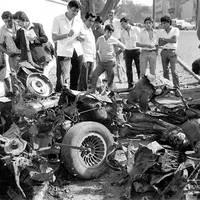
  1. Attack on U.S. Embassy

    Terrorist attacks against the offices of the U.S. Embassy and against the residence of the U.S. representative. The international repercussion of this news discredits the current government. For Pedro Pablo Kuczynski Godard, the impact of these events would affect the attraction of foreign investment. This was one of the most …

    Lima, Perú Informe CVR, página 4741
  2. Operation Cóndor and the Allotment of Lucio Tijero's Narco Industrial Complex

    In August 1985, the Peruvian government, with assistance from the CIA and U.S. authorities, implemented 'Operation Condor' to dismantle clandestine airstrips used for drug trafficking. This operation led to the raid of Lucio Tijero's narco industrial complex in Callarú, revealing the extensive economic power of the narcotics trade and its …

    Callarú, Peru página 757
  3. Adoption of Low-Intensity Conflict Strategy by Peruvian Armed Forces

    In 1988, the Peruvian Armed Forces systematically adopted a low-intensity conflict strategy recommended by the United States. This approach focused on respecting human rights and isolating subversives socially, without significant public investment or social reforms. The strategy included civic action operations aimed at gaining public favor through basic services and …

    Peru Página 310
  4. Conflict in the Alto Huallaga Region

    In 1989, the Peruvian government faced significant challenges in the Alto Huallaga region, where the Shining Path and the MRTA were vying for control over the lucrative cocaine trade. The Peruvian military proposed a Political-Military Plan to the United States, seeking support to prevent these groups from dominating the area. …

    Alto Huallaga, Peru p. 92-98
  5. U.S. Invasion of Panama and Peru's Diplomatic Response

    In December 1989, the United States invaded Panama, leading to international reactions. The Peruvian government, led by President Alan García Pérez, expressed its rejection of the invasion and temporarily withdrew its diplomatic representation from Washington. Additionally, Peru suspended its anti-drug operations with U.S. cooperation as a protest against the invasion.

    Panama, Peru, United States p. 173
  6. U.S. Restricts Economic Aid to Peru Over Human Rights Concerns

    In 1991, the United States government decided to restrict economic aid to Peru due to concerns over systematic human rights violations by Peruvian state forces under President Alberto Fujimori. This decision was influenced by reports from human rights organizations that highlighted a pattern of misconduct rather than isolated incidents. The …

    Peru p. 305
  7. Human Rights and Anti-Subversion Efforts in Peru

    In the early 1990s, the Peruvian government, under President Alberto Fujimori, sought to address subversive threats while maintaining a public discourse of human rights respect. Despite international scrutiny, particularly from the United States, the government continued its military strategies against subversion. Negotiations for economic aid from the U.S. were complicated …

    Peru 74
  8. Mesa de Paz and Legislative Measures in Peru

    In May 1991, the Peruvian government under President Alberto Fujimori proposed a public pacification plan emphasizing constitutional norms and human rights. This initiative was part of broader negotiations with the United States to secure international financial support and reduce narcotics flow. The proposal was presented at the 'Mesa de Paz', …

    Peru Página 75
  9. Alberto Fujimori's Agreement with the United States on Anti-Narcotics Efforts

    In May 1991, Peruvian President Alberto Fujimori signed a framework agreement with the United States, allowing the Peruvian Armed Forces to participate in anti-narcotics operations. This agreement expanded the military's role in controlling coca-growing and drug trafficking areas, such as Alto Huallaga, despite constitutional restrictions. The police, weakened by years …

    Peru
  10. Alberto Fujimori's Anti-Narcotics Agreement with the United States

    In May 1991, Alberto Fujimori signed a framework agreement with the United States, effectively allowing the Peruvian Armed Forces to participate in anti-narcotics operations. This decision came amidst widespread corruption within the police force and ongoing struggles against terrorism and drug trafficking. The agreement marked a significant shift in Peru's …

    Peru página 769
  11. Fujimori's speech against human rights organizations

    President Alberto Fujimori gave a speech in September 1991 describing human rights organizations as "useful fools" of the subversion. Days later, on Navy Day (September 24), the President spoke of the new anti-subversive policy and severely questioned "the terrorists [sic] infiltrated in pseudo humanitarian and human rights organizations". This speech …

    Perú Informe CVR, páginas 201-202
  12. Seventh armed strike in Lima

    On February 14, 1992, the seventh armed strike called by the PCP-SL took place. This strike was preceded by a week of violent actions that began on February 7, including the explosion of a bomb at SUNAT, a car bomb at the U.S. Embassy, and the brutal assassination of neighborhood …

    Lima, Perú Informe CVR, página 2266
  13. Coup d'État in Peru

    On April 5, 1992, President Alberto Fujimori, with the support of the military, executed a coup d'état in Peru. This event followed a period of limited U.S. military aid, which was primarily focused on training and instruction. The coup was partly a result of international influences and internal pressures, including …

    Peru
  14. Fujimori's Coup and the Control of Narcotrafficking by the SIN

    In 1991, while President Alberto Fujimori was negotiating with the United States for military aid to combat drug trafficking, his intelligence chief, Vladimiro Montesinos, and military leader, Hermoza Ríos, were monopolizing state presence in the Huallaga region, leading to widespread corruption within the Peruvian military. This situation culminated in Fujimori's …

    Peru, specifically the Huallaga region 360
  15. Corruption and Human Rights Violations in Peru under Fujimori and Montesinos

    During the late 1990s, the Peruvian government under President Alberto Fujimori and his advisor Vladimiro Montesinos engaged in significant corruption and human rights violations. Funds were diverted to the National Intelligence Service (SIN) under the guise of combating subversion, but were instead used for illegal activities such as phone tapping, …

    Peru Páginas 103-117

Showing 1–31 of 31 events

Photos, Videos & Documents 25

Showing 1–25 of 25 items