Truth and Reconciliation Commission - Peru

Complete database of events related to the internal armed conflict in Peru, extracted from the Final Report of the Truth and Reconciliation Commission (CVR). 5,159 events documented from 1817 to 2003.
Years All years
1817 2003
Tag impunidad × Browse all tags
  1. Interpretative ruling Barrios Altos

    The Inter-American Court of Human Rights issued an interpretive judgment on the Barrios Altos case, clarifying central aspects of its previous merits judgment of March 14, 2001. The Court unanimously decided that the judgment on the merits in the Barrios Altos case has general effects. This judgment established that amnesty …

    Corte Interamericana de Derechos Humanos Informe CVR, páginas 211
  2. Barrios Altos Ruling of the Inter-American Court of Human Rights

    The Inter-American Court of Human Rights issued a landmark judgment in the Barrios Altos case, declaring that the amnesty laws enacted in Peru lack legal effect because they are incompatible with the American Convention. The judgment established that amnesty, statutes of limitation and exclusion of liability provisions that seek to …

    Corte Interamericana de Derechos Humanos Informe CVR, páginas 190-213
  3. Inter-American Court ruling on amnesty laws

    On March 14, 2001, the Inter-American Court of Human Rights ruled on the incompatibility of self-amnesty laws No. 26475 and No. 26492 in the Barrios Altos case. The Court qualified these laws as self-amnesty laws, stating that they lead to the defenselessness of the victims and the perpetuation of impunity, …

    San José, Costa Rica Informe CVR, páginas 3479-3480
  4. Multiple rape of woman by six hikers in Sint Maarten

    A woman was sexually harassed by a neighboring PCP-SL member who told her that if she turned herself in to them they would not make problems for her. When she refused, the man vowed revenge. One day, some men came to her house saying they were coming to kill her …

    Provincia de Huallaga, departamento de San Martín, Perú Informe CVR, página 2829
  5. Confirmation of dismissal by the Supreme Council of Military Justice

    The Supreme Council of Military Justice confirmed the dismissal of the case related to the rape of María Magdalena Monteza Benavides. The Chamber of the Permanent War Council of the 2nd Judicial Zone of the Army had previously declared the dismissal and referred it to the Supreme Council for consultation. …

    Perú Informe CVR, páginas 381-383
  6. Written statement of Magdalena Monteza before the Ad Hoc Commission

    María Magdalena Monteza Benavides submitted a written statement to the Ad Hoc Commission created by Law 26655, in which she recounted the facts of her arbitrary detention, torture and rape that occurred in October-November 1992. In this statement, Monteza detailed how she was detained on October 30, 1992 by members …

    Comisión Ad Hoc, Perú Informe CVR, página 379
  7. Statement of Julio Rodriguez Cordova before the Permanent Court on the detention and rape of Maria Magdalena Monteza Benavides

    EP Lieutenant Colonel Julio Alberto Rodríguez Córdova testified before the Second Permanent Court of the Army's Second Judicial Zone about the detention operation of María Magdalena Monteza Benavides on October 30, 1992. In his statement, Rodriguez Cordova affirmed that he had authorization from the Command to carry out the operation …

    2º Juzgado Permanente de la IIª Zona Judicial del Ejército, Perú Informe CVR, páginas 378-379
  8. Constitutional Court ruling on amnesty laws

    The Constitutional Court declared inadmissible the action of unconstitutionality filed against amnesty laws 26479 and 26492, considering that their effects had already been exhausted. This decision consolidated the impunity granted by the amnesty laws and was later contradicted by the Inter-American Court of Human Rights, which would declare such laws …

    Lima, Perú Informe CVR, página 3054
  9. Final dismissal of criminal proceeding in the Castillo Paez case

    The 1st Criminal Chamber of the Superior Court of Lima declared the exception of res judicata filed by Víctor Vargas Giraldés and José Emilio Campos Chira to be founded, alleging that the War Chamber of the Supreme Council of Military Justice had already tried and sentenced them for the same …

    1ª Sala Penal de la Corte Superior de Lima, Lima, Perú Informe CVR, página 1309
  10. Criminal Court reverses Saquicuray's decision and closes the case

    On July 14, 1995, magistrates of the 11th Criminal Chamber of the Superior Court of Lima, invoking self-amnesty laws 26479 and 26492, overturned Judge Saquicuray's decision and ordered the final dismissal of the Barrios Altos case. The Chamber ruled that the amnesty law was not antagonistic to the Constitution or …

    11º Sala Penal de la Corte Superior de Lima, Perú Informe CVR, página 3710
  11. Application of Amnesty Law in the Santa Barbara case

    The Criminal Chamber of the Superior Court of Huancavelica declared Amnesty Law No. 26479 applicable to the process followed against Lieutenant EP Javier Bendezú Vargas and his subordinates, ordering the cutting of the sequel of the process and its definitive archiving. They also annulled the judicial and police records of …

    Sala Penal de la Corte Superior de Huancavelica, Huancavelica, Perú Informe CVR, páginas 3762-3763
  12. Promulgation of law 26492 that establishes the Amnesty Law as mandatory.

    President Alberto Fujimori Fujimori promulgated Law 26492, which establishes as obligatory the application of the controversial Amnesty Law, whose bill has been supported by the majority of Congress. With this, Judge Antonia Saquicuray Sanchez's ruling on the inapplicability of the amnesty benefit for those involved in the Barrios Altos case …

    Lima, Perú Informe CVR, página 4952
  13. Promulgation of Law 26492 against diffuse control

    On June 29, 1995, in reaction to Judge Saquicuray's decision, Congress passed Law 26492, known as the 'Barrios Altos Law', without public debate. This law 'interpreted' that the amnesty was of obligatory application by the Judicial Power and could not be reviewed in the courts, expressly prohibiting judges from exercising …

    Congreso Constituyente Democrático, Lima, Perú Informe CVR, páginas 3709-3710
  14. Approval of Amnesty Law 26479

    On June 15, 1995, Congress approved Law No. 26479 granting general amnesty to military personnel. This law expressly established that the facts or crimes covered by it, as well as the definitive acquittals and acquittals, would not be subject to investigation, and all judicial cases in process or in execution …

    Lima, Perú Informe CVR, página 825
  15. Amnesty for police officers prosecuted for abuse of authority in San Ignacio

    The Third Specialized Criminal Court of the Superior Court of Justice of Lambayeque declared the amnesty exception founded in the process against the three police officers prosecuted for abuse of authority and injuries against the defenders of the San Ignacio forests. This decision was made in application of Law 26479, …

    Lambayeque, Perú Informe CVR, páginas 3078-3079
  16. Promulgation of Amnesty Law 26479

    President Fujimori promulgated Law 26479, known as the General Amnesty Law, which had been approved by Congress the day before. This law granted general amnesty to military, police or civilian personnel denounced, investigated, prosecuted, tried or condemned for common and military crimes derived from the fight against terrorism from May …

    Lima, Perú Informe CVR, páginas 3053-3054
  17. Approval of unconstitutional amnesty laws

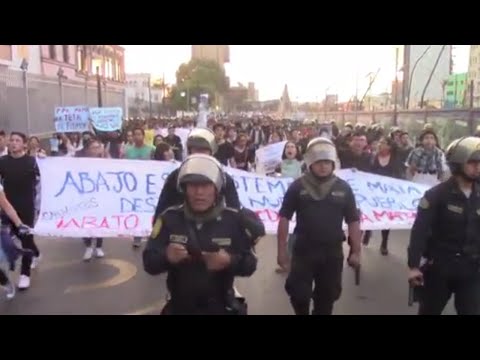
    The government headed by Alberto Fujimori approved the unconstitutional amnesty laws No. 26479 and No. 26492, which freed members of the security forces sentenced for crimes against humanity and prohibited any jurisdictional investigation. The citizenry mobilized massively against these laws, led by university youth who assumed a vanguard role in …

    Lima, Perú Informe CVR, página 22
  18. Promulgation of Amnesty Law 26479

    On June 14, 1995, the Democratic Constituent Congress, with the votes of the ruling majority of the 'Cambio 90' party, approved Law 26479, a broad and general amnesty for military and police officers implicated in human rights violations since May 1980. The law established that all facts derived from the …

    Congreso Constituyente Democrático, Lima, Perú Informe CVR, páginas 3708-3709
  19. Final dismissal of the complaint

    The Provincial Prosecutor of Huaraz, Dr. Hugo Morales Morales, ordered the definitive dismissal of the complaint. The decision was based on changes in the version of witnesses Yolanda Donata Hurtado Sanchez and Reyna Fernandez Salcedo, who retracted their initial statements. The prosecutor also invoked a JECOTER report that stated that …

    Primera Fiscalía Provincial de Huaraz, Ancash, Perú Informe CVR, página 2671
  20. Approval of amnesty laws

    In June 1995, the Democratic Constituent Congress approved by majority vote the Amnesty laws guaranteeing impunity for human rights violations. This approval included a significant vote by some leaders of the opposition to the Fujimori regime. The amnesty laws were designed to dispense with the obsequiousness of judicial authorities and …

    Lima, Perú Informe CVR, página 226
  21. Resolution of the Provincial Criminal Prosecutor's Office on the rape complaint against María Magdalena Monteza Benavides.

    The 44th Provincial Criminal Prosecutor's Office of Lima issued a resolution on May 2, 1995 regarding the complaint of rape filed by María Magdalena Monteza Benavides against military personnel. The resolution closed the investigation, considering that the military jurisdiction was not competent to hear the crime of rape since it …

    44º Fiscalía Provincial Penal de Lima, Perú Informe CVR, página 379
  22. Approval of amnesty laws by the Democratic Constituent Congress

    Alberto Fujimori's dictatorship attempted to spuriously legalize impunity for human rights violations committed by State agents. The Democratic Constituent Congress approved by majority vote two amnesty laws that violated constitutional provisions and international treaties sovereignly ratified by Peru. With one honorable exception, judges relinquished their power to apply diffuse control …

    Lima, Perú Informe CVR, página 4401
  23. Military Court Files Barrios Altos Case

    On October 21, 1994, the War Chamber of the Supreme Council of Military Justice closed the Barrios Altos case against Generals Pedro Villanueva Valdivia, Nicolás de Bari Hermoza Ríos, Juan Nolberto Rivera Lazo and Vladimiro Montesinos Torres, without further investigation. The decision was confirmed on October 28, 1994 by the …

    Consejo Supremo de Justicia Militar, Lima, Perú Informe CVR, página 3706
  24. Military Court dismisses Huancapi case

    On October 10, 1994, the Supreme Council of Military Justice confirmed the resolution of July 23, 1992 of the Permanent War Council of the Second Judicial Zone of the Army that dismissed the case in Case No. 1786-91 against Sub Lieutenant Chavez and 'those responsible', considering that there was no …

    Consejo Supremo de Justicia Militar, Lima, Perú Informe CVR, página 3731
  25. Complaint of Carmen Rosa Pariona Yachi for sexual violation.

    Carmen Rosa Pariona Yachi, 23 years old, filed a formal complaint before the Mixed Provincial Prosecutor's Office of Tocache on May 30, 1994. The complaint is framed in the context of sexual violence during the internal armed conflict in the Alto Huallaga area. The CVR report mentions this case as …

    Fiscalía Provincial Mixta de Tocache, San Martín, Perú Informe CVR, página 371
  26. Ruling of the military court in the Castillo Paez case

    The War Chamber of the Supreme Council of Military Justice issued a sentence absolving Commander Raúl Valverde Añorga of the crime of Negligence and sentencing José Emilio Campos Chira for the offense of Disobedience, for which the possibility of imposing a sentence had already expired, and Víctor Vargas Giraldés for …

    Sala de Guerra del Consejo Supremo de Justicia Militar, Lima, Perú Informe CVR, páginas 1309, 1313
  27. Promulgation of the Cantuta Law

    The government enacted the so-called 'Cantuta Law', according to which jurisdictional disputes are understood to be resolved with a simple majority. In practice, this paralyzed the new vote on jurisdiction in the La Cantuta case and the case went directly to military jurisdiction, favoring the impunity of those responsible.

    Lima, Perú Informe CVR, página 902
  28. Medical Record N°3343 of María Monteza - Evidence of pregnancy in detention

    Medical Record No. 3343 of the Prison Health Directorate of the National Penitentiary Institute (INPE) documents the condition of María Magdalena Monteza Benavides on July 14, 1993, the date on which she gave birth to her daughter. This medical record, together with Medical Report No. 081 of the Maternal Perinatal …

    Perú Informe CVR, páginas 381-383
  29. Approval of minority opinion on self-kidnapping in La Cantuta case

    In spite of the evidence of the kidnapping and murder of the students and the professor of La Cantuta, the official majority in Congress approved the minority opinion that sustained the thesis of self-kidnapping. This decision was taken, although it seems incredible, denying the evidence of military participation in the …

    Congreso de la República, Lima, Perú Informe CVR, página 902
  30. Detention and rape of declarant in Los Olivos

    A woman was arrested on May 17, 1993 in the district of Los Olivos, Lima. During her detention she was the victim of sexual violence by State agents. The case is part of a systematic pattern of sexual violence against women detained during the internal armed conflict. The affiant used …

    Distrito de Los Olivos, Provincia y Departamento de Lima Informe CVR, páginas 362-363

Showing 1–50 of 86 events