Timeline Events 73

  1. Asháninka Involvement in the Conflict with the Movimiento de Izquierda Revolucionario (MIR)

    In 1965, the Asháninka people found themselves caught in the violence between the guerrilla group Movimiento de Izquierda Revolucionario (MIR) and the Peruvian military. The MIR, led by José De la Puente Uceda, moved their operations to the Asháninka territory in the province of Satipo, Junín, as military repression intensified. …

    Province of Satipo, Junín, Peru página 668
  2. Creation of the Revolutionary Left Movement (Movimiento de Izquierda Revolucionaria, MIR)

    The Revolutionary Left Movement (MIR) was one of several political parties that, inspired by the Cuban revolution, opted for the 'foquista' armed struggle. At the beginning of 1966, the Army arrested the last guerrillas with the collaboration of some Asháninka. Most of the fighters and the Asháninka who accompanied them …

    Perú Informe CVR, página 272
  3. Arrest of last MIR guerrillas by the Army with Asháninka collaboration

    At the beginning of 1966, the Peruvian Army arrested the last guerrillas of the Revolutionary Left Movement (MIR) with the collaboration of some Asháninka from the area. The MIR was one of several political parties that, inspired by the Cuban revolution, opted for the 'foquista' armed struggle in the middle …

    Valle del río Pichis, Oxapampa, Perú Informe CVR, página 272
  4. Law on Native Communities and Agricultural Promotion of the Jungle and Ceja de Selva Regimes

    In 1974, the government of Velasco Alvarado enacted the Law of Native Communities and Agricultural Promotion of the Jungle and Jungle Edge Regimes. This law marked the first civil registration of indigenous peoples in the Peruvian Amazon, albeit with Spanish names instead of their native ones. It initiated a process …

    Peru pp. 78-79, 670
  5. Violence against the Asháninka people in the Central Jungle

    Between the second half of the 1980s and the early 1990s, the Asháninka people suffered a tragedy of enormous proportions. Some 6,000 Asháninka died, 10,000 were displaced and some 5,000 were taken captive by the Shining Path. Approximately 30 to 40 communities were disappeared and at least 60 mass graves …

    Provincias de Satipo, Chanchamayo, Oxapampa y Gran Pajonal, Selva Central, Perú Informe CVR, páginas 4179-4180
  6. First actions of the PCP-SL in the Central Rainforest

    Between 1985 and 1988, the Shining Path commanders of the PCP-SL carried out selective assassinations of alleged delinquents or 'informers' in the colonist villages of the Central Jungle. The Asháninka population felt fear when they heard about these executions, but at the same time recognized a positive aspect in these …

    Selva Central, provincias de Satipo y Chanchamayo, departamento de Junín, Perú Informe CVR, páginas 245-249
  7. Aggressive campaign by the PCP-SL in the Central Jungle

    Around 1988, the PCP-SL began a more aggressive campaign of actions in the Central Jungle, increasing its presence through more regular visits to native communities, especially Asháninka. That same year, the province of Satipo was declared in a State of Emergency due to the intensification of subversive activities. The PCP-SL …

    Selva Central, provincias de Satipo y Chanchamayo, departamento de Junín, Perú Informe CVR, páginas 245-251
  8. PCP-SL incursions into Cutivireni

    Since 1988, the PCP-SL made incursions into the Asháninka community of Cutivireni, where it indoctrinated the population and recruited young people. The incursions, looting, kidnappings of young people and assassinations of opponents multiplied progressively. The community of Cutivireni showed greater resistance to the advance of the PCP-SL along with the …

    Cutivireni, Satipo, Junín, Perú Informe CVR, páginas 249-251
  9. State of Emergency Declared in Junín and Oxapampa

    In October 1988, the entire department of Junín and the province of Oxapampa in Pasco, Peru, were declared in a state of emergency due to the activities of the Shining Path (PCP-SL). The group had established numerous People's Committees in the Ene Valley, expanding their influence to various districts and …

    Junín and Oxapampa, Peru chunk 284.0
  10. Widespread presence of PCP-SL in the Central Rainforest

    By 1989, the presence of the PCP-SL in the Central Jungle was widespread and open, especially in the province of Satipo. The subversive group intensified its actions, reaching absolute control of the entire Ene River and Alto Tambo by 1990. During this year, PCP-SL increased its actions in the area, …

    Selva Central, provincias de Satipo, Chanchamayo y Oxapampa, Perú Informe CVR, páginas 245-252
  11. Formation of popular committees in Otica

    By 1989, the PCP-SL (Shining Path) had formed two popular committees in Otica, as part of its strategy of territorial control in the Ene and Tambo River area. These popular committees were part of the so-called 'New State' that Shining Path was trying to establish in the region. The formation …

    Otica, Satipo, Junín, Perú Informe CVR, página 249
  12. Assassination of three Asháninka leaders by MRTA in Oxapampa

    At the end of 1989, an MRTA column assassinated three Asháninka leaders in the province of Oxapampa. Among the victims was Alejandro Calderón, pinkátzari (great chief) and president of ANAP (Apatyawaka Nampitsi Asháninka), the federation that groups 52 native communities of the Pichis River and tributaries. The Asháninka reacted quickly …

    Oxapampa, Perú Informe CVR, página 272
  13. Occupation and Control of Asháninka Territory by PCP-SL

    In 1989, the PCP-SL (Shining Path) gained control over much of the Province of Satipo, excluding major cities and certain areas. This occupation had a significant impact on the indigenous Asháninka people, who faced cultural erasure and displacement from their ancestral lands. The Asháninka communities were forced to relocate to …

    Province of Satipo, Peru
  14. Control of Asháninka Communities by PCP-SL

    In 1989, the Communist Party of Peru - Shining Path (PCP-SL) established control over approximately 44 Asháninka communities in the Alto Tambo and Río Ene regions. The PCP-SL relocated the population to remote areas to avoid detection by the Peruvian Army and organized them into 'Comités de Base' or 'Comités …

    Alto Tambo and Río Ene, Peru página 679
  15. Murder of Isaías Charete, OCARE president

    On February 13, 1989, the PCP-SL assassinated Isaías Charete, who was president of OCARE (Organización Central Asháninka del Río Ene), in the native community of Tzomaveni, located on the Ene River. This selective assassination was part of the PCP-SL's strategy to eliminate indigenous leaders who opposed or represented obstacles to …

    Tzomaveni, río Ene, Satipo, Junín, Perú Informe CVR, página 250
  16. Shining Path killed six people in Bajo Tambo

    On November 14, 1989, the PCP-SL (Shining Path) assassinated six people in Bajo Tambo as part of their repeated attacks against communities in the area. This attack took place in the context of the resistance shown by the communities of Bajo Tambo, together with Cutivireni, to the advance of the …

    Bajo Tambo, Satipo, Junín, Perú Informe CVR, página 250
  17. Formation of the Asháninka Army and Expulsion of MRTA

    In December 1989, the Asháninka people organized their own army, known as the ovayeriite, in response to the assassination of their leader Alejandro Calderón. Within three months, they successfully expelled the MRTA from the region. The Asháninka army's actions were not only directed against the MRTA but also against colonists, …

    Oxapampa and Ciudad Constitución, Pasco, Peru Chunk 694.0
  18. Murder of Alejandro Calderón

    An emerretista detachment executed Alejandro Calderón, president of the ANAP (Apatywaka-Nampitsi-Ashaninka del Pichis) under the accusation that it was he who had handed over Máximo Velando, leader of the MIR, to the forces of law and order in 1965. For a sector of the MRTA leadership it was an act …

    Pichis, Pasco, Perú Informe CVR, página 624
  19. Promotion of training of native patrols by CECONSEC and FECONACA.

    Since 1990, indigenous organizations in the region such as CECONSEC (Central de Comunidades Nativas de la Selva Central) and FECONACA (Federación de Comunidades Nativas Campa) promoted the organization of Rondas or Asháninka Self-Defense Committees. This initiative arose in a context of generalized violence in the Central Jungle, where both the …

    Chanchamayo, Perú Informe CVR, página 266
  20. Asháninka Uprising in Oxapampa

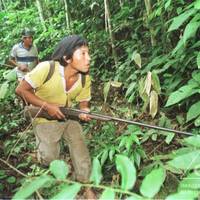
    In early January 1990, the Asháninka people, led by Alcides Calderón, mobilized an army in response to the assassination of Alejandro Calderón by MRTA militants. The Asháninka took control of Puerto Bermúdez, targeting those suspected of collaborating with the MRTA. The uprising led to violence against colonists, including killings and …

    Oxapampa, Puerto Bermúdez, Ciudad Constitución, Iscozacín, Peru página 140
  21. The Asháninka Army in Puerto Bermúdez

    In early January 1990, a group of Asháninka people, estimated to be between 2000 and 2500, took control of Puerto Bermúdez, Peru. They were armed with bows, arrows, and some hunting rifles, and established strict control over the population, suspecting them of collaborating with the MRTA subversives. This led to …

    Puerto Bermúdez, Peru 234
  22. Army operations in the Tambo and Ene river basins

    Between 1990 and early 1992, the Peruvian Army carried out several military operations in the Tambo and Ene basins, attacking several communities controlled by the PCP-SL. In Quempiri, on May 13, 1990, the community fled to their farms when they heard three army helicopters. On May 14, 1991, the Sinchis …

    Cuencas de los ríos Tambo y Ene, provincia de Satipo, departamento de Junín, Perú Informe CVR, páginas 242-260
  23. PCP-SL controls Ene and Alto Tambo rivers

    By the end of 1990, the PCP-SL managed to establish absolute control over the entire Ene River and the upper Tambo River, up to the Poyeni bend. This control was the result of an intensification of actions that began in 1989, when the PCP-SL increased its presence in the area …

    Río Ene y Alto Tambo, provincia de Satipo, departamento de Junín, Perú Informe CVR, páginas 242-260
  24. The Asháninka Uprising in Puerto Bermúdez

    On January 5, 1990, the Asháninka people, led by Alcides Calderón, organized an armed group known as the 'Ejército Asháninka' to retaliate against the MRTA for the kidnapping and presumed murder of Alejandro Calderón. The group marched on Puerto Bermúdez, capturing the city and executing suspected MRTA members and collaborators. …

    Puerto Bermúdez, Peru Página 303
  25. Asháninka Incursion in Ciudad Constitución

    On January 30, 1990, approximately 500 Asháninkas launched an incursion into the town of Ciudad Constitución, which had been significantly depopulated due to threats of invasion by native communities. The attackers gathered the townspeople in the street, conducted a widespread looting, and subjected the population to servitude, forcing them to …

    Ciudad Constitución, Peru página 304
  26. Asháninka Expulsion of MRTA and Subsequent Violence

    In March 1990, the Asháninka people successfully expelled the MRTA from their territory. However, the expulsion did not end the violence in the region. By late 1991, the PCP-SL began incursions, leading to further violence and economic disruption, prompting local communities and organizations to form self-defense groups.

    Central Peru, particularly the province with cities La Merced and San Ramón 273
  27. Clash between ronderos of CECONSEC and FECONACA left seven Ashaninka dead

    On June 4, 1990, there was a confrontation between Ashaninka ronderos organized in the CECONSEC (Central de Comunidades Nativas de la Selva Central) and others organized in the FECONACA (Federación de Comunidades Nativas Campa), resulting in the death of seven Ashaninka. This fact illustrates that in 1990 there were confrontations …

    Selva Central, Junín, Perú Informe CVR, páginas 653-684
  28. CECONSEC Communiqué on self-defense and Asháninka autonomy

    On July 22, 1990, the Central de Comunidades Nativas de la Selva Central (CECONSEC) issued a public communiqué entitled "La autodefensa y autonomía asháninka exigen respeto" (Asháninka self-defense and autonomy demand respect). This communiqué appeared in a context of intensifying political violence in the Amazon region, where both the PCP-SL …

    Selva Central, Perú Informe CVR, página 183
  29. Assassination of Indigenous Leaders in Anapati

    On July 22, 1990, in the native community of Anapati along the Tambo River, the Shining Path (PCP-SL) assassinated three prominent indigenous leaders of the Central Jungle: Pablo Santoma Santos, Oscar Chimanga Chanquete, and Dante Martínez López. This event occurred following the annual assembly of the Asháninka federation of the …

    Anapati, Río Tambo, Peru 705
  30. Creation of the Asháninka Central Committee for Self-Defense

    On September 23, 1990, the Asháninka Self-Defense and Development Central Committee No. 1 was formally created in response to the advance of the PCP-SL in the region. This committee arose after the assassination of Asháninka leader Pablo Santoma and other leaders during the VI CART Congress, where a contingent of …

    Bajo Tambo, Perú Informe CVR, página 252
  31. Execution of Sister María Agustina Rivas

    On 27 September 1990, in the Misión de la Florida-Chanchamayo in Junín, Peru, a group of young individuals, incited by hardened members of the Shining Path, conducted a 'people's trial' that resulted in the summary execution of eight people. Among the victims was Sister María Agustina Rivas, a 70-year-old nun …

    Misión de la Florida-Chanchamayo, Junín, Peru página 439
  32. Break point in trekking offensive in Selva Central

    The year 1991 marked a decisive turning point in the PCP-Sendero Luminoso offensive in the Central Jungle region. Beginning that year, the Armed Forces, together with the Asháninka population organized in Rondas or Self-Defense Committees, began an important counter-offensive that hit the PCP-SL hard, especially in the Ene River area. …

    Selva Central, Perú (ríos Ene y Tambo, provincias de Satipo y Chanchamayo) Informe CVR (páginas 242-260)
  33. Appearance of PCP-SL column in Oxapampa

    At the end of 1991, a PCP-SL column appeared in the province of Oxapampa and began to carry out incursions into peasant communities and annexes. This column carried out "ajusticiamiento" actions and cruelly murdered numerous peasants in the area. The appearance of this Shining Path column occurred after the "Asháninka …

    Oxapampa, Perú Informe CVR, página 272
  34. Intensification of the counter-subversive struggle in the Tambo and Ene Valleys

    In 1991 there was a turning point in the Shining Path offensive in the Central Jungle region. The Armed Forces, together with the Asháninka population organized in Rondas or Self-Defense Committees, began an important counter-offensive that hit the PCP-SL hard, especially in the Ene River area. Between 1991 and 1993, …

    Valles de los ríos Tambo y Ene, provincia de Satipo, departamento de Junín, Perú Informe CVR, páginas 242-260
  35. Creation of a native patrol in Puerto Ocopa

    In 1991, the Puerto Ocopa native community created a native patrol on its own initiative as part of the counter-offensive against the PCP-Sendero Luminoso in the central jungle. This patrol was formed in the context of the intensification of the counter-subversive struggle that was taking place in the Tambo and …

    Puerto Ocopa, Satipo, Junín, Perú Informe CVR, páginas 259-260
  36. Forced Displacement of the Asháninka Community of Cutivireni

    In September 1991, a group of 169 Asháninkas from the community of Cutivireni were forcibly displaced due to repeated attacks by the Shining Path (PCP-SL). With the assistance of Father Mariano Gagnon, they were airlifted to the Urubamba Valley, where they found refuge with the Matsiguenga community of Kiriketi. This …

    Cutivireni, Ene Valley, Peru Páginas 249-250
  37. Clashes between PCP-SL and Asháninka rondas in the Central Jungle

    During 1991 and 1992 there were strong and continuous confrontations between the PCP-SL and the rondas or Asháninka self-defense committees in the Central Jungle. The year 1991 was the turning point in the Shining Path offensive in the region, when the Armed Forces together with the organized Asháninka population initiated …

    Selva Central, ríos Tambo y Ene, provincias de Satipo y Chanchamayo, departamento de Junín, Perú Informe CVR (páginas 242-261)
  38. Abuses Against the Asháninka People in Peru

    The Asháninka people, an indigenous group in the Selva Central region of the Peruvian Amazon, suffered severe human rights abuses during the internal conflict involving the PCP-SL. These abuses included forced displacement, murder, enslavement, and other inhumane conditions. The actions against the Asháninka violated fundamental human rights and international humanitarian …

    Selva Central, Amazonia, Peru página 657
  39. Slaughter in Tahuantinsuyo

    The native community of Tahuantinsuyo, located in the district of Mazamari in the Central Jungle, was the victim of a massacre in 1993 during the internal armed conflict. This community was selected as a case study by the CVR Report along with Cushiviani to document the effects of violence on …

    Tahuantinsuyo, distrito de Mazamari, Selva Central, Junín, Perú Informe CVR, páginas 242-260
  40. Slaughter in Nomatsiguenga Tahuantinsuyo community

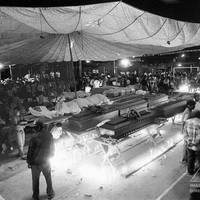
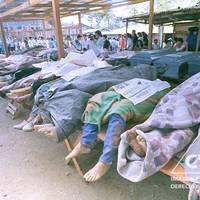
    On August 18, 1993, around 4:00 p.m., a group of hikers arrived in the Nomatsiguenga Tahuantinsuyo community as part of a coordinated incursion of three hiker columns into eight communities in the Tsiriari valley. The murders were committed with bladed weapons: arrows, machetes and others were hanged with pitas. Twenty-one …

    Comunidad Nomatsiguenga Tahuantinsuyo, valle de Tsiriari, distrito de Mazamari, Perú Informe CVR
  41. Slaughter in eight communities in the Tsiriari valley

    On August 18, 1993, three Shining Path columns, each composed of approximately 70 settlers and natives, entered eight communities in the Tsiriari valley (six colonists and two Asháninka). The massacre began around 4:00 p.m. in the Nomatsiguenga Tahuantinsuyo community, where twenty-one people were killed, including children, men and women. The …

    Valle de Tsiriari, distrito de Mazamari, Perú Informe CVR, páginas 264-270
  42. Asháninka massacre in Tsiriari

    Members of the PCP-SL murdered 65 inhabitants of the Tsiriari valley in Mazamari, Junín, in retaliation for the formation of Self-Defense Committees. Although it was known as an Asháninka massacre, of the total number of victims, 21 were Nomatsiguenga natives and the rest were settlers. This is one of the …

    Valle de Tsiriari, Mazamari, Junín, Perú Informe CVR, página 4923
  43. Massacre in the Tsiriari Valley

    On August 18, 1993, a group of 150 to 300 individuals, including Asháninka natives, entered eight communities in the Tsiriari Valley, killing 72 residents, including 16 minors, and injuring 10 others. Initially attributed to the Sendero Luminoso, these crimes were later linked to an officer from the Contrasubversive Base No. …

    Valle del Tsiriari, Distrito de Mazamari, Provincia de Satipo, Peru 235

Showing 1–50 of 73 events

Photos, Videos & Documents 17

Showing 1–17 of 17 items