Timeline Events 17

  1. Internal Conflict in the Central Jungle of Peru

    In 1980, the Peruvian government initiated the 'Paraíso Terrenal' colonization plan, leading to the migration of various groups into the Apurímac forest. This period saw increased conflict in the central jungle region, with the presence of insurgent groups such as the MRTA and PCP-SL. The local communities, including native Asháninkas …

    Central Jungle of Peru, including Satipo, Chanchamayo, and Oxapampa página 226
  2. PCP-SL achieves control of the Ene and Tambo river basin

    In mid-1989, in the central jungle, the PCP-SL achieved absolute control of the Ene River basin and part of the Tambo River basin, thus gaining control of the entire province of Satipo (Junín). This territorial control was achieved at the cost of the razing of dozens of communities, the murder …

    Cuenca del río Ene y río Tambo, provincia de Satipo, Junín, Perú Informe CVR, pág. 148
  3. Asháninka uprising at Puerto Bermúdez

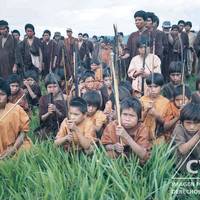
    In the first days of January 1990, an undetermined number of Ashaninka, which according to the CVR report could have reached 2,500 natives, armed mostly with bows, arrows, and some hunting shotguns, took over the town of Puerto Bermudez. The Ashaninka people removed villagers from their homes in search of …

    Puerto Bermúdez, Pasco, Perú Informe CVR, páginas 140-141
  4. Entry of Asháninkas to Ciudad Constitución

    On January 29, 1990, a large contingent of Asháninka entered Ciudad Constitución, armed with bows, arrows and shotguns, in search of presumed MRTA members. This entry was part of a larger Asháninka uprising that had begun in the first days of January 1990, when an undetermined number of Asháninka (which …

    Ciudad Constitución, Perú Informe CVR, página 141
  5. Confrontation at La Roca

    On September 25, 1990, there was an armed confrontation between Sinchis (police) forces and the Shining Path PCP in La Roca, located at kilometer 14 of the Mazamari-Puerto Ocopa highway. This confrontation was interpreted by the displaced Ashaninka natives as a defeat for the PCP-SL. The result of the combat …

    La Roca, Km 14 carretera Mazamari-Puerto Ocopa, Satipo, Junín, Perú Informe CVR, p. 142
  6. Installation of counter-subversive base in Cutivireni

    In 1991, the Peruvian Army installed a counter-subversive base in Cutivireni, located in the district of Rio Tambo. This installation was part of a broader military strategy in which the Army established bases in strategic areas of the central jungle to combat the Shining Path PCP. The base was established …

    Cutivireni, distrito de Río Tambo, Perú Informe CVR, página 142
  7. Army enters Satipo and organizes peasant patrols

    At the end of 1991, the Army entered the province of Satipo and compulsively organized the population into urban and peasant patrols. The native patrols, which had been confronting the PCP-SL on their own initiative, received support from the army. In 1991, the Ashaninka of the Ene and Tambo rivers …

    Satipo, Junín, Perú Informe CVR, pág. 150
  8. Asháninkas organize themselves into Self-Defense Committees

    In 1991, the Ashaninka of the Ene and Tambo rivers organized themselves into Self-Defense Committees to confront the PCP-SL. This organization took place in the context of the Army's entry into Satipo at the end of 1991, when the armed forces compulsively organized the population into urban and peasant patrols. …

    Ríos Ene y Tambo, Satipo, Junín, Perú Informe CVR, pág. 150
  9. Calculation of Asháninkas under control of PCP-SL

    By 1991, specialists and institutions estimated that out of 55,000 Asháninkas in the Central Jungle, about 10,000 were forcibly displaced in the Ene, Tambo and Perené valleys. It is estimated that 6,000 people died during the conflict and about 5,000 people were held captive under the control of the PCP-SL. …

    Selva Central, Perú (valles del Ene, Tambo y Perené) Informe CVR, páginas 242-259
  10. Installation of military base in Cutivireni

    In September 1991, a group of 169 Asháninkas from Cutivireni were transferred by air to the Urubamba valley with the support of the Franciscan priest Mariano Gagnon, after suffering multiple attacks by the PCP-SL. In 1991, the Peruvian Army installed a military base in Cutivireni. Along with the installation of …

    Cutivireni, Satipo, Junín, Perú Informe CVR, páginas 250-251
  11. Increased escape attempts by Asháninkas from the Popular Committees of PCP-SL

    Between 1992 and 1993, the number of Asháninkas who attempted or succeeded in fleeing the Popular Committees controlled by the PCP-SL increased significantly. The Asháninkas rejected the living conditions in these committees, which functioned as concentration camps with forced labor, strict schedules, rigorous rules of conduct and loss of individual …

    Selva Central, Perú (ríos Ene y Tambo, provincia de Satipo) Informe CVR, páginas 257-258
  12. Massacre in Tahuantinsuyo

    In 1993, nearly 100 individuals, including asháninkas, nomatsiguengas, and colonists, entered the community of Tahuantinsuyo under the guise of being ronderos. They proceeded to loot, mistreat, and execute members of the community. The event was marked by extreme violence, including the brutal killing of children and adults, as the PCP-SL …

    Tahuantinsuyo, Peru Chunk 4533.0
  13. Increase of Asháninkas rescued from PCP-SL

    Between 1993 and 1995, the number of Asháninkas rescued from the PCP-SL grew significantly as a result of the intensification of the counter-subversive struggle. Joint operations between the Army and the ronderos in the Tambo and Ene river valleys made it possible to free thousands of Asháninkas who had been …

    Selva Central, Perú (valles de los ríos Tambo y Ene, provincia de Satipo) Informe CVR (páginas 242-260)
  14. Massacre in the Valle del Tsiriari

    On August 18, 1993, a group of 150 to 300 unknown individuals, including natives, attacked several communities in the Tsiriari Valley. They killed 72 people, including 16 minors, and left 9 injured. The attack, characterized by extreme cruelty, was reportedly a retaliatory act by Sendero Luminoso against the Asháninkas who …

    Valle del Tsiriari, Mazamari District, Satipo Province, Junín Department, Peru página 821
  15. Massacre in communities of the Tsiriari Valley, Mazamari

    Between 150 and 300 people, accompanied by Asháninka natives, entered eight communities in the Tsiriari Valley, killing 72 villagers with bladed weapons, including 16 minors. They left 10 wounded, 8 of them minors. Rape and looting were committed. Initially attributed to Sendero Luminoso, it was later denounced the participation of …

    Valle del Tsiriari, Junín, Perú Informe CVR, páginas 4015-4028
  16. Ronda de Puerto Ocopa seeks independence from the Colonist Command

    In 1995, the Puerto Ocopa patrol or Self-Defense Committee, which had been created on its own initiative in 1991, sought independence from the colonist patrol command led by Natalio Sánchez. Until then, this Asháninka round had been under the direct dependence of the Army and the colonist patrols, which caused …

    Río Ene, Puerto Ocopa, Satipo, Junín, Perú Informe CVR, página 259
  17. Ongoing Fear and Insecurity in Peru Post-Sendero Luminoso Conflict

    In 2002, testimonies from various regions in Peru, including Tingo María and Lima, highlighted the ongoing fear and insecurity among communities due to the remnants of the Sendero Luminoso (Shining Path) insurgency. Despite the official end of the conflict, many locals, including indigenous groups like the Asháninkas, continued to face …

    Peru CVR, páginas 274-277, testimonios de audiencias públicas en Tingo María y Lima, mayo-agosto de 2002

Showing 1–17 of 17 events

Photos, Videos & Documents 7

Showing 1–7 of 7 items