Timeline Events 29

  1. Formation of the Raucana Settlement by PCP-SL

    In 1990, the PCP-SL (Shining Path) deliberately formed the Raucana settlement in Ate-Vitarte, Lima, as part of their strategy to expand their 'people's war' into urban areas. Unlike other settlements, Raucana was conceived as a 'Comité Popular Abierto' (Open People's Committee) and was distinct from other projects like Huaycán. The …

    Ate-Vitarte, Lima, Peru
  2. Military Raids and Intimidation Tactics in Raucana

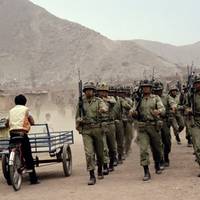
    In 1990, military raids became a common occurrence in the marginalized neighborhoods of Lima, particularly in Raucana. Soldiers, often masked, conducted late-night searches of homes, instilling fear among residents who worried about being wrongfully detained or disappearing. Additionally, the military used intimidation tactics such as firing guns into the air …

    Raucana, Lima, Peru
  3. Installation of military bases in Huaycán and Raucana

    In 1991, military bases were installed in Huaycán and Raucana as part of the Peruvian State's counterinsurgency strategy. In Raucana, the Army installed a military base on September 6, 1991, which was maintained until the year 2000, militarizing and socially controlling daily life among the population. This organization of daily …

    Huaycán y Raucana, Lima, Perú Informe CVR (páginas no especificadas en el fragmento)
  4. Raking in Huaycán

    Police raids in Huaycán were carried out intermittently until March and April 1991, as part of the combined law enforcement operations in the human settlements of the Eastern Zone. These operations had begun in 1987, when nearly 300 settlers were detained in two successive raids. In 1991, military bases were …

    Huaycán, Lima, Perú Informe CVR (páginas no especificadas en el fragmento)
  5. Confrontation at Raucana

    On the night of April 27, tensions escalated in Raucana, Peru, when the military detained local leaders, suspecting them of terrorist affiliations. The following day, a confrontation occurred between the military and local residents, resulting in violence and injuries. The military's actions were justified by claims of preventing extremist infiltration, …

    Raucana, Peru
  6. Militarization of Raucana

    On September 6, 1991, the Peruvian Army established a military base in Raucana, which remained until 2000. This militarization led to social control over the local population and resulted in severe repression, leaving lasting impacts on the community. The military presence marked the end of the PCP-SL's organization of daily …

    Raucana página 424
  7. Installation of Army military base in Raucana

    On September 6, 1991, the Army installed a military base in the Raucana Human Settlement, which remained in place until the year 2000. This military installation put an end to the organization of daily life that the PCP-SL had established in the settlement since its founding on July 28, 1990. …

    Asentamiento Humano Félix Jorge Raucana, Lima, Perú Informe CVR
  8. Confrontation in Raucana

    Armed confrontation between soldiers of the Peruvian Army and Shining Path supporters in Raucana, district of Ate Vitarte. Raucana represented the largest organizational experiment of the PCP-SL in Lima, constituted as an 'Open Popular Committee' in the heart of Ate Vitarte. The inhabitants came mainly from El Agustino and Andahuaylas, …

    Raucana, Ate Vitarte, Lima Metropolitana, Perú Informe CVR
  9. Murder of La Cantuta students

    On July 18, 1992, university students from La Cantuta were assassinated, accused as terrorists by intelligence agents and the troops installed in the university. This event took place in the context of the militarized intervention of the university since 1991, when military bases were installed in La Cantuta, Huaycán and …

    Universidad Nacional de Educación Enrique Guzmán y Valle (La Cantuta), Lima, Perú Informe CVR (páginas 426-427)
  10. Occupation and Struggle in Raucana

    During the early 2000s, the residents of Raucana experienced a significant occupation by the PCP-SL, a group that sought to align local needs with their political objectives. The occupation led to challenging living conditions, including issues with cold weather, parasites, and water supply. Despite these hardships, the community organized itself …

    Raucana, Lima, Peru página 443
  11. Community Justice Practices in Raucana

    In 2002, community leaders in Raucana justified detaining individuals to prevent 'social diseases' such as discotheques, bars, and other activities deemed harmful to societal development. Punishments for offenses like theft, domestic abuse, and bigamy were decided by community assemblies rather than imposed by the leadership. These practices reflect the community's …

    Raucana p. 448
  12. Community Support and Political Influence in Raucana

    In Raucana, community members contributed small amounts of money to support local families, particularly single mothers and the elderly, by providing meals. Over time, as families became more self-sufficient, communal kitchens and gardens fell out of use. The area was also noted for the influence of the PCP-SL, which allegedly …

    Raucana Página 446
  13. Sendero Luminoso's Influence in Raucana

    The text describes the organizational structure and influence of the Sendero Luminoso (Shining Path) in Raucana. It highlights the centralized and vertical nature of decision-making within the community, with directives often coming from a clandestine central committee. Despite this, there were varying degrees of autonomy and involvement among local leaders, …

    Raucana Página 441

Showing 1–29 of 29 events

Photos, Videos & Documents 3

Showing 1–3 of 3 items