Truth and Reconciliation Commission - Peru

Complete database of events related to the internal armed conflict in Peru, extracted from the Final Report of the Truth and Reconciliation Commission (CVR). 5,159 events documented from 1817 to 2003.

Years All years
1817 2003
Tag San Martín × Browse all tags
  1. State of Emergency in Huánuco and San Martín

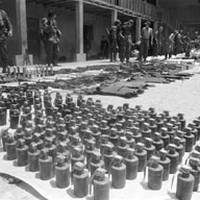
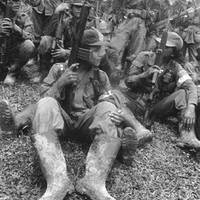
    In 1994, the Peruvian government extended the State of Emergency in the regions of Huánuco and San Martín due to increased subversive activities by the PCP-SL (Shining Path). This period saw significant violence, including the assassination of community leaders and military personnel, as well as pressure on local coca growers. …
    Huánuco and San Martín, Peru página 324
  2. Migration and Agricultural Expansion in Huánuco and San Martín

    In the years leading up to 1993, migration policies encouraged movement from the highlands and coast to the high jungle regions of Peru. This resulted in significant agricultural expansion, particularly in the department of Huánuco, where larger agricultural units became more prevalent in the jungle compared to the highlands. The …

    Huánuco and San Martín, Peru Página 310
  3. Ninja" case

    The 'Ninja Case' involved the murder of eight drug traffickers in Balsayacu, San Martin, on October 28, 1992. The perpetrators, including Captain José Penas Sandoval and Lieutenant Werner Huamaní Tipismana, committed the crime to steal 300 kilos of drugs. This event highlights the intersection of military personnel and drug trafficking …

    Balsayacu, San Martín
  4. Lucero Cumpa returns from Germany to take over the General Command of the FNO

    In September 1992, the MRTA National Directorate ordered Lucero Cumpa to return from Germany to assume the General Command of the Northeastern Front (FNO). This return took place in a context of crisis for the MRTA, after the capture of Evaristo (who had assumed the general command of the MRTA …

    Perú Informe CVR, página 337
  5. MRTA attacks in Tarapoto, Picota, Tabalosos and San Miguel del Río Mayo.

    Between April and May 1992, the MRTA carried out a series of offensive military actions in the department of San Martin. MRTA attacked the towns of Tarapoto, Picota, Tabalosos and San Miguel del Río Mayo. In addition to these attacks on towns, the MRTA also attacked the police posts of …

    Tarapoto, Picota, Tabalosos, San Miguel del Río Mayo, San Martín, Perú Informe CVR, página 337
  6. Comandante Esther leads the Northeastern Front of MRTA

    Comandante Esther assumed command of the Northeastern Front (FNO) of the MRTA in San Martin during the period 1992-1993. The FNO commander was the military chief of the organization in the region and was in charge of coordinating political actions together with the political chief, the press chief and the …

    San Martín, Perú Informe CVR, página 311
  7. Defeat of the MRTA in Peru

    During the late 1980s and early 1990s, the Peruvian government intensified its counterinsurgency operations against subversive groups, including the MRTA and PCP-SL. The MRTA, despite having well-trained combatants and support from local bases, faced strategic challenges and was significantly weakened by both the PCP-SL and the Peruvian Armed Forces. In …

    Peru, specifically in the regions of Huallaga, Ucayali, and San Martín página 300
  8. MRTA attacks in San Martin

    Numerous MRTA elements simultaneously attacked police posts and public premises in four cities in the department of San Martin: Saposoa, Tarapoto, Rioja and Moyobamba. During these coordinated attacks, MRTA members kidnapped nine policemen. These attacks were part of an MRTA offensive in the Amazon region of the country.

    Saposoa, Tarapoto, Rioja y Moyobamba, San Martín, Perú Informe CVR, página 197
  9. Creation of the Commission of Pacification of the San Martín Region

    On April 20, 1991, the Commission of Pacification of the San Martín Region was established, spearheaded by the Catholic Church. The commission was led by Professor Lincoln Rojas Salazar, the Executive Secretary of OPASM. Its directive committee included various entities such as the National University of San Martín, political parties, …

    San Martín, Peru
  10. Formation of Autonomous Peasant Patrols and the Role of OPASM

    In the region of San Martín, Peru, autonomous peasant patrols were formed in response to subversive threats. These patrols were initially independent but later had to adapt to the military's creation of defense committees. The Office of Prelature Social Action (OPASM) played a significant role in organizing workshops on human …

    San Martín, Peru página 438
  11. Comandante Evaristo leads the Northeastern Front of MRTA

    Comandante Evaristo assumed command of the Northeastern Front (FNO) of the MRTA in the department of San Martin during the period 1990-1992. As military chief of the FNO, Evaristo was in charge of coordinating political actions together with the political chief, the press chief and the logistics chief. His leadership …

    San Martín, Perú Informe CVR, página 311
  12. MRTA coexistence with drug trafficking in San Martin

    Between 1990 and 1992, the MRTA lost support from the local population due to the abuse of the quotas they used to extort money from the few remaining businessmen in the region and, in general, to the criminal practices that many of their hastily recruited militia members had engaged in. …

    San Martín, Perú Informe CVR, página 337
    3 docs
  13. Commander Ricardo leads the Northeastern Front of MRTA

    Commander Ricardo assumed command of the Northeastern Front (FNO) of the MRTA in San Martin during 1990. His command period was brief, being part of a succession of commanders who led the FNO between 1987 and 1993. As military commander of the FNO, together with the political chief, the press …

    San Martín, Perú Informe CVR, página 311
  14. MRTA Offensive in San Martín

    In 1989, the MRTA launched a new offensive in the San Martín region, capturing several localities including Juanjuí and conducting simultaneous incursions in Tarapoto, Saposoa, Moyobamba, and Rioja on December 24. This was part of the MRTA's Military Campaign Fernando Valladares, aimed at criticizing the economic and political conditions imposed …

    San Martín, Peru Página 144
  15. Kidnapping of Demetrio Tafur by MRTA

    On June 25, 1989, Demetrio Tafur, the President of the Corporación Departamental de Desarrollo de San Martín, was kidnapped by members of the MRTA. The kidnapping occurred approximately 65 kilometers from the city of Tarapoto. The MRTA later claimed responsibility and issued demands to the government, including infrastructure improvements and …

    Near Tarapoto, San Martín, Peru Página 560
  16. Commander Roberto leads the Northeastern Front (FNO) of MRTA

    Comandante Roberto assumed the leadership of the Northeastern Front (FNO) of the MRTA in San Martin during the period 1988-1990. As military commander of the FNO, together with the political chief, the press chief and the logistics chief, he was in charge of coordinating the political actions of the front. …

    San Martín, Perú Informe CVR, página 311
  17. Assassination of Professor Julio Sánchez and the Formation of the First Ronda Campesina

    In 1988, the assassination of Professor Julio Sánchez in Shapaja by elements of the MRTA led to the creation of the first ronda campesina in the department of San Martín. This event marked a significant moment in the local community's response to political violence. The formation of these peasant patrols …

    Shapaja, San Martín, Peru p. 46-339
  18. Detención ilegal y ejecuciones extrajudiciales en San Martín

    In January 1988, Dr. Carlos Escobar Pineda, the Superior Prosecutor in the judicial district of San Martín, received reports of the illegal detention of 35 individuals. Official records later confirmed the reappearance of only 28 of these individuals. The counter-subversive campaign during this period included extrajudicial executions.

    San Martín, Peru Nota 23
  19. Attack on Campanilla

    On July 13, 1987, the town of Campanilla in the San Martín and Loreto regions of Peru was taken and occupied by subversive forces. During this event, public buildings were set on fire. This incident was part of a series of violent actions in the region during the late 1980s.

    Campanilla, San Martín and Loreto, Peru 1.4.7.4. Cronología, Zona III: San Martín y Loreto
  20. Escalation of Violence in San Martín and Ucayali

    In 1987, the violence in the northeastern region of Peru intensified with the involvement of new actors, including the Movimiento Revolucionario Tupac Amaru (MRTA) and paramilitary groups like 'Rodrigo Franco'. The MRTA initiated armed conflict in the southern part of San Martín, clashing with both state forces and the PCP-SL …

    San Martín and Ucayali, Peru página 322
  21. Comandante Raúl leads the Northeastern Front (FNO) of MRTA

    Commander Raul was the military commander of the Northeastern Front (FNO) of the MRTA in the department of San Martin between 1987 and 1988. As military chief, together with the political chief, the press chief and the logistics chief, he was in charge of coordinating the FNO's political actions. The …

    San Martín, Perú Informe CVR, página 311
  22. MRTA's First Military Campaign 'Tupac Amaru Vive'

    In 1987, the MRTA (Túpac Amaru Revolutionary Movement) initiated its first military campaign, 'Tupac Amaru Vive,' involving incursions into various cities in San Martín, Peru. This campaign was part of a broader struggle for regional autonomy and political decentralization, amidst the backdrop of political violence. The Peruvian state responded by …

    San Martín, Peru 316
  23. Huelga Campesina Regional de 1982

    In March 1982, the Federación Agraria Selva Maestra (FASMA) led by Segundo Centurión initiated a general indefinite strike to address issues related to the commercialization of rice and corn. The strike involved blocking the Marginal highway and was supported by various sectors, including transport workers and public employees. The conflict …

    San Martín, Peru página 369
  24. MIR-VR mapping and census mission in Sint Maarten

    Between 1982 and 1984, MIR-VR area managers had the mission to travel throughout their area in order to prepare maps for population and housing censuses. This task included locating villages, roads, paths, trails, trails, native ethnic groups, bridges, streams, among other geographic and demographic elements. The people leaving the political-military …

    San Martín, Perú Informe CVR, página 311
  25. Internal Displacement During the Peruvian Armed Conflict

    During the Peruvian armed conflict, internal displacement affected hundreds of thousands, primarily Quechua-speaking individuals, who fled rural areas due to violence and insecurity. The conflict, which targeted rural, predominantly indigenous populations, forced many to seek refuge in urban areas, leading to the creation of marginal communities around cities. Despite its …

    Peru, specifically Ayacucho and San Martín página 653

Showing 1–50 of 51 events

Photos & Videos 2