Place
Perú › Lima ›

Lima Metropolitana

Timeline Events 46

  1. 1940 national census

    The 1940 national census recorded a total population of 7,023,111 inhabitants in Peru. At that time, Metropolitan Lima had 661,508 inhabitants, representing only 9.4% of the country's total population. This census marks an important reference point for understanding the subsequent demographic changes experienced by the country, especially the process of …

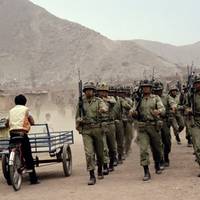
    Perú Informe CVR - Capítulo Lima Metropolitana, página 400
  2. Inauguration of La Parada wholesale market

    In 1945, the La Parada wholesale market was inaugurated in Lima, an event that had important demographic and urban consequences for the Peruvian capital. This inauguration generated a new wave of slum formation in the area, driving migration and informal settlement processes. The opening of this wholesale market provoked the …

    Lima, Perú Informe CVR, página 418
  3. Invasion of San Cosme Hill

    The invasion of San Cosme hill in 1946 marked the beginning of the process of formation of shantytowns around the city of Lima. This event was followed months later by the invasion of San Pedro and the following year by that of El Agustino, despite strong state repression that would …

    Cerro San Cosme, Lima, Perú Informe CVR - Capítulo La Región Lima Metropolitana (páginas 400, 418)
  4. Invasion of El Agustino

    The invasion of El Agustino occurred in 1947, as part of the first wave of slum formation in Metropolitan Lima. This process began with the invasion of San Cosme hill in 1946, followed months later by that of San Pedro, and the following year by that of El Agustino. These …

    El Agustino, Lima, Perú Informe CVR, páginas 400, 418-419
  5. Creation of the Breña, Surquillo and San Martín de Porres districts.

    In 1961, seven additional districts were registered in the province of Lima, four of them as a result of the creation of seaside resorts and three as a result of the subdivision of existing districts due to the pressure of urban growth. The three districts created by subdivision were Breña, …

    Lima Metropolitana, Perú Informe CVR - Capítulo Lima Metropolitana, p. 400
  6. National census

    The 1961 national census recorded a total population of 10,420,357 inhabitants in the country. Metropolitan Lima had 1,901,927 inhabitants, representing 18.3% of the national population, a significant increase over the 9.4% recorded in 1940. This census also recorded 7 additional districts in the province of Lima, four of which were …

    Perú Informe CVR
  7. Belaunde's first government

    The processes of urbanization and modernization of Metropolitan Lima can be explained in relation to the demographic changes experienced by the country since the middle of the twentieth century, which generated new population contingents that became social actors, especially during the first Belaunde government (1963-1968) and the military regime (1968-1980), …

    Perú Informe CVR
  8. Creation of the El Agustino district

    The district of El Agustino was created in 1965 as part of the urban expansion process of Metropolitan Lima. This district arose from the formation of shantytowns in the Eastern Cone of the city, in a context of accelerated demographic growth as a result of internal migration. The creation of …

    El Agustino, Lima, Perú Informe CVR, página 400, 418
  9. Lurigancho Division

    In 1967, the administrative division of the district of Lurigancho took place to create the new district of San Juan de Lurigancho. This division was the result of the pressure of urban growth in the eastern part of Metropolitan Lima. The process of district subdivision was part of the sociodemographic …

    Lurigancho, Lima, Perú Informe CVR (página no especificada en el fragmento)
  10. Military regime

    The military regime that governed Peru between 1968 and 1980 was a key period in the reconfiguration of Metropolitan Lima and the country. During this period, especially during the first military government of Velasco, important demographic changes took place that generated new population contingents that became social actors. The regime …

    Perú Informe CVR - Capítulo La Región Lima Metropolitana, página 400
  11. Creation of Comas and Independencia districts

    During the 1970s, Lima experienced its greatest peripheral growth, with new districts being created as a result of the formation of shantytowns in the Northern, Southern and Eastern Cones. In the Northern Cone, the districts of Comas and Independencia were created as a result of the pressure of urban growth …

    Lima Metropolitana, Perú Informe CVR - Capítulo La Región Lima Metropolitana, página 400
  12. Land occupations in Metropolitan Lima

    During 1976 there were nine land occupations in the Lima metropolitan area, in a context of growing popular mobilizations. These occupations occurred in the midst of protests against SINAMOS and municipalities in districts such as Independencia and Collique, as well as protests against service companies in Comas and the Southern …

    Lima Metropolitana, Perú Informe CVR
  13. Attempted fire at the Municipality of San Martin de Porres

    On June 13, 1980, a group of approximately 60 youths belonging to the MOTC (Movimiento de Obreros y Trabajadores Clasistas), an organization created by the PCP-SL in 1976, threw Molotov cocktails at the facilities of the Municipality of San Martin de Porres. This attack marked the beginning of the PCP-SL's …

    San Martín de Porres, Lima, Perú Informe CVR - Capítulo Lima Metropolitana (páginas 400, 407, 414)
  14. Beginning of the internal armed conflict in Metropolitan Lima

    The internal armed conflict began in Metropolitan Lima on June 13, 1980, when approximately 60 youths from the MOTC (Movimiento de Obreros y Trabajadores Clasistas) threw Molotov cocktails at the Municipality of San Martin de Porres. This period is characterized by sabotage and attacks against state institutions, including ministries and …

    Lima Metropolitana, Perú Informe CVR
  15. IV Plenary Session of the Central Committee of the PCP-SL

    During the IV Plenary Session of the Central Committee of the PCP-SL held in 1981, the creation of the popular committees as 'embryos of the new power' was planned. In this session it was decided to empower the Metropolitan Committee to act in the capital as a 'sounding board' for …

    Perú Informe CVR, página 407
  16. Emergence of the MRTA (Tupac Amaru Revolutionary Movement).

    The Tupac Amaru Revolutionary Movement (MRTA) emerged in 1982 from the union between the Marxist-Leninist Revolutionary Socialist Party (PSR) and the Revolutionary Left Movement-El Militante (MIR-EM). This subversive group was constituted as an armed organization that would operate mainly in the cities, especially in Metropolitan Lima. Like the PCP-SL, its …

    Perú Informe CVR
  17. PCP-SL seditious actions surpass Ayacucho

    Between 1982 and 1987, the number of seditious actions carried out by the PCP-SL in Metropolitan Lima was higher than in Ayacucho, marking a significant change in the subversive strategy. This period represents the second half of the 1980s, when subversive actions in the cities acquired a new dimension and …

    Lima Metropolitana, Perú Informe CVR - Capítulo La Región Lima Metropolitana, página 400
  18. Belaunde's ultimatum to hikers

    On December 26, 1982, President Fernando Belaunde Terry issued an ultimatum to the Shining Path. This occurred in a context of escalating violence in Metropolitan Lima, where the PCP-SL had intensified its subversive actions. During that year there had been multiple attacks, including general blackouts in Lima and Callao due …

    Perú Informe CVR
  19. First declaration of a State of Emergency in Metropolitan Lima

    On March 9, 1983, a State of Emergency was declared for the first time in Metropolitan Lima, marking a milestone in the state response to the internal armed conflict. This measure came after a State of Emergency had already been declared in some areas of the interior of the country. …

    Lima Metropolitana, Perú Informe CVR, páginas 458, 462
  20. Attack on Cebichería El Piano

    A group of hikers shot at a restaurant near the headquarters of the Armored Division in Rimac, specifically at the cebicheria 'El Piano'. The attack resulted in the death of two army officers and five civilians. This attack was part of the PCP-SL strategy of carrying out violent actions in …

    Cebichería 'El Piano', Rímac, Lima, Perú Informe CVR, página 415
  21. Murder of Heriberto Arroyo Mio

    On April 27, 1989, alleged paramilitaries assassinated Heriberto Arroyo Mío, deputy of Izquierda Unida (IU) in Chaclacayo. This assassination occurred in the context of the incursion of the forces of law and order and paramilitary groups in the Eastern Zone of Metropolitan Lima. The crime took place during a period …

    Chaclacayo, Lima, Perú Informe CVR (página 426)
  22. Attempted kidnapping of Humberto Paredes

    On September 28, 1989, a group of unknown persons attempted to kidnap Humberto Paredes, a PUM (Partido Unificado Mariateguista) militant and Izquierda Unida (United Left) candidate for mayor of Comas. The kidnapping attempt occurred in a context of increasing political violence in the northern area of Metropolitan Lima. It is …

    Comas, Lima, Perú Informe CVR, página 442
  23. Murder of Enrique Castilla

    Enrique Castilla, textile leader and member of the Central Committee of the Unified Mariateguista Party (PUM), was assassinated by the PCP-Sendero Luminoso on October 31, 1989. This assassination was part of the Shining Path's strategy of selective annihilation of political and union leaders who opposed their revolutionary project. The crime …

    Lima, Perú Informe CVR, página 415
  24. Training of the GEIN (Special Intelligence Group)

    In March 1990, the Special Intelligence Group (GEIN) was formed within the DIRCOTE (Directorate against Terrorism) with the explicit objective of capturing the leadership of the PCP-Sendero Luminoso. This specialized police intelligence group was created at a critical moment in the internal armed conflict, when Metropolitan Lima had become the …

    Lima, Perú Informe CVR - Capítulo Lima Metropolitana, página 410
  25. Escape of 47 MRTA prisoners from Castro Castro prison

    On July 9, 1990, 47 prisoners of the Tupac Amaru Revolutionary Movement (MRTA) escaped from the Castro Castro prison through a tunnel. Among the escapees were Víctor Polay Campos and Alberto Gálvez Olaechea, two of the main leaders of the MRTA. This massive escape represented a significant blow to the …

    Penal Castro Castro, Lima, Perú Informe CVR, página 416
  26. Assassination of Congressman Alejandro Victoria Mendoza

    Congressman Alejandro Victoria Mendoza, a member of the Cambio 90 party, was assassinated in the district of Ate Vitarte, Lima. This crime took place in the context of an escalation of political violence in the Peruvian capital, where both the PCP-SL and the MRTA were intensifying their actions against authorities …

    Ate Vitarte, Lima, Perú Informe CVR, página 416
  27. Attack on the municipality of Carabayllo

    The municipality of Carabayllo was attacked in 1991 as part of a series of sabotage and intimidation actions carried out by subversive groups in the Northern Zone of Metropolitan Lima. This attack was part of a broader strategy to weaken the presence of the state and local authorities in the …

    Carabayllo, Lima, Perú Informe CVR (páginas 439-442)
  28. Letter bomb attack against Augusto Zúñiga Paz

    Augusto Zúñiga Paz, lawyer for COMISEDH and sponsor of the disappeared student Ernesto Castillo Páez, was the victim of a letter bomb attack. The explosive device amputated his left forearm. This attack took place in the context of the escalation of violence in Metropolitan Lima during the most intense period …

    Lima, Perú Informe CVR
  29. Annihilation commando captured in Callao

    In October 1991, a PCP-Sendero Luminoso annihilation commando was captured in Callao. This capture allowed access to valuable information on the zoning of the Shining Path annihilation commandos operating in Metropolitan Lima. The captured commando was part of the military structure of the PCP-SL operating in the Callao area and …

    Callao, Perú Informe CVR (página 442)
  30. Paramilitary killings in Carabayllo

    In November 1991, paramilitary groups carried out four murders in the district of Carabayllo, in the Northern Zone of Metropolitan Lima. These murders took place in a context of increasing political violence in the area, where subversive groups as well as law enforcement and paramilitary groups were operating simultaneously. The …

    Carabayllo, Lima, Perú Informe CVR (página 444)
  31. Recomposition of the North Zonal Committee cell

    At the beginning of 1992, the leadership cell of the Northern Zonal Committee of the PCP-SL was reorganized in a meeting held in Zárate. This reorganization was in charge of Juan Francisco Tulich Morales as political commander and Remigio Mercado Sangama as military commander. The Northern Zonal Committee covered the …

    Zárate, Lima, Perú Informe CVR (página 442)
  32. Murder of Andrés Sosa

    Andrés Sosa, former leader of Patria Libre, was assassinated by a commando of the MRTA (Movimiento Revolucionario Túpac Amaru) on January 25, 1992. This assassination occurred in the context of the intensification of political violence in Metropolitan Lima, during the period of greatest subversive activity in the capital. It occurred …

    Lima, Perú Informe CVR, página 416
  33. Reorganization of the northern zone

    In June 1992, the Northern Zonal Committee of the PCP-SL entered into reorganization, suppressing the position of military command and reorganizing its structure into two detachments and a militia. This reorganization occurred in the context following the police intervention in the Canto Grande prison (June 6-9, 1992) and shortly before …

    Lima, Perú Informe CVR, página 443
  34. Car bomb in Tarata Street

    On July 16, 1992, the PCP-Sendero Luminoso detonated a car bomb on Tarata Street, in the heart of the residential district of Miraflores in Lima. This action was part of the Shining Path's strategy of "sounding board" and "strategic balance" that sought to demonstrate their ability to strike even in …

    Calle Tarata, Miraflores, Lima Metropolitana, Perú Informe CVR
  35. Arrest of Carlos Rios Fernandez

    Carlos Ríos Fernández, head of the section of Workers, Neighborhoods and Workers (OBT) and member of the leadership cell of Socorro Popular of the PCP-SL, was arrested by the Peruvian Navy. Ríos Fernández was the political commander of the entire OBT and his capture took place in the Bocanegra human …

    Asentamiento humano Bocanegra, Callao, Perú Informe CVR (página no especificada en el fragmento)
  36. 1993 National Census

    The 1993 National Census revealed significant demographic changes in Peru, showing that more than 50% of the country's total population was predominantly urban. Metropolitan Lima concentrated almost a third of the national population with 28.4% compared to 9.4% in 1940. The census recorded that Metropolitan Lima was home to 6,434,323 …

    Perú Informe CVR - Capítulo Lima Metropolitana, página 400
  37. Birth Certificate N°2852 - Daughter of María Magdalena Monteza Benavides

    On August 14, 1993, Birth Certificate N°2852 was issued by the Chief of the Civil Registry of the Municipality of Metropolitan Lima, corresponding to K.E.M.B., daughter of María Magdalena Monteza Benavides. The minor was born on July 14, 1993 at the Perinatal Maternal Institute of the Ministry of Health (Maternity …

    Lima Metropolitana, Perú Informe CVR, página 382
  38. Armed strike called by the PCP-SL in Lima

    The PCP-SL called an armed strike for May 17 and 18, 1994 in Metropolitan Lima. This action was part of the subversive modality of armed strikes that the PCP-SL had developed since 1989 as part of its strategy of strategic balance. On this specific occasion, the PCP-SL mixed threats with …

    Lima Metropolitana, Perú Informe CVR
  39. Seizure of the Japanese ambassador's residence

    A commando of 14 MRTA members stormed the residence of Japanese Ambassador Morihisa Aoki on December 17, 1996. The hostage crisis lasted for more than four months. On April 22, 1997, the crisis ended with a military intervention that left 17 victims: Supreme Court member Carlos Giusti, two Army officers, …

    Residencia del embajador japonés Morihisa Aoki, Lima, Perú Informe CVR
  40. End of hostage crisis at Japanese ambassador's residence

    The hostage crisis that began on December 17, 1996, when a commando of 14 MRTA members stormed the residence of Japanese Ambassador Morihisa Aoki, ended with a military intervention. The operation resulted in 17 fatalities: Supreme Court vowel Carlos Giusti, two Army officers and the 14 emerretistas who had stormed …

    Residencia del embajador japonés, Lima, Perú Informe CVR

Showing 1–46 of 46 events

Photos, Videos & Documents 4

Showing 1–4 of 4 items