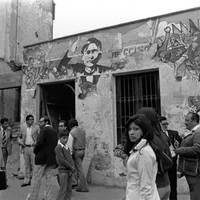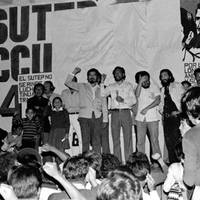
SUTEP
Organization

SUTEP

Timeline Events 45

  1. Formation of SUTEP - Sindicato Único de Trabajadores de la Educación del Perú (Peruvian Education Workers' Union)

    In the 1972 Congress, held in Cuzco, it was agreed to change the name of the former FENEP to SUTEP and to abandon the old division based on educational levels. The unification of the teachers' union met with some opposition, especially from the PAP. The PCP Patria Roja allied with …

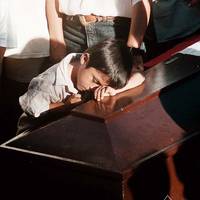
    Cuzco, Perú Informe CVR, páginas 1218-1220
  2. 80-day teachers' strike

    In 1978 there was a teachers' strike that lasted eighty days. The union demanded a general salary increase of 100% (frozen since 1965), reinstatement of teachers subrogated and transferred in retaliation for their participation in union activities, and legal recognition of SUTEP. The reaction of the State was manifested in …

    Perú Informe CVR, página 1222
  3. SUTEP teachers' strike

    SUTEP begins an indefinite national strike that would last until July. On July 27, after eighty days of strike, the government finally agreed to meet the teachers' union's demands. The strike was one of the most important mobilizations in the education sector during this period.

    Perú Informe CVR, páginas 4704, 4706
  4. Longest teachers' strike in Peruvian history - 118 days

    In 1979, the longest teachers' strike in Peruvian history took place: 118 days. It was motivated by the non-fulfillment of government promises from the previous strike. The government's repressive response implied the recess of several educational centers and the refusal to engage in dialogue with the SUTEP leadership, which was …

    Perú Informe CVR, páginas 1222-1223
  5. Attack on Vilcashuamán police post by students

    Students from the General Córdova school attacked the police post in the district of Vilcashuamán. It was not the first time that the post was attacked. Previously, contingents from Vischongo, Pomacocha and other places had mobilized to expel the police and the director of the Educational Center who had recessed …

    Vilcashuamán, Ayacucho, Perú Informe CVR, página 1826
  6. Extrajudicial Executions of SUTEP Teachers in Ayacucho

    In 1983, during a period of intense political violence in Peru, eight teachers affiliated with the SUTEP union were detained and executed extrajudicially by the Guardia Civil in the regions of Cangallo and Ayacucho. This event was part of a broader pattern of repression against educators, who were often suspected …

    Cangallo and Ayacucho, Peru Página 574
  7. Death of Patrocinio Quicha Espinoza et al.

    Patrocinio Quicha Espinoza, Hernán Gutiérrez Araujo, Virgilio Huaranca and Estilo Ayala, all members of SUTEP (Sindicato Único de Trabajadores en la Educación del Perú), were killed between April 10 and 14, 1983 in the towns of Cangallo and Huamanga. These events occurred in the context of the repression against union …

    Cangallo y Huamanga, Ayacucho, Perú Informe CVR, página 361-362
  8. Death of Patrocinio Quicha Espinoza and other SUTEP leaders

    Patrocinio Quicha Espinoza, Hernán Gutiérrez Araujo, Virgilio Huaranca and Estilo Ayala, all members of SUTEP (Sindicato Único de Trabajadores en la Educación del Perú), were victims of violence on May 26, 1983. This event is part of a series of deaths and disappearances of union leaders and workers during the …

    Perú Informe CVR, página 361-362
  9. Approval of teacher's law regulations

    The government approved the regulation of the teacher's law during the government of Fernando Belaunde Terry. This regulation established several aspects related to the rights of teachers in the country. Among the most important aspects, the regulation stated that teachers have the right to free unionization. This measure took place …

    Perú Informe CVR, página 104
  10. Huelgas Magisteriales y Acusaciones de Subversión en Perú

    During the 1986 teachers' strike in Peru, the government, led by Minister Grover Pango Vildoso, accused the teachers' union SUTEP of having connections with subversive groups, including the PCP-SL and the armed group Pukallacta. The accusations were based on the union's combative stance and alleged infiltration by extremist political parties. …

    Perú página 580
  11. Massacre of the Penales and Subsequent Teacher Protests

    Following the massacre of the penales, the SUTEP leadership publicly demanded a thorough investigation into the incident and information about the teachers who were killed or disappeared. They also called for the release of 45 teachers imprisoned across the country, accused of participating in terrorist activities. This period saw religious …

    Peru página 583
  12. Implementation of Premilitary Instruction in Peruvian Schools

    In March 1989, during the administration of Mercedes Cabanillas Bustamante, the Peruvian government implemented a course of Premilitary Instruction in schools. This initiative was part of a broader strategy to combat subversion by militarizing educational spaces, a move that faced opposition from the teachers' union SUTEP. The course was managed …

    Peru Página 584
  13. Orurillo Massacre

    On the night of December 3, 1989, a PCP-SL column entered Orurillo and assassinated eight people: IU mayor-elect Tomás Quispesayhua (secretary general of the district peasant federation), Godofredo Marrón (secretary general of SUTEP), Pedro Pablo Tito Limache (primary school teacher), Julio Céspedes (director of the Agricultural College), Víctor Quispesayhua (governor), …

    Orurillo, Melgar, Puno, Perú Informe CVR, páginas 2353-2354
  14. Death of Alcides Palomino Aronés

    Alcides Palomino Aronés, leader of SUTEP (Sindicato Único de Trabajadores en la Educación del Perú), was assassinated on December 10, 1989 in Ayacucho. According to the report, the perpetrator was allegedly a military patrol. This murder took place in a context of systematic violence against union and social leaders during …

    Ayacucho, Perú Informe CVR, página 362
  15. 1991 Teachers' Strike in Peru

    In 1991, a significant teachers' strike occurred in Peru, during which the government attempted to dismantle the teachers' union, SUTEP. The strike was marked by the government's indiscriminate repression of teachers, many of whom were falsely accused of subversion. This event highlighted the tensions between the state and the teachers' …

    Peru Página 595
  16. Labor protests in Lima

    On March 21, 1991, Lima endured one of the most agitated labor days of the period. Protests were sparked by multiple sectors on strike simultaneously, including nurses, Ministry of Health workers, members of the CITE (Confederación Intersectorial de Trabajadores Estatales), the Federación Nacional de Trabajadores Universitarios del Perú (FENTUP) and …

    Lima, Perú Informe CVR, página 194
  17. Disappearance of Zenón Huamaní Chuchón and Others

    In April 1991, Zenón Huamaní Chuchón, a teacher and secretary general of the SUTEP in the province of Víctor Fajardo, Ayacucho, along with other teachers and members of a leftist electoral list, were detained by a military patrol and subsequently disappeared. This event occurred amidst a period of political violence …

    Huancaraylla, Ayacucho, Peru página 593
  18. SUTEP and health care workers strike

    In May 1991, an indefinite strike of SUTEP (Sindicato Unitario de Trabajadores en la Educación del Perú), health workers and national university workers began. The strike continued during June 1991, while the government maintained its position. In July, faced with the continuation of the SUTEP strike, the government declared a …

    Perú Informe CVR, páginas 196-202
  19. Indefinite strike by SUTEP, health and university workers

    In May 1991, an indefinite strike of SUTEP (Sindicato Unitario de Trabajadores en la Educación del Perú) began, together with health workers and national university workers. The strike lasted several months, significantly affecting the country's education sector. The government declared a state of emergency in the education sector in July …

    Perú Informe CVR, páginas 196, 198, 201
  20. SUTEP teachers strike

    On May 8, 1991, a strike of 260,000 state teachers affiliated to SUTEP began under the leadership of Secretary General Jose Ramos Bosmediano. The strike was a protest against the low salaries of teachers and the union was demanding a general salary increase from the government. During the strike, the …

    Perú Informe CVR, páginas 1252-1254
  21. Start of SUTEP teachers' strike

    The World Confederation of Organizations of Professional Teachers (CMOPE) alleges a series of murders, arrests and acts of violence against teachers who were members of the Single Union of Education Workers of Peru (SUTEP) since the beginning of the strike on May 8, 1991. The repression of this strike resulted …

    Perú Informe CVR, página 362-363
  22. Detention of seven teachers by the Peruvian Army in Ayacucho

    On May 17, 1991, seven teachers were arrested by the Peruvian Army in the province of Ayacucho. This arrest occurred in the context of the teachers' strike that began on May 8, 1991, whose repression resulted in the temporary arrest of 2,000 teachers, twenty disappearances and 14 murders. The teachers …

    Provincia de Ayacucho, Ayacucho, Perú Informe CVR, página 363
  23. March of SUTEP leaders to Government Palace

    On May 30, 1991, the leaders of SUTEP (Sindicato Único de Trabajadores en la Educación del Perú), accompanied by three parliamentarians and other union members, marched across Lima's Plaza de Armas towards the Government Palace. The objective of the march was to request an audience with the wife of President …

    Plaza de Armas de Lima, camino a Palacio de Gobierno, Lima, Perú Informe CVR, páginas 361-363
  24. Balance of the teachers' strike of 1991

    On August 22, 1991, the long teachers' strike was suspended. According to the newspaper La República, 2,000 teachers were arrested, twenty disappeared and 15 were murdered. The SUTEP Human Rights Secretariat attributed the deaths, which occurred in towns in a state of emergency, to the PCP-SL (5), paramilitary forces (4), …

    Perú Informe CVR, páginas 1253-1254
  25. Óscar de la Puente Raygada assumes Education portfolio

    Óscar de la Puente Raigada assumed the Ministry of Education on December 12, 1991, in the context of ministerial changes during the government of Alberto Fujimori Fujimori. This appointment took place at a time of political tension between the Executive and the Congress, with multiple legislative decrees being issued and …

    Perú Informe CVR, página 206
  26. Alberto Fujimori's coup d'état

    On April 5, 1992, Alberto Fujimori executed a coup d'état. On April 6, union leaders of SUTEP and CGTP rejected and condemned the coup. The union premises remained surrounded by military and police. Days later, a leader denounced the disappearance of Olmedo Auris, who was forcibly removed from the union …

    Lima, Lima, Perú Informe CVR, página 1256

Showing 1–45 of 45 events

Photos, Videos & Documents 6

Showing 1–6 of 6 items