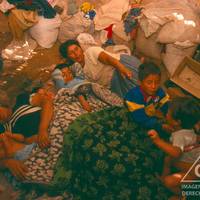
Huaycán
Place
Perú Lima

Huaycán

Timeline Events 54

  1. Formation of the John Paul II Human Settlement

    The AH Juan Pablo II was formed in 1984 during the municipal government of Barrantes (IU), when the Municipal Housing Programs were promoted, such as those of Huaycán, Laderas de Chillón and Arenal de Canto Grande. The settlers populated the settlement in 1985, under the endorsement of the municipality of …
    San Juan de Lurigancho, Lima, Perú Informe CVR (página 430)
  2. Establishment of Huaycán Settlement

    In 1984, the settlement of Huaycán in Lima, Peru, was established following a period of occupation and organization by local residents. The community faced challenges in distributing land due to the area's uneven terrain, leading to disputes among associations. A significant agreement was reached between the Andrés Avelino Cáceres and …

    Huaycán, Lima, Peru p. 423
  3. Creation of the Huaycán Area Urban Upgrading Program (PEHUH).

    The Municipality of Metropolitan Lima created the Urban Rehabilitation Program for the Huaycán Area by means of Mayor's Resolution No. 40. The program sought to promote popular management, consolidate neighborhood organizations, support self-construction and develop appropriate urban technologies. A permanent technical team was appointed in the area to promote democratic …

    Lima, Perú Informe CVR, página 2209
  4. Invasion of Huaycán

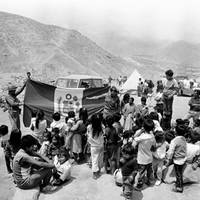
    On July 15, 1984, the first invasion of Huaycán was organized as part of the 'Special Program for Urban Development of the Huaycán area', implemented during the municipal administration of Alfonso Barrantes. This invasion was part of the urban expansion process of Metropolitan Lima towards the peripheral cones. The event …

    Huaycán, Lima, Perú Informe CVR, páginas 400-423
  5. Occupation of Huaycán

    The occupation of Huaycán was a significant event involving the coordinated efforts of various associations in Lima, Peru, to secure housing for the population. On July 15, 1984, 2,000 families from 23 associations, including the prominent Andrés Avelino Cáceres association, occupied the land in Huaycán. This action was marked by …

    Huaycán, Lima, Peru 420
  6. Occupation of the Huaycán land

    2,000 of the 12,000 registered families proceeded to occupy the Huaycán land in an action supported by the Municipality of Lima. The occupation took place amidst tensions due to delays in the habilitation works and rumors circulating that the Horacio Zevallos association intended to invade the area. The residents organized …

    Huaycán, Ate-Vitarte, Lima, Perú Informe CVR, páginas 2210-2211
  7. Confrontation between Huaycán and Horacio Zevallos

    A column of 5,000 people from Huaycán, armed with sticks and stones, rejected the 4,000 members of the Horacio Zevallos human settlement who were trying to occupy land in the ravine. The confrontations were stopped by the mediation of the main leaders of the conflicting sectors. The Horacio Zevallos Association, …

    Huaycán, Ate-Vitarte, Lima, Perú Informe CVR, página 2211
  8. Start of classes at the 1236 Educational Center of Huaycán

    Exactly one month after the occupation of Huaycán, classes began at Educational Center 1236. The school building was built on a communal site with seven classrooms, restrooms and an office for the principal. The neighbors contributed materials and built the first folders. Two months later, the Lima Department of Education …

    Huaycán, Ate-Vitarte, Lima, Perú Informe CVR, página 2213
  9. First Ordinary Congress of Villagers of Huaycán

    During the First Ordinary Congress of Huaycán Villagers in July 1985, the PCP-SL tried to infiltrate the self-management project. This event took place in a context where the Huaycán Project had a particular value for the Shining Path strategy of an eventual insurrection, in the framework of their so-called 'strategic …

    Huaycán, Lima, Perú Informe CVR
  10. First Ordinary Congress of Huaycán

    The first ordinary congress of Huaycán was held, considered the most important in its history, with the attendance of between 600 and 700 delegates. The leftist leaders decided that the Board of Directors would be elected by universal voting and not by delegates. Surprisingly, the first board of directors of …

    Huaycán, Ate-Vitarte, Lima, Perú Informe CVR, páginas 2217-2218
  11. Murder of aprista leader Andres Tapia

    The APRA leader of Huaycan, Andres Tapia, head of PAIT, was murdered at the doors of the Victor Raul Haya de la Torre soup kitchen. According to witnesses, three men and a woman shot him three times in the head. The newspapers of the time attributed this crime to the …

    Huaycán, Ate-Vitarte, Lima, Perú Informe CVR, página 2218
  12. First mass mobilization from Huaycán to Lima

    The residents of Huaycán carried out a massive mobilization to the Plaza San Martín in Lima to demand that the authorities fulfill the community's demands. The mobilization had a double message: reject the PCP-SL and the APRA veto. During the march, the PCP-SL attempted acts of violence and the leaders …

    Plaza San Martín, Lima, Perú Informe CVR, página 2218
  13. Huaycán mobilization with police repression

    The residents of Huaycán carried out a mobilization that was harshly repelled by the police with tear gas and counter-demonstration vehicles. One of the vehicles ran over two neighbors, killing Rafael Flores Echevarría and leaving Luis handicapped. In addition, the police arrested between 200 and 300 demonstrators. A few days …

    Lima, Perú Informe CVR, páginas 2218-2219
  14. Military incursion in Huaycán

    On June 16, 1989, 1,000 Peruvian Army soldiers raided the human settlement of Huaycán. During the military operation, the armed forces detained more than 800 people, identified as undocumented and suspected of committing terrorist acts. This action took place in the context of intense police and military operations that were …

    Huaycán, Lima, Perú Informe CVR, página 165
  15. Manipulation of Community Kitchens and Women's Organizations in Peru

    In 1990, following the election of Alberto Fujimori as President of Peru, community kitchens and women's organizations in Huaycán gained prominence. These organizations, initially formed to ensure food security, faced manipulation attempts from both the government and the PCP-SL. The government sought to control these groups by threatening to cut …

    Huaycán, Peru
  16. Formation of the Raucana Settlement by PCP-SL

    In 1990, the PCP-SL (Shining Path) deliberately formed the Raucana settlement in Ate-Vitarte, Lima, as part of their strategy to expand their 'people's war' into urban areas. Unlike other settlements, Raucana was conceived as a 'Comité Popular Abierto' (Open People's Committee) and was distinct from other projects like Huaycán. The …

    Ate-Vitarte, Lima, Peru
  17. Installation of military bases in Huaycán and Raucana

    In 1991, military bases were installed in Huaycán and Raucana as part of the Peruvian State's counterinsurgency strategy. In Raucana, the Army installed a military base on September 6, 1991, which was maintained until the year 2000, militarizing and socially controlling daily life among the population. This organization of daily …

    Huaycán y Raucana, Lima, Perú Informe CVR (páginas no especificadas en el fragmento)
  18. Raking in Huaycán

    Police raids in Huaycán were carried out intermittently until March and April 1991, as part of the combined law enforcement operations in the human settlements of the Eastern Zone. These operations had begun in 1987, when nearly 300 settlers were detained in two successive raids. In 1991, military bases were …

    Huaycán, Lima, Perú Informe CVR (páginas no especificadas en el fragmento)
  19. Second Statutory Congress of CUAH

    During the Second Statutory Congress of the CUAH (Comunidad Urbana Autogestionaria de Huaycán) in April 1991, the Shining Pathists were politically defeated by the delegates. The delegates agreed to organize in "mass self-defense" against drug addiction, delinquency and violence. In response to this political defeat, the PCP-SL called an armed …

    Huaycán, Lima, Perú Informe CVR
  20. Second Statutory Congress of Huaycán

    During the Second Statutory Congress of the Urban Self-Managed Community of Huaycán, the Shining Path PCP suffered a significant political defeat. The congress delegates agreed not to entrust their security to the PCP-SL, but to organize themselves in mass self-defense against drug addiction, delinquency and violence. In response to this …

    Huaycán, Lima, Perú Informe CVR, página 138
  21. Armed strike in Huaycán

    In April 1991, during the Second Statutory Congress of the Urban Self-Managed Community of Huaycán, the Shining Path PCP suffered a political defeat when the delegates agreed not to entrust their security to the PCP-SL, but to organize themselves in mass self-defense against drug addiction, delinquency and violence. In response …

    Huaycán, Lima, Perú Informe CVR, página 138
  22. Armed strike called by PCP-SL in Huaycán

    In April 1991, during the Second Statutory Congress of the CUAH, the Shining Pathists were politically defeated by the delegates, who agreed to organize themselves in "mass self-defense" against drug addiction, delinquency and violence. In response to this political defeat, the PCP-SL called for an armed strike on April 29-30, …

    Huaycán, Lima, Perú Informe CVR
  23. Pascuala Rosado Cornejo Elected as Secretary General of Huaycán

    Pascuala Rosado Cornejo, a dynamic and socially conscious leader, was elected as the Secretary General of the Comunidad Urbana Autogestionaria de Huaycán on May 6, 1991. Her leadership journey began when she moved to Huaycán in 1984 and became involved in women's groups aimed at overcoming poverty. Her dedication and …

    Huaycán, Lima, Peru
  24. Leadership of Pascuala in Huaycán Against Sendero Luminoso

    Pascuala, as the Secretary General of Huaycán, played a crucial role in the community's development and resistance against the Sendero Luminoso. On May 7, 1991, she publicly opposed the subversive group, emphasizing the need to combat terrorism by addressing poverty and unemployment. Her leadership led to significant infrastructure improvements and …

    Huaycán, Peru Página 623, El Caso de la Comunidad Urbana Autogestionaria de Huaycán. Informe Final
  25. Creation of the Self-Defense Corps by CUAH

    On July 7, 1991, the Urban Self-Management Community of Huaycán (CUAH) decided to create the "Self-Defense Corps", initially restricted to fighting crime and drug addiction. This decision came after in April 1991, during the Second Statutory Congress of the CUAH, the Shining Pathists were politically defeated by the delegates who …

    Huaycán, Lima, Perú Informe CVR
  26. Creation of the Self-Defense Corps of Huaycán

    On July 7, 1991, the Self-Defense Corps was created in the human settlement of Huaycán, located in the Eastern Cone of Lima. This creation was the result of a process of community resistance against the Shining Path PCP, which had tried to establish political control in the area. In April …

    Huaycán, Lima, Perú Informe CVR, página 138
  27. Installation of military base in Huaycán

    In September 1991, a military base was installed in Huaycán, a human settlement in the Eastern Cone of Lima. This installation took place after in April 1991, during the Second Statutory Congress of the Urban Self-Managed Community of Huaycán, the Shining Path PCP suffered a political defeat when the delegates …

    Huaycán, Lima, Perú Informe CVR, página 138
  28. Murder of Zacarías Magallanes

    Zacarías Magallanes, a leader of the Huaycán human settlement, was assassinated by the Shining Path PCP in March 1992. This assassination occurred in the context of the political dispute for control of the Huaycán neighborhood organization, where the PCP-SL had suffered a political defeat in April 1991 when the delegates …

    Huaycán, Lima, Perú Informe CVR, página 138-139
  29. Murder of Zacarías Magallanes Mejía

    On March 31, 1992, the PCP-SL assassinated Zacarías Magallanes Mejía, a promoter belonging to the NGO IDEAS and one of the founders of the Huaycán human settlement. This murder marked the beginning of a systematic campaign by the PCP-SL against officials of non-governmental organizations. Magallanes Mejía was a community leader …

    Huaycán, Lima, Perú Informe CVR, página 210
  30. Establishment of first police station in Huaycán

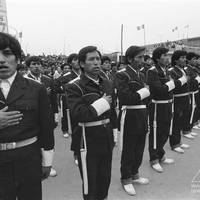
    In July 1992, the first police station was established in Huaycán when Pascuala Rosado was the leader. This decision met with resistance from the population, who were accustomed to their local self-defense systems for citizen security. The population experienced these decisions as a loss of autonomy and their capacity for …

    Huaycán, Lima, Perú Informe CVR, página 373-374
  31. Formation of Self-Defense Groups in Huaycán

    In 1992, amidst rising crime and insecurity, the community of Huaycán formed a self-defense group led by Pascuala Rosado. On July 15, 1992, over 300 men and women took an oath to protect their community through mixed patrols. Despite these efforts, violence and fear persisted, with several leaders being assassinated, …

    Huaycán, Peru CVR 2003
  32. Swearing in of defense corps in Huaycán

    In July 1992, the first police station was established in Huaycán under the leadership of the leader Pascuala Rosado. On July 15, 1992, the defense corps was sworn in, where more than two or three hundred men and women were sworn in to fight for the security of the town. …

    Huaycán, Lima, Perú Informe CVR, páginas 373-374
  33. Murder of La Cantuta students

    On July 18, 1992, university students from La Cantuta were assassinated, accused as terrorists by intelligence agents and the troops installed in the university. This event took place in the context of the militarized intervention of the university since 1991, when military bases were installed in La Cantuta, Huaycán and …

    Universidad Nacional de Educación Enrique Guzmán y Valle (La Cantuta), Lima, Perú Informe CVR (páginas 426-427)
  34. Murder of Pascuala Rosado

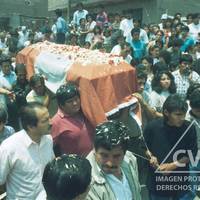
    Pascuala Rosado was a leader of the urban community of Huaycán who established the first police station in the area in July 1992. In 1991, when the PCP-SL increased its presence on the central highway, Pascuala was threatened. Faced with threats, she was forced to leave the country. Upon her …

    Huaycán, Lima, Perú Informe CVR, páginas 373-374

Showing 1–50 of 54 events

Photos, Videos & Documents 8

Showing 1–8 of 8 items