 1989
1989
Photos & Videos
2 media items in Truth and Reconciliation Commission - Peru
Tag
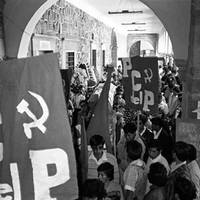
Patria Roja
×
Showing 1–2 of 2 items
Timeline Events 11
-
Elections at the Universidad Nacional Mayor de San Marcos
In late 1989, the legal left in Peru, including parties like Patria Roja, successfully united to confront subversive groups such as the PCP-SL. This unity was demonstrated in the student elections at the Universidad Nacional Mayor de San Marcos, where Luis Hoces, a member of Patria Roja, won the presidency …
-
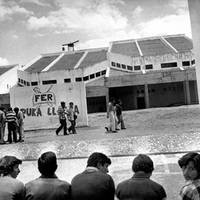
Student Elections at La Cantuta University
In September 1987, student elections were held at La Cantuta University amidst a climate of instability and violence. The elections saw the victory of the Izquierda Unida list, an alliance between VER, PUM, and MUR, over other competing lists, including those backed by Patria Roja and the Frente Estudiantil Democrático …
-
Breakup of Patria Roja in 1987
In 1987, Patria Roja experienced its second split when its Bolshevik faction decided to move away from the official party line. This split was due to ideological differences, with the Bolshevik faction adopting a discourse closer to the PCP-SL. The split affected the political work that Patria Roja was developing …
-
Political Crisis and Violence in Peru's Universities
In 1987, the political landscape in Peru, particularly within San Marcos University, was marked by significant turmoil and division. The leftist party Patria Roja experienced a split, leading to the formation of a dissident faction called FER Bolchevique, which engaged in violent clashes with the main party. This period was …
-
Conflict and Settlement in Huaycán
On July 23, 1984, a conflict erupted in Huaycán, Lima, where a group of 5,000 people armed with sticks and stones repelled 4,000 members of the Horacio Zevallos settlement attempting to occupy land. The confrontation was mediated by local leaders, highlighting the tensions between different political factions, including the Communist …
-
V National Congress of Patria Roja
In 1984, the V National Congress of the Patria Roja party in Peru focused on a significant internal debate about the direction of their revolutionary political work. The outcome was a strategic decision to prioritize preparing for armed struggle while also emphasizing mass political work. This period also saw the …
-
1979 Student Plebiscite and Political Shift at San Marcos University
In 1979, during a plebiscite concerning student participation in university governance, an alliance formed by Patria Roja, PCR, and other leftist groups successfully defeated the Antifascist faction and other radical groups. This political shift was significant as it led to the defeat of the Antifascists in the elections for the …
-
PCP-SL's Attempt to Dominate the XVI Congress of the FEP
In 1978, during the XVI Congress of the FEP in Cuzco, the PCP-SL, allied with Pukallaqta and the FER-Antifascista, attempted to dominate the Congress. They faced opposition from Patria Roja and were ultimately defeated, leading to their withdrawal. This event marked a significant moment in the political struggles within Peruvian …
-
First Split of Patria Roja
In 1978, the political group Patria Roja experienced its first split with the emergence of the Puka llaqta faction. This division highlighted the internal tensions within leftist groups in Peru, particularly as they faced the growing influence and radical actions of the PCP-Sendero Luminoso. The split was a result of …
-
Integration of UPA into UNSCH
In 1977, the University Particular of Ayacucho (UPA) was dissolved and its faculties were integrated into the Universidad Nacional de San Cristóbal de Huamanga (UNSCH). This integration increased the student population of UNSCH by over two thousand, reaching a total of 7,610 students. The event had political significance as UPA …
-
Congress Nacional de Refundación de la FEP
In 1970, the Congress Nacional de Refundación de la FEP took place amidst significant fragmentation within the student movement in Peru. Only six federations attended, allowing Patria Roja, a party that emerged from Bandera Roja, to easily establish its dominance over the fragmented Maoist groups. This event marked a pivotal …