Truth and Reconciliation Commission - Peru

Complete database of events related to the internal armed conflict in Peru, extracted from the Final Report of the Truth and Reconciliation Commission (CVR). 5,159 events documented from 1817 to 2003.

Years All years
1817 2003
Tag cads × Browse all tags
  1. Clash in Quispincancha

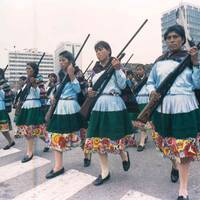
    In August 1995, there was an armed confrontation between the PCP-SL and the Quispincancha Self-Defense Committee (CAD), in the district of Iguain, province of Huanta. This event occurred in the context of the final phase of the internal armed conflict in the region. The confrontation is part of the history …

    Quispincancha, Iguain, Huanta, Ayacucho Informe CVR, página 85
  2. Murder of Miguel Rivera

    Miguel Rivera, a leader of the Pujas community, was killed by the PCP-SL in 1995. Rivera was a community leader who had participated in the PCP-SL assault on the Ayzarca farm in 1980, but had subsequently distanced himself from the subversive group. At the time of his death, Rivera was …

    Pujas, Vilcashuamán, Ayacucho Informe CVR, página 59-60
  3. First Departmental Congress of CAD in Ayacucho - Expulsion of the Huayhuaco Command

    From September 16 to 18, 1993, the First Departmental Congress of Anti-Subversive Self-Defense Committees was held in Ayacucho. The Congress unanimously ratified the expulsion of Javier Pompeyo Rivera T., known as Commander Huayhuaco, who had been imprisoned for drug trafficking. He was declared persona non grata to the self-defense organizations …

    Ayacucho, Perú Informe CVR, páginas 653-684
  4. Diminishing influence of drug cartels in Tamaya and Imiria

    Beginning in 1993, the drug cartels significantly decreased their influence in the Tamaya River and Imiria Lake areas. This decline was the result of increased repressive actions by the Navy and the anti-drug policy promoted by the Peruvian government. By this time, the military and political presence of the PCP-SL …

    Tamaya, Imiria, Ucayali, Perú Informe CVR, página 360
  5. CAD training at Huipoca

    In 1992, the Peruvian Navy successfully formed a Self-Defense Committee (CAD) in the hamlet of Huipoca, located in Padre Abad. This was one of the places where the Navy implemented its new counter-subversive strategy based on winning over the PCP-SL's social base through civic actions. It was the first time …

    Huipoca, Padre Abad, Ucayali, Perú Informe CVR, páginas 362-377
  6. CAD training in Puerto Alegre

    The Puerto Alegre Self-Defense Committee (CAD) was formed on March 21, 1991, with logistical and technical advice from the Peruvian Navy. This CAD played a fundamental role in the counter-subversive struggle and in the defeat of PCP-SL in Lake Imiria and in some areas of the Tamaya River, due to …

    Puerto Alegre, Padre Abad, Ucayali, Perú Informe CVR, páginas 362-379
  7. Natives join the CAD of Puerto Alegre

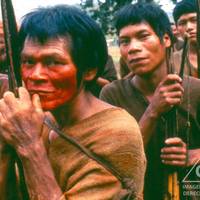
    In 1991, the native communities of the area, particularly the Shipibo-Conibo of Lake Imiria, decided to join the Self-Defense Committee (CAD) of the hamlet of Puerto Alegre as a sub-base to combat subversion. This decision was made after PCP-Sendero Luminoso repeatedly tried to impose its laws and organize committees in …

    Puerto Alegre, Ucayali, Perú Informe CVR, páginas 354-360
  8. Change of counter-subversive strategy in Ucayali

    In 1991, the armed forces, particularly the Peruvian Navy, implemented a significant change in their counter-subversive strategy in Ucayali. This new strategy was based on winning over the social base of the PCP-SL through civic actions that demonstrated to the civilian population that the armed forces respected the lives of …

    Ucayali, Perú Informe CVR, página 362
  9. Formation of CAD sub-base in Caimito

    In 1991, after the formation of the Puerto Alegre ADC, Caimito became a sub-base of the Self-Defense Committee with the specific objective of monitoring and combating the presence of PCP-SL in Lake Imiria. Like other CAD's, Caimito's became a sort of security and order guarantor force, although its actions were …

    Caimito, Ucayali, Perú Informe CVR
  10. PCP-SL incursion in Caimito

    PCP-SL raided the hamlet of Caimito in November 1989 and forced the population to organize into committees. Subsequently, in 1991, after the formation of the Puerto Alegre Self-Defense Committee (CAD), Caimito became a sub-base with the objective of monitoring and combating the presence of PCP-SL in Lake Imiria. The Caimito …

    Caimito, Ucayali, Perú Informe CVR
  11. Deaths and disappearances of Spanish mother tongue in Peru

    During the period 1980-2000, the CVR recorded a total of 3,593 deaths and disappearances of native Spanish speakers. The Shining Path PCP was responsible for 1,734 victims, State Agents for 1,181, CADS for 49, MRTA for 190, and 439 cases were attributed to undetermined perpetrators or others. Spanish-speaking victims accounted …

    Perú Informe CVR, página 5221
  12. Victims in the department of Junín

    During the period 1980-2000, the department of Junín registered 984 Quechua-speaking and 807 Spanish-speaking deaths and disappearances. Among the Quechua-speaking victims, the Shining Path PCP was responsible for 666 victims, the State Agents for 128, the CADS for 60, the MRTA for 50, and 80 undetermined cases. Among the Spanish-speaking …

    Junín, Perú Informe CVR, páginas 5205, 5222
  13. Victims in the department of Huánuco

    During the period 1980-2000, the department of Huánuco registered 905 Quechua-speaking and 1,123 Spanish-speaking deaths and disappearances. Among the Quechua-speaking victims, the Shining Path PCP was responsible for 559 victims, State agents for 257, and 89 cases were attributed to undetermined perpetrators or others. Among the Spanish-speaking victims, Shining Path …

    Huánuco, Perú Informe CVR, páginas 5205, 5222
  14. Victims in the department of Ayacucho

    During the period 1980-2000, the department of Ayacucho was the most affected by the internal armed conflict. A total of 6,549 Quechua-speaking people were reported killed and disappeared in this department. The Shining Path PCP was responsible for 3,752 victims, State agents for 2,316, CADS for 170, MRTA for 3, …

    Ayacucho, Perú Informe CVR, página 5205
  15. Dead and missing reported to CVR in Peru

    During the period 1980-2000, the Truth and Reconciliation Commission (CVR) recorded a total of 11,376 Quechua-speaking deaths and disappearances. The Shining Path PCP was responsible for 6,788 victims, State Agents for 3,491, the Self-Defense Committees (CADS) for 261, the MRTA for 71, and 765 cases were attributed to undetermined perpetrators …

    Perú Informe CVR, páginas 5204

Showing 1–41 of 41 events